

Hard Water and Badger Brushes: What the Group Found
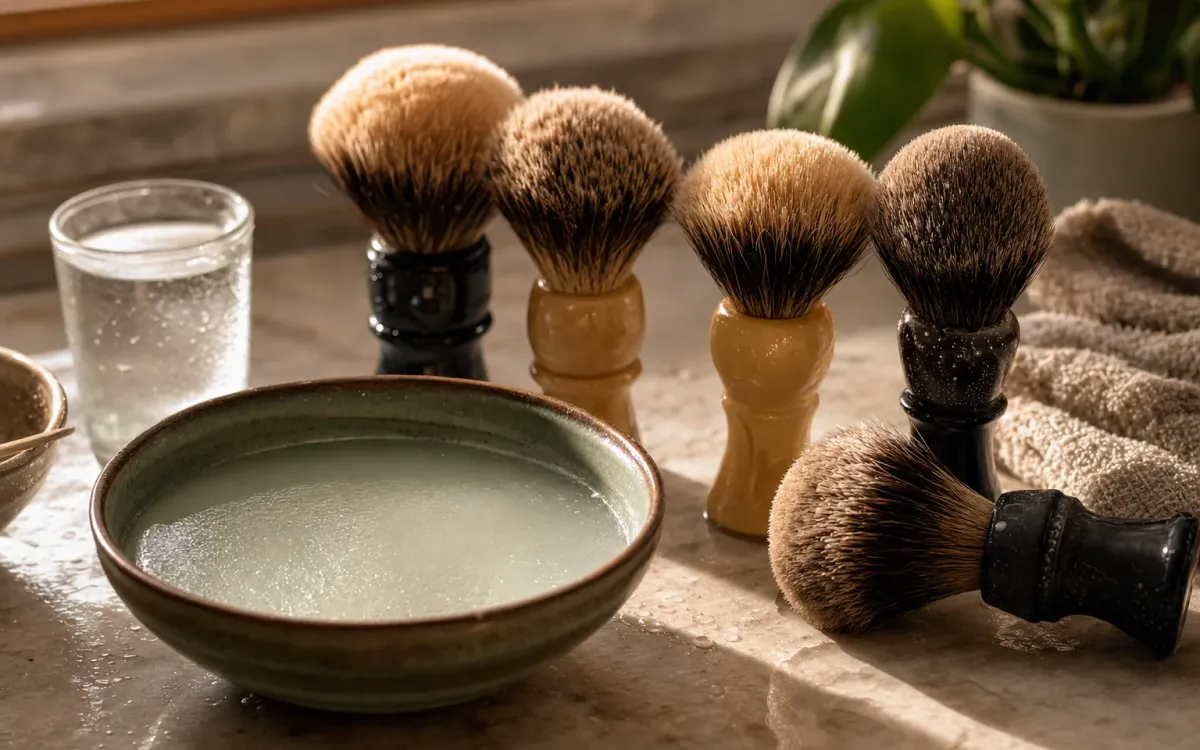
Andrew’s Yaqi badger brushes won’t load soap. Synthetics work fine. He’s tried the YouTube suggestions and the tips fellow members have passed along, and nothing has moved the needle. The brushes aren’t defective, the synthetics prove the technique is there — but every time he picks up a badger, the lather doesn’t build.
The thread landed on the answer fast.
Andrew confirmed he’s in Antalya on the Turkish coast, where the water runs a little hard. That turned out to be the key variable. Most troubleshooting advice skips straight to technique, loading angle, bloom time, and soap hardness, but water chemistry is upstream of all of it. Synthetic knots and natural hair knots don’t respond the same way to dissolved minerals. Synthetics push through. Badger, and other natural hair, is more sensitive to what’s in the supply, and hard water can interfere with soap lathering before technique matters at all.
The fix most members converged on is distilled water. Soak the knot in distilled water warmed to the desired temperature, and use it to build the lather. Adam is in Arizona, where the tap is famously rough, and has the same split: every natural hair brush struggles while his synthetics sail through. A water purifier helps. Or go simpler: warm distilled water in a pot or a mug, heat it to your preferred temperature, soak the knot before you touch the puck. Justin’s version was the shortest: bottled distilled water, soak the brush in it, build the lather from there.
Craig put the water problem plainly.
He dropped tap water for bowl lathering and switched to warm distilled water entirely.
Loading time is probably longer than you think
Charles brought up the most useful measurement in the thread. The conventional advice is around 30 seconds of swirling on the puck. When he actually put a clock on his own loading sessions, he found he went for a full two minutes. That’s considerably longer than what most guides recommend, and it’s probably doing significant work. He has a water softener, which helps his badgers load reliably — but when the softener goes out for any reason, his fix is to start the brush wetter going into the puck. The loading time is doing real work on top of that starting condition.
Most people have never timed their loading. The conventional 30-second figure gets repeated often enough that it starts to feel like a measured baseline, but Charles’s experience suggests many experienced shavers are going considerably longer without realizing it. If your badger is underperforming, put a clock on the next session before you decide the brush is the problem.
If you’re pulling the brush at 30 seconds and wondering where the soap went, try going much longer. 90 seconds. Two minutes. The puck won’t punish you for loading too long.
Craig’s approach adds deliberate sequencing. He soaks the knot first, flicks it out two flicks for a 22mm knot, three for a 24mm, and then does about 20 to 30 seconds of what he calls a door-knocking loading motion on the puck. That starting condition is doing work before the loading even begins: a dampened knot, some water already in the fibers, loading from a brush that isn’t waterlogged going in.
The water you squeeze out matters as much as the water you put in
Rob flagged something that catches people off guard. Badger hair holds water inside the fibers in a way that isn’t visible. A synthetic knot that’s too wet looks wet. A badger knot can be carrying a significant amount of water and give no outward sign of it. If you rinse the brush and go straight to loading without squeezing first, you’re working soap into a brush that’s already full.
He shakes and squeezes out most of the water before loading. Not bone dry, just wrung out enough that the knot has room. He also found that starting with a cream squeezed into the knot is a more forgiving entry point than hard puck loading when the technique isn’t clicking, cream loads faster and gives a cleaner read on whether the brush is the issue or the soap.
Two more approaches from the thread worth trying. Adam grabs a box grater and grates his puck soaps before repacking them: more surface contact, easier loading, less friction with a hard or cold puck. Aaron scoops a small amount of soap into a bowl, adds a touch of water to soften it slightly, and loads from there instead of off the bare puck. Different approach to the same problem.
If your badger isn’t loading and your synthetics are fine, start with the water. Switch to distilled and see what changes before you adjust anything else. Then work through loading time, water removal before loading, and how you’re presenting the soap.
The brush is probably fine.
Happy shaving.