

The Hone Zone: Free Straight Razor Honing and Restoration Training
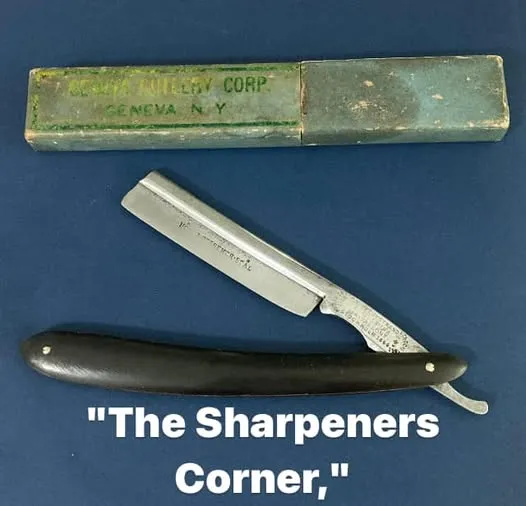
Straight razor honing is the point where the whole practice shifts. You stop depending on factory edges and you start understanding what sharp actually means - because you put it there. The gear to get there costs money before you know if you’ll stick with it. A basic entry progression can run a couple hundred dollars. The loupe, the strop paste, and the practice razor you’re willing to wreck are on top of that.
There’s community for this. Forums, YouTube, the experienced honer at a wet shave meet who’ll let you watch him work a stone. But the gear access problem is real. Jerry pinned The Hone Zone in February 2024 to address it directly.
The concept: members who’ve built up spare honing stones, scales, blades, parts, and accessories share them with people who want to learn. Usually for just the cost of postage. Instructional videos and technique advice from experienced hands live in the same pinned thread, alongside whatever gear has been posted. Jerry gave the credit to Bryan for the idea. Bryan didn’t wait around.
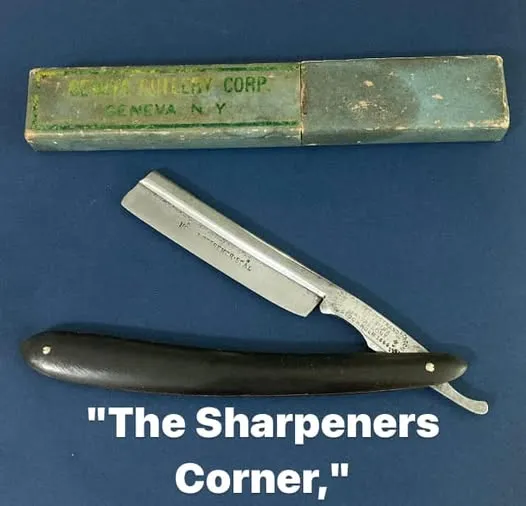
Bryan Backed It Up on Day One
Bryan posted gear the same day the thread went live.
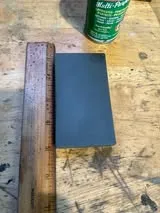
First: a finishing stone he described as feeling like a finisher, though he wasn’t certain of the exact spec. One side has a chip, still usable. Available for the cost of postage.
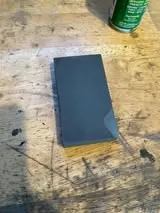
A second small finisher stone, also available.
And half a dozen 4/8 razors for anyone wanting to practice pin tapping, honing, and repairs.
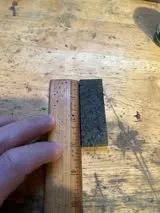
4/8 razors - four-eighths of an inch blade width - are the standard workhorse for straight razor practice. Common, easy to source, cheap to learn on. If you’re going to make mistakes setting a bevel or tapping a pin, make them on one of these. Not on something you paid real money for. A stack to work through means real reps - the technique refinements you only develop by doing it over and over.
Finishing stones are the piece most beginners skip because the cost adds up fast and the jump from an 8000 feels acceptable. Having a real finisher on offer for postage changes that calculation.
The Whetstone Conversation
Michael, just getting into straights and restoration, asked which stones to start with. He was looking at a Shapton 1000, 5000, and 8000 progression.
That’s a solid starting lineup. The 1000 is the bevel setter - the stone that does the defining work. The bevel is the foundation: the angle at which both sides of the blade meet at the cutting edge. Get it wrong and no amount of polishing fixes it. The 5000 cleans up the scratch pattern the 1000 left. The 8000 takes the edge to a functional shaving level. Shapton makes reliable synthetics and this three-step progression shows up consistently in straight razor honing recommendations.
Bryan confirmed it and mentioned he has a 10k and 16k synthetic plus several finishing stones available from his collection. That’s a serious range to have on offer.
Jason pointed Michael toward Naniwa stones as an alternative and added one more recommendation:
The 12k call makes sense. Going from 8000 directly to a natural finisher can be a rough transition - natural stones work differently, reward a different technique, and generally want an already-polished edge going in. A 12k synthetic bridges that gap cleanly. Natural finishers - Jnats, Coticules - are the endgame for a lot of serious honers, but they’re expensive and have their own learning curve. Get to a solid shaving edge on a synthetic stack first. Then think about naturals.
Nobody agreed on every detail. Stone selection in straight honing has strong opinions in every corner. But three experienced honers pointing in roughly the same direction is about as reliable as thread advice gets.
The Community Showed Up
Ninety-two reactions. The thread is pinned.
Joe, who has been honing his own straights for a while, put it directly:
Phil came in from the DE side. He’s been restoring double-edge razors and owns a few straights but hasn’t gotten into honing yet. A pinned thread with gear available at cost of postage and experienced honers willing to answer questions is exactly what changes that.
Salvador offered something more direct than a forum recommendation. If you’re in Phoenix, he’ll walk you through his process in person. Watching someone work a stone in real time - hands on, adjustments called out as they happen - there’s no substitute.
The Hone Zone is a permanent resource, not a one-time gear drop. The knowledge is in the membership. The gear is there when members post it. If you’ve been sitting on a straight that needs work, the thread is pinned. That’s where to start.