

The Three-Pass Shave: Do You Actually Need It?
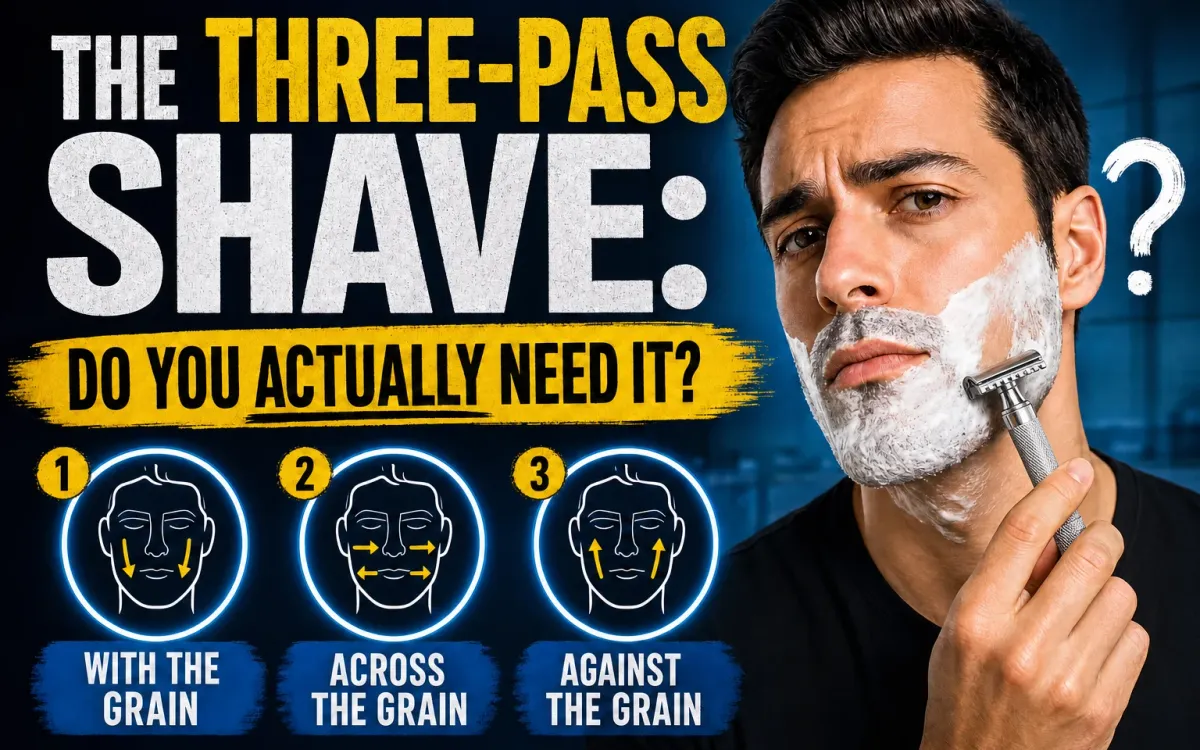
Rob did three-pass shaves every morning for a couple of years because that’s what the wet-shaving YouTube crowd did. Then he stopped.
He shaves daily, works outdoors, runs his own business. Not entering any modeling contests. His words. One or two passes now depending on the day and the need, and what he found: almost all the nicks and weepers came on that third pass, chasing BBS. Cut it out, fewer nicks, more comfortable face.
A lot of people in the thread landed in the same place.
What the Third Pass Is Actually Costing You
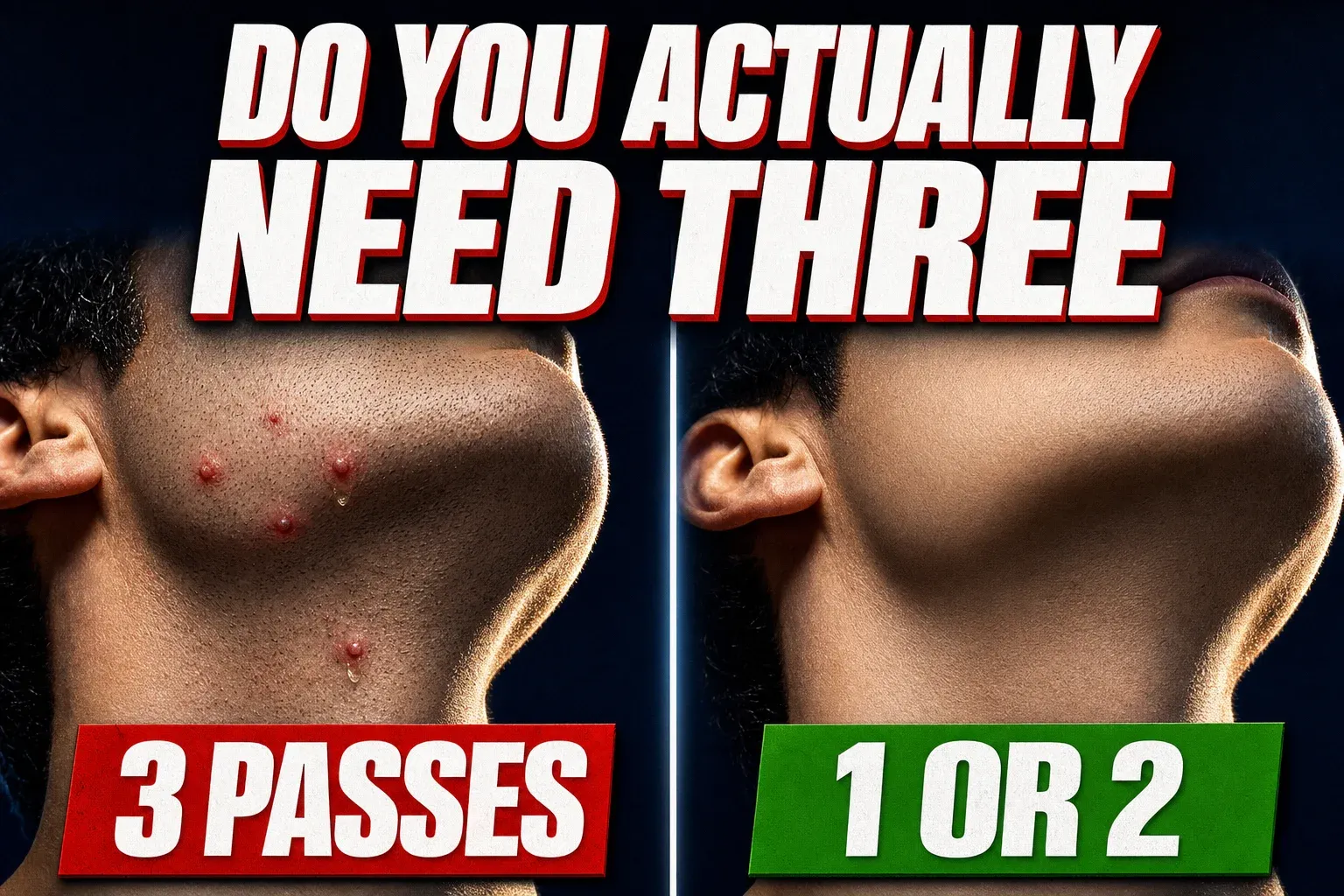
Three passes isn’t wrong. The problem is that the third pass is where most of the damage happens. You’ve already shaved the beard twice. What’s left is a half-millimeter of hair and a face that’s been worked over. That’s when you press harder, make more passes over the same territory, and pick up the little bleeds that send you to the alum block.
Phil made the point simply: more passes, more chances to slip. Ron said his neck won’t tolerate a third pass at all. Doug tried three passes early on and his neck broke out.
The other part of this is the chase itself. BBS, baby-butt smooth, the zero-friction result that wet-shaving YouTube frames as the whole point. It’s a worthwhile thing to hit. But when it becomes the daily standard, you’re almost guaranteeing you’ll push past what your skin can handle, especially on the neck.
What the Group Is Actually Doing
The responses covered every option, which is kind of the point.
Cody does three passes on Mondays, two the rest of the week. Matt switches from three to two once the temperature clears 85 degrees. Rob replied to that one: 102 degrees on Thursday where he is. Robert does two passes most days and adds a third around his jawline when going out with his wife. Tim shaves twice a day, one pass each time, and uses that to rotate through more products. Doug keeps a straight razor for when he has the time and isn’t swamped with work.
Keith takes a different approach entirely. He does one deliberate thorough pass, rinses, then feels his face with his fingertips for what he missed, and runs a second pass over those spots.
The second pass becomes precision cleanup instead of another full sweep of the face.
Charles eliminated the WTG pass entirely. His argument: WTG shortens the hairs just enough that ATG and XTG become harder and less effective. Still two passes, just not the standard first two.
Hardware factors in too. One comment in the thread described getting weepers and shave rash from the Henson on three passes, then switching to a Rockwell 6C with a Feather blade at plate four and dropping to one pass. No abrasions, clean shave. Both the razor and the pass count changed at once, so it’s hard to separate them, but the combination worked.
Starting Out: Don’t Let the Doctrine Box You In
Rob addressed this at the end of his post directly: if three passes works for you, keep doing it. He did it for a couple of years. The point is that it’s a variable, not a constant.
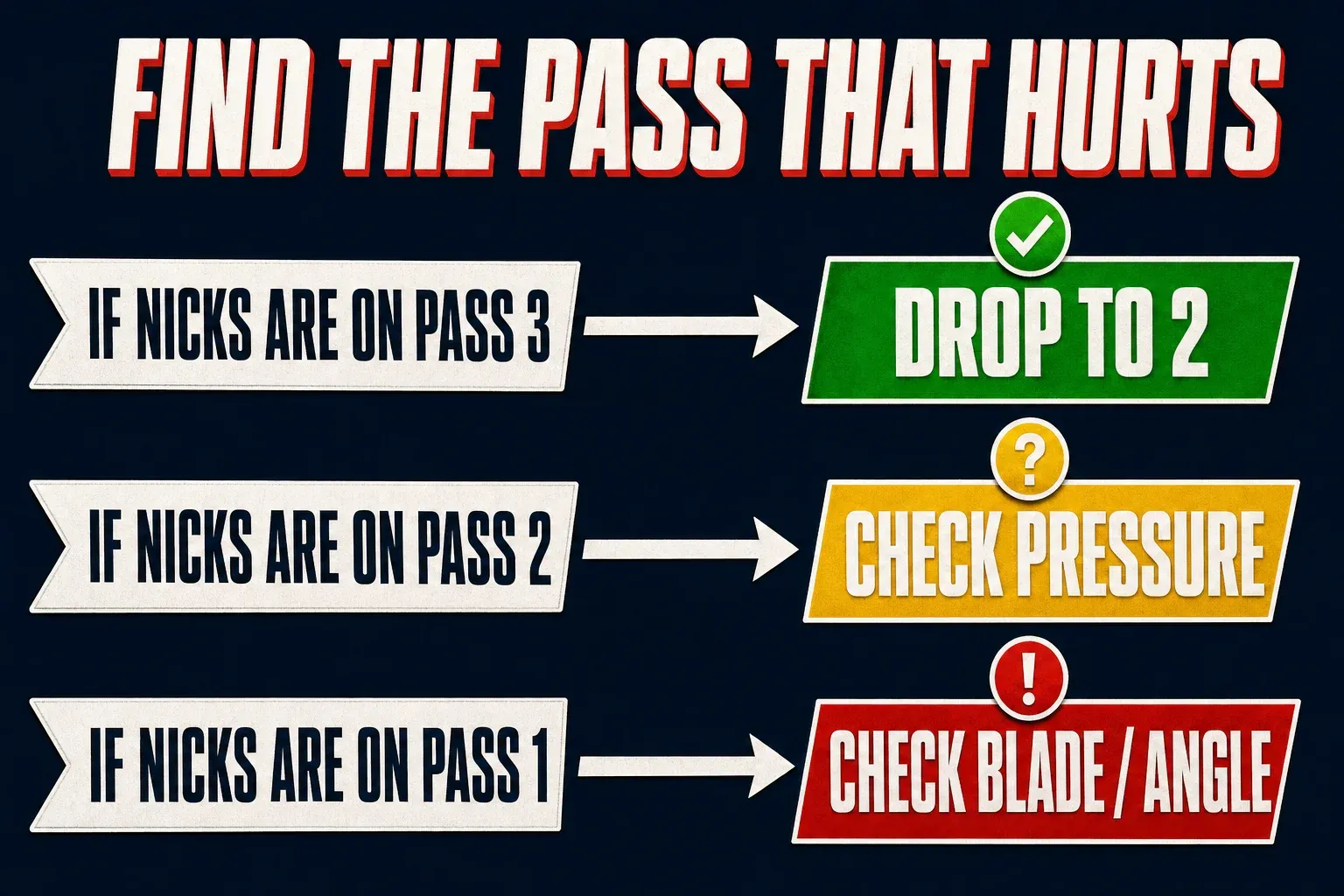
Start where your guide tells you to start. Figure out which pass is giving you trouble and back off from there. If you’re picking up nicks and weepers regularly, check which pass they’re coming from before you blame your blade angle or your prep. Odds are it’s the last one.
David does three passes because his skin tolerates it and he likes how close it gets. That’s exactly right. Some people land on one, some on three, some on a tactile-check two like Keith. The YouTube tutorials standardized on three because it’s teachable and it produces a result that photographs well. It’s a starting point, not a rule.
If you’re still building your routine and figuring out your hardware, our beginner’s guide to your first razor covers what actually matters when you’re picking a razor.
Happy shaving.