

Does Anyone Still Strop? The Shave Dad Group Has One Answer
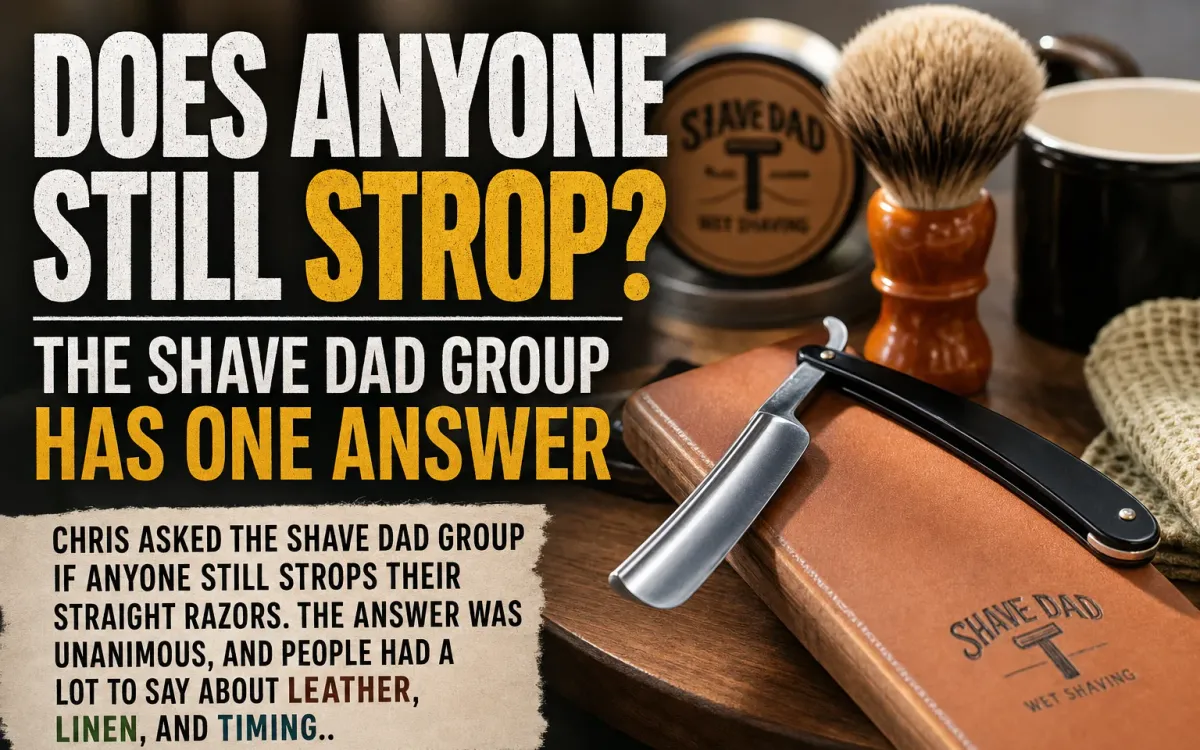
Chris posted a pointed question to the group: does anyone still use a strop for straight razors?
Forty-three replies came back. Every single answer was yes.
A few people didn’t pause to explain. “Every shave,” from Bary. “You need one if using a straight razor,” from Freddie. “They are a must have,” from Doug. Guillaume typed one word: everyone. Les replied with a question: “Is there any other way.”
The near-unanimous response reflects where stropping actually sits in the straight-razor workflow. It’s not optional upkeep. It’s the thing that keeps a straight razor working between visits to the stone.
What a Strop Actually Does
A strop doesn’t sharpen a razor. A hone sharpens a razor. What the strop does is realign.
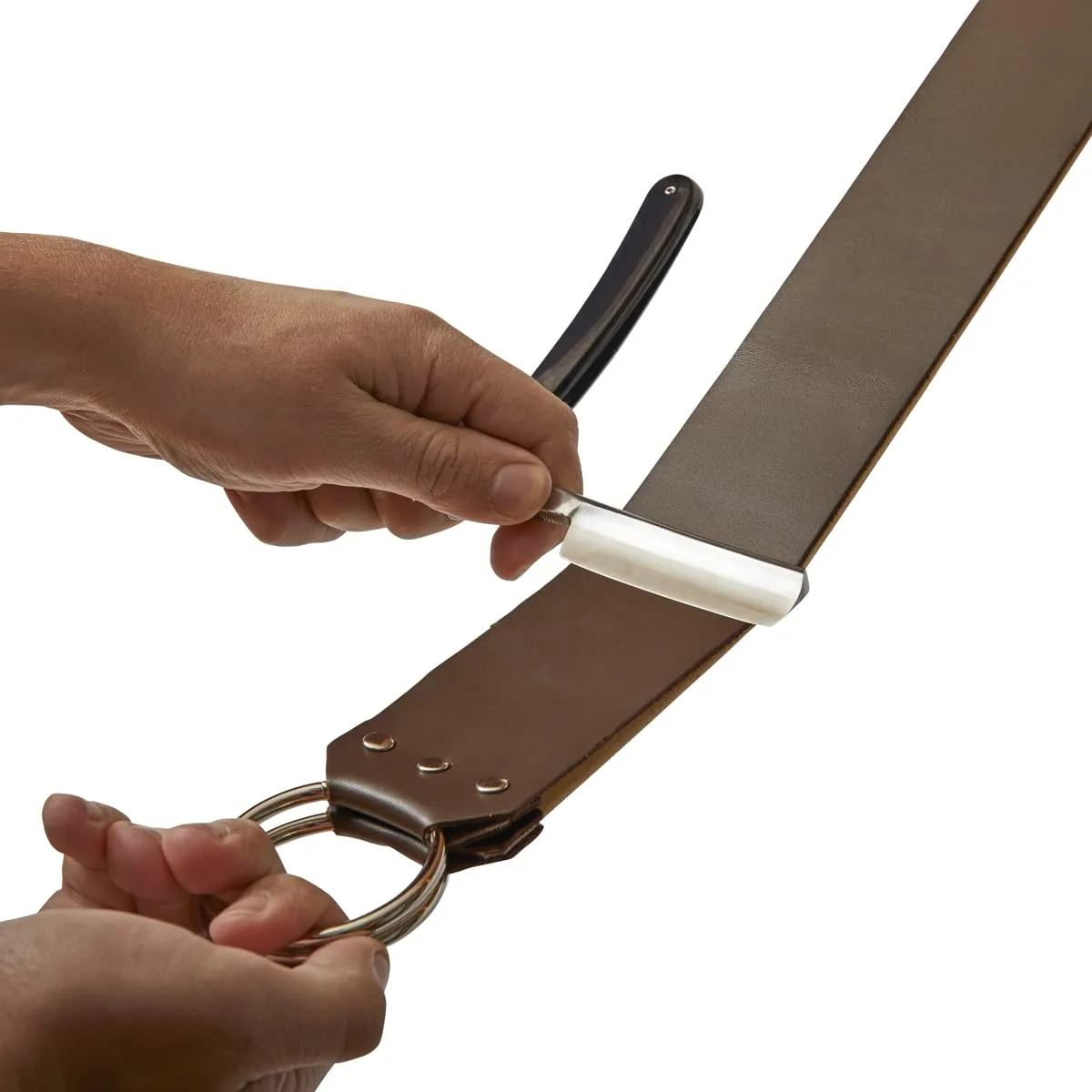
A straight razor’s edge is thin enough that normal use deforms it at a microscopic level. The metal doesn’t wear down the way a cartridge blade does. It folds. The strop’s job is to bring that apex back into line between honing sessions, stretching how long the edge holds without having to go back to stone.
“Keen” is the right word for it. The strop restores geometry without removing metal. Skip it and you’re shaving on a progressively folded edge, blaming the blade for a maintenance problem that belongs to the routine.
Leather, Linen, or Both
Most dedicated strop setups run two surfaces: a linen or canvas section and a smooth leather section. The standard sequence is linen first to knock off any wire edge or oxidation, leather second to polish and align. But the linen’s role is genuinely debatable.
Steven was blunt about it:
He’s not alone. Plenty of straight-razor shavers skip the linen entirely, especially once they’ve got their honing rhythm dialed in and are working with well-maintained steel. The linen matters more right after a fresh hone or when coming off a coarser stone. Once you’re in maintenance mode rather than restoration mode, the leather is where the real work happens.
Mark runs a more structured protocol:
That 40/60 ratio between linen and horsehide, with a finishing stone waiting for when the strop can no longer hold the edge, is the kind of system somebody develops over years at the stone. It’s a good map of where the practice can go. Not where most people start. Where some end up.
Chris mentioned he uses a wide Dovo single-sided strop and a slimmer Dovo with linen backing, two different tools for different moments in the edge’s life.
Before, After, or Both
Most of the group strops right before every shave. Patrick kept it simple: “You’re supposed to strop before every shave.” A rested edge benefits from realignment before it goes to work. That’s the standard, and the consensus here backed it.
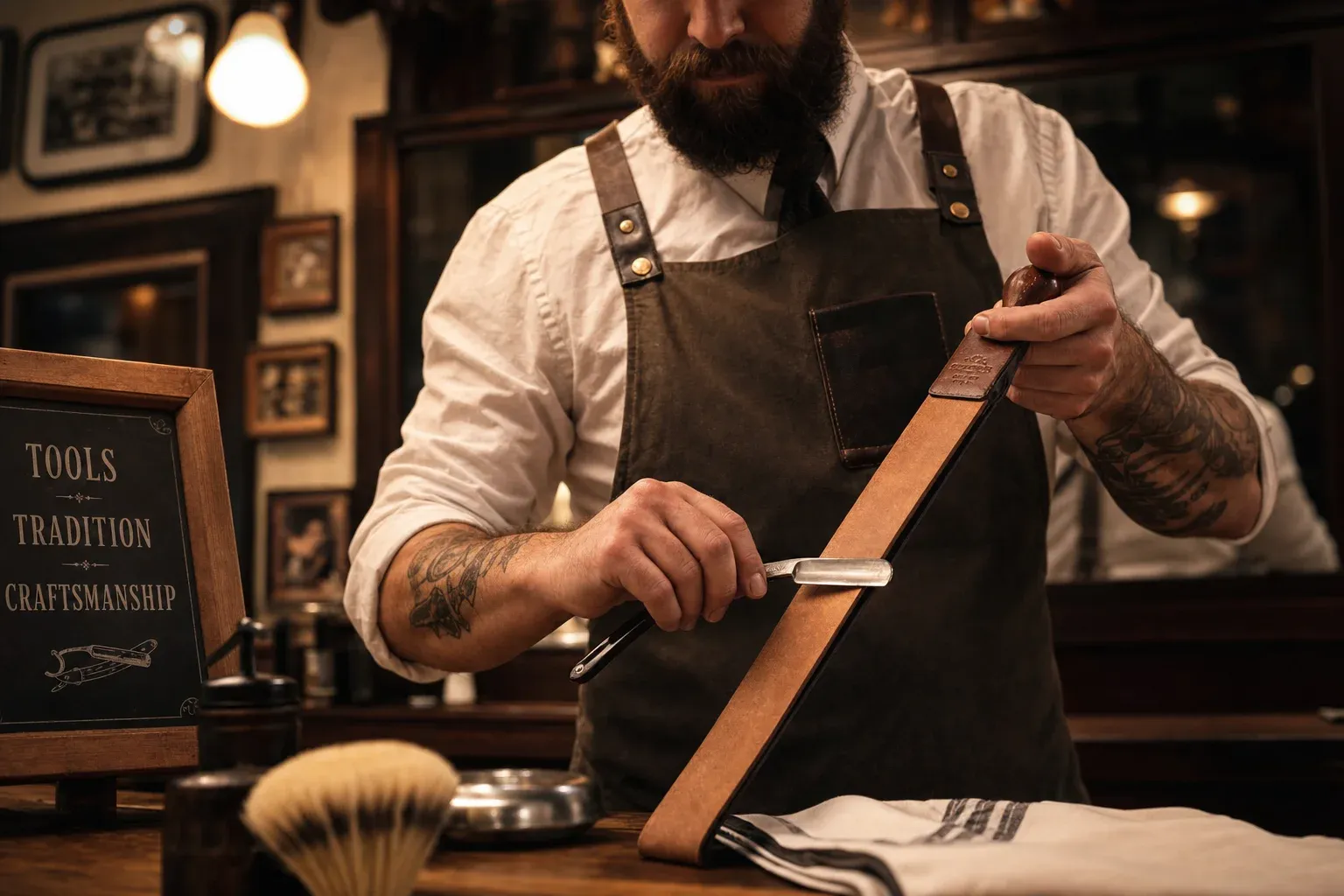
But some shavers strop on both ends of the shave. Bob goes before and after, every time. Drew keeps a strop in each bathroom, strops after every shave, and does a quick touch-up before each shave as well.
Stropping after makes sense for preservation. You’re cleaning the edge and realigning what a shave just put through its paces, so the next shave starts from a better position. Jason takes a pragmatic approach too: when he’s traveling and away from his strop, he’ll use the palm of his hand or a standard leather belt to get a quick touch-up in.
Whether you strop only before or also after is a personal call. That you strop before every shave is not.
SE Blades and the Palm
The thread was nominally about straight razors, but Chris introduced a useful aside: for SE blades, he uses the side of his palm instead of a dedicated strop.
Not the flat of the palm. The side. Ten to twenty swipes per side on a Gem blade is enough to refresh the edge. Brandon backed that up: even before the first shave on a new SE blade, a pass on something helps with keenness. The geometry of SE blades differs from a straight, and a quick palm strop handles the job without a traditional strop setup.
The underlying principle is the same either way: the edge you put to your face benefits from realignment. The tool for doing that changes based on what you’re shaving with. The reason doesn’t change at all.
Happy shaving.