

Do You Need Rest Days From Shaving? The Science of Recovery Days
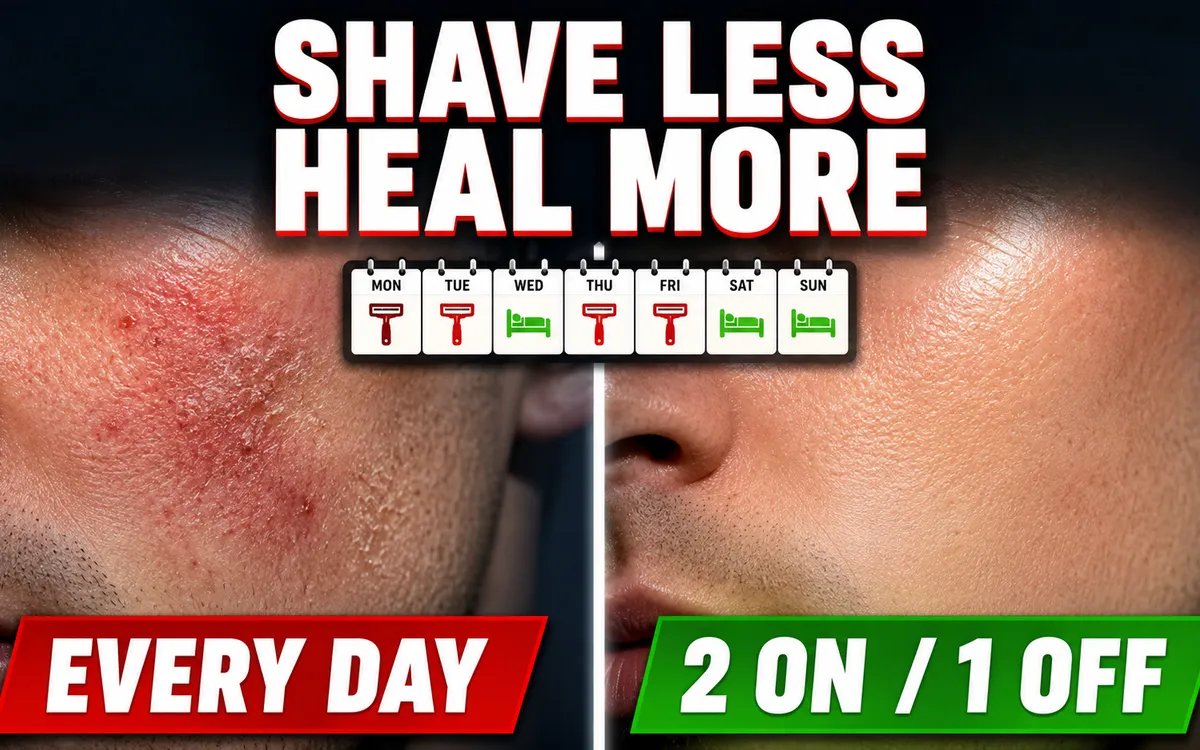
The skin on your face is not designed to be scraped with a blade every twenty-four hours. It can tolerate it, most of us have been doing it for decades without visible consequences, but tolerating is not the same as recovering. Daily shaving keeps the skin barrier in a permanent low-grade injury state that shows up as tightness, sensitivity, redness, and the kind of dull, tired look that no aftershave balm ever quite fixes.
The correction is not a better razor. The correction is a rest day. And the dermatology behind that is more settled than the wet-shaving corners of the internet usually give it credit for.
What Actually Gets Damaged
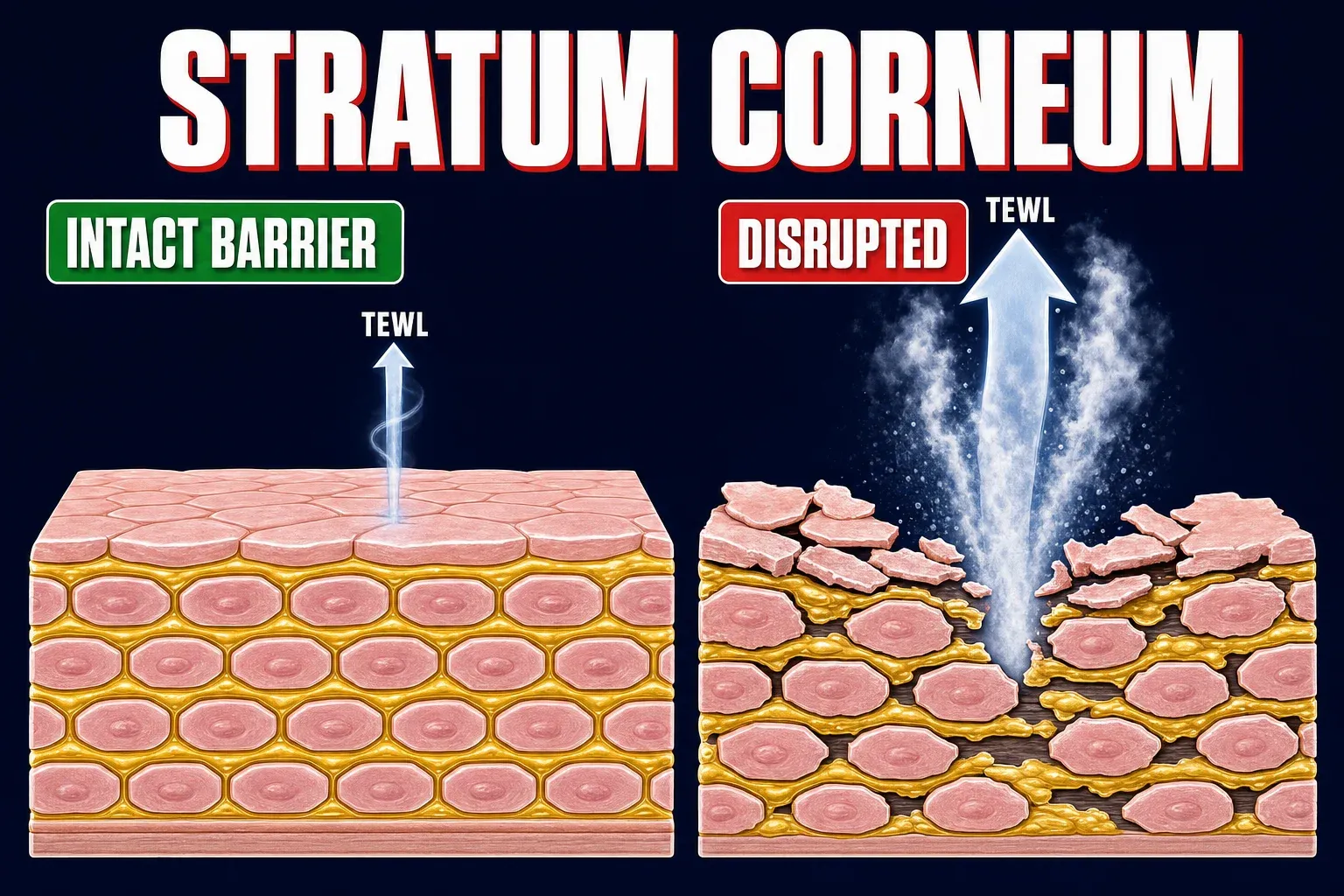
Every shave removes a thin layer of the stratum corneum, the outermost layer of the skin, along with the beard hair. The stratum corneum is not dead flat cells stacked like shingles the way high-school biology diagrams suggested. It is a living-adjacent structure of corneocytes glued together by a specific mix of ceramides, cholesterol, and free fatty acids. Together those lipids form the barrier that keeps water inside your body and irritants outside.
When the barrier is intact, water evaporates from the surface at a slow, steady rate that dermatologists measure as transepidermal water loss, or TEWL. When the barrier is disrupted, whether by a razor, a harsh cleanser, sun, or wind, TEWL spikes. The skin loses water faster than it can replace it, feels tight, gets flaky, and turns reactive to everything you put on it.
A single shave is a barrier insult. Not a big one. But it is a measurable spike in TEWL, and it takes hours to normalize. Under laboratory conditions, uncomplicated shaving without irritation can bring TEWL back near baseline within a day. Repeated or aggressive shaving stretches that recovery well past twenty-four hours, and the lipid matrix underneath, the ceramides that actually hold the barrier together, takes longer than the surface reading suggests.
The twenty-four-hour myth is that the barrier resets overnight. It does not. The surface number normalizes on that scale under best-case conditions. The underlying repair does not.
The 2-On, 1-Off Cadence
Give the barrier a full rest day roughly every third shave, and something interesting happens. The tight, glassy feel the day after shaving eases. The pink patches on the neck fade. Aftershaves that used to sting stop stinging. Products that used to sit on top start absorbing. Small changes, individually. Cumulatively, a face that looks less inflamed and behaves more predictably.
The cadence that works for most shavers is two on, one off. Shave Monday and Tuesday, rest Wednesday. Shave Thursday and Friday, rest Saturday. Shave Sunday if you want, rest Monday. It is not rigid. What matters is that the barrier gets a full day, ideally more, at some point in every three-day window.
For coarse-bearded shavers whose growth is aggressive, three on, one off is workable. For fine-bearded shavers or anyone with reactive skin, one on, one off is worth trying for a month to see where the baseline actually sits when the skin is not chronically under attack.
The tell that the cadence is working is not that the skin looks amazing on the rest day. It is that the shave the morning after the rest day is dramatically smoother, tugs less, and produces less alum sting. That is the barrier having actually recovered rather than being papered over with aftershave balm.
The Objection
The objection is professional. Guys with client-facing jobs feel like they cannot show up with a day of growth. Fine. There is a version of the cadence that works around that.
The first move is to soften the daily damage. A milder razor and a smoother blade cut roughly the same amount of hair with roughly half the barrier insult. The Merkur 34C is the classic mild recommendation, a two-piece head with a modest blade gap that is nearly impossible to hurt yourself with once you stop pressing. The Edwin Jagger DE89 is the same tier at the same price. If a slightly closer shave is required, the Merkur 37C slant tilts the blade to give a scything cut with less pressure, which many barbers consider the sweet spot for coarse beards on daily rotation.
Blade choice matters more than most shavers think. Feather Hi-Stainless is legitimately the sharpest daily blade, and on tough skin it is spectacular. On skin you are trying to protect, it is the wrong tool. A Gillette Silver Blue or a Personna Lab Blue cuts almost as clean with a smoother edge that leaves less microtrauma behind. Astra Superior Platinum (green) is the cheap, forgiving default, and a hundred-blade pack lasts close to two years even on daily use.
The second move is a one-pass shave on daily days and a two-pass shave only after a rest day. One pass with the grain is not the closest shave possible, but it is close enough for a normal office day, and it removes maybe forty percent of the barrier insult of a two-pass shave. Save the against-the-grain cleanup pass for mornings when the barrier has had a day to recover.
The third move is what happens on the rest day. Because a rest day is only a rest for shaving. It is a working day for the barrier if you help it along.
The Rest-Day Kit
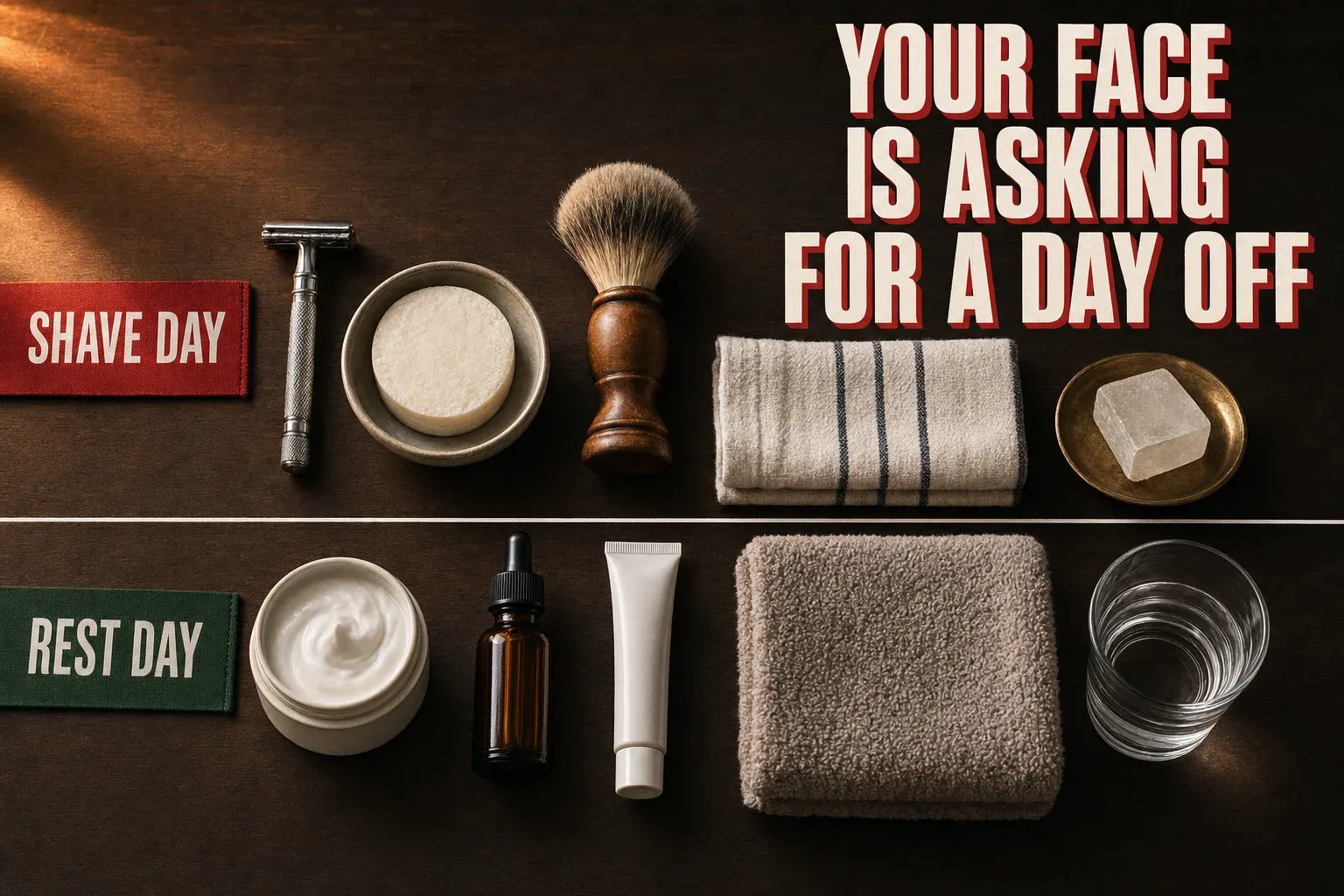
On the day you do not shave, you still cleanse and moisturize. The point is not to leave the skin alone, it is to leave the razor out of the equation while feeding the barrier what it needs to actually rebuild.
Wash with a gentle, non-foaming cleanser or a bar formulated for reactive skin. Skip anything with sulfates on rest days, they strip lipids and undo the work of the day off. Cetaphil and CeraVe Hydrating Cleanser are the drugstore standards. The Cerave Hydrating Cleanser is the one dermatologists reach for by default because it is non-foaming and preserves the surface lipids the barrier is trying to rebuild.
After the cleanse, apply a ceramide-based moisturizer. Ceramides are one of the three lipid families that make up the barrier itself. Applying them topically has genuine evidence behind it, unlike most skincare category claims. CeraVe Moisturizing Cream is the cheap, unglamorous, dermatologist-recommended default. La Roche-Posay Toleriane Double Repair Face Moisturizer is the tier up. Both contain ceramides plus the humectants (glycerin, hyaluronic acid) that pull water into the skin and hold it there.
If the skin runs oily, use a niacinamide serum after the cleanse and before a lighter moisturizer. Niacinamide at five percent has a decade of clinical data behind it for barrier repair, TEWL reduction, and calming visible redness. The Ordinary Niacinamide 10% + Zinc 1% is the cheap workhorse. CeraVe Facial Moisturizing Lotion PM stacks niacinamide into a light non-comedogenic base.
For hot, dry, or windy days on which the barrier is under external attack too, a plain unscented balm on top locks the moisture in. Aquaphor Healing Ointment is the medical-grade default. Vanicream Moisturizing Cream is the fragrance-free ceramide-based alternative for anyone who dislikes the greasy feel of petrolatum.
Nothing on the rest day should sting, tingle, foam heavily, or smell like a barbershop. Aftershave splashes, alcohol-based tonics, and menthol prep products all belong on shave days. The rest day is repair, not stimulation.
When You Cannot Skip
Some shavers genuinely cannot rest. Military, tightly-regulated professional settings, or beards that come in fast enough that skipping a day is not cosmetically viable. There is still a version of the barrier-repair protocol that works.
Shift the entire routine to be as low-insult as possible. Mild razor. Smooth blade. One pass with the grain, only. Skip the second pass entirely on weekdays and save two-pass shaves for one weekend day. Use a slick, high-quality soap that reduces friction, Proraso Green or Stirling Bay Rum are the cheap standards, both lather well and are easy on reactive skin. Follow with a cold rinse to blunt the inflammation cascade, an alum block, and a ceramide-forward balm rather than an alcohol splash. The Proraso After Shave Balm White (oatmeal and green tea) is designed exactly for this scenario. The Nivea Sensitive Post-Shave Balm is a drugstore alternative that a lot of dermatologists quietly recommend for the same reason: it is fragrance-free, alcohol-free, and heavy on humectants.
Even without a rest day, that routine cuts the daily insult roughly in half. It is not as good as an actual rest day. It is much better than a Fusion Pro and a cheap gel.
The Payoff Timeline
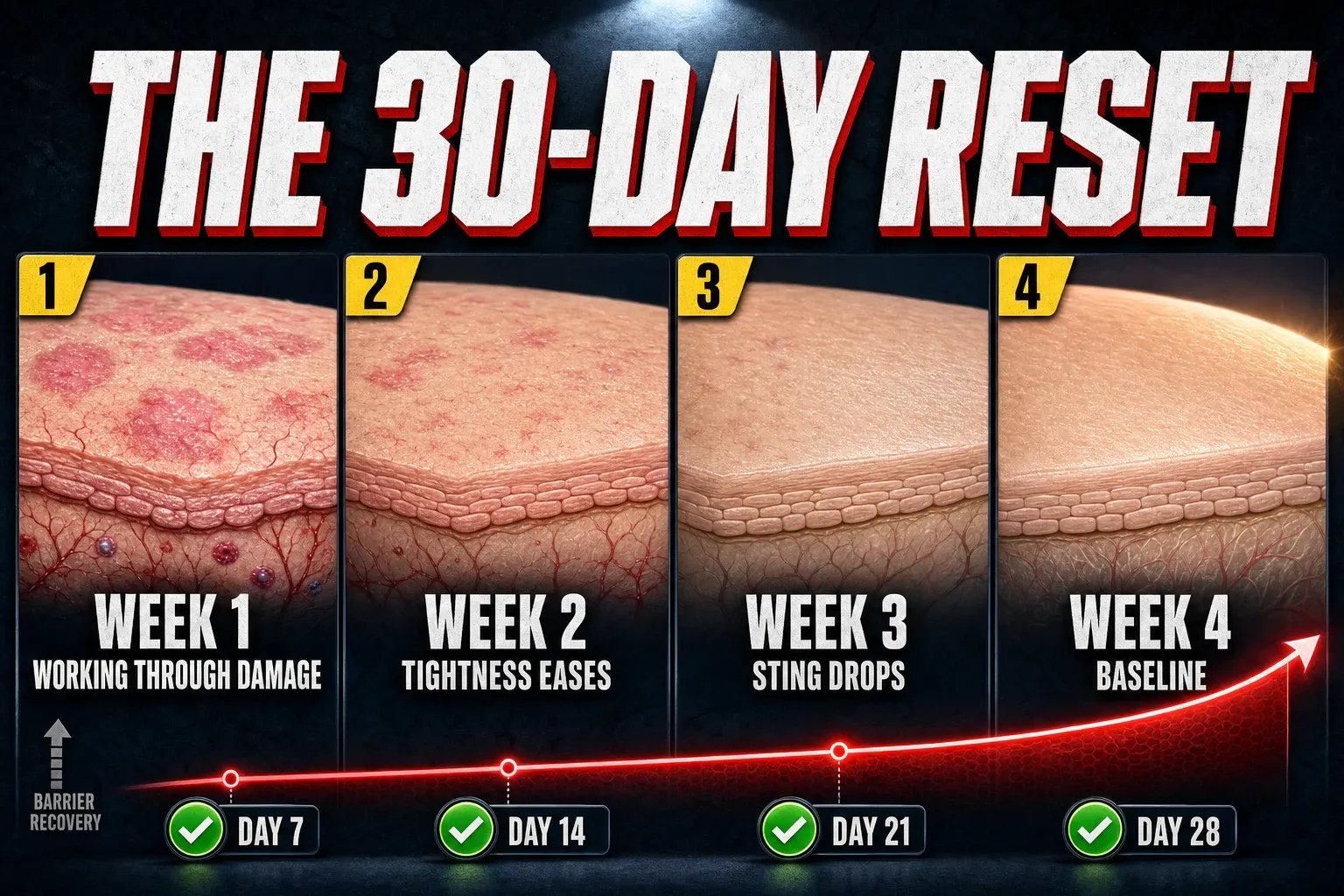
Do not judge the change on day three. The stratum corneum turns over on roughly a four-week cycle, so the visible payoff of a better cadence and a better rest-day routine takes about that long to show up. The first week is the skin working through the damage it already had. The second and third weeks are when the tightness fades and the aftershave sting starts dropping. By week four, most shavers notice they need less product, the pink patches on the neck are gone or nearly gone, and the shave itself feels different, less like scraping and more like sliding.
If nothing has changed at week six, the issue is not cadence, it is something else. That is the point to see a dermatologist and rule out seborrheic dermatitis, rosacea, or contact dermatitis that a rest day cannot fix on its own.
The Bottom Line
Daily shaving is not going to give you a bad face by itself. But it removes an option most shavers do not know they have. Skipping a day is not laziness, it is barrier maintenance. Two on, one off, with a rest-day routine that actually rebuilds rather than punishes, will give you a smoother shave and a calmer face inside a month.
Your skin is not asking for a better razor. It is asking for a day off.
Frequently asked questions
Is shaving every day bad for your skin?
It can be, because shaving is mildly abrasive and the skin barrier needs time to recover. Shaving daily without recovery is what leaves many people permanently slightly irritated.
How often should I shave?
A two-on, one-off cadence suits most skin: shave two days, take the third off. It gives the barrier time to recover while keeping you presentable.
How long does skin take to recover after shaving?
The outer layer turns over on roughly a four-week cycle, so a better cadence takes about that long to show its full payoff. The first week is the skin working through damage it already had.
What should I do on a rest day?
Keep it simple and supportive: gentle cleansing and a moisturiser that helps the barrier rather than strips it. The point of the day off is to stop taking anything away.
What if my skin does not improve?
If nothing has changed after about six weeks, the problem is probably not cadence. That is the point to see a dermatologist and rule out conditions like seborrheic dermatitis, rosacea or contact dermatitis.
Happy shaving.