

Splash First, Balm Second: The Science Settles It
The order debate in wet shaving has a real answer, and it is not preference. Aftershave splash goes on first. Balm goes on second. The order is decided by what each product is built to do and by how skin actually absorbs what gets put on it. Tradition lined up with the science a long time before anyone had a name for the science.
What each product actually does
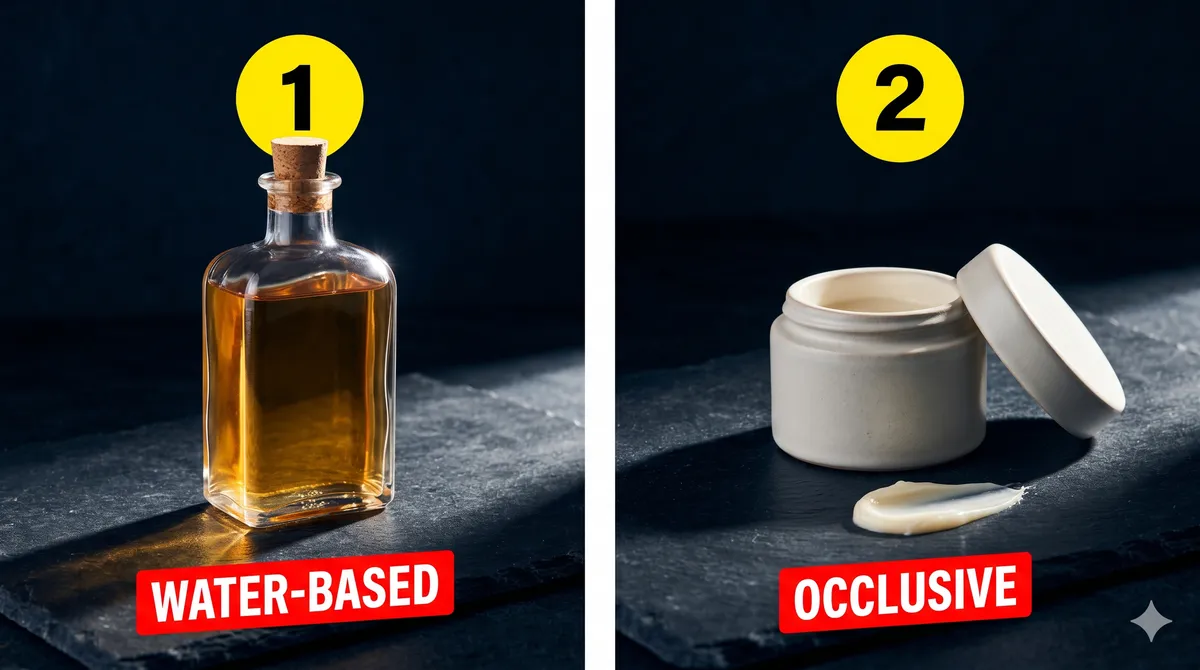
A traditional aftershave splash is a hybrid. Part toner, part astringent, part antiseptic, sometimes a hit of menthol for the cooling finish. The base is mostly water and short-chain alcohol, with witch hazel, glycerin, and fragrance carried in. It is built to land on freshly shaved skin and do its job in the seconds after a shave: cleanse small nicks, tighten the surface, calm post-shave irritation, and close the routine out. The actives need direct skin contact to work.
A balm is in a different category. It is a moisturizer with two jobs. Deliver emollients that smooth and soften the skin, and put down an occlusive layer that locks water in. The ingredient list reads like a moisturizer because that is what it is. Shea butter, jojoba, ceramides, allantoin, sometimes dimethicone or beeswax. Balm is the last step because its purpose is to seal.
If a product is designed to seal, putting something on top of it works against the design. If a product is designed to land on bare skin, putting it under a sealing layer means it never reaches bare skin in the first place. The functional definitions decide the order before any debate starts.
The dermatology principle
Outside of wet shaving, the same layering question has a settled answer in clinical dermatology. Skin care goes on in order from thinnest and most water-based to thickest and most occlusive. The Cleveland Clinic puts it directly: order the routine from lightest to heaviest, because the wrong order means active ingredients cannot reach the skin. The American Academy of Dermatology’s consumer guidance walks the same sequence. Treatments first, moisturizer second, never the other way around.
Harvard Health Publishing explains the mechanism. Occlusive ingredients form a film on the surface of the skin that reduces transepidermal water loss, the rate at which water evaporates out of the stratum corneum. The film is the point. The film also blocks whatever sits on top of it from getting through. Per the NIH-published StatPearls clinical reference, a petrolatum film cuts transepidermal water loss by roughly 99 percent. Petrolatum is the gold standard occlusive, but the same mechanism scales across the category. A balm forms a thinner version of the same film.
Apply the rule to the shave routine and the answer falls out. The splash is the water-based, lightweight, treatment step. The balm is the occlusive sealing step. Splash first. Balm second.
The alcohol part
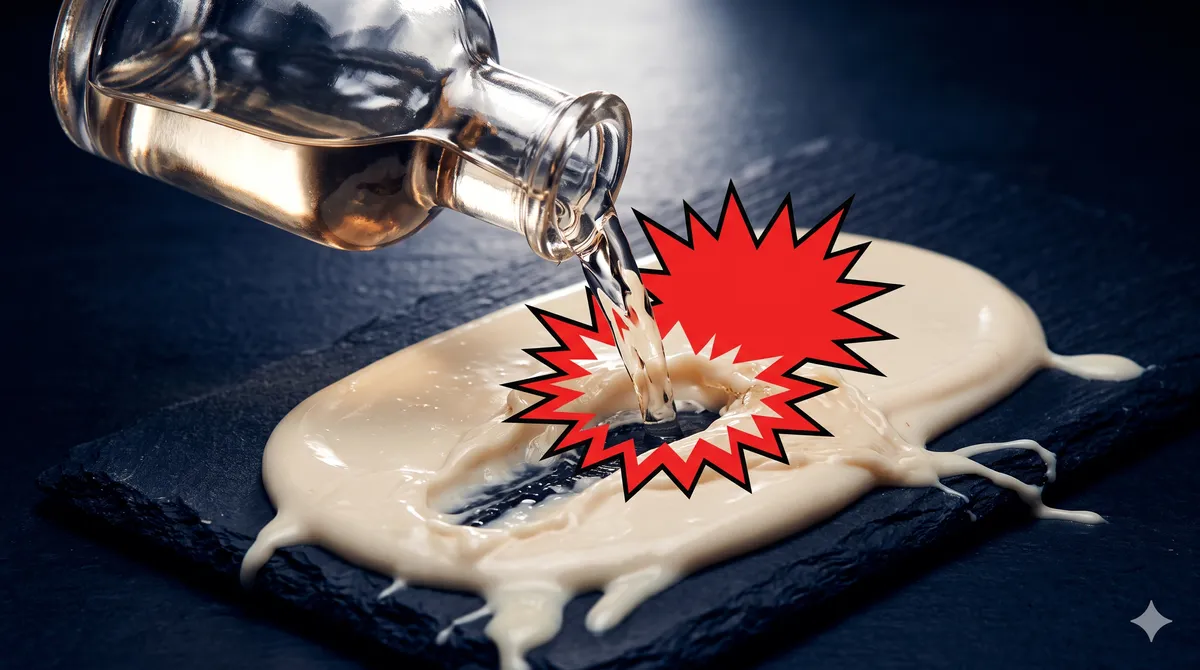
Short-chain alcohols, the kind in an aftershave splash, are mild solvents. Peer-reviewed work (Cartner et al., International Journal of Cosmetic Science, 2017) has shown that repeat alcohol exposure denatures lipid enzymes in the stratum corneum and increases transepidermal water loss when applied at hand-sanitizer frequencies. On intact skin in a once-a-day shaving routine the effect is small. But the same chemistry says something else about the order question. Put a balm on bare skin and then pour an alcohol splash over it, and the alcohol dissolves the emollient film that just went down. The balm gets wasted. The splash gets blunted. The skin gets the worst of both products instead of the best of either.
The bicycle-chain analogy that comes up in the group is more right than it sounds. Putting balm on before the splash is lubricating the chain and then washing it down with solvent.
Why the tradition was right
Italian and Spanish barbershops were running splash-only and splash-first routines for a century before anyone could measure transepidermal water loss in a lab. Barbershop tradition across Europe and the United States put the splash on the chair and the balm, if it was offered at all, on the counter for after. Trial and error works. Skin tells you. A balm laid over a splash sits where it is supposed to sit. A splash poured over a balm runs off and leaves the skin sticky.
The artisan side of the hobby tracks the same conclusion. Barrister and Mann, on the record about this exact question in their own brand blog: do not put balm on first and then the splash. The brand frames it as wasting product and irritating skin. They are right.
The edge cases
A few things the rule does not apply to. Splash-only is fine. Balm-only is fine. The order question only exists when both products are in the routine.
Alcohol-free splashes built on witch hazel or rose water still go on first. The layering principle is about what each product does, not how aggressive the splash is. A gentle witch-hazel splash is still water-based and still does its work on bare skin.
Sensitive or chronically dry skin can run an alcohol-free splash plus a balm, or skip the splash entirely and run balm only. Board-certified dermatologists recommend alcohol-free formulas for reactive skin. None of them recommend putting a balm on first and then chasing it with a splash.
What the rule does not allow is the balm-first-then-splash sequence. It has no dermatological backing. It is not in the European barbershop tradition, not in the American barbershop tradition, not in any artisan brand’s house guidance, and not in any peer-reviewed skincare reference. It is forum folklore that survives because the wrong order is not painful enough to correct itself.
The routine
The order, with nothing else added:
- Finish the shave.
- Rinse with cool water.
- Pat the skin down, leave it slightly damp.
- Apply the splash. Cup it in the hands, press it into the skin, let it land.
- Let it dry for a minute or two.
- If the skin needs more moisture, apply a balm.
The slight dampness in step three matters. Harvard Health flags it for moisturizers generally: emollients and occlusives work better when there is still water on the skin for them to lock in. The splash carries a small amount of its own water with it. Apply the balm while the skin is cool and faintly damp from the splash, and the seal is more complete than on bone-dry skin.
Settled
The traditional order is right because it matches the skin biology, not just because it is traditional. Splash first, balm second, in that order. Some debates in wet shaving are real. This one was answered before the question was asked.
Frequently asked questions
Do you put aftershave splash or balm on first?
Splash first, balm second. The order is decided by what each product is built to do. A splash is water-based and needs direct contact with bare skin to cleanse nicks, tighten the surface and calm irritation. A balm is a moisturizer whose job is to put down an occlusive layer that seals water in, which is why it goes last.
Why does the order matter?
Because a sealing product blocks whatever sits on top of it. Clinical dermatology applies the same rule to skincare generally: go from thinnest and most water-based to thickest and most occlusive, because the wrong order means active ingredients cannot reach the skin. An occlusive film reduces transepidermal water loss, and it blocks absorption in both directions.
What happens if you put balm on before the splash?
The alcohol in the splash dissolves the emollient film that just went down. The balm gets wasted, the splash gets blunted, and the skin gets the worst of both products instead of the best of either. Short-chain alcohols are mild solvents, which is exactly the wrong thing to pour over a layer designed to seal.
Does the rule still apply to alcohol-free splashes?
Yes. An alcohol-free splash built on witch hazel or rose water still goes on first. The layering principle is about what each product does, not how aggressive the splash is, and a gentle witch-hazel splash is still water-based and still does its work on bare skin.
Do I have to use both a splash and a balm?
No. Splash-only is fine and balm-only is fine, and the order question only exists when both are in the routine. Sensitive or chronically dry skin can run an alcohol-free splash with a balm, or skip the splash and use balm alone.
Happy shaving.