

What Is Wet Shaving? The Complete Introduction
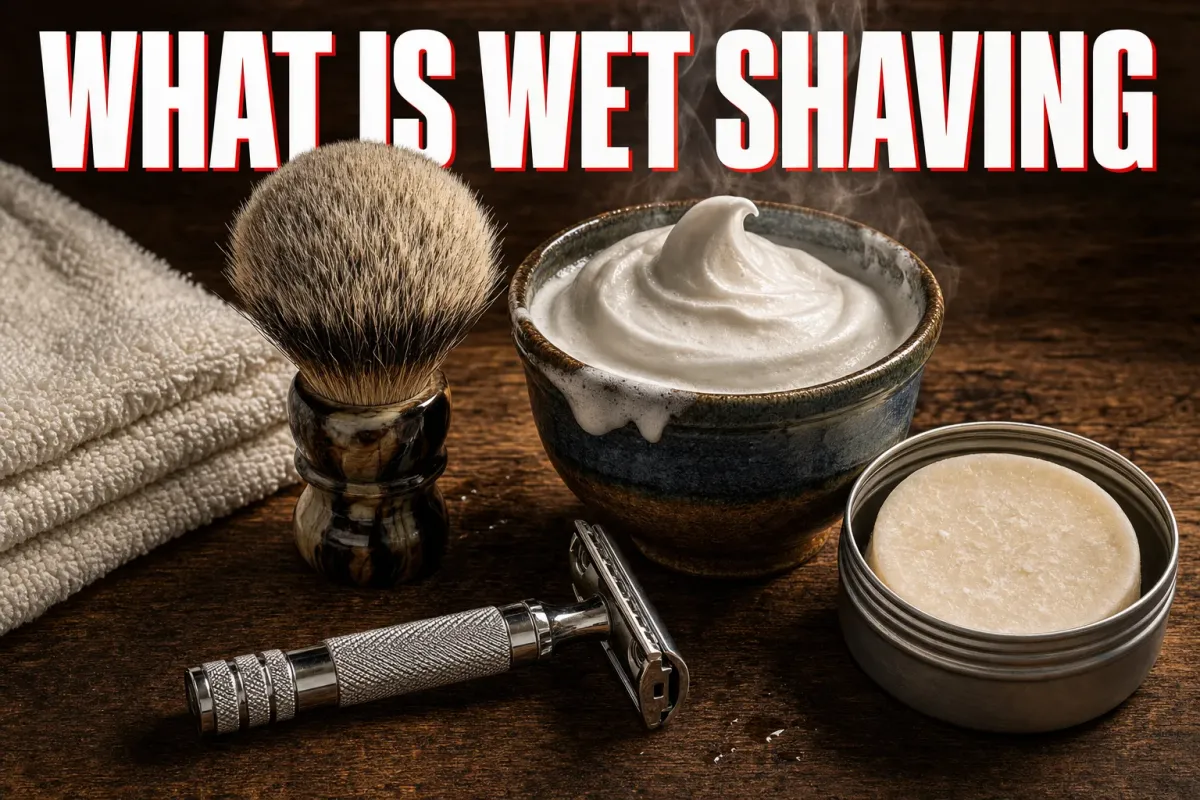
Wet shaving is the old way of shaving done deliberately: warm water, real lather built with a brush, and a single blade you control. That is the whole definition. No batteries, no five-blade cartridges, no canned foam that smells like a chemistry set. It is how nearly every man shaved for the first half of the twentieth century, and it never actually stopped working; it just got out-marketed.
The reason a century-old method keeps growing in the age of subscription razors is simple: it produces closer, more comfortable shaves for a fraction of the ongoing cost, and it turns a chore into ten minutes that are actually yours. Here is what the term really means, what you need, and how to start.
The Definition, Properly
“Wet” shaving means the beard is genuinely wet: softened by warm water and covered in a lather that is built, not sprayed. In practice the term has come to mean traditional shaving with a brush, a lather from real soap or cream, and a single-blade razor, usually a double-edge safety razor, sometimes a straight razor for the committed.
Each piece has a job. The warm water does the heavy lifting, because hair that has absorbed water cuts dramatically easier than dry hair. The brush builds a lather that lifts stubble and lubricates the skin, doing far more than foam from a can. And the single blade cuts each hair once, cleanly, at the surface, which is the core mechanical difference from a cartridge dragging five edges across your face per stroke; we took that comparison apart blade by blade in our cartridge takedown.
The Four-Piece Kit
Everything wet shaving needs fits in four objects. A razor: the Merkur 34C is the classic first choice, and our beginner shortlist walks the honest options. Blades: they cost pennies, and a sampler finds the brand your face likes; the Astra Superior Platinum is the usual starting point. A brush: a soft synthetic like the TWSS Black G5 needs zero care knowledge on day one, and the brush guide covers every fiber from there. A soap: Proraso Green is the beginner standard, with the soap chapter mapping what comes after.
That whole kit runs about the cost of a year of cartridge refills, and the razor and brush last decades. We did the full cost math elsewhere; the short version is that after year one, wet shaving is nearly free.
What a Shave Actually Looks Like
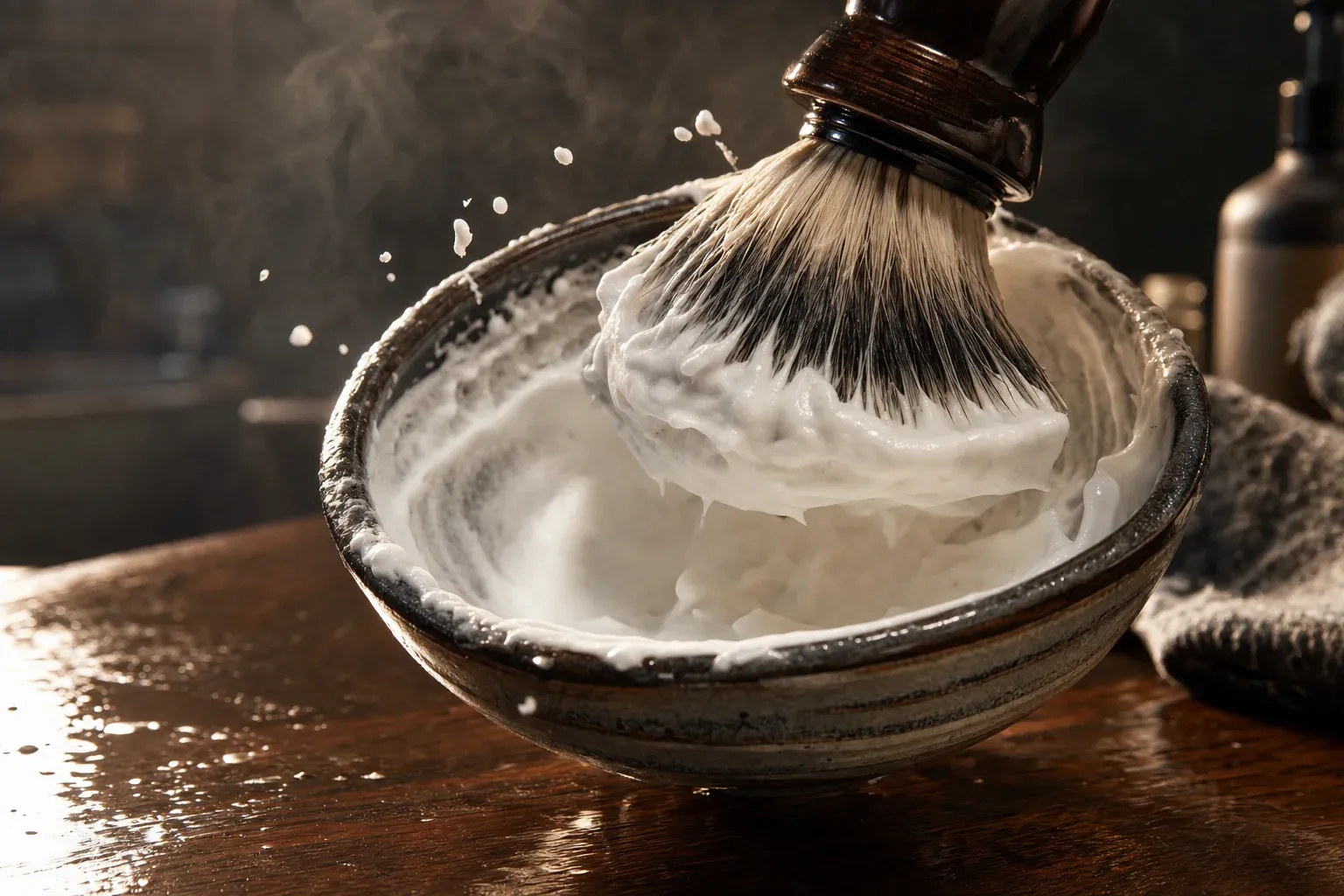
The ritual is simpler than the vocabulary suggests. Shower or hold a warm, wet towel to your face. Build a lather with the brush, either in a bowl or straight on your face, and paint it on. Shave with the grain in short, light strokes, letting the razor’s weight do the work at about a thirty-degree angle. Re-lather and repeat across the grain if you want closer. Rinse cool, and finish with an aftershave or balm.
The learning curve is real but short: the first week feels deliberate, the second clicks, and within a month it is muscle memory. The complete beginner guide walks every step with diagrams, and the structured Beginner’s Path takes you from first razor to troubleshooting in eleven short chapters.
Why People Switch, and Why They Stay
Most people arrive for one of three reasons. Their skin is angry, because razor burn, ingrown hairs, and bumps trace back to multi-blade tug-and-cut and disappear for many shavers with a single blade. Their wallet is tired, because cartridge refills are one of the most marked-up products in the store. Or they simply want the ritual, ten unhurried minutes with warm lather and a good tool at the start of the day.
They stay for a fourth reason nobody predicts: it becomes a hobby. Soaps come in a thousand scents made by real artisans, razors become small mechanical jewelry, and communities like the Shave Dad group turn a bathroom chore into a shared craft. Nobody warns you about the soap shelf. There is always a soap shelf.
Common Beginner Worries, Answered
Is it dangerous? No. The “safety” in safety razor is literal: the guard makes serious cuts hard. Expect a nick or two the first week, the kind a styptic pencil erases, and less irritation than the cartridge was giving you. Is it slow? A practiced wet shave runs ten to fifteen minutes; a rushed two-pass shave, five. You spend a little more time and get a much better shave for it. Is it hard? It is a small skill: angle, pressure, and grain, learned in a couple of weeks, kept for life.
The Bottom Line
Wet shaving is warm water, real lather, and one blade under your control. It costs pennies per shave after the starter kit, treats skin better than any five-blade system, and turns a daily chore into something worth doing well. Start with the four-piece kit, give the technique a month, and see why the old way never actually went anywhere.
Frequently asked questions
What does wet shaving mean?
Shaving with a genuinely wet, water-softened beard and a lather built from real soap or cream with a brush, cut by a single-blade razor, usually a double-edge safety razor. The name distinguishes it from electric shaving and from canned-foam cartridge shaving.
What do you need to start wet shaving?
Four things: a mild double-edge safety razor like the Merkur 34C, a pack or sampler of blades such as the Astra Superior Platinum, a shaving brush, and a real shaving soap or cream like Proraso Green. The whole kit costs about a year of cartridge refills and the hardware lasts decades.
Is wet shaving better for your skin?
For many shavers, noticeably. A single blade cuts each hair once at the skin's surface, while multi-blade cartridges pull hair up and cut it below the surface, which is where much razor burn and many ingrown hairs come from. Proper lather and warm-water prep also protect the skin far better than canned foam.
Is wet shaving cheaper than cartridge shaving?
Dramatically, after the starter kit. Double-edge blades cost pennies each versus several dollars per cartridge, and the razor, brush, and bowl are one-time purchases that last decades. Soap is the only meaningful recurring cost, and a puck lasts months.
How long does it take to learn wet shaving?
The first week feels deliberate, the second week clicks, and within a month the technique is muscle memory. The skill amounts to three things: a roughly thirty-degree blade angle, no added pressure, and shaving with the grain before adding other directions.
Is shaving with a safety razor dangerous?
No. The safety bar between the blade and your skin makes serious cuts genuinely difficult. Beginners typically collect a small nick or two in the first week, less trauma than an aggressive cartridge shave, and technique quickly makes even those rare.
Happy shaving.