

The Ingrown Hair Fix Nobody Talks About (And It Isn't Your Razor)
The razor is not why you get ingrown hairs. The razor is the last thing that happens before the ingrowns show up, so it takes the blame, but it is not the cause. Much of the problem is what happens in the ten minutes before the shave and the ten minutes after. Three steps fix it, and you can start tonight with the razor you already own.
What an Ingrown Hair Actually Is
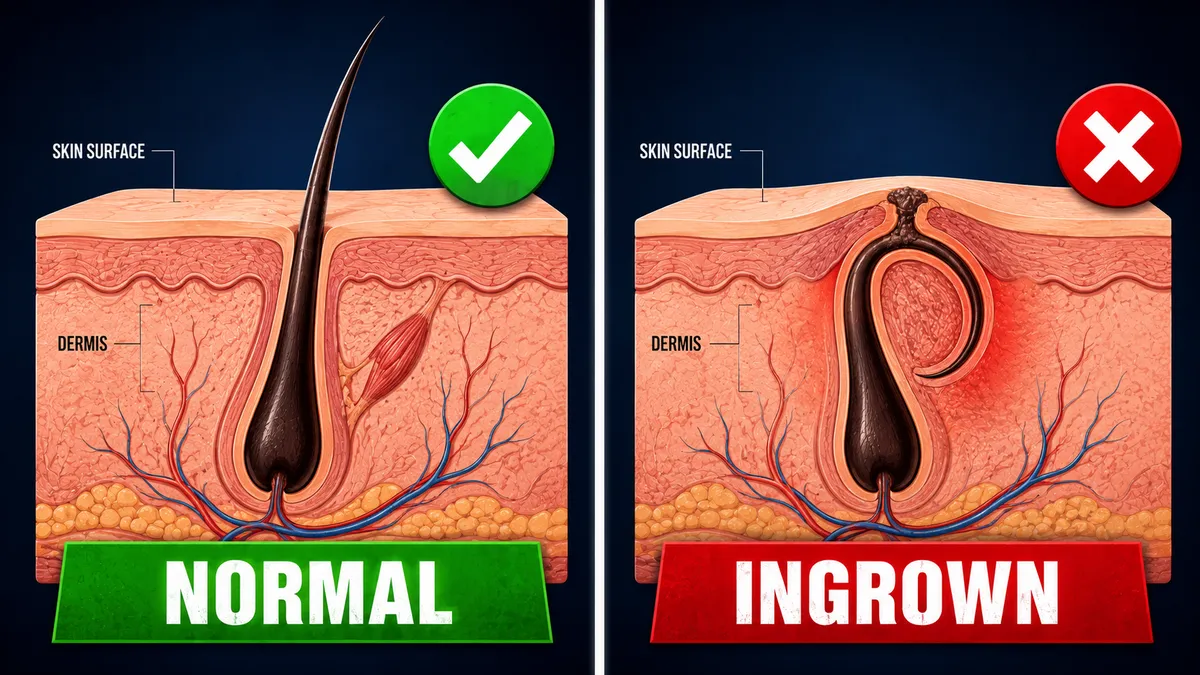
Skip this if you already know. A hair follicle is a small pit in the skin. Normally the hair grows straight up out of the pit and off your face. When the pit gets plugged with dead skin or the hair curves as it emerges (common on coarse or curly beards), the hair either grows sideways under the skin or grows out of the pit and then curls right back into the skin like a fish hook. The skin reads it as a foreign object and inflames. That is the bump.
The medical name for chronic razor-bump ingrowns is pseudofolliculitis barbae. Dermatologists have understood this for decades. Cleveland Clinic and the American Academy of Dermatology both frame it as a plug-and-curl problem, not a razor problem. What causes the plug is dead skin sitting where it shouldn’t. What causes the curl is beard geometry you were born with. Neither of those is a razor.
Why Everyone Blames the Razor Anyway
The razor is the last visible action. Cause and effect feels close because it is close in time. Twenty minutes after the shave, the bumps show up, so the shave gets the blame.
The other reason the razor gets blamed: five-blade cartridges do make it worse. The first blade lifts each hair away from the skin under the tension of the second blade grabbing it. The remaining blades cut that lifted hair below skin level. On a coarse beard, that below-skin cut turns into a below-skin curl and a fresh ingrown. This is called the hysteresis effect and Gillette described it in patents as a feature.
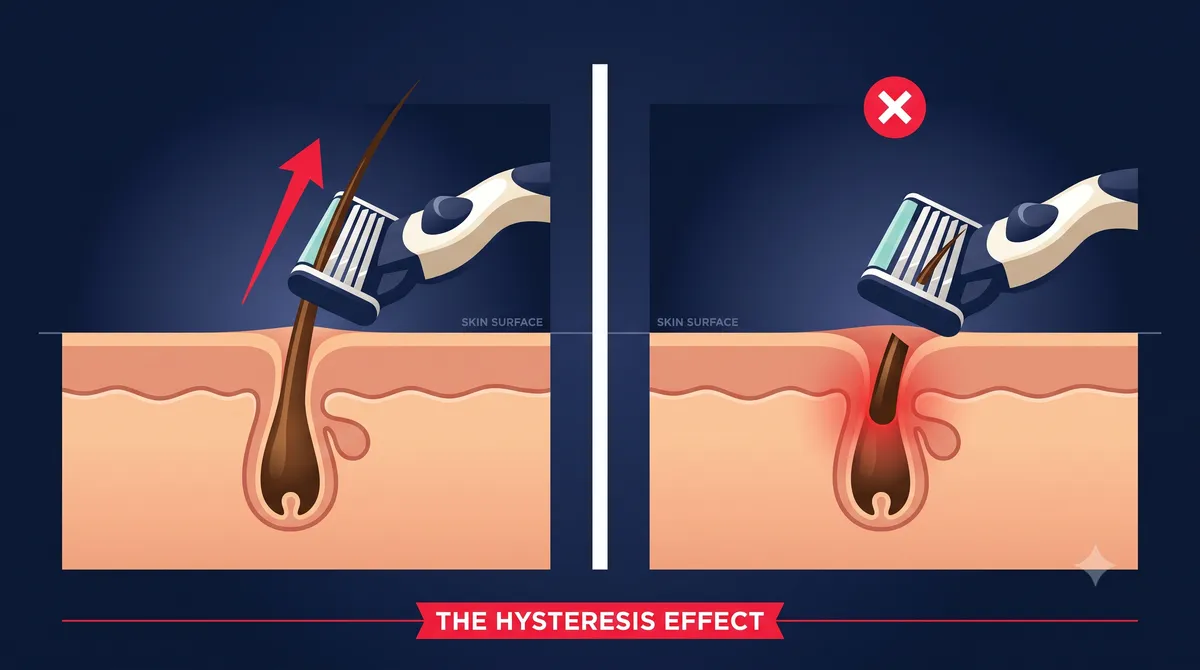
But even a single-blade razor cannot fix a plugged follicle. And a five-blade cartridge on well-exfoliated, well-conditioned skin with a good recovery routine will produce far fewer ingrowns than a single-blade razor on skin that has been ignored on both ends. Which is why “just switch to a DE” is the wrong first answer.
The right first answer is the routine.
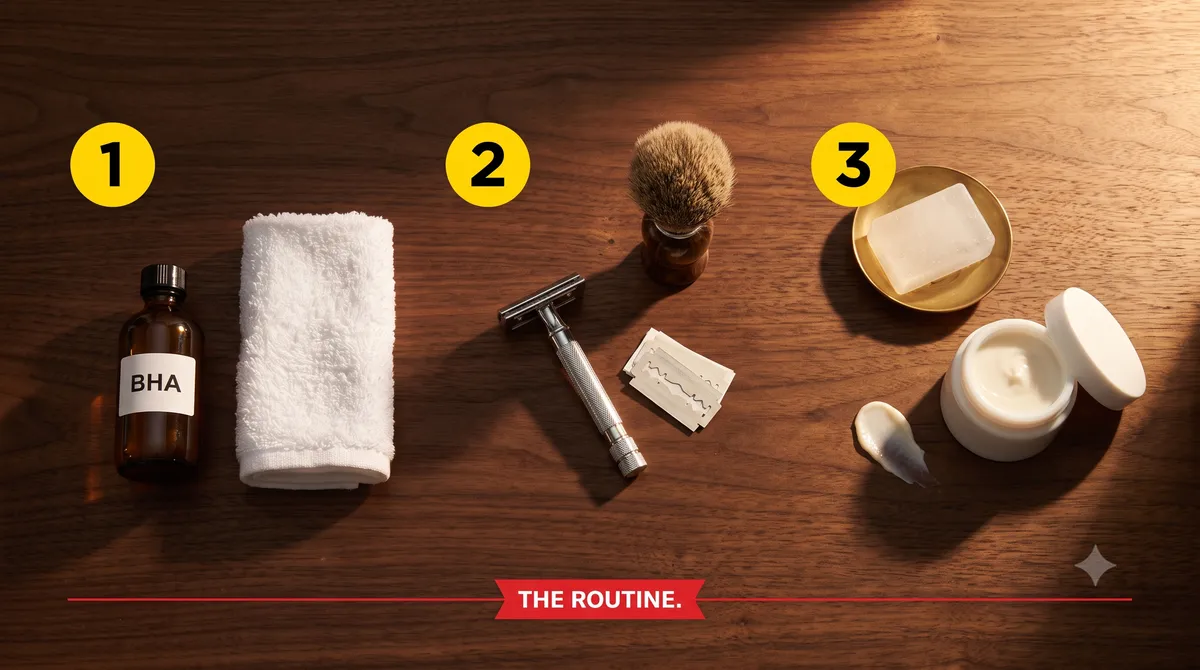
Step 1: The Night Before, or Ten Minutes Before
Two things need to happen before the razor gets anywhere near your face. Dead skin needs to come off the surface, and the hair needs to soften.
For the dead skin, use a chemical exfoliant with salicylic acid (BHA) or glycolic acid (AHA) the night before you shave. Any drugstore salicylic-acid toner or wipe pad in the 1 to 2 percent range works. Apply it to the beard area after washing, let it dry, do not rinse. Salicylic acid is oil-soluble, so it dissolves the sebum-and-dead-skin plug inside the follicle where a physical scrub cannot reach. This is the load-bearing move of the whole routine. Physical scrubs (loofahs, exfoliating gloves, sugar rubs) are worse for reactive skin because they inflame it further. Skip them.
For the softening, shower with warm water for three or four minutes before you shave, or wrap a hot damp towel around your face for two minutes. Water is what softens beard hair, not heat by itself. Then apply a pre-shave cream. Proraso White Pre-Shave Cream is the classic for sensitive and reactive skin (oatmeal-based, no menthol). Proraso Green Eucalyptus Pre-Shave Cream is for shavers who want a cooling sensation. Proraso Sandalwood Pre-Shave is a richer version of the same idea, with added shea butter for shavers whose skin runs dry. All three are cheap, last months, and do the same job: lock water into the hair shaft so the razor is cutting through something soft.
That is the entire prep. Chemical exfoliation the night before, hot water and pre-shave cream on the morning of.
Step 2: The Shave Itself
Grain matters more than the razor. Beard hair grows in different directions in different places. Under the jaw it usually grows up. On the neck near the Adam’s apple, it often grows sideways or in a swirl. On the cheeks it usually grows down, but not always. Map your own grain with a day of stubble by dragging a fingertip across the skin in all four directions and noting which direction feels smoothest (that is with the grain) and which feels roughest (that is against the grain).
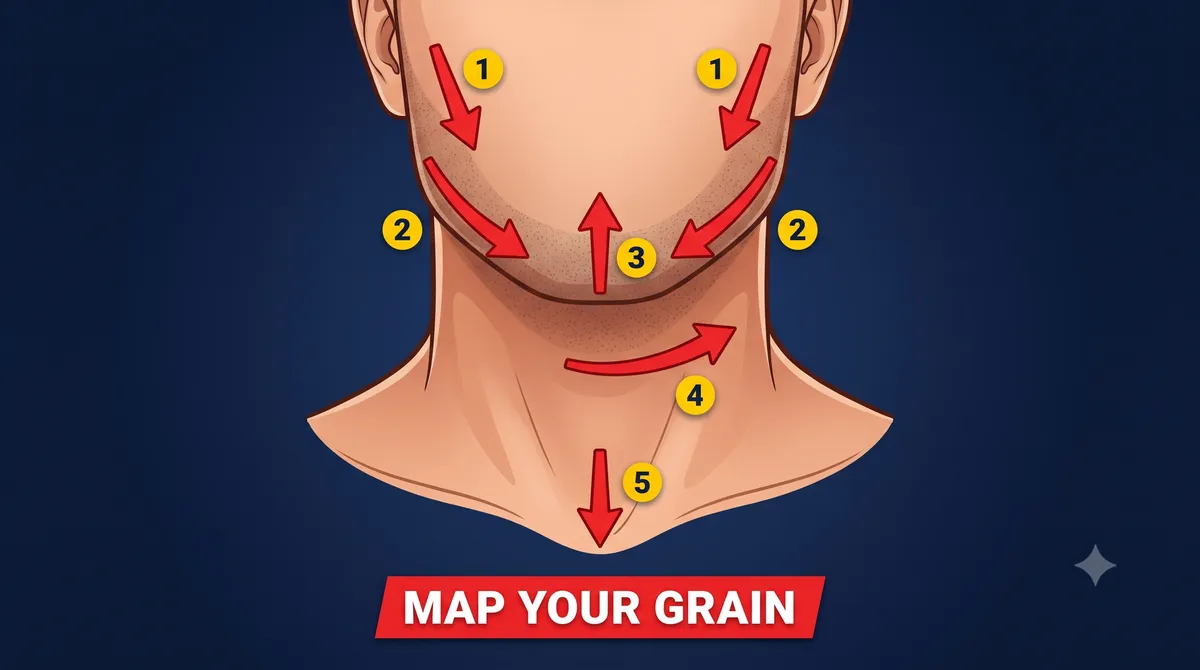
The first pass goes with the grain, everywhere. If your face is truly ingrown-prone, stop there. Two-pass shaves and against-the-grain finishing passes are what convert a manageable beard into a bumpy one. The one-pass shave is not as close, but it is close enough for another twenty-four hours and it will not put your face through the shredder.
The blade angle is thirty degrees off the skin. Steeper and you scrape. Shallower and you tug. If you are using a DE razor, that angle is more or less baked into the head geometry once the razor is flat against the face and you tip the handle out about the width of a finger.
Do not press. The blade weight is enough. Pressing is what causes the microcuts that get infected and become bumps on their own. Every pass over the same spot in the same direction is one more chance for the blade to lift a hair and cut it below the surface, so keep the passes to one per stroke.
None of this requires a specific razor. A Mach 3 done this way is better than a Merkur 34C done wrong.
Step 3: The Sixty Seconds After
The post-shave window is where the routine either seals in what you did or throws it away.
Rinse with cold water. Not because it “closes pores” (pores do not open and close), but because it stops the inflammation cascade that heat kicked off during the shave. Cold water calms the vasodilation and buys you time before the skin overreacts.
Apply an alum block, wet, over the whole shaved area. Alum is potassium alum, a natural astringent that antisepticizes microcuts and, importantly, stings on the spots where the skin is already disrupted. That sting is a diagnostic map of where you shaved too hard. Note those spots. That is where you will lighten pressure or skip the second pass next time.
After the alum dries, apply the same BHA product you used the night before, or a lighter salicylic-acid toner, to keep the follicles clear during the healing hours. Then a calming balm. Proraso After Shave Balm White (oatmeal and green tea) is the standard for reactive skin. Proraso After Shave Balm Blue (aloe vera and vitamin E) is the standard for skin that needs hydration. Both are alcohol-free, so they will not undo the calming work of the cold rinse.
The last part is the hardest and it is what most guys get wrong. Do not tweeze the buried hairs you see later that day. Do not pop the bumps. Do not scrub them. The follicle will resolve most of them on its own within seventy-two hours if you leave it alone. Picking at them is what turns a two-day ingrown into a two-week scar.
The Razor Question (Optional Upgrade)
The three-step routine works with any razor. If you want to go further than the routine alone takes you, then yes, single-blade beats multi-blade for coarse and curly beards. The lifted-then-cut hysteresis problem is real, and a single-blade shave does not create it.
The Merkur 34C HD is the classic mild DE recommendation. The Edwin Jagger DE89 is the same tier at the same price and forgives beginner mistakes better than a sharper razor. Skip the aggressive razors for now; the goal here is to reduce skin insult, not maximize closeness.
For blades, skip Feather Hi-Stainless and other sharp-end blades while your face is still healing. They are wonderful for shavers with tough skin, but on reactive skin they magnify every technique error. Start with Derby Extra, Personna Lab Blue, or Astra Superior Platinum (green). Personna Med Prep is a medical-grade platinum-coated option that some barbers use specifically on reactive skin. All four are gentle, forgiving, and inexpensive enough that a hundred-blade pack lasts close to two years.
The Thirty-Day Reset
Chronic PFB does not clear up in a week. The follicles are already inflamed and there are already ingrowns in various stages under the skin. Give the routine a full thirty days before judging it. Skin turnover runs on a roughly four-week cycle, so the first three weeks are the skin working through the ingrowns it already had. The next month is when the change shows up.
If it does not work at day thirty, talk to a dermatologist about a topical retinoid. Prescription retinoids are effective for stubborn PFB and no over-the-counter routine matches them. But most shavers will not need to get there. Three steps in the right order will do it.
The Bottom Line
The razor is not the problem. Bad prep is the problem. Bad post-shave is the problem. Coarse-beard geometry is the problem. Three steps fix all three of those. The razor comes last, and only after the routine is dialed in.
Your face is not broken. Your routine is.
Frequently asked questions
What causes ingrown hairs from shaving?
The follicle gets plugged with dead skin, or the hair curves as it emerges and grows back into the skin like a fish hook. The skin reads the trapped hair as a foreign object and inflames, which is the bump you see.
Is it my razor causing ingrown hairs?
Usually not by itself. Most of the fix is technique and skincare rather than hardware, though a single-blade razor helps where a multi-blade cartridge hurts, because cartridges are more likely to cut hair below the skin line.
Do single-blade razors help with ingrown hairs?
They help for coarse or curly beards. A single blade cuts the hair at the surface rather than lifting and cutting it below the skin line, which is the mechanism behind a lot of ingrown hairs.
How long does it take for ingrown hairs to clear up?
Give a corrected routine about thirty days. Skin needs time to turn over and settle, so judging a change after a few shaves will not tell you much.
Should I shave over an ingrown hair?
No. Shaving over an inflamed bump irritates it further and can break the skin. Let the area settle, and address the cause with prep, exfoliation and technique rather than shaving through it.
Happy shaving.