

How Many Shaves Per Blade? The One-and-Done Debate
Jeff asked the obvious question. If you’ve already got hundreds of blades in the drawer, why run any one of them past the first shave? Toss it and grab another.
Sixty-seven replies said why.
Why Shave Two Is Often the Better One
Many blade manufacturers apply a thin coating to the edge after sharpening. PTFE is common and well-documented in blade manufacturing generally. The community’s leading explanation for why some shavers notice the first pass feeling slightly rougher than the second or third is that this coating wears in during the initial shave, and the settled edge underneath tends to feel smoother from there. That theory has a real basis in how blades are actually made. It’s not just forum lore.
Call it a theory, though. Some shavers report the opposite: shave one is their sharpest, and each subsequent pass degrades from there. The honest answer is that it varies by blade, razor, and face. Common enough that the standard read in the community is to give any blade at least a second shave before you judge it. Not universal.
A Feather and an Astra SP both change across five shaves, just differently. The Feather can feel aggressive off the foil and considerably smoother by shave two. The Astra might peak early. The only way to find out is to run it more than once.
What the Group Actually Does
The range was wide. Mike uses three shaves per blade. Robert and Wayne land around five to six, which at three shaves a week comes out to roughly two weeks per blade. Charles runs some blades twenty to thirty passes in his adjustable razors and open combs.
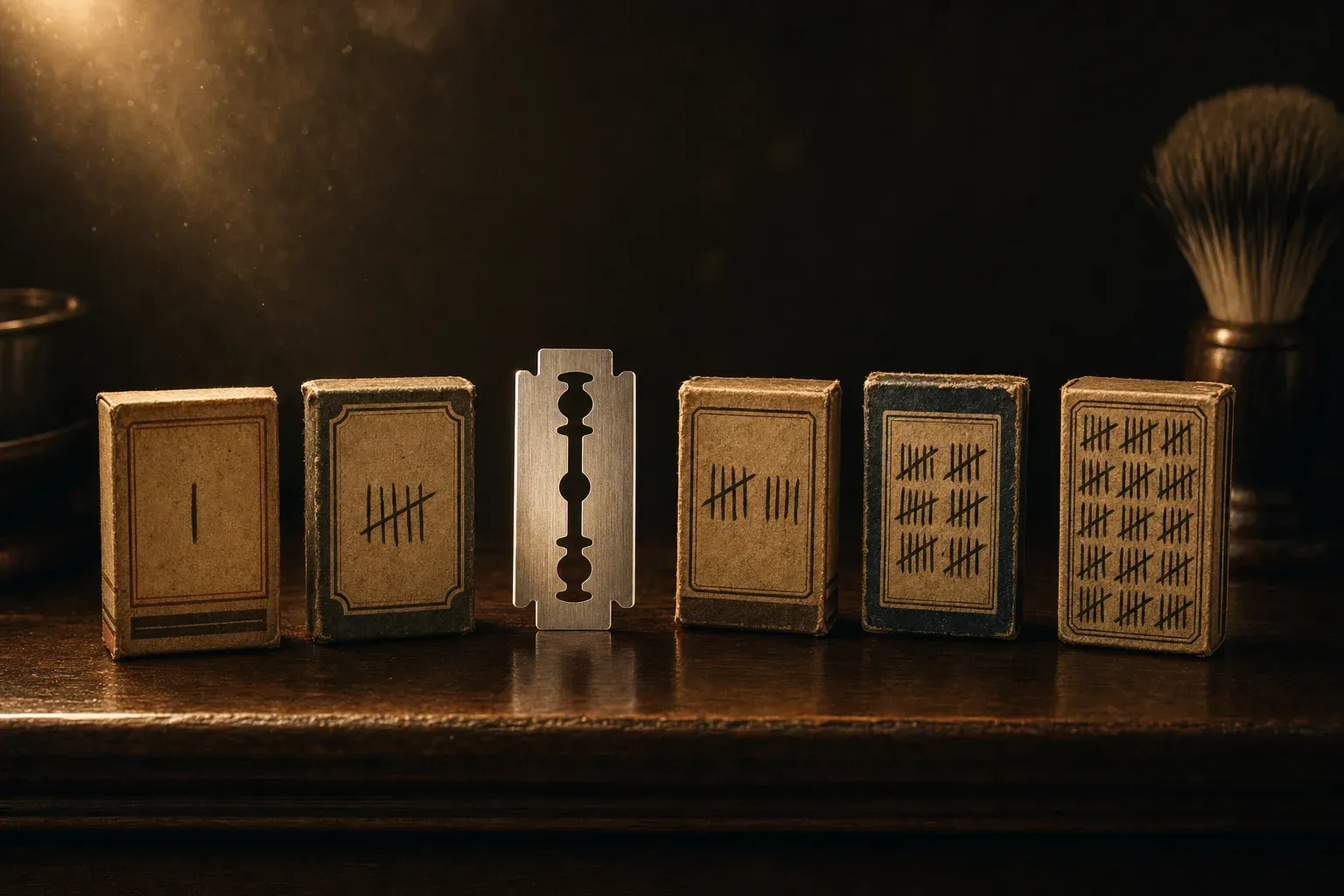
Harry went furthest: twenty-four passes on a single Shark, running three passes per shave across eight shaves. He added “Lol.” Fair enough.
Michelle’s framing is the cleanest version of the argument. You have a shelf full of soaps for variety and rotation, not because you plan to use each one once and move on. Her point is that the same logic applies to blades, and the one-and-done habit doesn’t survive the same test.
Lee’s note about the fourth shave coming back around to roughly first-shave quality is a useful benchmark. For a lot of shavers, two and three are the peak. Four starts to show. Five and beyond depends on the blade and the gear.
When the Razor Changes the Math
Charles’s point about adjustable razors and open combs applies across setups, not just his. The razor you’re running affects how fast a blade wears. A mild geometry puts less mechanical stress on the edge per pass. An aggressive open comb works the edge harder. Same blade, different number of usable shaves.
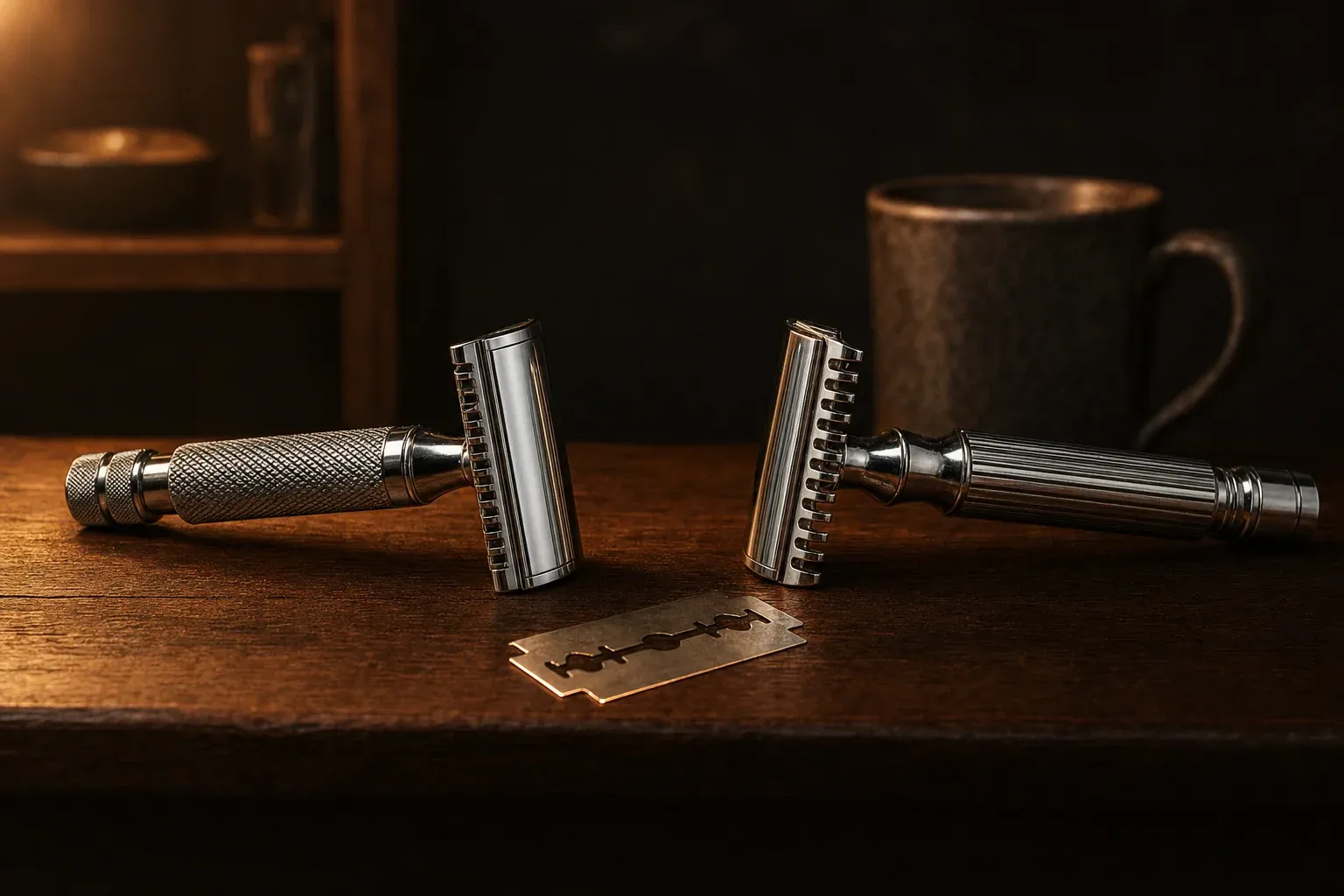
Rules that skip this context don’t account for the setup. Three passes in one razor might be five in another. The blade that lasts six shaves in a Merkur 34C might wear out at three in a more aggressive open comb or a vintage razor run at a steep angle.
Blade type plays into it too. Stainless blades don’t generally hold an edge as long as coated ones under the same conditions. Some coated blades feel noticeably smoother at shave three than at shave one. Some don’t. Testing in your specific razor across multiple passes is how you actually learn how a blade performs in your setup, not just how it performs fresh off the foil.
If you’re sampling blades and trying to compare them, give each one the same number of shaves in the same razor. Blade A on shave one against blade B on shave three tells you nothing useful. Same shave count, same setup, same day of growth is the only fair comparison. The DE blade buyer’s guide is worth a read if you’re still mapping out which families suit your face.
Finding Your Number
One-and-done has one real advantage: consistency. You always know what you’re getting. If you’re still figuring out whether a specific blade suits you, using it once removes a variable. That’s a legitimate reason.
As a permanent practice, though, you’re always basing your read on the least settled version of any blade you try. A blade you rejected might have been good on the second pass.
Run the test: take a blade you already use comfortably and push it to five shaves. Note when the quality changes. Cut it at four next time and compare. Most people land somewhere between three and eight shaves per blade. It varies by blade, but it gives you a starting point.
Travis put the economics plainly: at the per-blade cost most sampler packs work out to, you’re talking a few cents per shave either way. The one-and-done approach was never really about money. It was about not having to track anything. That’s a reasonable preference when the drawer is full. Just don’t mistake it for the sharper shave.
Happy shaving.