

How Often Should You Change Your Safety Razor Blade? (An Honest Answer)
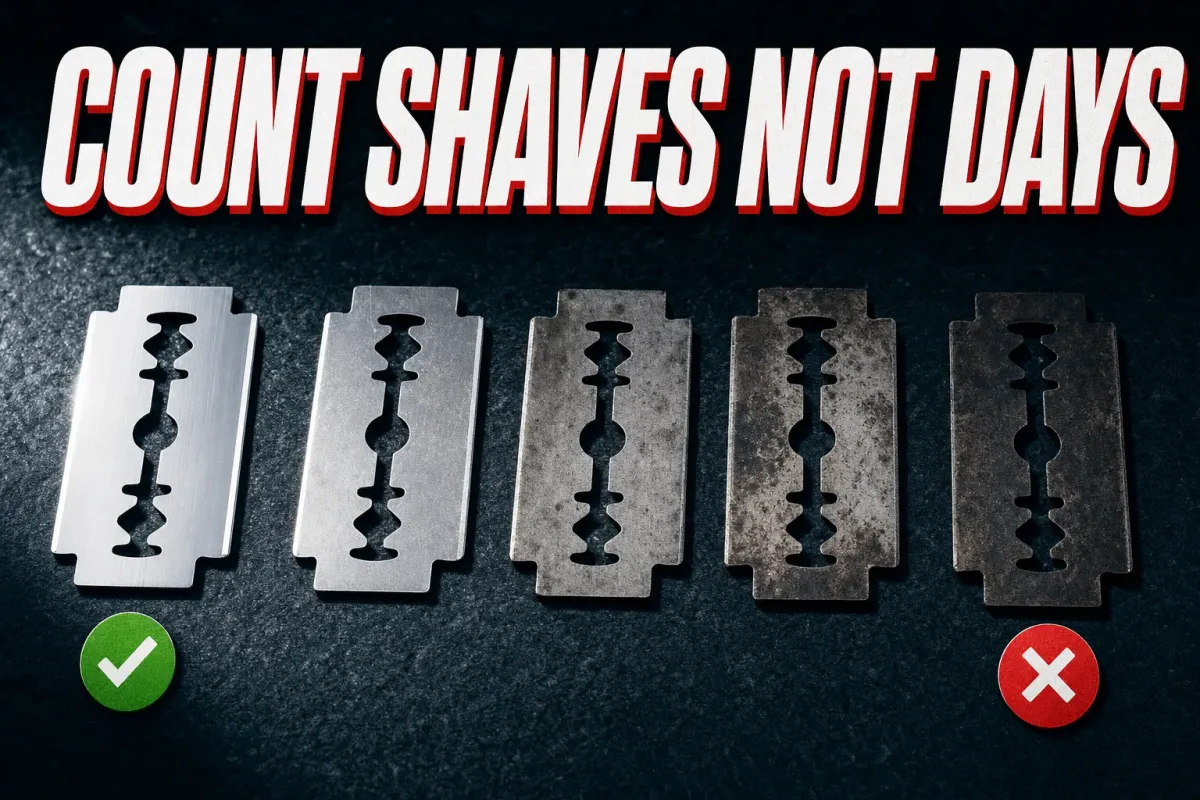
One of the first questions every new double-edge shaver asks is how often to change the blade, and the internet answers with a confident number that is almost always wrong for you. The honest answer is that a blade lasts most shavers somewhere between three and seven shaves, but the number is the least useful part of the answer, because the right time to change a blade is when it stops feeling good, not when a calendar says so. Once you understand what actually wears a blade out and how to feel when it is done, you will never have to count again.
The Short Answer
For most people, a double-edge blade gives three to seven good shaves before it is worth replacing. Somewhere around five is a fair average.
But notice the unit: shaves, not days. A blade does not care how many days it has sat in your razor, only how much cutting it has done. And a single shave is not a fixed amount of cutting either, because a shaver who does one light with-the-grain pass wears a blade far more slowly than someone doing three full passes over a heavy beard. Count shaves, weight them by how much work each one is, and ignore the calendar entirely.
Why “Days” Is the Wrong Way to Think About It
A blade dulls from cutting, not from waiting. Left dry between shaves, a good blade sitting in a razor is essentially unchanged a week later. What blunts an edge is dragging it through thousands of tough hairs, so the real variables are all about how much and how hard you cut.
That is why two shavers can honestly report wildly different blade lives. A man with fine, sparse growth doing a single gentle pass might get ten comfortable shaves from a blade. A man with a dense, wiry beard doing three passes to get smooth might be done in two. Neither is wrong. They are just asking their blades to do very different amounts of work.
The Real Signal: How the Blade Feels
Forget the number and learn the feel, because your face is a better judge than any rule of thumb.
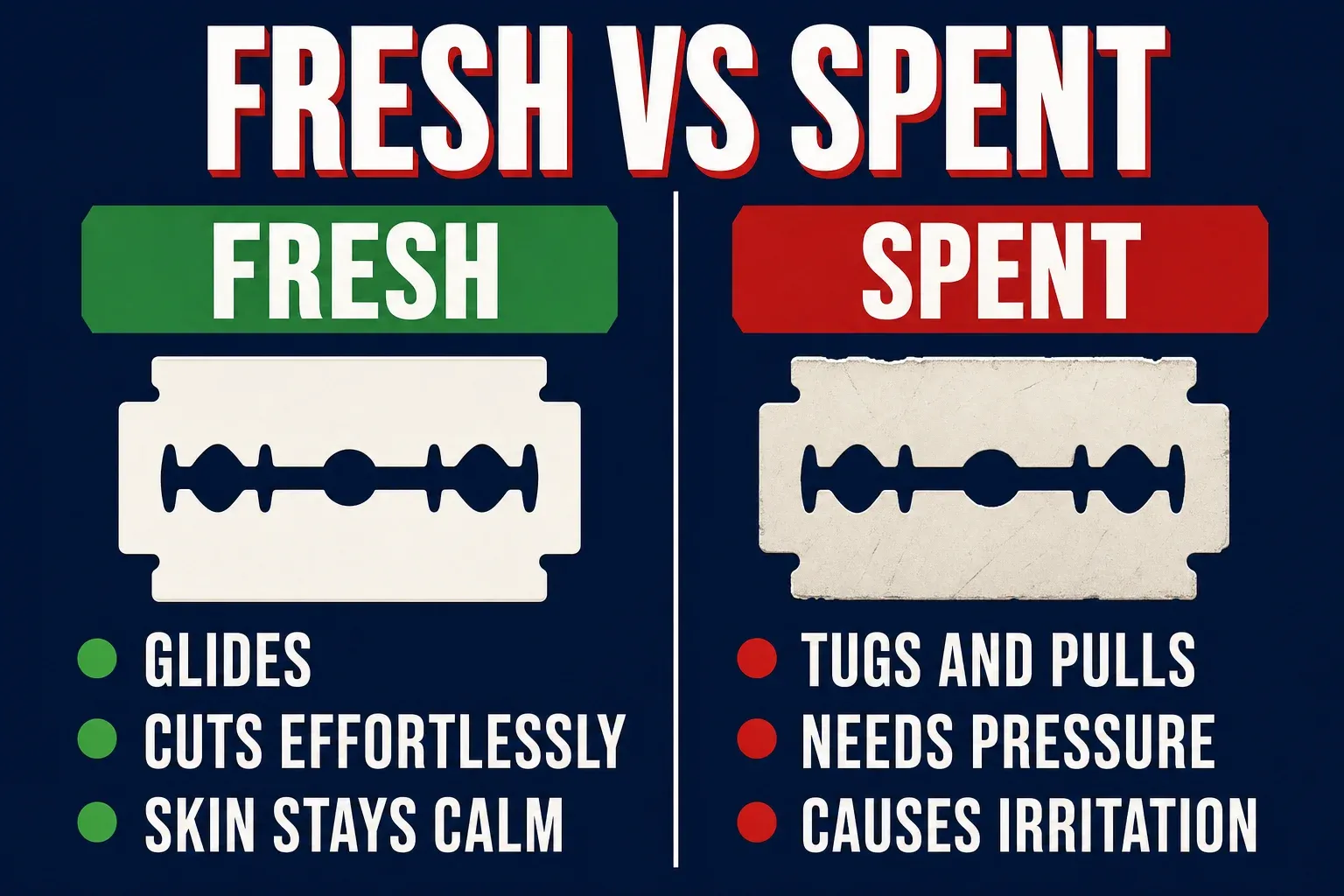
A fresh blade cuts almost effortlessly. It glides, it clears stubble without you leaning on it, and it leaves your skin comfortable. As a blade wears, that changes in ways you can feel: it starts to tug and pull at the hair instead of slicing it, you find yourself adding pressure to get the same result, and shaves that were comfortable start leaving irritation, redness, or the odd weeper behind. The moment a blade begins to tug rather than glide, it is done, and no number matters more than that. When in doubt, a fresh blade costs pennies, so the tie always goes to changing it.
What Actually Wears a Blade Out
Four things drive how fast you go through blades, and knowing them explains everyone’s different numbers.
Beard coarseness is the biggest. Thick, dense, wiry hair is simply harder on an edge than fine, sparse growth, so coarse-bearded shavers change blades more often, and that is normal, not a defect. The number of passes matters just as much, since every extra pass is another full trip of the blade across your whole face. Prep matters more than people think: a well-hydrated, properly lathered beard cuts easily and spares the edge, while shaving dry or under-lathered stubble drags and dulls a blade faster. And the blade brand itself plays a role, because different steels and coatings hold an edge for different lengths of time.
Does the Brand Matter?
It does, both for how the blade feels and for how long it lasts, which is the whole reason to start from a sampler rather than committing to a hundred-pack of one brand. Some blades are prized for sharpness, like the Feather Hi-Stainless, which many shavers find fades a little faster precisely because it starts so keen. Others are loved for a smooth, dependable life, like the Astra Superior Platinum, the Gillette Silver Blue, and the Voskhod, while budget classics like the Derby Extra and the Personna Lab Blue land where they land for your face. There is no universal longest-lasting blade, only the one that suits your beard, and a cheap variety pack of singles, or an inexpensive widely-stocked blade like the Gillette 365 to set a baseline, is the fast way to find it before you buy in bulk.
Sharpness and Longevity Are Not the Same Thing
It is worth separating two ideas that get tangled together. How sharp a blade is and how long it lasts are different properties, and the sharpest blade is not automatically the one that gives you the most shaves. A very keen blade can feel incredible for its first two or three shaves and then drop off, while a milder, smoother blade holds a steady, comfortable edge for longer even though it never felt as aggressive on day one. Which you prefer is a personal trade between peak sharpness and consistent longevity, and it is another reason the only honest way to find your blade is to try a few. If you want to go deeper on where popular blades fall on the sharpness scale, that is its own rabbit hole worth exploring once you have your bearings.
Myths About Blade Life
A few persistent beliefs cost people money and comfort. The idea that blades go dull from sitting in the air is mostly wrong; oxidation is not what blunts a modern coated blade over the span of a week. Rust is a real thing but an avoidable one, and it only shows up when a blade is left sitting wet, which brings us to the single best habit below. The notion that everyone should change on a fixed schedule ignores that blade life is deeply personal. And the various tricks for “resharpening” a blade, running it backward along your denim or your palm, do very little that lasts, so they are not worth building a routine around. Change the blade when it tugs and skip the folklore.
How to Make a Blade Last Longer
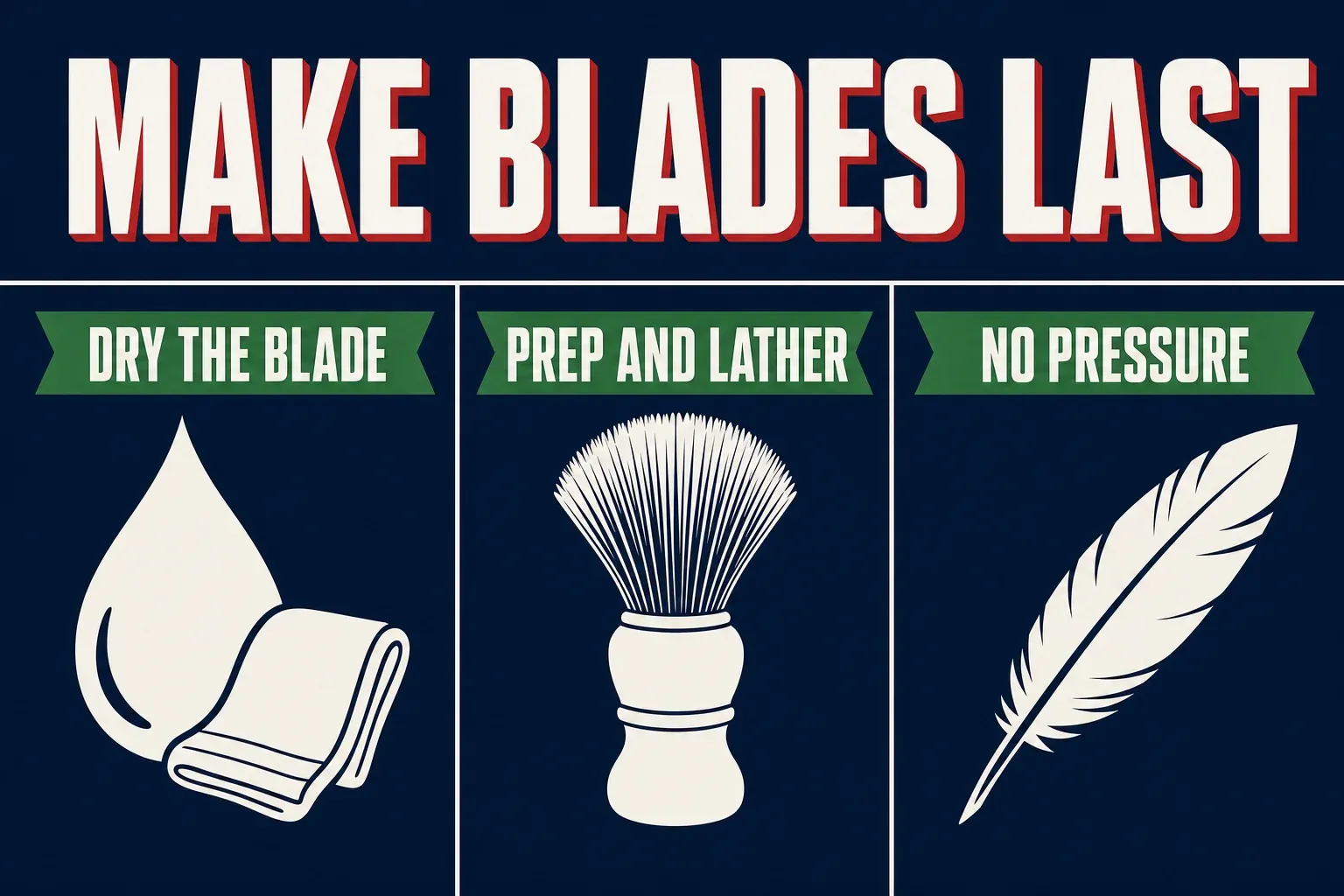
The most effective thing you can do costs nothing: dry the blade after every shave. A razor left with a wet blade invites the corrosion that actually shortens blade life, so give the razor a shake, and if you want to be thorough, dab the blade dry or leave the razor somewhere it can air out. That one habit does more for blade longevity than any other.
Beyond that, good prep and a slick lather spare the edge by letting it cut easily, and using no pressure keeps you from grinding the blade into your skin. Do those three things, dry your blade, prep well, and press lightly, and you will get the most shaves your particular beard allows.
The Cost Reality
Here is the part that should end the anxiety entirely. Double-edge blades cost pennies apiece, a tiny fraction of what cartridges cost, so trying to squeeze extra shaves out of a spent blade to save money makes no financial sense at all. A dull blade gives worse, more irritating shaves, and the “savings” is measured in fractions of a cent. When a blade starts to tug, change it, and never once feel guilty about it. Blades are the cheapest ongoing expense in wet shaving by a wide margin.
The Bottom Line
Stop counting days and start counting shaves, then let your face have the final vote. A double-edge blade lasts most people three to seven shaves, coarse beards and multi-pass routines burn through them faster, and the only rule that always works is to change the blade the moment it stops gliding and starts tugging. Dry your blades, prep well, press lightly, and buy a sampler to find the brand that lasts longest on your face. Blades are pennies. Use a fresh one the instant the old one asks you to.
Frequently asked questions
How many shaves does a double-edge razor blade last?
Three to seven good shaves for most people, with about five as a fair average. Count shaves, not days: a light single-pass shaver with fine growth might get ten comfortable shaves from a blade, while a dense, wiry beard and three full passes can finish one in two.
How do you know when to change a safety razor blade?
The moment it starts to tug and pull at the hair instead of gliding, needs added pressure to get the same result, or begins leaving irritation, redness, or weepers behind. When in doubt, change it; a fresh blade costs pennies, so the tie always goes to a new blade.
Do razor blades go dull from sitting unused?
Mostly no. A blade dulls from cutting, not from waiting, and a good blade sitting dry in a razor is essentially unchanged a week later. Rust is real but avoidable; it only shows up when a blade is left sitting wet.
What wears a razor blade out fastest?
Beard coarseness is the biggest factor, followed by the number of passes, since every extra pass is another full trip across your face. Poor prep dulls a blade faster because dry, under-lathered stubble drags, and different blade brands hold an edge for different lengths of time.
How can you make razor blades last longer?
Dry the blade after every shave, which prevents the corrosion that actually shortens blade life and does more than any other habit. Beyond that, prep well with a slick lather so the edge cuts easily, and use no pressure. Skip the resharpening folklore like stropping a blade on denim; it does very little that lasts.
Happy shaving.