

Open Comb vs. Closed Comb Safety Razors: What the Group Thinks
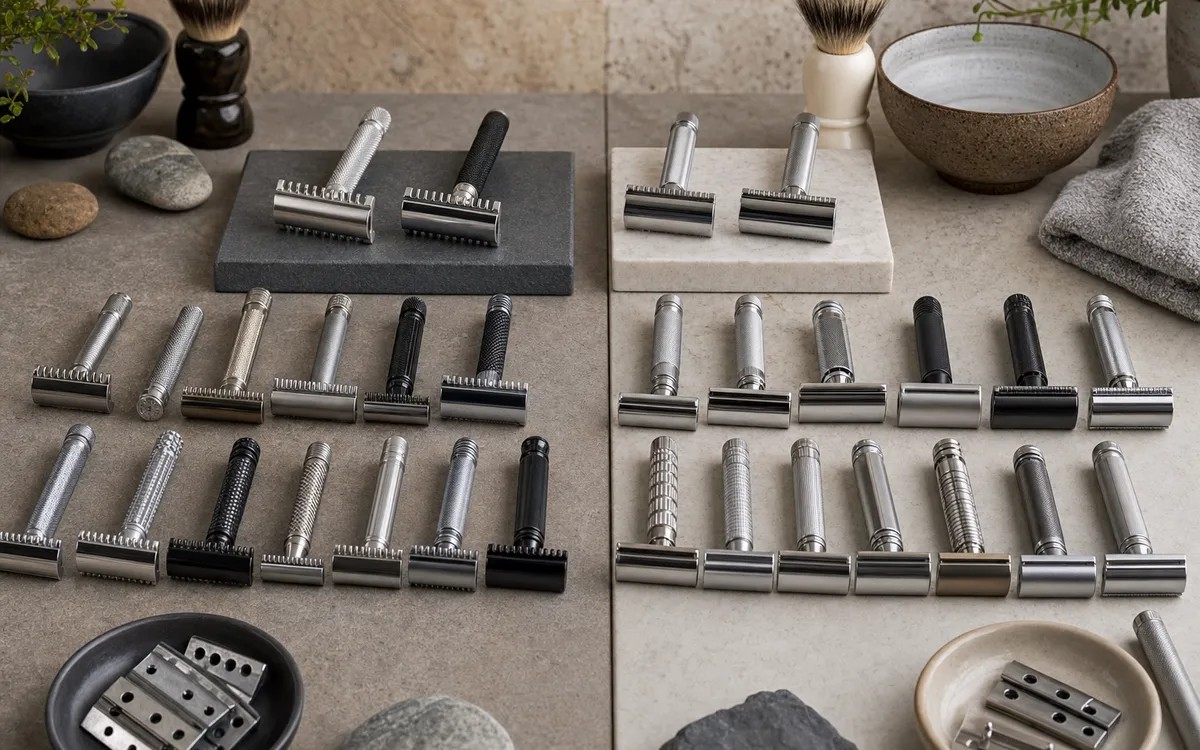
Charles threw a question into the group: open comb or closed, which do you prefer? On a safety razor, that guard design shapes how the blade meets your skin, how thick a beard it handles, and how much feedback you feel. Twenty-six people answered. Most landed on closed comb. A handful swear by open. The rest said it depends, and a few of those gave you something worth reading.
Before getting into what the group said, it helps to know what the two designs actually are.
What Is a Closed Comb Safety Razor?
A closed comb has a solid bar running along the bottom edge of the razor head. That bar, sometimes called a safety bar, sits between the blade and your skin. As you shave, it lightly stretches the skin right before the blade makes contact. More cushion. More control. A smoother feel overall.
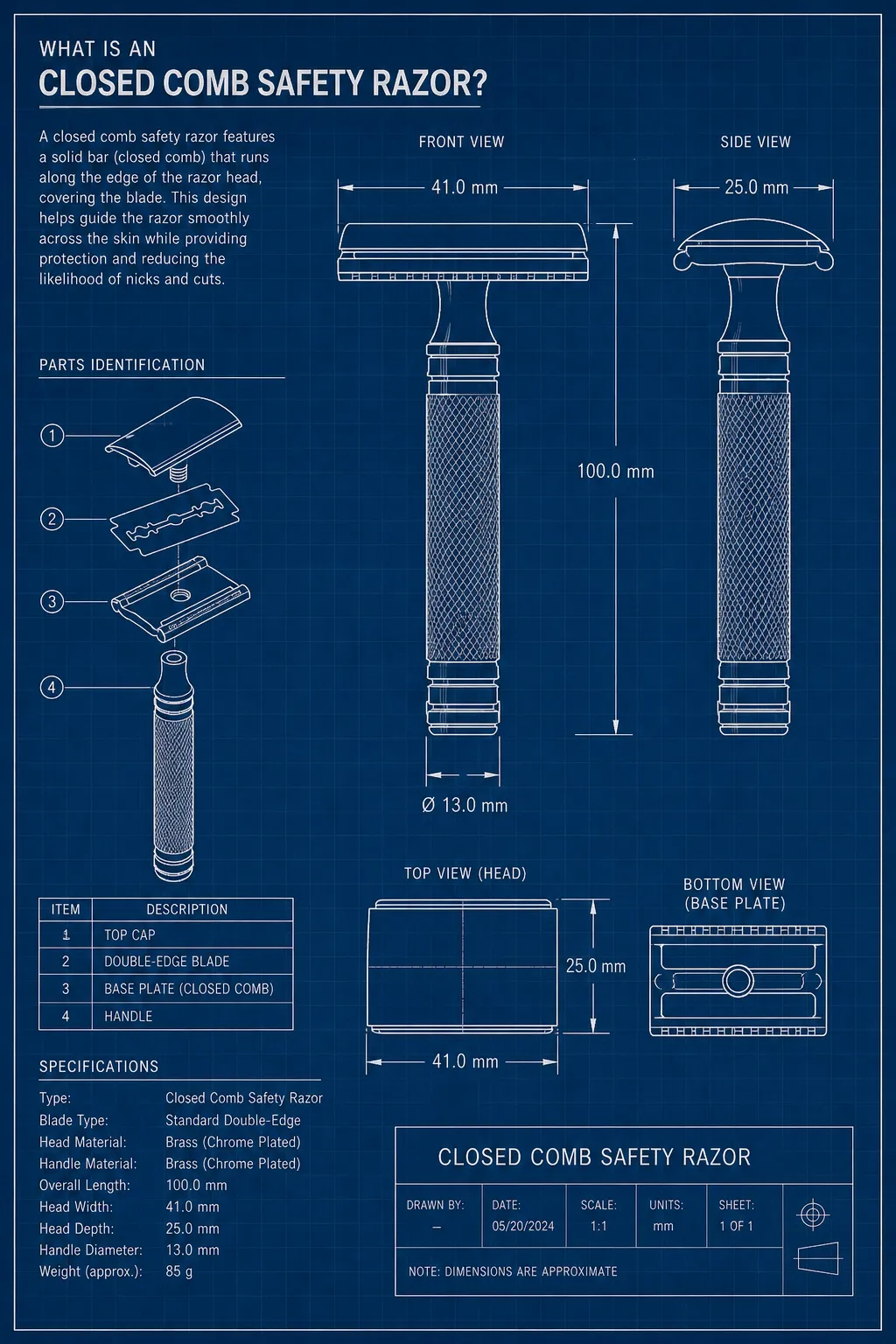
Hair and lather don’t flow through anything on a closed comb. They scrape off on the bar and rinse away. That works well for everyday shaving with regular growth. The bar keeps things tidy, blade feel is lower, and the margin for small technique errors is wider. Most beginners start with closed comb, and plenty of experienced shavers never see a reason to leave.
What Is an Open Comb Safety Razor?
An open comb has teeth, spaced apart, where that solid bar would be. Those gaps let hair and lather pass through instead of building up against the guard. When you’ve got a few days of growth or a heavier beard, that matters. A solid bar clogs. An open comb handles thickness better.
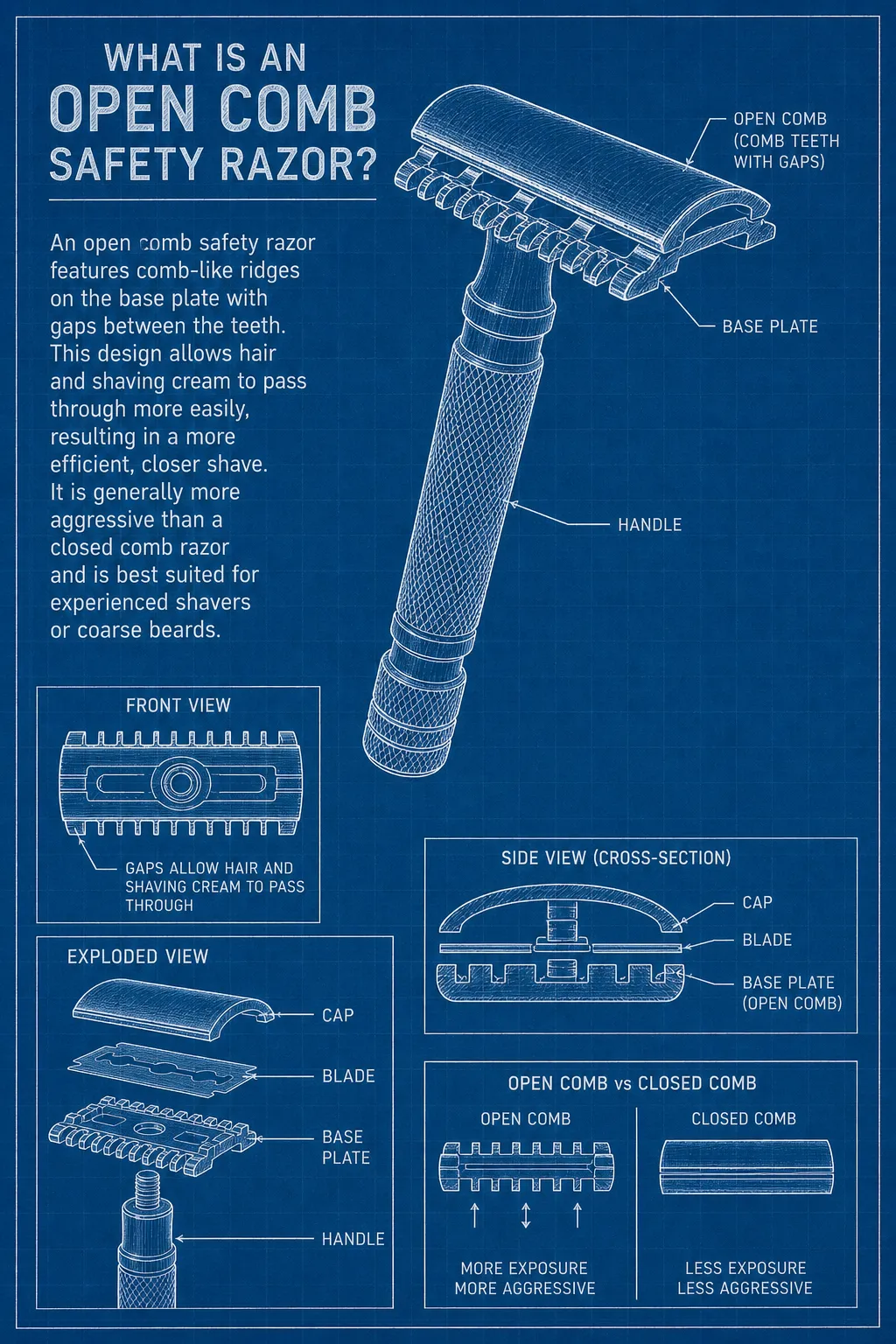
Open comb has a reputation for being aggressive, and some open combs are. That reputation isn’t universal, though. Richard pointed out in the thread that Fatip makes some very mild open combs, and Parker’s three-piece open comb is another example of gentle geometry in an open design. Tooth spacing, blade gap, and blade exposure all factor into how a razor feels. Guard type is just one piece.
Jim gave the clearest breakdown of the mechanical difference:
He also noted something worth flagging if you’re shopping vintage. Older open combs, the Gillettes and Schicks from earlier decades, often had the tooth edges smoothed after machining. Newer open combs tend to leave them as-machined. Jim said he’d reach for open combs more if that smoothing came back as a standard practice.
What the Group Said
Most of the thread landed on closed comb with no qualifications. Mike, Jeff, Wayne, Dave, Zia, Robert, and Charles all said closed. Dĕd called out that an aggressive closed comb is the most efficient on his face. Charles mentioned his current favorite razor is the Chieftain bc 5. It’s a closed comb.
A few went the other way. Scott prefers open. Pablo said open comb, Blackland Blackbird specifically.
Then there’s the third group, and it’s bigger than either of the first two: it depends.
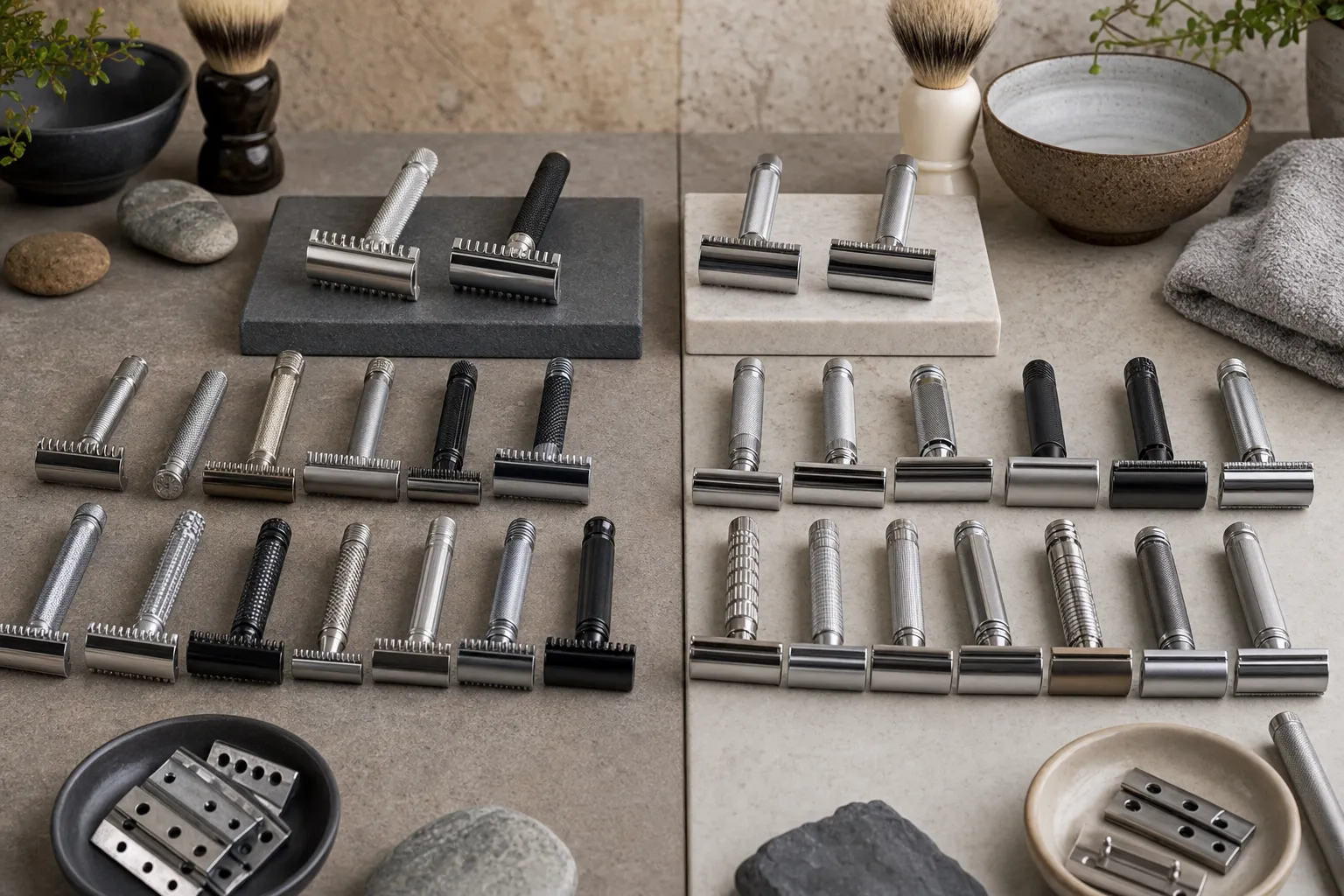
Todd’s take is practical. Open comb for longer growth when you need to mow through it, closed for regular maintenance shaving. Aaron runs a Rod George, a mild open comb, alongside vintage Gillettes and a Karve, and said both the amount of growth and the individual razor design factor into which one he picks up. Ryan said the same thing from a different angle: it depends entirely on the razor and how the blade feels in it.
Sean normally reaches for closed comb, with one exception: the PAA Ascension DOC, an open comb he called an amazing razor.
Richard has taken the whole question in a different direction. He’s bought five hybrid razors from different brands where one side of the head is open and the other is closed. No plate swapping, no committed preference. He just flips the razor.
That’s probably the most honest answer the thread produced. No geometry wins every time, on every face, with every blade. The group has run through enough razors between them that the variety of preferences is the point.
Which One Should You Try First?
If you’re new to safety razors, or you shave daily with regular growth, start with closed comb. More forgiving, easier to build technique with, won’t punish you for slight angle or pressure errors. Westley, who said he generally prefers open comb, mentioned his all-time favorite DE is the Maxwell June Double Edge Razor with EX Plate. Closed comb. Preferences don’t always follow the expected logic.
If you’ve got a heavier beard or you tend to skip days between shaves, an open comb is worth trying. You don’t need something harsh. A mild Fatip or Parker’s three-piece open comb gives you the flow-through geometry without the blade exposure that makes some open combs unforgiving.
If you like options, Richard’s hybrid approach is worth knowing about. A few manufacturers make dual-sided designs. You get both geometries on one handle without keeping two razors in rotation.
One thing that came through clearly in this thread: closed comb doesn’t mean gentle and open comb doesn’t mean harsh. Both types cover a wide range. A mildly-specced open comb is an easier shave than an aggressive closed comb. When you’re evaluating a new razor, look at the blade gap and exposure numbers alongside the guard type, not instead of it.