

The Best Safety Razor for Beginners: An Honest Guide to Your First Razor
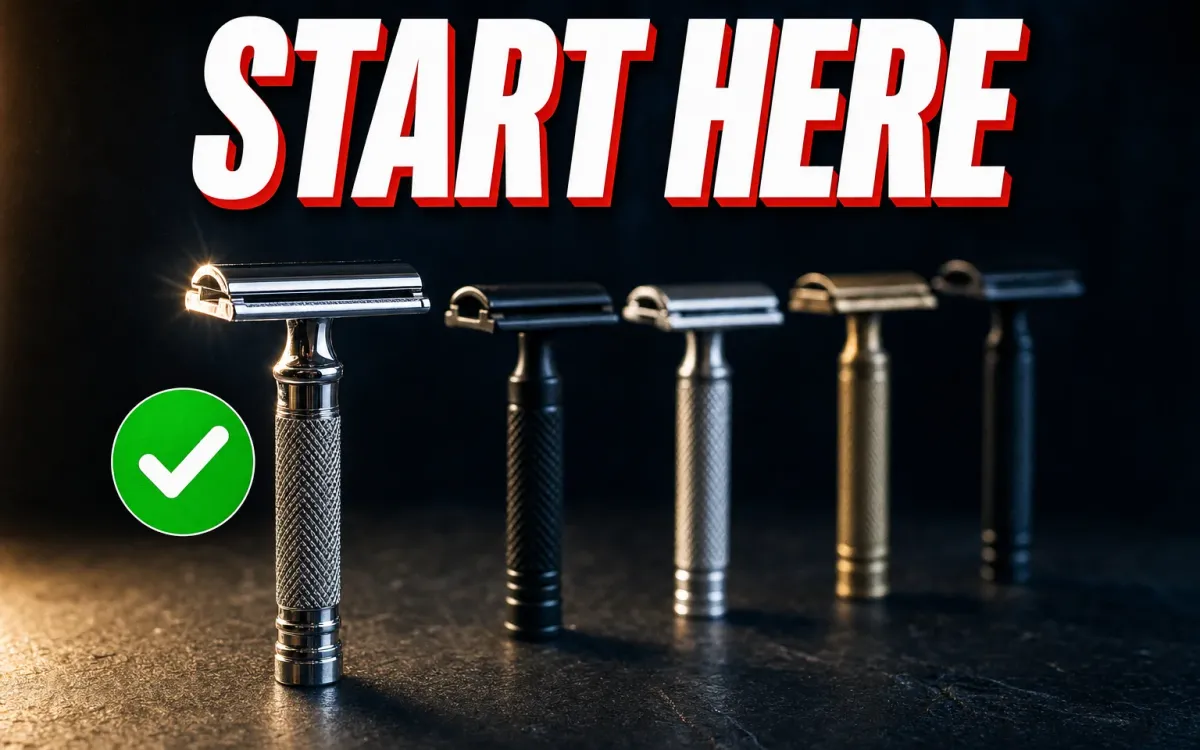
Search “best beginner safety razor” and you will drown in conflicting answers before you ever buy anything. The good news is that the honest answer is short and a little boring: a handful of mild, forgiving, widely available razors are all excellent first razors, the differences between them are small, and you will get a great shave with any of them once your technique comes together. The razor is the easy part. Learning to use it is the rest.
So this is not a hype list of the one razor that will change your life. It is the short list of razors that will not fight you while you learn, plus a plain explanation of what makes a razor beginner-friendly and how to pick one in under a minute. Buy any razor on this list, stop shopping, and go practice.
What Makes a Razor Good for a Beginner
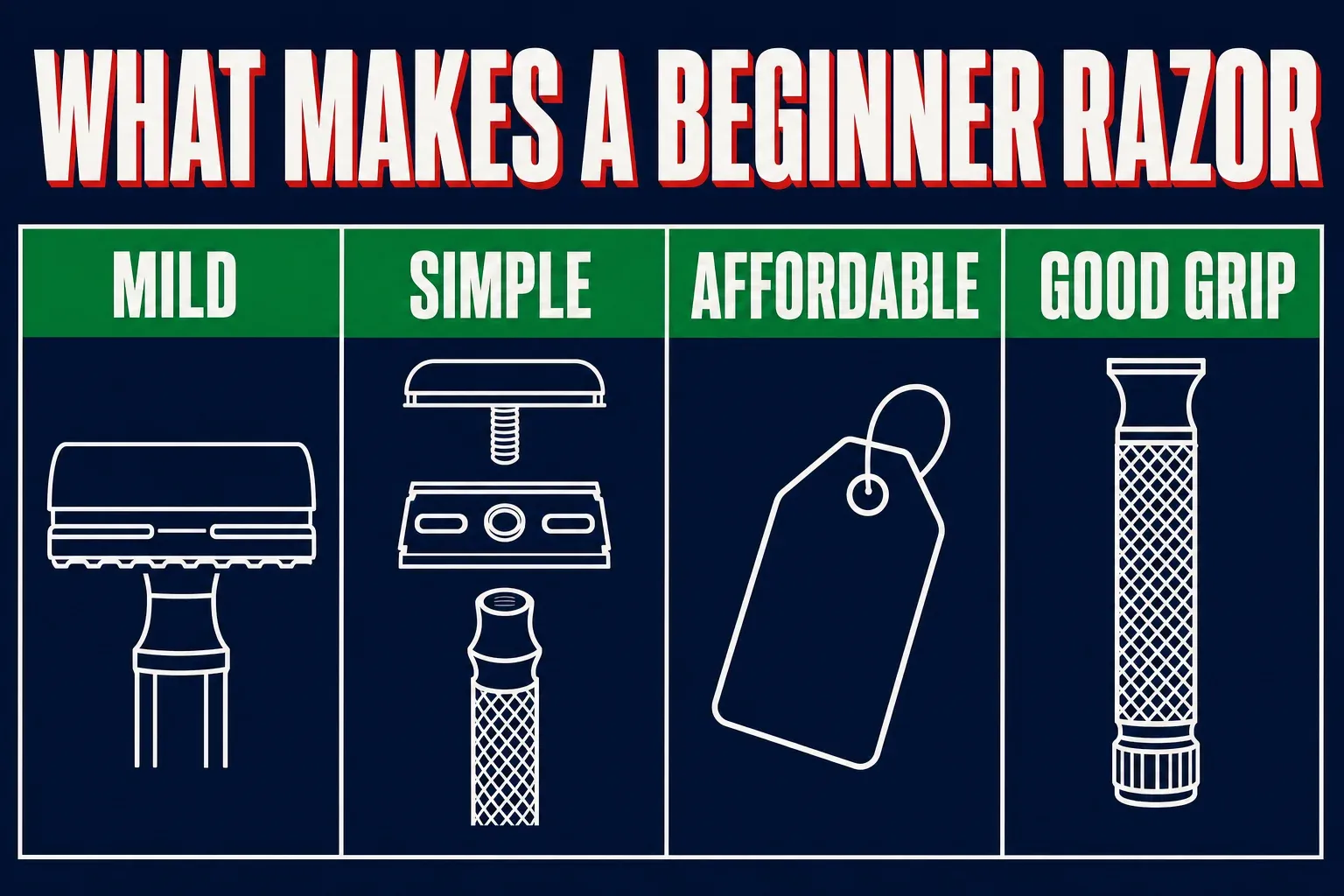
Four things, and aggression is not one of them.
Mildness comes first. A beginner razor should have a modest blade gap and modest blade exposure, which is the technical way of saying it is forgiving of the two mistakes every new shaver makes: too much pressure and a bad angle. A forgiving razor turns those mistakes into a slightly-less-close shave instead of a nicked, burning one. You want to learn on a razor that lets you get away with things.
Simplicity comes second. A three-piece razor, where the handle, baseplate, and cap come apart into three pieces, has nothing to break and makes blade changes obvious. A two-piece or a butterfly-open razor is fine too. What you do not need on day one is an adjustable dial or a plate system you feel obligated to fiddle with before you can even shave.
Then availability and price. Your first razor should be easy to buy, easy to replace, and cheap enough that you are not afraid to use it. Every razor below is in wide circulation and lands in the modest range where a good razor costs less than a few months of cartridge refills.
And finally a grip that survives soap and water. A knurled or textured handle that does not turn slippery in a wet, lathered hand matters more for a beginner than any specification on the box.
The Short List
| Razor | Type | Why it is on the list |
|---|---|---|
| Merkur 34C | Two-piece, medium-mild | The default answer, compact with a well-gripped handle |
| Edwin Jagger DE89 | Three-piece, mild | Same idea on a longer handle, better for larger hands |
| Muhle R89 | Three-piece, mild | The DE89 head geometry in a different dress |
| Rockwell 6C | Plate system, mild to medium | Start on the mildest plate and climb over months |
| Henson AL13 | Fixed, very mild setting | Presents very little blade, hard to cut yourself |
| Parker 22R | Butterfly, entry price | Cheapest no-regrets way to find out if you like DE shaving |
Any one of these is a correct answer. Pick the one that fits your hand and your budget and move on.
The Merkur 34C is the reference beginner razor and the one most often handed to a new shaver, for good reason. It is a compact two-piece with a medium-mild head, a short knurled handle that grips well, and a reputation built over decades. It is efficient enough that you will not outgrow it and forgiving enough that you can learn on it. If you want someone to just tell you what to buy, buy the Merkur 34C.
The Edwin Jagger DE89 is the other default, and picking between it and the Merkur is mostly a matter of feel. The DE89 uses a well-regarded mild head on a longer handle, and a lot of shavers with larger hands prefer it for that reason. The Mühle R89 uses the same head geometry in a slightly different dress, so if you like the look of one over the other, you are not giving anything up.
If you would rather buy from a shop that curates for beginners, the Rockwell R1 Rookie was designed for exactly this moment: a purpose-built, gentle first razor meant to get a new shaver through the learning curve without drama. And if you like the idea of a razor you can make more efficient as your technique grows, the Rockwell 6C ships with multiple baseplates so you start on the mildest setting and climb over months, one razor covering years of progression.
For a modern take, the Henson AL13 in its mild setting is about as forgiving as a new razor gets, machined to tight tolerances that present very little blade, which makes it hard to cut yourself even when your angle is wrong. And if budget is the deciding factor, the Parker 22R gives you a butterfly-open razor with a long handle at an entry price, an easy no-regrets way to find out whether wet shaving is for you.
The Vintage Option
There is one more path worth knowing about. A clean vintage Gillette Super Speed is one of the best beginner razors ever made, mild, simple to load with its twist-to-open butterfly doors, and often cheaper than a new razor on the secondhand market. The catch is that you are buying a used object sight-unseen, so condition matters and a little knowledge saves you from a bad purchase. If the hunt appeals to you, our vintage safety razor field guide covers exactly what to check before you buy. If it sounds like a hassle, buy new off the list above and do not think twice.
What to Pair It With
A razor is a third of a shave. Round it out and you are set.
Do not guess your blade. Order an inexpensive blade sampler and try several, because the single biggest variable in your early shaves is which blade your face likes, and it is personal. The Astra Superior Platinum is a mild, forgiving, widely loved blade and a perfect default to start from while you test the others.
You will want a brush to build lather. A simple boar or synthetic brush in the 22 to 26mm range is all you need, and it does not need to be expensive. The Omega boar bristle brushes are the classic budget starting point and break in beautifully over a few weeks; the TWSS Black G5 is a synthetic that works well from the very first shave with no break-in at all. Either one is a lifetime tool at a modest price.
Add a soap or cream you like the smell of, an alum block for feedback and aftercare, and you have a complete kit for less than the cost of a year of cartridges.
How to Choose in 30 Seconds
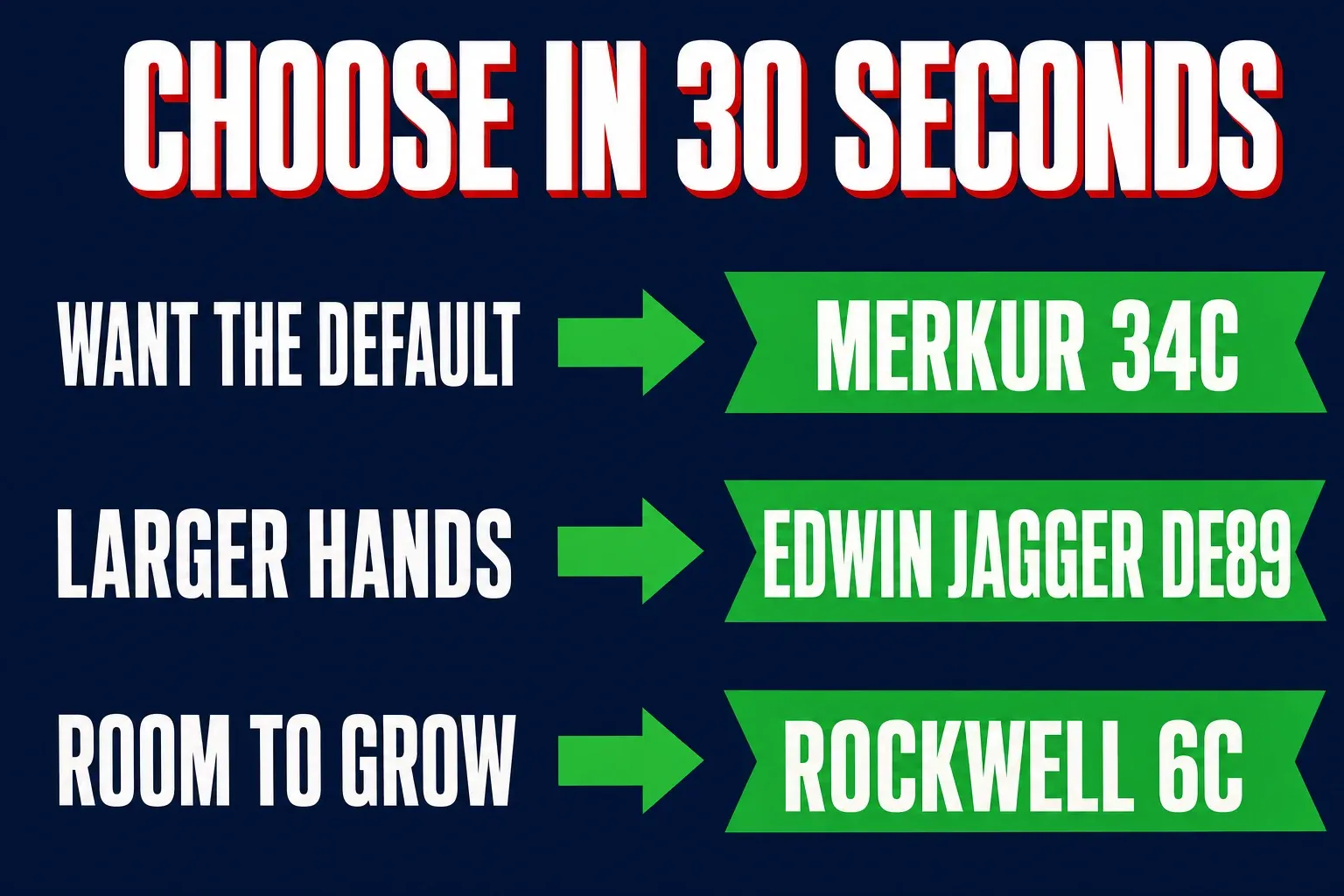
If you want one answer and no more thinking, buy the Merkur 34C. If you have larger hands or want a longer handle, buy the Edwin Jagger DE89. If you want a razor you can make more aggressive as you improve, buy the Rockwell 6C. If you want the gentlest possible learning curve, buy the Henson AL13 on its mild setting. If money is tight, buy the Parker 22R or hunt a clean vintage Gillette Super Speed. And if you want a shop that will point you at the right first razor and stand behind it, the Rockwell R1 Rookie is built for you.
Every one of those is a razor you can learn on and keep. There is no wrong choice on this list, only the trap of not choosing.
Razors to Skip While You Are Learning
Knowing what not to buy first saves you a rough month. Skip the aggressive razors, the ones with a large blade gap and lots of exposure that reviewers call efficient. They are wonderful in trained hands and punishing in new ones, and starting there teaches you that wet shaving hurts, which is the opposite of what you want to learn. An open-comb razor built for a heavy beard, a slant, and the single-edge artist-club razors are all in this category. They are not better razors, they are razors for a different stage.
Skip the temptation to start with an adjustable set to a high number just because you can. An adjustable is a fine first razor on its mildest setting, but its whole point is lost on someone who has not yet learned what a mild shave feels like to compare against. And skip anything sold purely on looks or exclusivity. A gorgeous razor you are afraid to learn on is worse than a plain one you use every morning. There will be plenty of time for the fancy razor once you know what your face wants.
The Bottom Line
The best beginner safety razor is a mild, simple, well-made razor you actually buy, because the razor was never the hard part. Pick one from the short list, pair it with a blade sampler and a cheap brush, and put your energy into technique: map your grain, use no pressure, and make more than one pass. Do that and within a few weeks the razor in your hand will be giving you the best shaves of your life, and you will understand why none of us went back to cartridges.
Frequently asked questions
What is the best safety razor for a beginner?
There is no single best one. A handful of mild, forgiving, widely available razors are all excellent first razors and the differences between them are small. If you want one answer, the Merkur 34C is the most commonly handed to a new shaver. The Edwin Jagger DE89 is the same idea on a longer handle.
Is a more expensive safety razor better?
Not for closeness. Price mostly buys durability, materials and feel in the hand. A well-used mild razor in trained hands gives a closer, more comfortable shave than a premium razor in untrained ones.
Should a beginner start with an adjustable razor?
An adjustable is fine on its mildest setting, but its whole point is lost on someone who has not yet learned what a mild shave feels like to compare against. A fixed mild razor is the simpler place to start.
How long does it take to get good at wet shaving?
Expect the first two weeks to be mediocre and the technique to click in the second or third. Shave with the grain only at first and accept a less close shave in exchange for comfortable skin while your hands learn.
What else do I need besides the razor?
A blade sampler rather than one brand, a brush, a soap or cream, and something soothing afterwards. An alum block is a useful extra because it doubles as feedback on where your technique went wrong.
Happy shaving.