

Vintage Safety Razors: A Field Guide to the Ones Worth Hunting
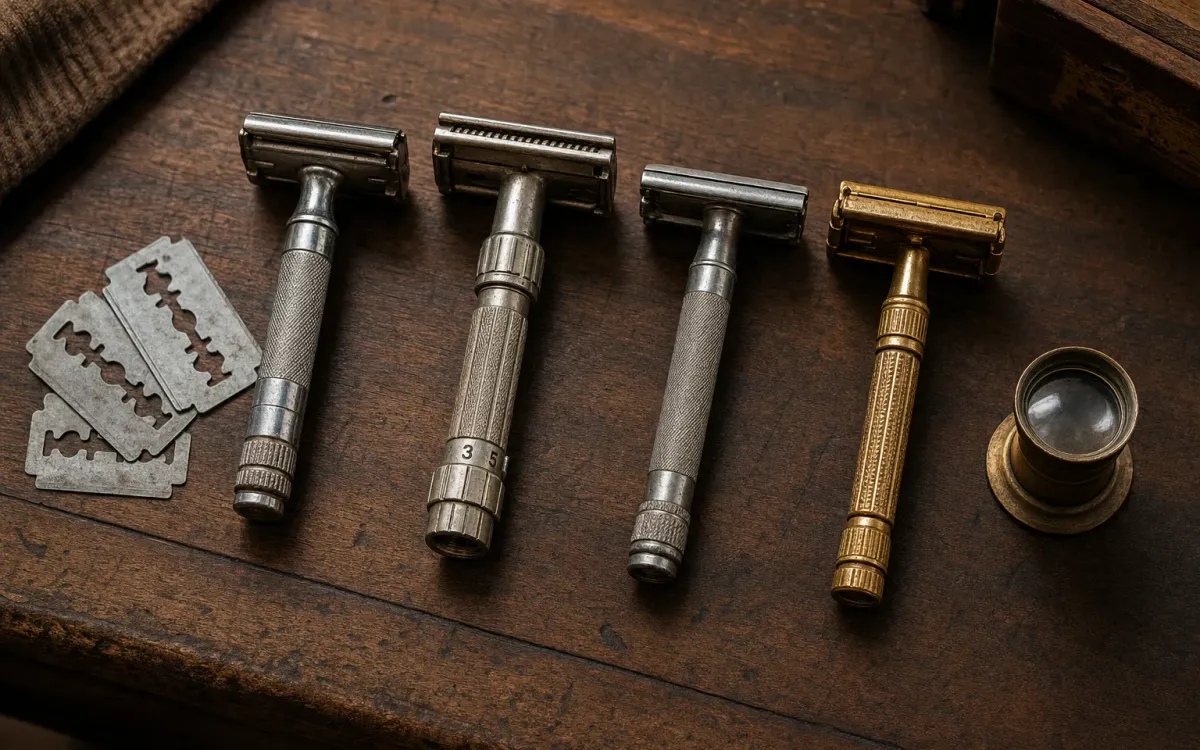
There is a specific moment, the first time you shave with a razor that is older than you are, when the whole hobby clicks into place. The thing has outlived its original owner and it still works perfectly. Twenty or forty dollars buys you a tool that shaves as well as anything sold new today, and often better, because it was built in an era when a razor was expected to last a lifetime and it did.
This is a guide to the vintage razors actually worth hunting. Not a price list, prices move, but a map of what each one is, how it shaves, roughly when it was made, and what to check before you hand over your money. Most of these live on the secondhand market, which means the hunt is half the fun and a little knowledge saves you from the common mistakes.
Why buy a vintage razor at all
Three honest reasons. The build quality is real: solid brass under the plating, tight tolerances, mechanisms that still snap shut cleanly after seventy years. The value is real: a clean vintage Gillette in the $20 to $50 range shaves with any modern razor costing five times that. And the connection is real in a way that is hard to explain until you feel it. You are using the same object your grandfather might have used, maintained by hand, and it asks nothing of you but a fresh blade.
The tradeoff is that you are buying used goods sight-unseen from strangers. Condition matters enormously, and the difference between a great buy and a paperweight comes down to a few things you can learn to spot. We will get to those.
The Gillette Super Speed: start here
If you buy one vintage razor, make it a Gillette Super Speed. It is the gateway for a reason. The Super Speed is a twist-to-open razor, the whole bottom half twists and the doors open like a butterfly so you drop a blade in and twist it shut. Gillette produced the Super Speed across a long run from the late 1940s into the 1960s, which means they made an enormous number of them and they are still everywhere and still cheap.
The shave is mild and forgiving. This is the razor to learn vintage on, because it will not punish a clumsy first pass the way an aggressive razor does. A clean Super Speed with a fresh blade is a genuinely excellent daily shaver, full stop, not just “good for the price.”
The tip colors
Somewhere in the mid-1950s Gillette started color-coding the tip of the twist knob on the flared-end Super Speeds, and collectors have chased those colors ever since. The shorthand is worth knowing.
The Gillette Red Tip is the sought-after one. Vintage shavers generally regard the Red Tip Super Speed as the more aggressive of the family, with a bit more blade exposure and a bit more efficiency, and its reputation has pushed prices above the plain Super Speeds. If you have a heavy beard or you already shave comfortably and want more from a mild razor, the Red Tip is the upgrade people reach for.
The Gillette Blue Tip sits at the other end. The Blue Tip Super Speed has long been regarded as the milder, gentler option, and that is how it shaves, making it a soft landing for sensitive skin or a genuine beginner. The Gillette Black Tip and the flared Gillette Flare Tip round out the group and generally land in the middle for feel. None of them is a bad razor. The tip color is a preference dial, not a quality ranking.
The adjustables: Fatboy and Slim
Gillette’s adjustable razors are the ones collectors get sentimental about, and with good reason. Turn a dial and the blade gap changes, so one razor covers everything from a timid first pass to a serious close shave.
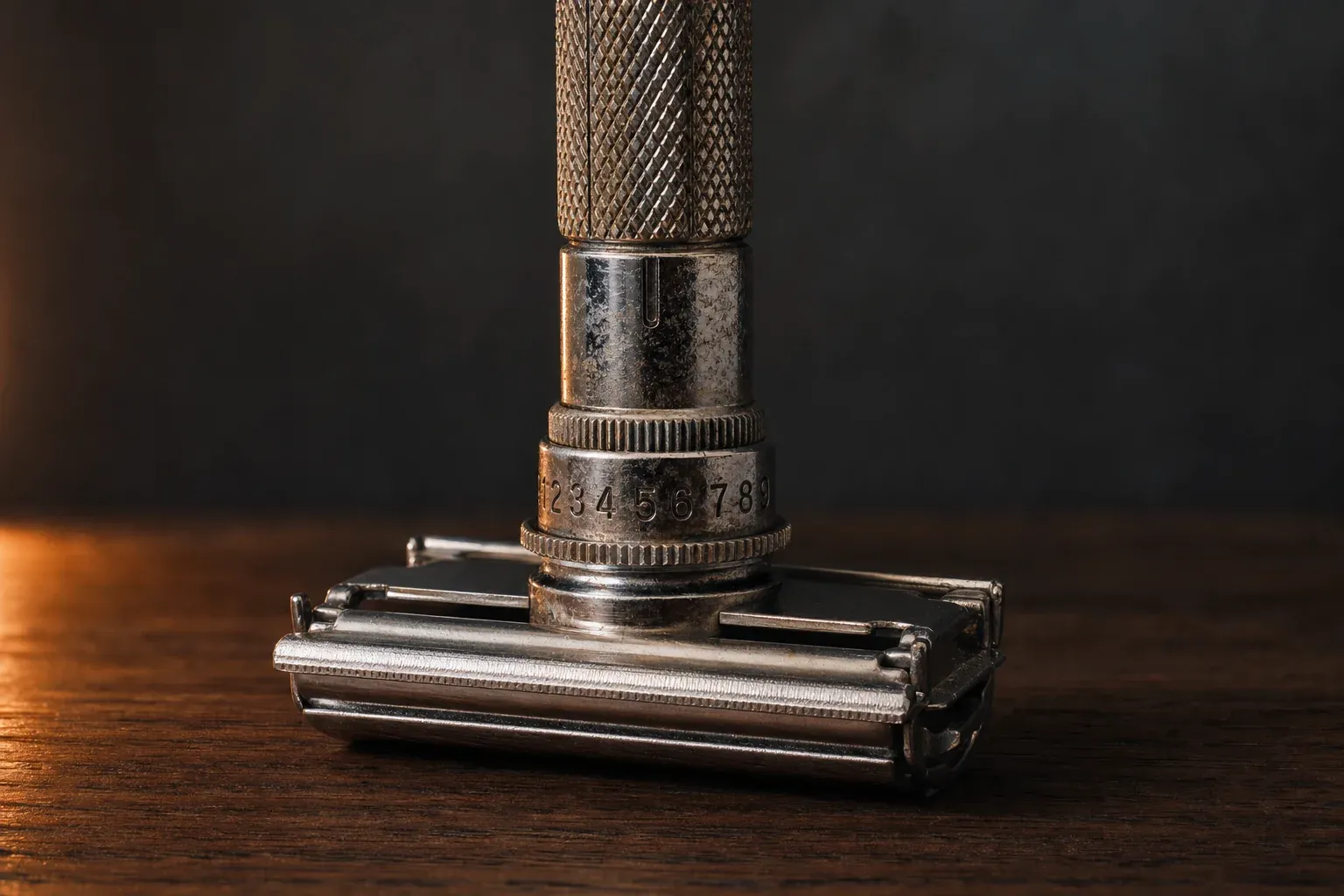
The Gillette Fatboy, officially just an adjustable but nicknamed the Fat Boy for its stubby heft, came out of a short production run around 1958 to 1961. It was Gillette’s first mass-market adjustable and it feels like a serious instrument in the hand, dense and mechanical, with a numbered dial from 1 to 9. It is not a beginner razor, but it is a razor you can grow into and never outgrow.
The Gillette Slim followed in the early-to-mid 1960s. Same adjustable idea, sleeker and, to a lot of shavers, better balanced. The Gillette Slim Adjustable is the one many people land on as their forever razor: mild enough at a low setting to be forgiving, aggressive enough at a high setting to handle anything. If the Fatboy is the muscle car, the Slim is the one you actually drive every day.
The Aristocrat
The Gillette Aristocrat is the dress-up option. Produced in various forms from the 1930s through the 1950s, often gold-plated, the Aristocrat is a twist-to-open razor built as a premium piece, and a clean one is a genuinely beautiful object. It shaves like a well-mannered Super Speed. You are paying partly for the looks and the name, but if you want one vintage razor that feels like an heirloom on the counter, this is it.
The Tech: the cheapest honest way in
If money is tight or you just want to test the vintage waters, the Gillette Tech is the answer. A three-piece razor, top cap, baseplate, handle, produced for decades starting in the 1930s, the Tech is mild, nearly indestructible, and so common that you can find a shaveable one for under twenty dollars. There is no mechanism to break because there is no mechanism. It comes apart into three pieces for cleaning and goes back together forever. The Tech will never be anyone’s most exciting razor, and it might be the best value in all of wet shaving.
Beyond Gillette: single-edge and injectors
Double-edge razors are the mainstream, but two other vintage systems are worth knowing, and both still have blades made for them today.
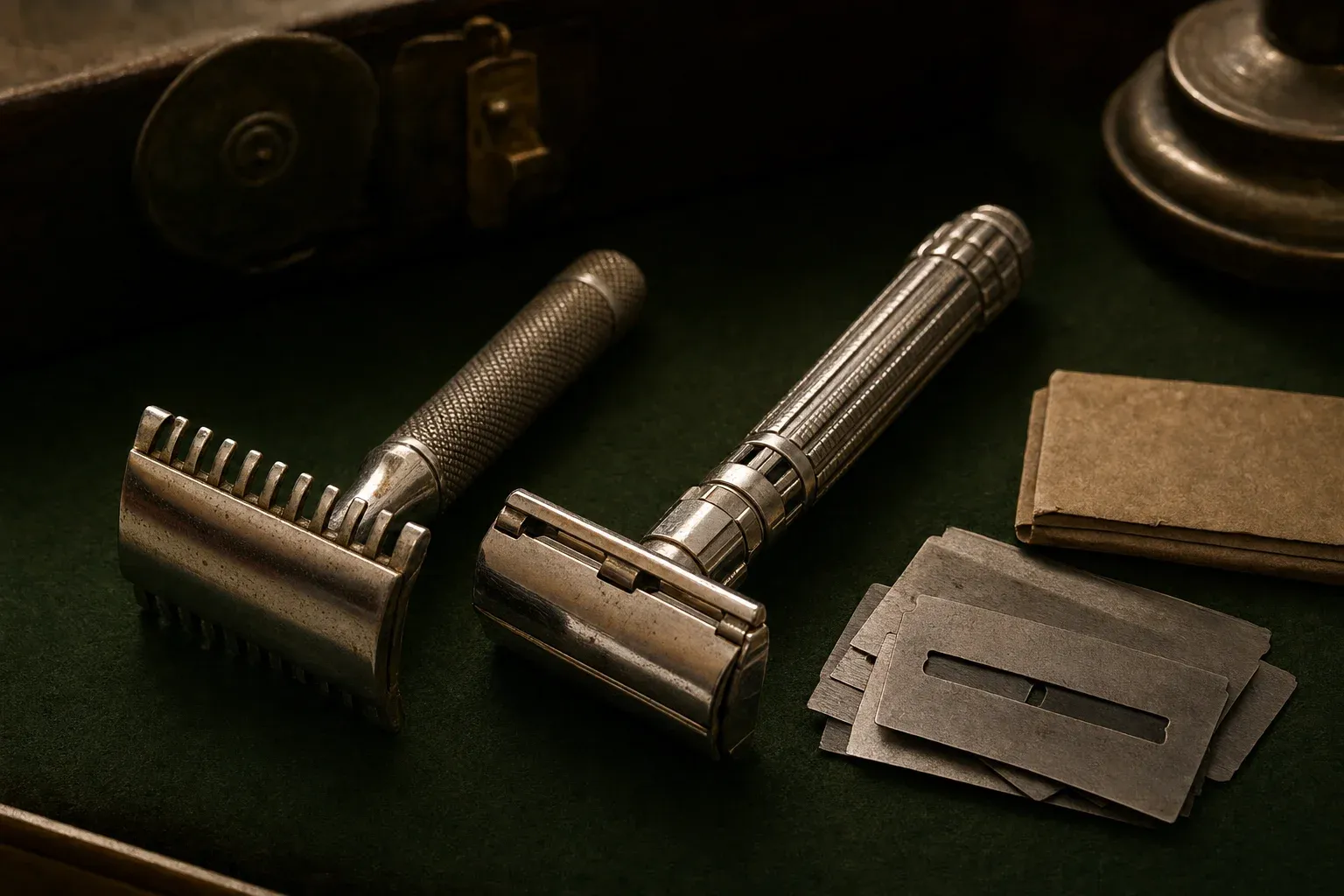
The GEM single edge razors use one thick, stiff blade instead of a thin double-edge, and that rigidity gives a distinctly smooth, planing feel a lot of shavers fall hard for. Models like the GEM Micromatic and the GEM Featherweight are the ones to look for, and GEM-format single-edge blades are still manufactured, so you are not buying a museum piece you cannot feed.
The Schick Injector loads through a key that pushes a fresh blade in from a magazine, no fiddling with a bare blade at all. It is a clever, tidy system with a devoted following, the shave is efficient and easy, and injector blades are still made. If the double-edge loading ritual is not your thing, a vintage Schick Injector is a genuinely different and pleasant way to shave.
The straight-razor rabbit hole
A quick word for the tempted. The vintage straight razor market is deep and gorgeous, old Sheffield steel, a Wade & Butcher with a hollow grind, blades that were made to be handed down. It is also not a beginner move. A straight needs honing, stropping, and a real investment of technique before it gives you a good shave instead of a bad morning. Admire them, save them for after you have a few years of double-edge shaving behind you, and come back when you are ready.
How to buy vintage without getting burned
This is the part that saves you money. A few habits.
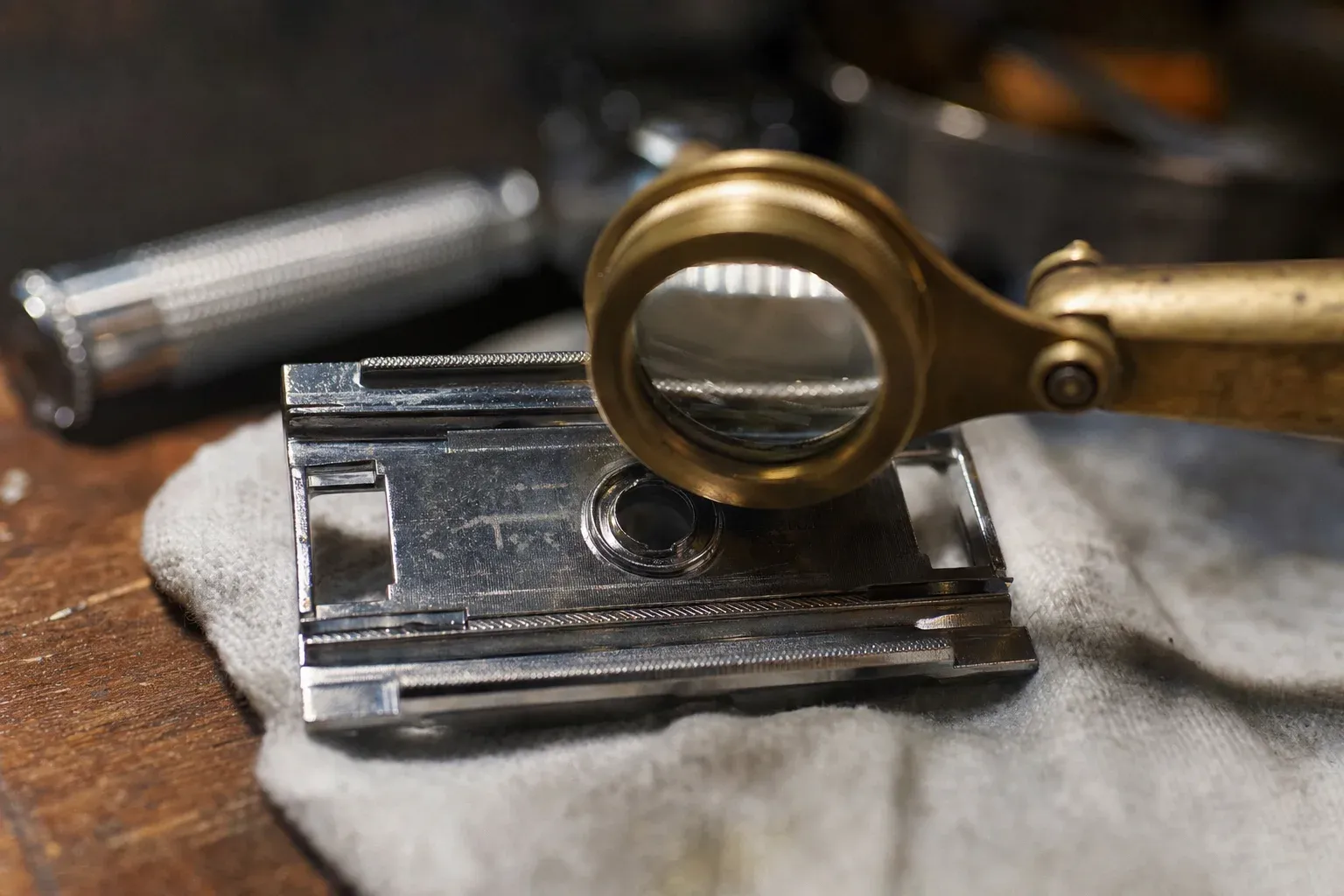
Judge the plating and the mechanism first. Surface tarnish cleans up; flaking or bubbling plating that exposes the brass underneath does not, and it will only spread. On a twist-to-open razor, look at the doors: they should close flush and even. Cracked or bent doors are the most common way a vintage twist-to-open gets ruined, and a listing that avoids showing the closed doors head-on is a listing to be suspicious of.
Learn the date codes. From about 1950 onward Gillette stamped a small date code on many razors, so with a quick lookup you can often pin down the year yours was made. It is not essential to a good shave, but it is part of the fun and it helps you tell an honest seller’s description from a guess.
Avoid anything sold “for parts” or “as-is” unless you specifically want a project. Clean, working razors are common enough that you never need to gamble.
Cleaning is easy and worth doing before first use. Warm water, dish soap, an old toothbrush, and patience get most vintage razors ninety percent of the way there. A soak in diluted vinegar or a scrub with a little Bar Keepers Friend can lift stubborn grime, but go gentle, because aggressive abrasives will take the plating off along with the crud. If a razor is beautiful but the plating is truly gone, replating services exist, though at that point you are spending real money and it only makes sense for a razor you love.
What to feed it
A vintage razor takes modern blades, which is the quiet magic of the whole thing. Any standard double-edge blade drops right into a vintage double-edge razor, so a sampler of Astra, Feather, Voskhod, and Gillette Silver Blue will tell you fast what your particular razor likes. The GEM takes its own single-edge blades and the Schick takes injector blades, both still on the shelf.
For the full period-correct experience, the era’s soaps are still findable too. A puck of Williams Mug Soap, the discontinued drugstore staple, or a mug of Shulton-era vintage Old Spice turns a vintage shave into a small time machine. Pair any of it with a vintage badger brush and you have assembled a complete mid-century shave for less than the cost of one modern premium razor.
The bottom line
Start with a Gillette Super Speed or a Gillette Tech for twenty to forty dollars, learn what a seventy-year-old razor feels like, and let the hunt take you from there. The adjustables and the Red Tips and the gold Aristocrats will still be out there when you are ready for them. That is the best part of buying vintage: the supply is enormous, the prices are fair, and every one of these razors was built to outlast the person hunting for it.
Frequently asked questions
What is the best vintage razor to start with?
A Gillette Super Speed. It is mild and forgiving, twist-to-open so loading is simple, and Gillette made so many across the late 1940s to 1960s that clean examples are still common and inexpensive.
Do vintage razors take modern blades?
Yes. Any standard double-edge blade drops straight into a vintage double-edge razor, which is the quiet magic of the whole thing. GEM single-edge and Schick injector blades are also still manufactured.
What should I check before buying a vintage razor?
The plating and the mechanism first. Surface tarnish cleans up, but flaking plating that exposes the brass underneath does not and will spread. On a twist-to-open razor the doors should close flush and even.
How do I clean a vintage razor?
Warm water, dish soap, an old toothbrush and patience get most of the way there. Diluted vinegar or a gentle scrub lifts stubborn grime, but go easy, because aggressive abrasives take the plating off along with the crud.
Are vintage adjustable razors good for beginners?
Not as a first razor. The Fatboy and Slim are excellent razors you can grow into, but they are more machine than a beginner needs. A Super Speed or a Tech is the easier starting point.
Happy shaving.