

Single Edge vs Double Edge Razors: Which Format Deserves Your Face?
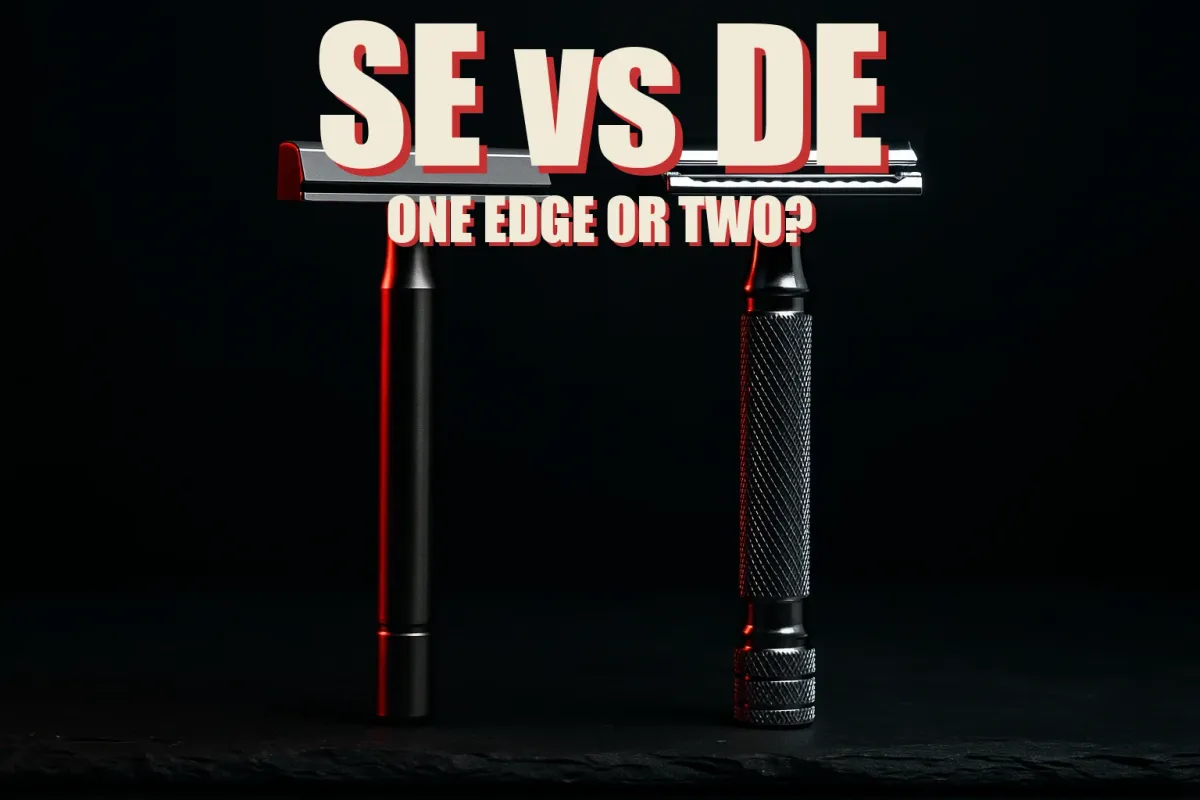
Every wet shaver knows the double edge razor; it is the format that defines the hobby. But hang around the group long enough and you will notice a quieter faction, the people who shave with a GEM from 1948 or a Schick injector from their grandfather’s medicine cabinet, and who will tell you, unprompted and at length, that a stiff single edge blade gives a shave a DE cannot. The group has dug into this territory before, and the enthusiasm was real.
They are not wrong, exactly. They are describing a real mechanical difference. Whether it matters for your face is the actual question, so let us take it apart.
The Core Difference: Blade Rigidity
A DE blade is a marvel of cheap precision: thin steel, flexible as a leaf, tensioned into shape by the razor’s clamp. That thinness is why DE blades cost pennies, and it is also why blade feel varies between razors; the head’s clamping is doing structural work, as our aggressiveness explainer covers.
A single edge blade is a different animal: thicker spine, stiffer steel, one working edge. Rigidity is the whole pitch. A stiff blade does not flex or chatter under load, and the shave feels planted, direct, almost carpentry-like, where a DE can feel like an instrument. Heavy beards in particular notice the difference: the blade tracks straight through dense growth instead of deflecting.
The SE Families
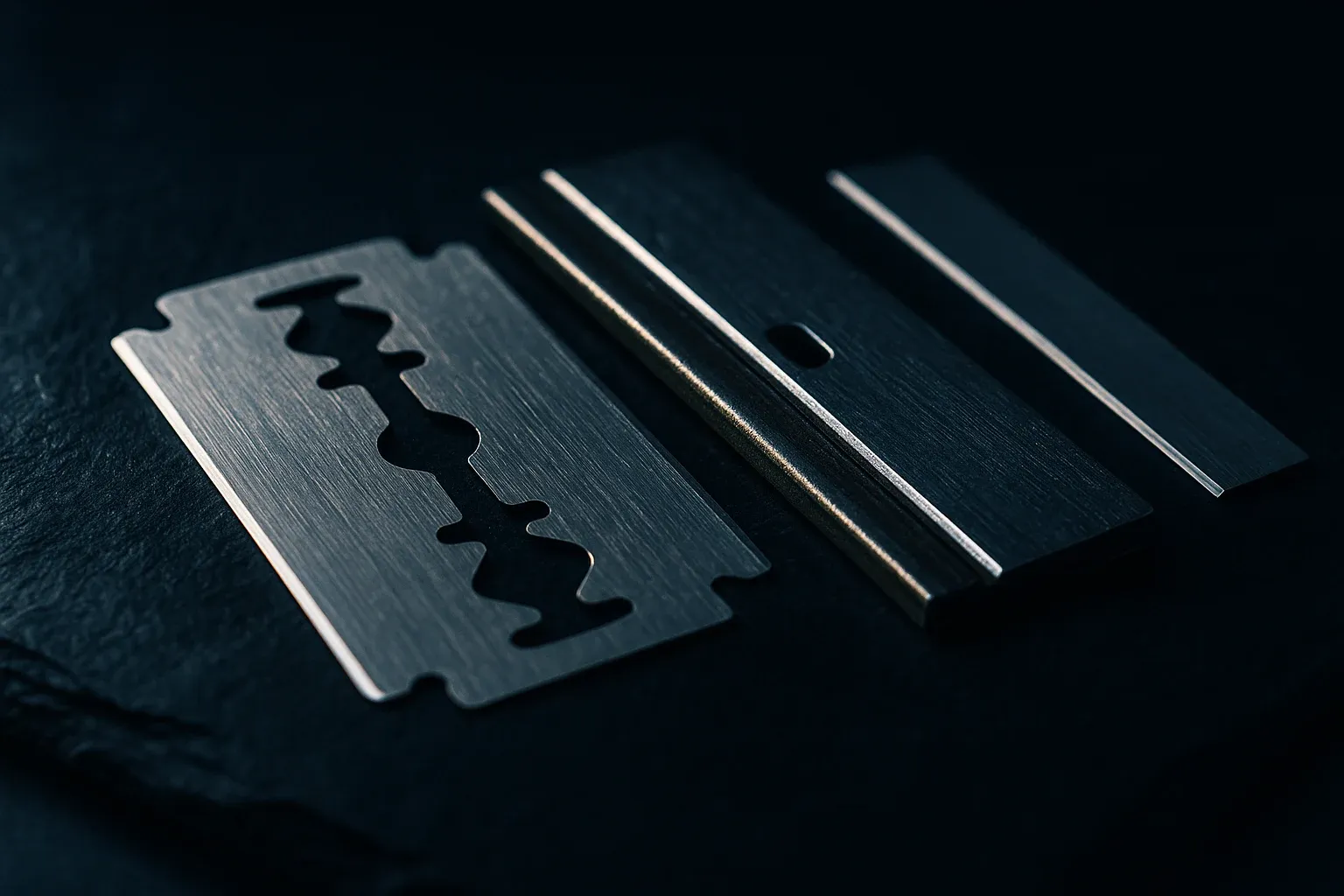
GEM razors, the classic American single edge, take a blade that looks like a small paint scraper with a reinforced spine. Vintage GEM Micromatics and push-button models are abundant, cheap, and legendarily smooth once the steep GEM angle clicks; the razor rides almost flat, cap against the cheek, which takes one strange morning to learn and then feels obvious. Blades are still manufactured and cost little.
Injectors are the format Schick built: a narrow, stiff blade that loads sideways from a metal magazine, no handling, no unwrapping. A vintage Schick Injector remains one of the great starter vintage buys, compact, forgiving, and quick; the format survived decades of nurses and travelers for a reason. Modern injector blades remain in production.
AC-blade razors are the modern SE renaissance: artisan razors built around the long, narrow Artist Club blades from Japanese barber culture. The archetype is the Blackland Vector, a compact machined stainless single edge built around the AC blade, stocked at The Wet Shaving Store. This is where machining brands and the head types conversation meet the SE world, with everything from mild dailies to deliberately wild designs.
And yes, straight razors are technically the original single edge; they are also a different hobby, and we treat them that way.
The Honest Comparison
Cost and availability: DE wins, no contest. DE blades are everywhere on Earth at pennies each with a hundred brands to sample; SE formats each use their own blade type at several times the price, from fewer makers. Learning curve: DE has the gentler on-ramp and every guide written for it, including ours. GEM’s flat-riding angle and the injector’s short head are different dialects, learnable in a shave or two but different. Shave character: this is where SE partisans earn their zeal. The rigidity is real, the audible feedback is real, and on heavy, dense, or wiry beards the planted feel of a stiff blade is a genuine advantage rather than a mystique. Variety: DE, overwhelmingly, in razors and blades both.
The verdict writes itself: DE is the right default and the right first format, which is why the starter kit is built around it. SE is the right second format, especially if your beard is heavy, your DE shaves feel chattery no matter the blade, or the vintage hunt appeals to you. A GEM or a vintage Schick costs less than a nice soap, and the eBay listings for a GEM single edge or a vintage Schick injector are exactly where that experiment starts. Both formats produce identical results in skilled hands; the difference is the drive, not the destination.
Frequently asked questions
What is the difference between single edge and double edge razors?
A DE blade is thin and flexible with two usable edges, tensioned into shape by the razor's clamp; SE blades (GEM, injector, Artist Club) are thicker and rigid with one edge. The practical difference is rigidity: SE blades feel planted and direct, DE blades offer more variety, lower cost, and a gentler learning curve.
Are single edge razors better for thick beards?
Many heavy-bearded shavers prefer them. A stiff SE blade does not flex or chatter when it meets dense growth, so it tracks straight where a thin DE blade can deflect. It is one of the few gear differences that consistently survives blind testing chatter in the community.
What blades does a GEM razor use?
GEM-format single edge blades with a reinforced spine, which look like small paint scrapers. They are still manufactured, inexpensive, and available online; standard DE blades do not fit GEM razors.
Are vintage Schick injectors still usable?
Yes. Injector blades are still in production, the razors were built to last decades, and a cleaned-up vintage Schick is one of the cheapest excellent vintage shaves available. The blade loads sideways from a magazine, so you never touch an edge.
Should a beginner start with SE or DE?
DE. It has the gentlest learning curve, universal blade availability at pennies each, and nearly every guide and community recommendation assumes it. SE formats make a rewarding second chapter once your technique is settled, particularly for heavy beards.
Happy shaving.