

Safety Razor Head Types Explained: Closed Comb, Open Comb, Slant, and Adjustable
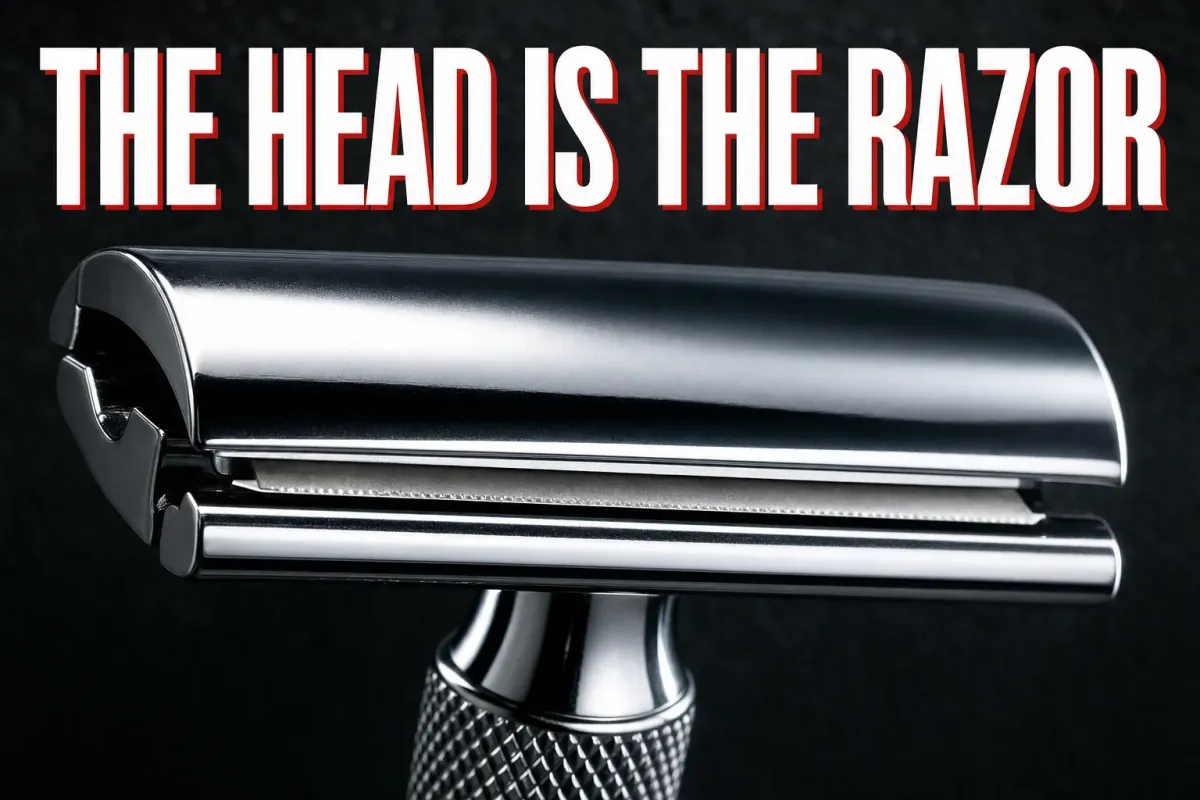
Put two safety razors side by side and they look like the same tool: a head, a handle, a blade in the middle. Then you shave with both and one feels like a warm towel while the other feels like it has opinions. The difference is almost never the handle and almost never the brand. It is the head, the few millimeters of metal that decide how the blade meets your face.
Every double-edge razor uses the same blades. What the head controls is how much of that blade you feel. Learn the four head types and razor shopping stops being guesswork.
What the Head Actually Does
A DE head is a sandwich: a top cap that bends the blade into a curve, and a baseplate underneath that decides how the skin approaches the edge. Two numbers people throw around, blade gap and blade exposure, both come from this sandwich, and together they set what shavers call aggression, how much blade the razor presents to your skin. We covered that vocabulary in depth in our aggressive razor explainer; the short version is that the guard under the edge is doing most of the deciding.
Closed Comb: The Default for a Reason
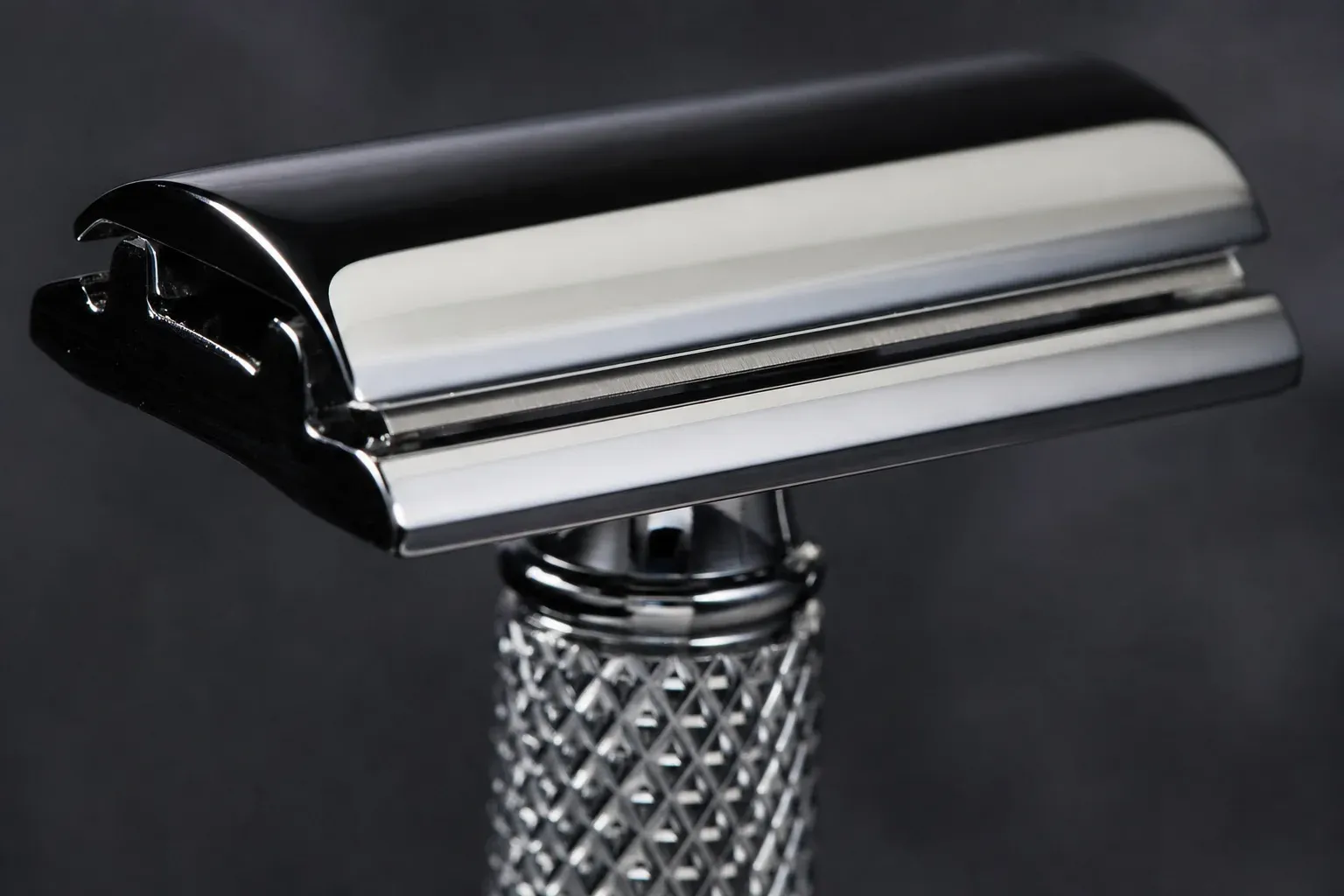
A closed comb head puts a solid, smooth safety bar under the blade. The bar flattens and stretches the skin a split second before the edge arrives, which is exactly the babysitting a beginner needs and plenty of veterans never stop appreciating. Most razors you can name are closed combs, and the classics of the type, like the Mühle R89 and its many siblings, are gentle, efficient, and boring in the best possible way.
If you are new, start here and stay as long as you like. Nothing about a closed comb is training wheels; it is simply the most forgiving way to hold a blade, and our beginner shortlist is built almost entirely from this type.
Open Comb: Teeth for Heavy Growth
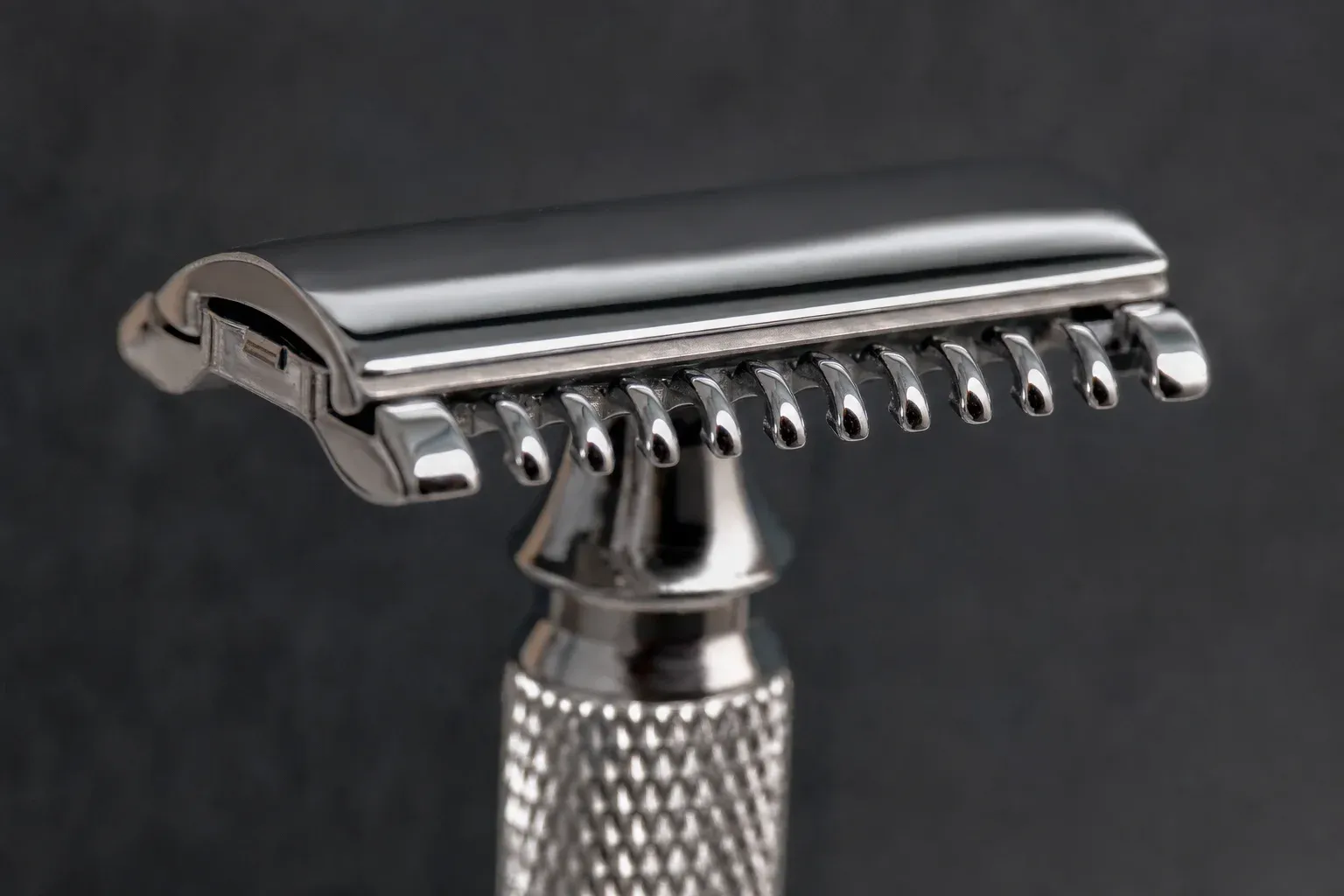
Swap the solid bar for a row of bare teeth and you have an open comb. The teeth guide lather and longer stubble directly to the edge instead of mowing it flat first, so nothing clogs and dense growth feeds cleanly into the blade. The trade is that less metal stands between the edge and your skin, so the shave feels more present and rewards technique that is already settled.
Open combs earned their reputation on three-day beards and heavy growth. The Mühle R41 is the famous modern example, a razor with a fan club and a warning label in equal measure. If you shave daily and lightly, you do not need one; if you regularly ask a closed comb to chew through serious stubble, an open comb is the tool built for the job.
Slant: The Guillotine Trick
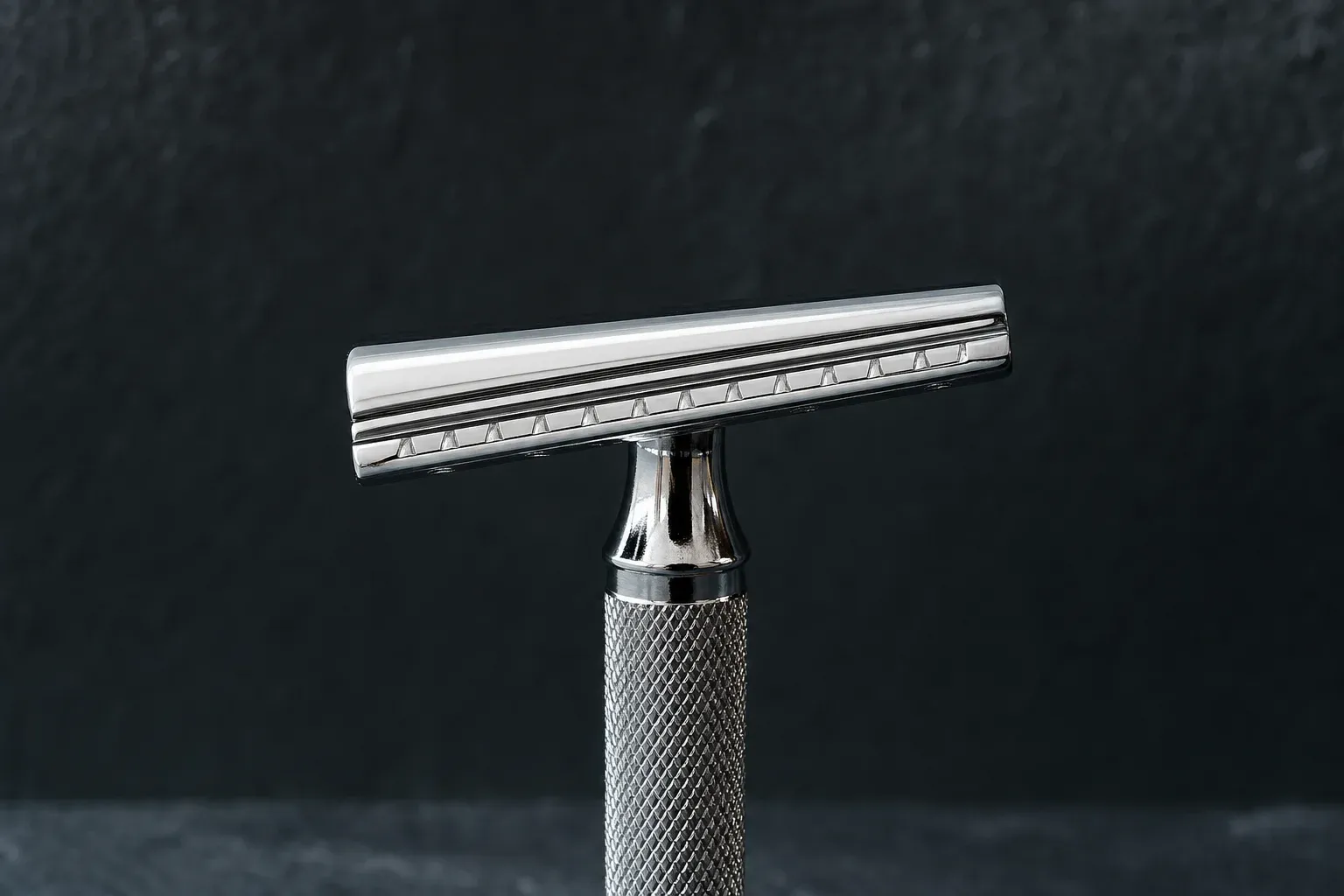
A slant head takes the ordinary sandwich and twists it, so the blade sits torqued at a slight diagonal. Instead of chopping hair straight on, the edge slices through it at an angle, the same reason a guillotine blade is angled and a chef draws the knife through a tomato instead of pressing down. Coarse hair that fights a straight chop gives up quietly to a slice.
The surprise of slants is that many shavers find them both more efficient and more comfortable than an equivalent straight head, because slicing needs less force than chopping. The Merkur 37C is the classic of the type. Slants suit wiry beards, sensitive skin that hates repeated passes, and anyone whose closed comb needs three trips over the same patch.
Adjustable: Every Razor in One
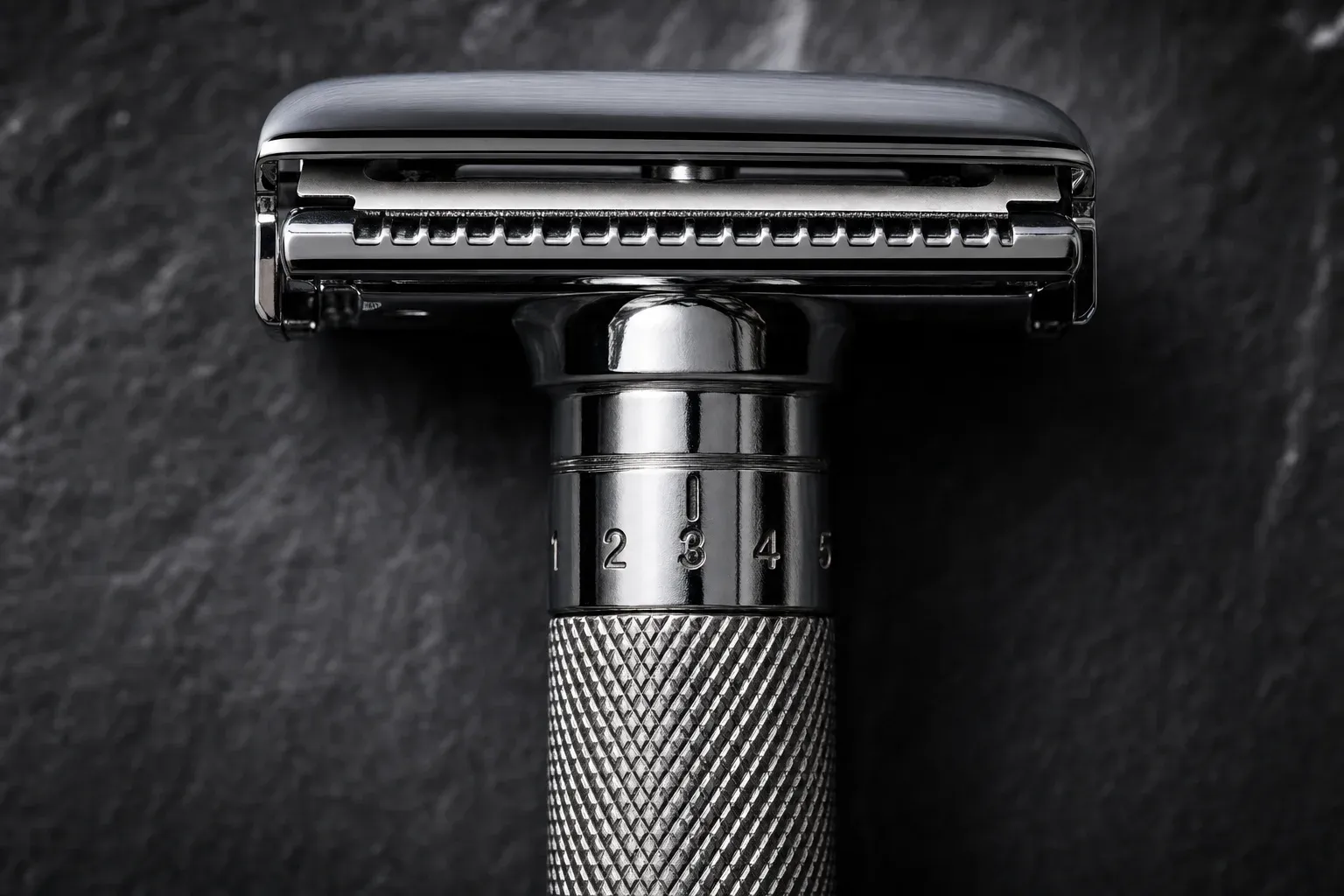
An adjustable puts the blade gap on a dial. Turn it down and the razor behaves like the mildest closed comb; turn it up and it approaches open-comb presence, all with the same head and the same blade. One razor becomes a whole shelf: mild for a daily touch-up, dialed up for the Monday beard, split the difference everywhere else.
Modern adjustables run from the Rockwell 6S, which adjusts by swapping numbered plates, to dial razors in the classic style. And the classic style is worth knowing about: the vintage Gillette Fatboy and the Gillette Slim Adjustable defined this category in the late 1950s and 1960s, and clean examples still shave beautifully today, which is why they remain some of the most hunted razors on the vintage market.
How to Actually Choose
Be honest about two things: your growth and your technique. Light-to-medium daily growth with developing technique points squarely at a closed comb. Dense or wiry growth that laughs at your current razor points at an open comb or a slant, with the slant as the more forgiving of the two. If your beard changes with your schedule, or you simply cannot stop tinkering, the adjustable is the one razor that meets every version of your week.
And whatever head you choose, remember what it cannot do: no head type fixes pressure or angle. The fundamentals in our complete beginner guide matter more than any geometry, and a well-driven closed comb will out-shave a badly driven anything.
The Bottom Line
The head is the razor. Closed comb babies the skin with a solid bar, open comb feeds heavy growth straight to the edge, slant slices instead of chops, and adjustable puts the whole spectrum on one dial. Same blade in all four; the guard under the edge is what changes your morning. Pick for the beard you actually have, not the one the marketing photographed.
Frequently asked questions
What is the difference between a closed comb and open comb safety razor?
A closed comb puts a solid, smooth safety bar under the blade, which flattens and stretches the skin just before the edge arrives, making it the most forgiving type. An open comb replaces the bar with bare teeth that guide lather and longer stubble directly to the edge, which suits heavy growth but puts less metal between the blade and your skin.
What is a slant razor and why use one?
A slant head holds the blade torqued at a slight diagonal so it slices through hair at an angle instead of chopping straight on, the same principle as an angled guillotine blade. Slicing needs less force than chopping, so many shavers with coarse hair find slants both more efficient and more comfortable than a straight head.
Are adjustable safety razors worth it?
If your beard or schedule varies, yes: an adjustable puts the blade gap on a dial, so one razor can run as mild as a gentle closed comb or approach open-comb presence. Modern options include plate-swap designs like the Rockwell 6S, and vintage dial razors like the Gillette Fatboy and Slim Adjustable still shave beautifully.
Which razor head type is best for beginners?
A closed comb. The solid safety bar is the most forgiving way to hold a blade, and there is nothing temporary about it; plenty of experienced shavers never use anything else. Open combs and slants reward technique that is already settled.
Does the head type matter more than the blade?
They matter differently. Every double-edge razor takes the same blades, and the head decides how much of the blade your skin feels through its gap, exposure, and guard design. Blade choice tunes sharpness and smoothness within whatever the head presents; no head or blade fixes poor angle or pressure.
Happy shaving.