

Rockwell Razors, Explained: The Flip-Plate System From R1 to T2
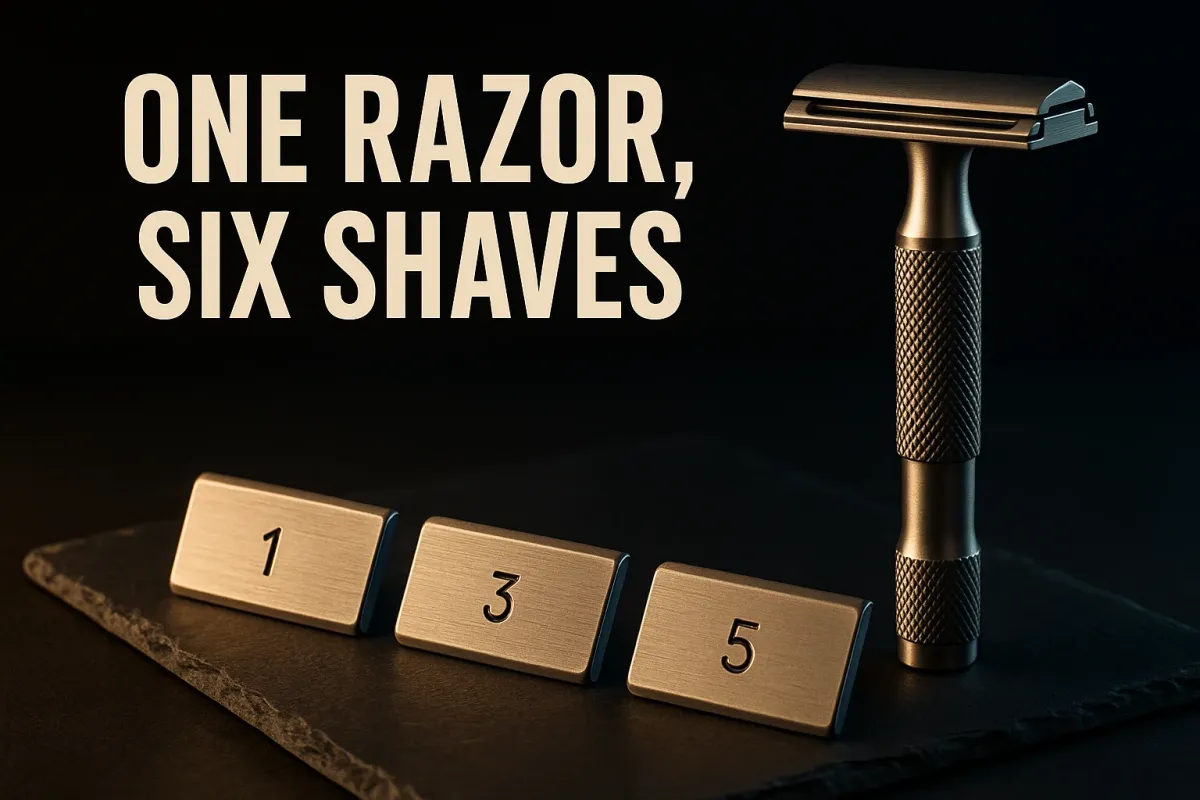
Most razors make you choose your aggressiveness the day you buy. Rockwell’s founding idea, which carried the Canadian company from a viral Kickstarter campaign in the mid-2010s to one of the most recommended names in the hobby, was to put that choice in the box instead: interchangeable baseplates, each with a different blade gap on each face, so one razor covers a beginner’s first month and a veteran’s coarse-beard Mondays. If the words blade gap are new, our aggressiveness explainer is the primer; Rockwell is essentially that article made into hardware.
How the Flip-Plate System Works
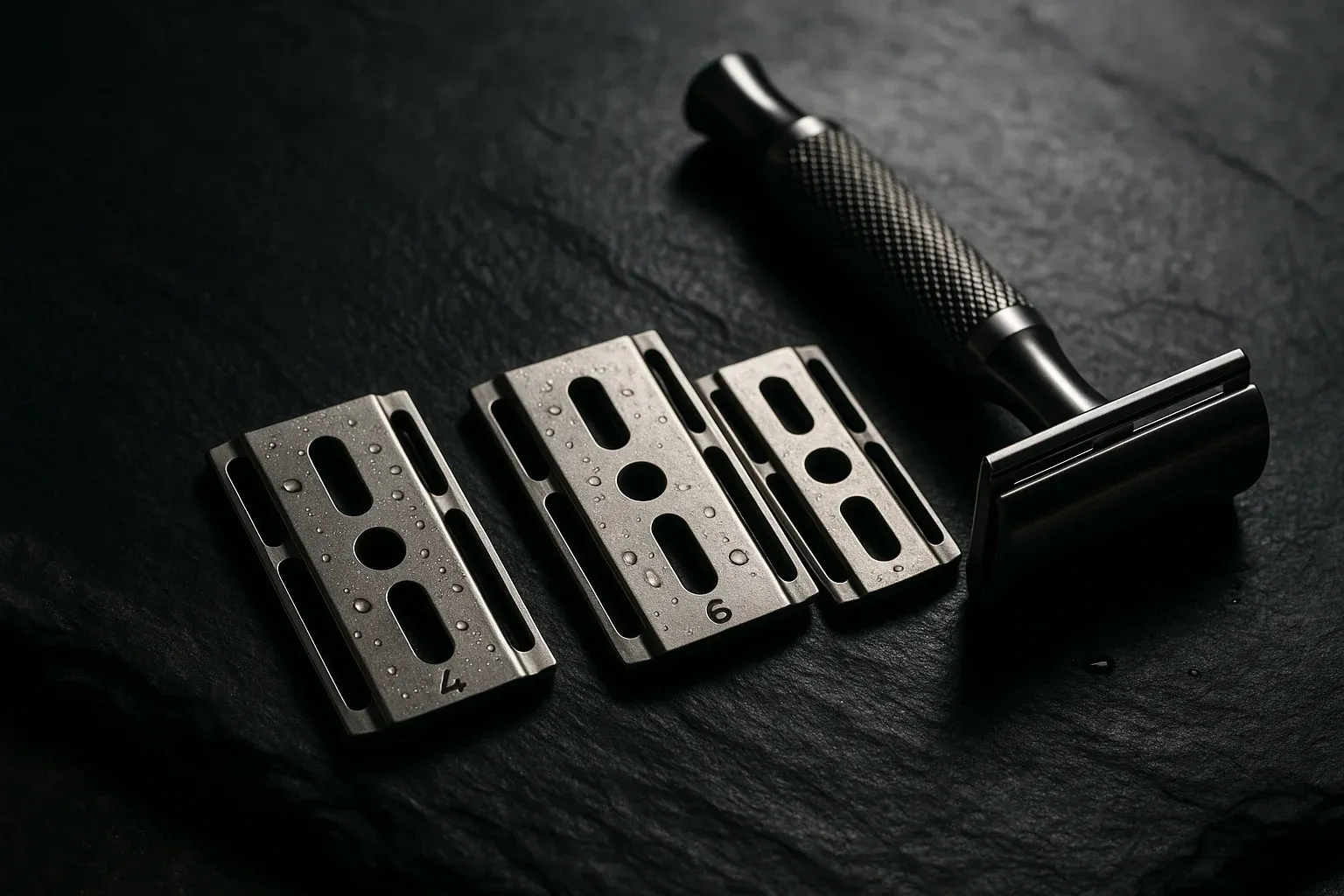
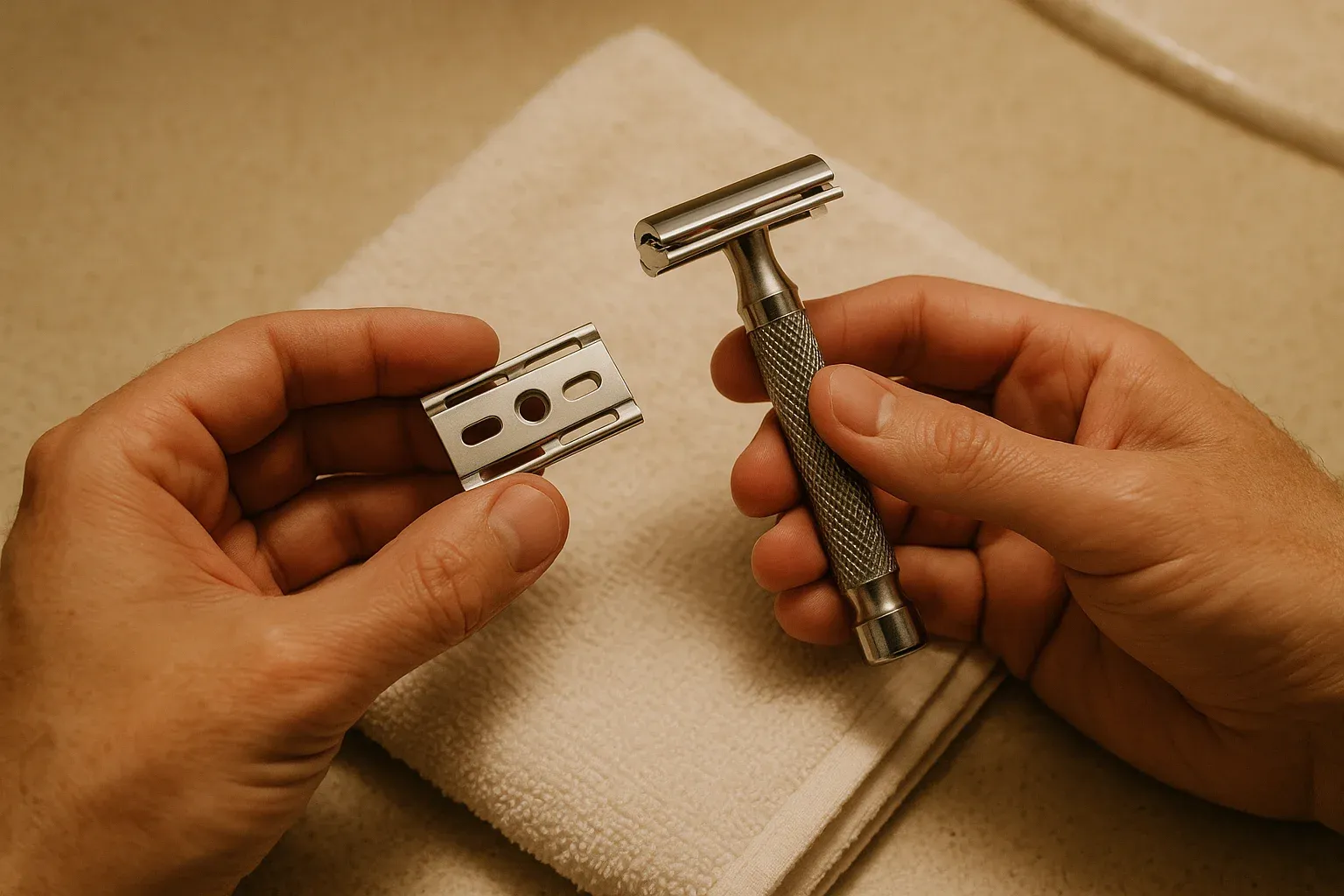
A Rockwell plate is stamped with a number on each side. Assemble the razor with side 1 up and you get the mildest shave in the range; flip or swap plates and the gap grows, feeding the blade more skin per stroke. The six-plate models run settings 1 through 6: 1 and 2 are genuinely gentle territory, 3 and 4 are the everyday middle where most faces settle, and 5 and 6 are for coarse growth and multiple days of it. Changing settings takes as long as unscrewing the handle, and because it is the same head geometry throughout, what you learn on setting 2 transfers directly to setting 4.
The Lineup, Bottom to Top
The Rockwell R1 Rookie is the fixed, entry model: one mild setting, no decisions, the trainer bike of the range. It is a fine first razor for the cautious, though the step up buys a lot of future.
The Rockwell 2C is the pragmatic middle: two plates covering the settings most shavers actually use, at a price that undercuts the six-setting models. Think of it as the range’s honest answer to what do most people really need.
The Rockwell 6C is the famous one: chrome-plated, all six settings, and for years the default answer when the group is asked what razor should I buy that I will not outgrow. The Rockwell 6S is the same idea executed in stainless steel: heavier in hand, tougher finish, buy-once-cry-once. Between them the honest difference is materials and budget, not shave quality.
The Rockwell T2 is the flagship: a true dial adjustable that moves through its range with a twist instead of a plate swap, for shavers who want vintage-adjustable convenience with modern machining. It competes in a different price class; the 6C and 6S remain the value core of the brand.
Who Should Buy Which
A beginner who wants one razor for the next decade: the 6C, run on setting 2 for a month, then explored, exactly the on-ramp the starter kit guide recommends. Sensitive skin that may never need the top settings: the 2C covers the territory for less. Wet hands, long horizon, appreciation for stainless: 6S. Adjustment as a daily pleasure rather than an occasional experiment: T2. And if a household needs one razor to serve two different faces, the flip-plate system is the entire answer; that is the use case it was born for.
Pair any of them with a blade found through a proper sampler run, per our blade buying guide, and remember that a setting change is often the fix people buy a new razor for.
Frequently asked questions
How does Rockwell's adjustable system work?
Instead of a dial, Rockwell ships interchangeable baseplates with a different blade gap on each face. The six-setting models cover settings 1 (mildest) through 6 (most aggressive); you pick a setting by which plate and face you assemble. It takes seconds and the head geometry stays consistent across settings.
Rockwell 6C or 6S, what is the difference?
Shave-wise they are the same six-setting system. The 6C is chrome-plated with a friendlier price; the 6S is machined stainless steel, heavier and essentially permanent. Choose by budget and material preference, not by shave quality.
Is the Rockwell 6C good for beginners?
It is one of the standard recommendations: start on setting 2, which is genuinely mild, and grow into higher settings as technique develops. You are buying the razor after your first razor at the same time.
What is the Rockwell T2?
Rockwell's dial-adjustable flagship: the range of the plate system controlled by twisting the head rather than swapping plates, in a premium machined package. It suits shavers who adjust often; the 6C and 6S remain the value picks.
One razor, six shaves, and the upgrade path is already in the box. That is a rare kind of honesty in hardware.
Happy shaving.