

What Does an Aggressive Razor Actually Mean? Gap, Exposure, and Efficiency
Ask three shavers what makes a razor aggressive and you will get three answers: it bites, it is loud, it is efficient. The word gets used for everything from a razor that removes three days of growth in one pass to a razor that removes skin. Those are not the same property, and buying your next razor gets much easier once you can tell them apart.
The short version: aggressiveness is about how much blade the razor lets touch your skin and at what attitude. It is set by the head’s geometry, and three measurements do nearly all the work.
The Three Numbers That Matter
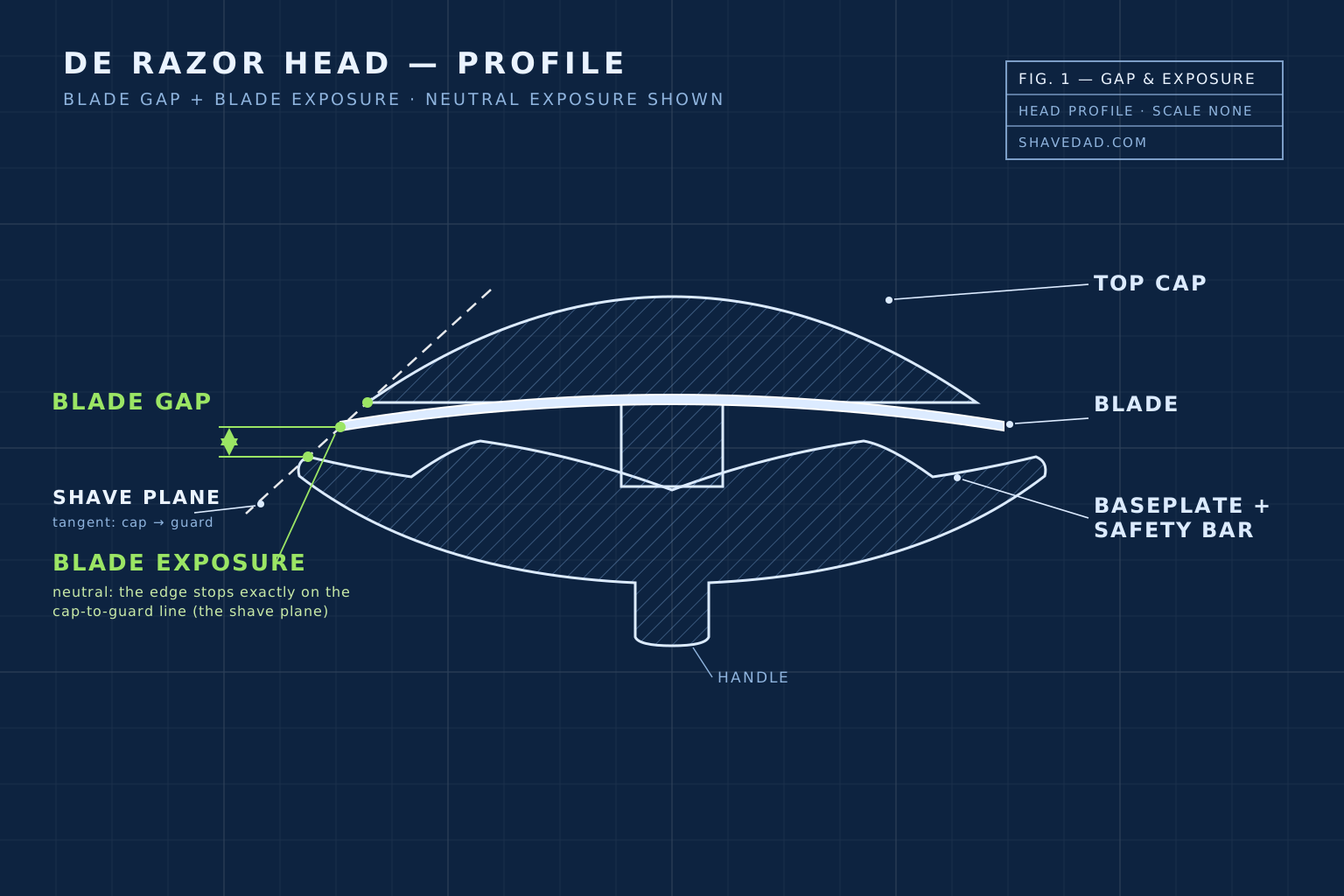
Blade gap is the one everyone quotes: the distance between the blade edge and the safety bar below it. A bigger gap lets more skin bulge up into the blade’s path, which means more cutting power and less margin for sloppy technique. Gaps run from well under half a millimeter on mild razors to over a millimeter on the wild end.
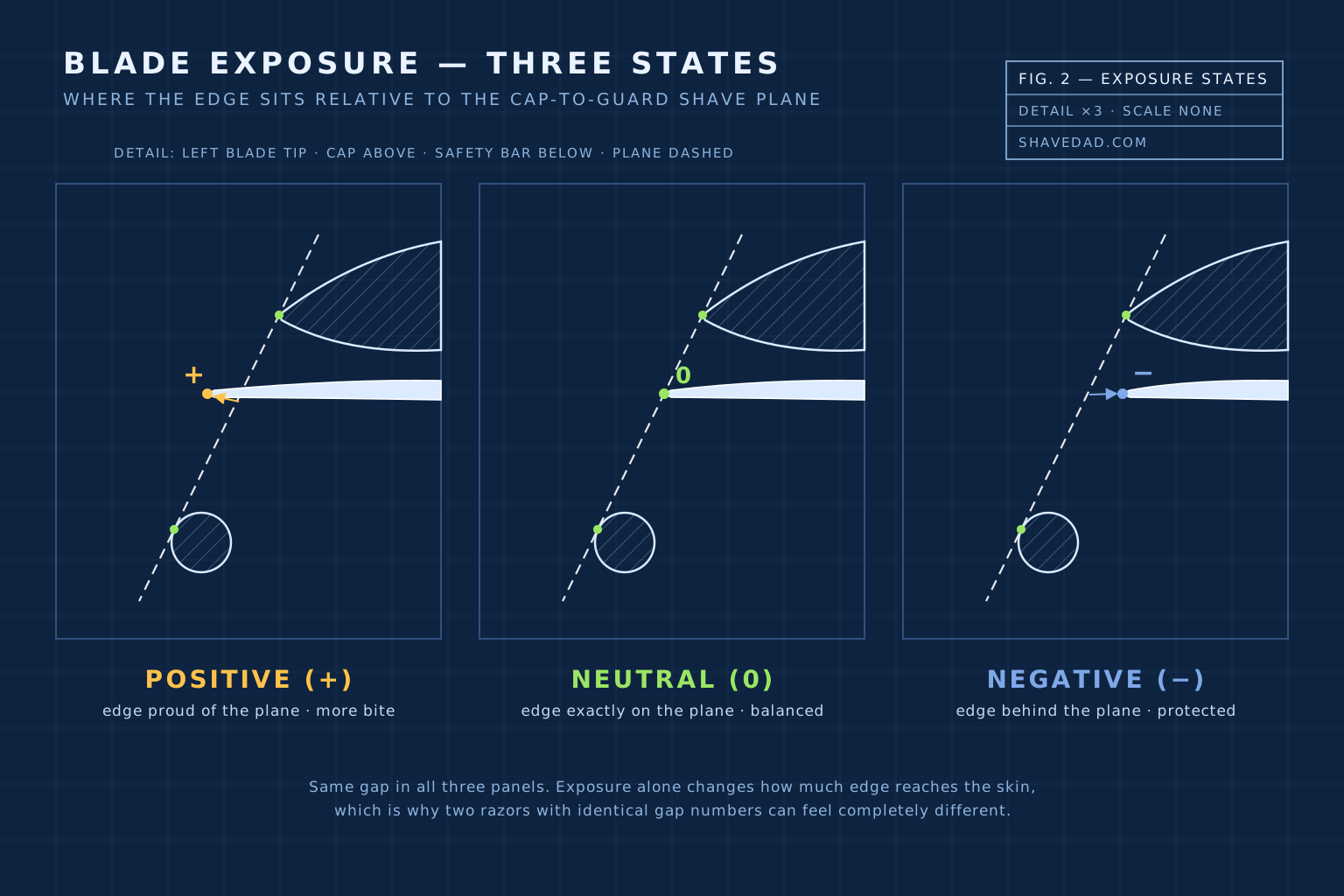
Blade exposure is the number that actually predicts how a razor feels, and it is the one spec sheets rarely print. Draw an imaginary line from the cap to the safety bar; exposure is how far the blade edge pokes above that line (positive), sits on it (neutral), or hides below it (negative). A razor can have a generous gap and still feel gentle because the edge sits protected behind that plane, and a small-gap razor with positive exposure can bite harder than its numbers suggest.
Blade angle and rigidity finish the picture. How the head bends the blade sets the working angle, and how firmly the cap clamps it determines whether the edge stays put or chatters. A rigidly clamped blade feels smoother at any aggression level, which is a big part of why two razors with near-identical gaps can feel worlds apart.
Aggressive Is Not the Same as Efficient
Here is the distinction that saves you money: efficiency is how much stubble comes off per pass, and aggression is how much the razor punishes error while doing it. The holy grail is efficient and comfortable at the same time, and modern head design chases exactly that combination, usually with a generous gap paired to neutral or negative exposure and a very rigid blade clamp.
That is why the community stopped treating aggressive as a compliment. A razor that mows through three days of growth but never feels dangerous is not mild, it is efficient. A razor that feels like a live wire on your face is not necessarily efficient, it is just exposed. When you read reviews, translate accordingly.
The Spectrum, With Landmarks
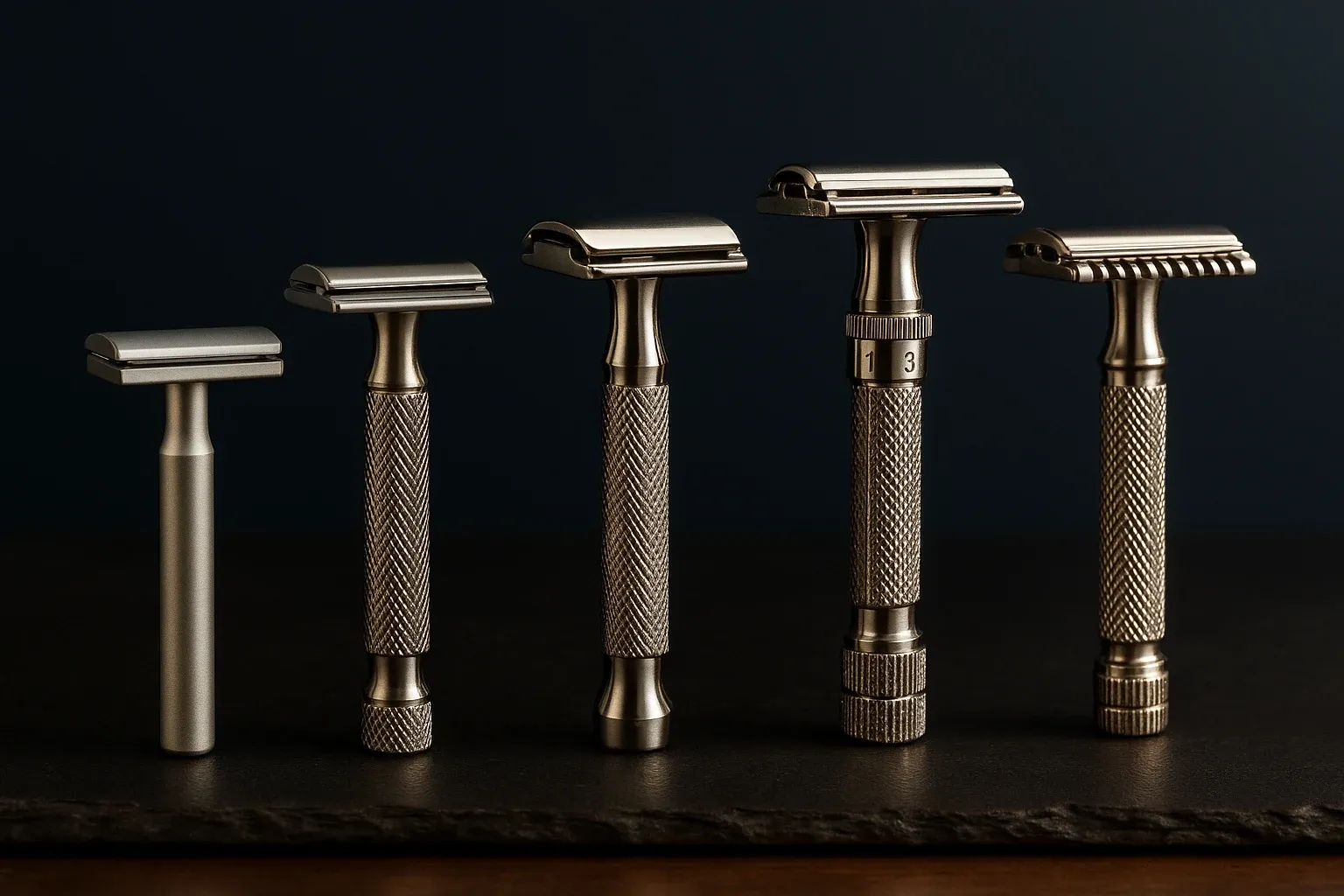
On the mild end sit razors like the Henson AL13, machined so the blade barely peeks out, with tiny exposure and a shave that is almost impossible to do wrong. The classic middle belongs to the Merkur 34C, the default first razor for a reason: enough gap to clear a daily beard, geometry forgiving enough for a learner. Lean further and you hit the Merkur 37C slant, which twists the blade so it slices at an angle, efficiency gained through geometry rather than exposure.
Adjustables put the whole spectrum in one handle. The Merkur Progress dials its gap smaller or wider with a twist of the knob, and the Rockwell 6C does the same trick with six swappable baseplates, so you can literally shave the same face on setting one and setting six and feel what gap does. On the traditional aggressive end, open comb designs like the Merkur 41C drop the safety bar entirely in favor of teeth that feed stubble and lather straight to the edge.
Our head types guide covers the closed comb, open comb, slant, and adjustable families in detail if you want the full tour.
How to Pick Your Spot
Match the razor to your beard and your skin, not to your ego. Light beard and reactive skin: stay mild, you lose nothing and gain comfort. Heavy beard, shaving every third day: you genuinely benefit from more gap or a slant, because a mild razor will have you making six passes, and passes are what irritate skin, not gap. Not sure: an adjustable is the honest answer, one purchase that lets you find your setting instead of guessing at checkout.
And remember that technique moves you along the spectrum for free. Lighter pressure and a shallower angle make every razor milder; our beginner technique guide is the cheapest upgrade there is. If your current razor feels harsh, run through the razor burn checklist before you blame the hardware.
Frequently asked questions
What does aggressive mean for a safety razor?
An aggressive razor lets more blade contact the skin, through a larger blade gap, positive blade exposure, or both. It cuts more stubble per pass but punishes pressure and angle mistakes with nicks and irritation, while a mild razor protects the edge behind its cap-to-bar plane.
What is blade gap on a safety razor?
Blade gap is the distance between the blade edge and the safety bar beneath it. A larger gap lets more skin reach the edge, increasing cutting power. It is the most quoted aggressiveness number, but blade exposure usually predicts feel better.
What is blade exposure?
Blade exposure describes where the edge sits relative to an imaginary plane from the razor's cap to its safety bar: above it (positive) feels more aggressive, on it (neutral) is balanced, below it (negative) feels protected. Two razors with identical gaps can feel completely different because of exposure.
Is an efficient razor the same as an aggressive one?
No. Efficiency is how much stubble comes off per pass; aggression is how harsh and error-intolerant the razor feels doing it. Modern designs aim to be efficient and smooth at once, typically by pairing a useful gap with neutral or negative exposure and a rigid blade clamp.
Should a beginner use a mild or aggressive razor?
Start mild to medium: something in the Merkur 34C class or gentler builds technique without punishing mistakes. Move up the spectrum, or to an adjustable like the Merkur Progress or Rockwell 6C, once your angle and pressure are consistent and you know your beard needs more.
Happy shaving.