

Reknotting a Shaving Brush? Here's What Glue the Group Actually Uses
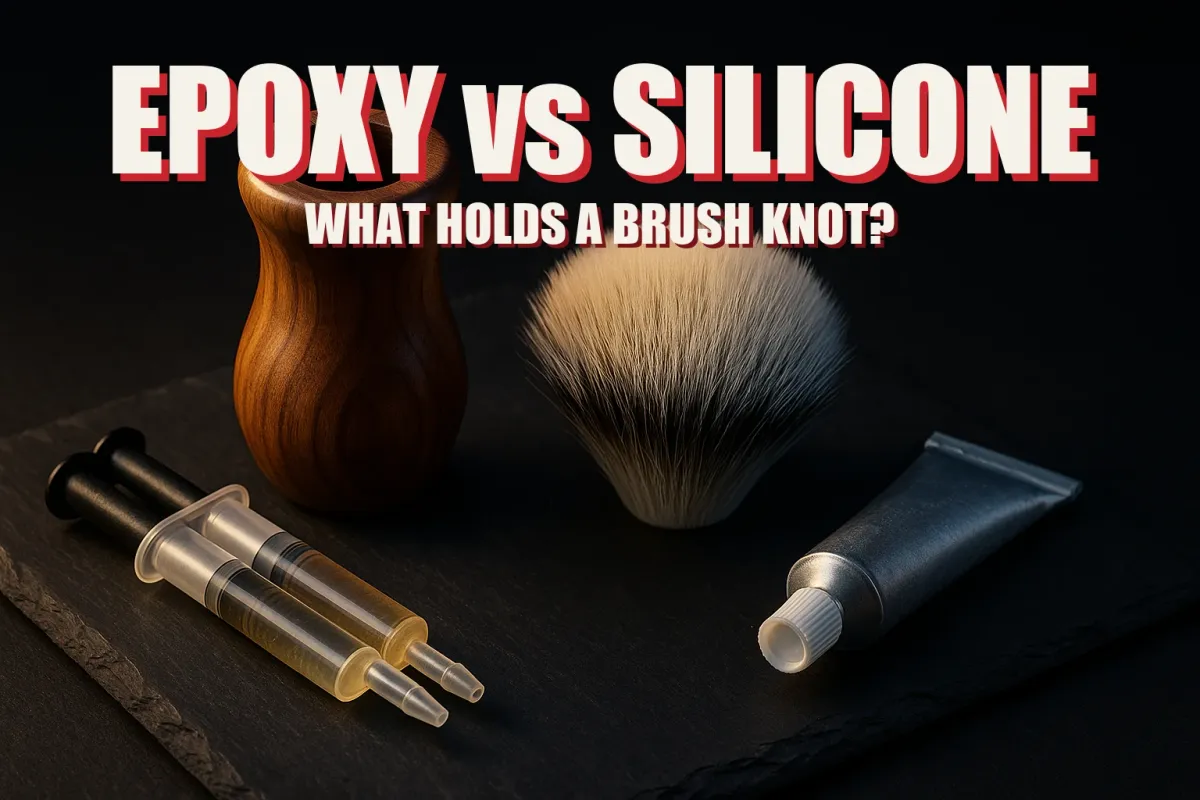
Mark had two brushes losing their knots and needed something to hold the new ones in. He asked the group what glue people actually use. Thirty some replies later, the thread had split clean into two camps, plus a handful of guys doing their own thing entirely.
Nate framed the actual decision better than anyone else in the thread: RTV silicone if you think you’ll ever want to pull the knot back out, two-part epoxy if you know it’s going in for good. Everything else in the thread is really just people picking a side of that line.
The epoxy camp is small but firm. Jeffrey, Jack, and Dave all named plain two-part epoxy, no qualifiers, no brand. Dondra and Paul went a step more specific and called for marine-grade epoxy, Paul naming PC-11 by name. Matthew covered both bases: two-part epoxy, or Gorilla Glue if you’d rather go that route. Francisco just said Gorilla Glue, flat out.
Silicone got more votes, and the reasoning behind it is the more interesting part.
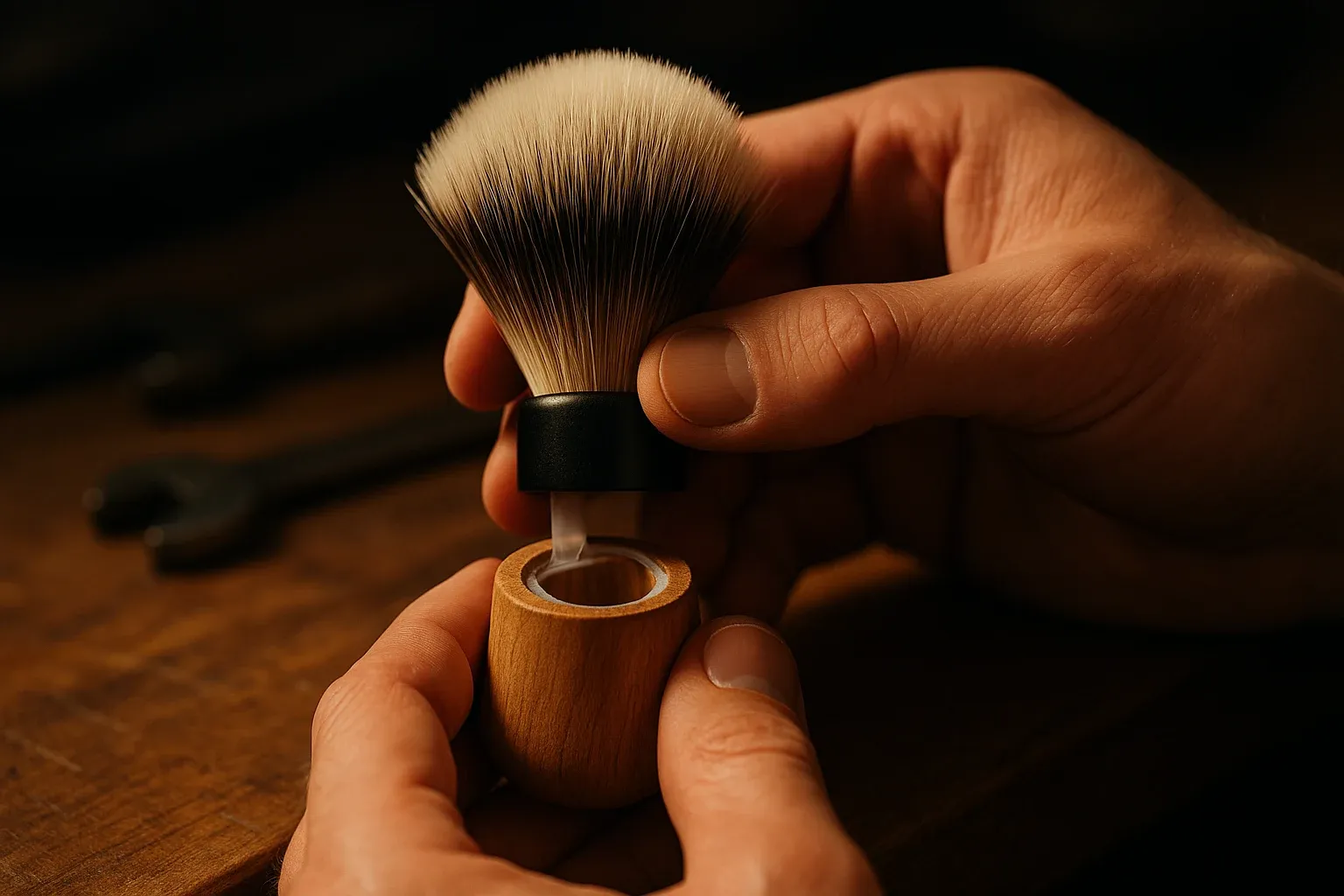
That’s nine years on one tube of Permatex Clear RTV Silicone with no failure, and the knot stays swappable if James ever wants to change it. Mark’s own answer lines up: clear silicone sealant, and it holds for years. His one tip worth keeping, if you overfill and get squeeze-out, methylated spirits will dissolve the silicone while it’s still wet, so you can clean it up before it cures.
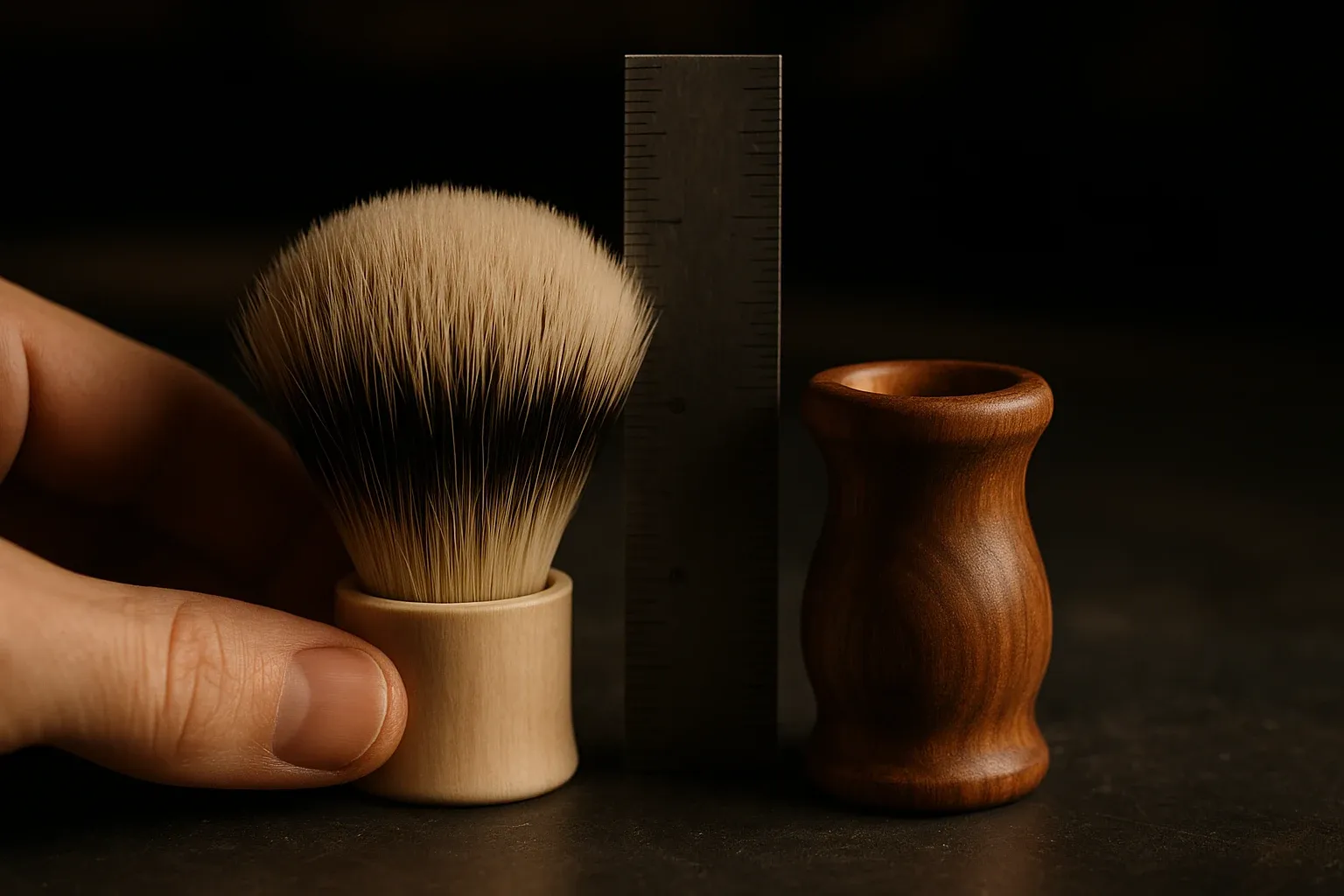
Ronald backed silicone too, with a warning attached: know the loft you actually want before you set the knot, because that gap is permanent once the silicone cures. Alex made the same point from the other direction, silicone stays the safer call precisely because you don’t always know up front whether you’ll want a different loft, or a different knot altogether, down the line.
That’s the whole silicone pitch in one line. It holds fine, and it lets you change your mind later.
A few guys had their own variations on the silicone theme. Tim uses food-grade silicone specifically. Will sets his knots with silicone and adds nylon washers as spacers to dial in the fit. Brian’s pick is a waterproof silicone that still leaves the knot removable if he wants it out.
One product got specific mention and then went away. Scott brought up a single-use silicone pack Maggards used to sell for exactly this job. Thomas went looking for the name and couldn’t track it down on the site. James confirmed it: it used to ship inside Maggards’ brush kits, and it doesn’t anymore. Worth knowing if you go looking for it and come up empty, it’s not you, it’s gone.
Not everyone in the thread cares which brand. Dimitris and Geovany both just said they grab whatever epoxy or silicone is on Amazon and call it a day. For a two-tube job on a brush handle, that’s a reasonable place to land too.
If you’re staring at a brush with a wobbly or dead knot, the group’s answer isn’t complicated. Want the option to change knots or lofts later, reach for RTV silicone. Know you’re never touching it again, two-part epoxy will outlast the handle. Either way, don’t skip Ronald’s point: measure your loft before you commit, because that part you don’t get to redo.
Frequently asked questions
What glue should you use to reknot a shaving brush?
The group's answer splits on one question: RTV silicone if you might ever want to pull the knot back out, two-part epoxy if it is going in for good. Both camps report holds measured in years; the silicone camp keeps the option of swapping knots later.
Does silicone really hold a shaving brush knot?
Yes. One group member has a brush set with Permatex Clear RTV Silicone going on nine years with no failure. Silicone's reputation as a temporary adhesive undersells it; the practical difference is that a silicone-set knot can still be pulled with a good yank when you want a change.
What kind of epoxy works for brush knots?
Plain two-part epoxy from any hardware aisle is the standard answer, with several members preferring marine-grade formulas like PC-11 for a wet-environment bond. Epoxy is permanent: changing the knot later means drilling it out.
How do you clean up silicone squeeze-out when setting a knot?
Catch it before it cures: methylated spirits dissolve RTV silicone while it is still wet, so overfill can be wiped clean. Once cured, it has to be cut or peeled away.
What should you check before gluing in a new knot?
The loft, the height of the knot above the handle rim, because it is locked in the moment the adhesive cures. Set the knot deeper for more backbone or higher for more splay, test-fit dry first, and only then glue. Spacers like nylon washers can dial the depth in precisely.
Happy shaving.