
The Wet Shaving Glossary: Every Acronym and Term, Actually Explained
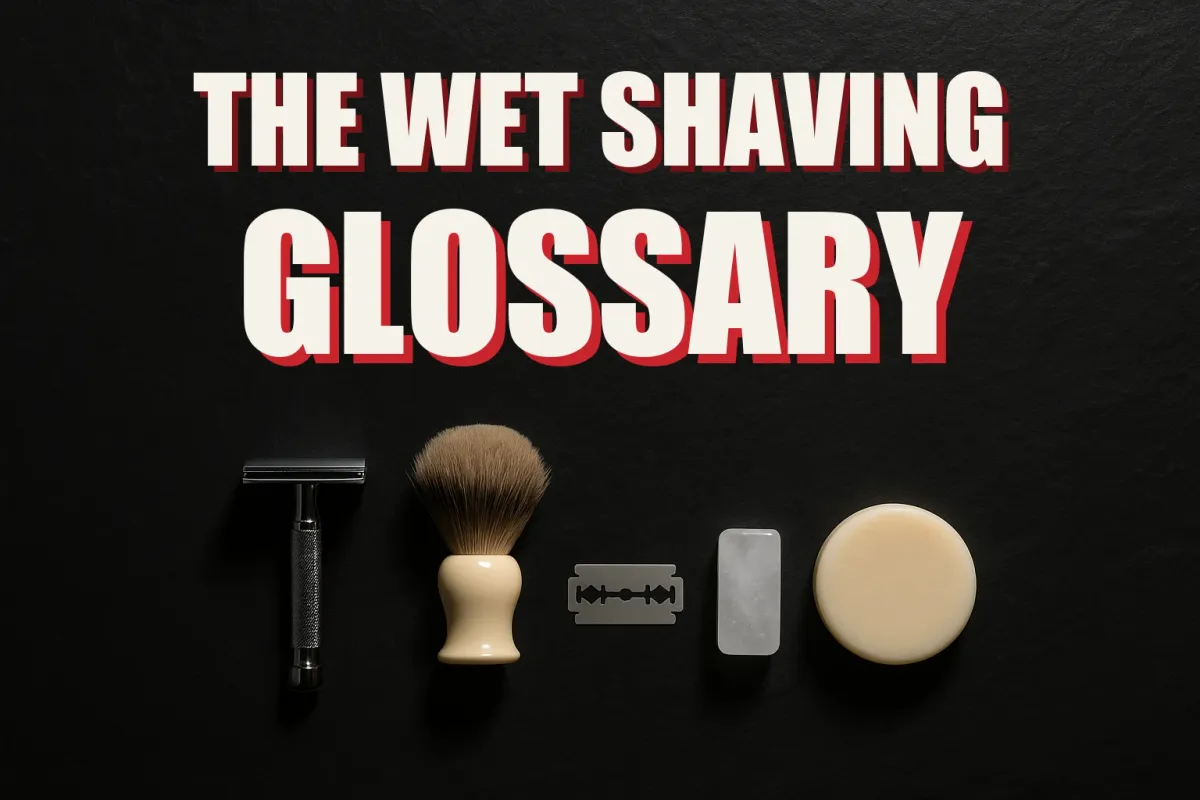
Every hobby builds a private language, and wet shaving built a dense one. Drop into any forum thread and you will hit sentences like “WTG then XTG got me a DFS with zero weepers, alum barely registered.” That sentence is perfectly clear to everyone in the room and total gibberish to everyone outside it.
This page is the decoder ring. Terms are grouped by what they describe, with the handful that carry real technique behind them explained properly rather than just expanded. If you want the compact A-to-Z reference instead, the Beginner’s Path glossary has every term as a one-liner with deep-linkable anchors; this page is the guided tour. Keep it open in a tab; nobody memorizes this in one pass.
Direction: WTG, XTG, ATG
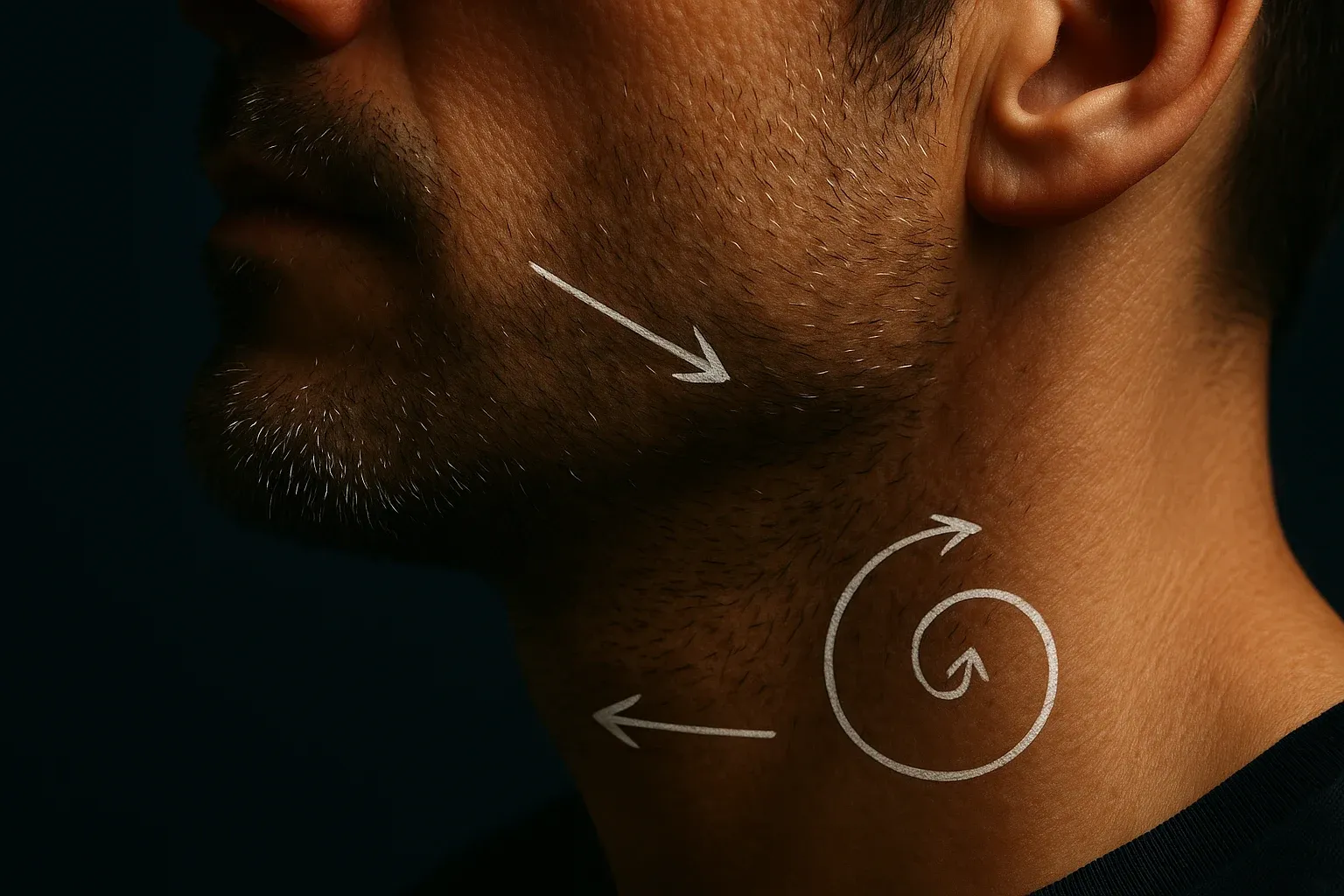
The big three describe your razor’s direction relative to how your hair grows.
WTG (with the grain) means shaving the direction your hair points. It is the gentlest pass and where every shave should start. XTG (across the grain) runs perpendicular to growth, cutting closer at a modest cost in comfort. ATG (against the grain) runs into the growth, closest and riskiest, and it is where most irritation is born when skin is not ready for it.
The catch is that grain direction is not uniform: most faces swirl, especially on the neck. That is why mapping your grain is the single highest-value fifteen minutes in this hobby, and why our three-pass guide builds the passes in that order.
Results: BBS, DFS, SAS
BBS (baby butt smooth) is the trophy finish: no stubble detectable in any direction, by touch. DFS (damn fine shave) is one honest step down, smooth in most directions with a whisper of stubble against the grain, and it is what most experienced shavers actually aim for on a daily basis. SAS (socially acceptable shave) is the pragmatic floor: looks clean, feels fine through a workday. There is a whole argument about whether chasing BBS daily is worth the skin damage, and we give it a full airing in our BBS versus DFS piece.
Weeper belongs here too: the tiny pinprick bleed that is not quite a nick, usually raised by an ATG pass or too much pressure. An alum block firms them up in seconds.
Hardware: DE, SE, TTO, and Friends
DE (double edge) is the classic safety razor blade with two usable sides; SE (single edge) covers the GEM, injector, and artisan formats with one thicker edge. TTO (twist to open) describes butterfly-door razors like the vintage Gillette Super Speed, where the head opens with a twist of the handle. A three-piece razor breaks into cap, baseplate, and handle, which is most modern razors. Open comb and closed comb describe the guard under the blade, teeth versus solid bar, covered fully in our head types explainer. Blade gap and exposure are the aggressiveness numbers, and they get their own deep dive too.
Shavette is the replaceable-blade straight razor barbers use; a true straight is the fixed blade you hone and strop. Strop is both the leather and the verb.
Lather: Loading, Blooming, Slickness
Loading is working your damp brush on the soap to pick up product. Blooming a soap means letting a little warm water sit on the puck while you shower to soften the top layer. Proto-lather is the pasty first stage before you add water. Slickness is the lather property that actually protects you, how easily the blade glides, while cushion is the pillowy feel between blade and skin. Residual slickness is what is left after the lather is scraped away, the difference between a soap that protects buffing strokes and one that does not.
A puck is the soap disc itself; croap is the soft middle ground between cream and soap that brands like Arko ship. All of it comes together in the lather guide.
Brushes: Knots, Lofts, and Scritch
The knot is the bundle of hair or fiber, measured in millimeters at its base; the loft is its height above the handle. Backbone is resistance when you press; scritch is the gentle exfoliating scratch of natural hair; splay is fanning the knot against your face. Badger grades run from pure through best, super, and silvertip, with Manchurian at the luxury summit. Synthetics dodge the grading entirely. The brush guide translates all of it into an actual buying decision.
Culture: SOTD, Den, Acquisition Disorders
SOTD (shave of the day) is the daily ritual post, gear photographed like a still life. Your den is your gear collection and wherever it lives. AD (acquisition disorder) is the community’s self-diagnosis for compulsive gear buying, usually prefixed: RAD for razors, SAD for soaps, BAD for brushes. Nobody is actually diagnosed; everybody actually has one. A 3017 is a use-it-till-it-is-gone soap discipline named after a forum thread, and sample gauntlet is the blade-sampler ritual every beginner runs through with a pack like the Gillette 365 sampler.
YMMV (your mileage may vary) is the community’s most honest phrase: blades, soaps, and razors genuinely perform differently on different faces, which is why every recommendation here comes with an implicit asterisk.
Frequently asked questions
What do WTG, XTG, and ATG mean in shaving?
They describe pass direction relative to hair growth: WTG is with the grain (gentlest, always first), XTG is across the grain (closer), and ATG is against the grain (closest and most irritation-prone). A classic three-pass shave runs them in exactly that order.
What does BBS mean?
Baby butt smooth: the perfectionist finish where no stubble can be felt in any direction. One step down is DFS, a damn fine shave, which most experienced shavers target daily because chasing BBS every day tends to cost skin comfort.
What is the difference between DE and SE razors?
DE (double edge) razors take the classic thin blade with two usable edges. SE (single edge) covers formats like the GEM and injector that use one thicker, stiffer blade. DE is the modern default; SE formats have devoted followings for their rigidity and feel.
What does loading and blooming a soap mean?
Loading is swirling a damp brush on the soap to pick up product, the foundation of a good lather. Blooming is letting warm water sit on a hard soap's surface for a few minutes first to soften it, which makes loading faster.
What does YMMV mean on shaving forums?
Your mileage may vary. Blades, soaps, and razor feels genuinely differ from face to face, so the community appends YMMV to almost every recommendation. It is the reason blade samplers exist: the only blade ranking that matters is yours.
Happy shaving.