

The Complete Shaving Brush Guide: Boar, Badger, Synthetic, and What the Knot Numbers Mean
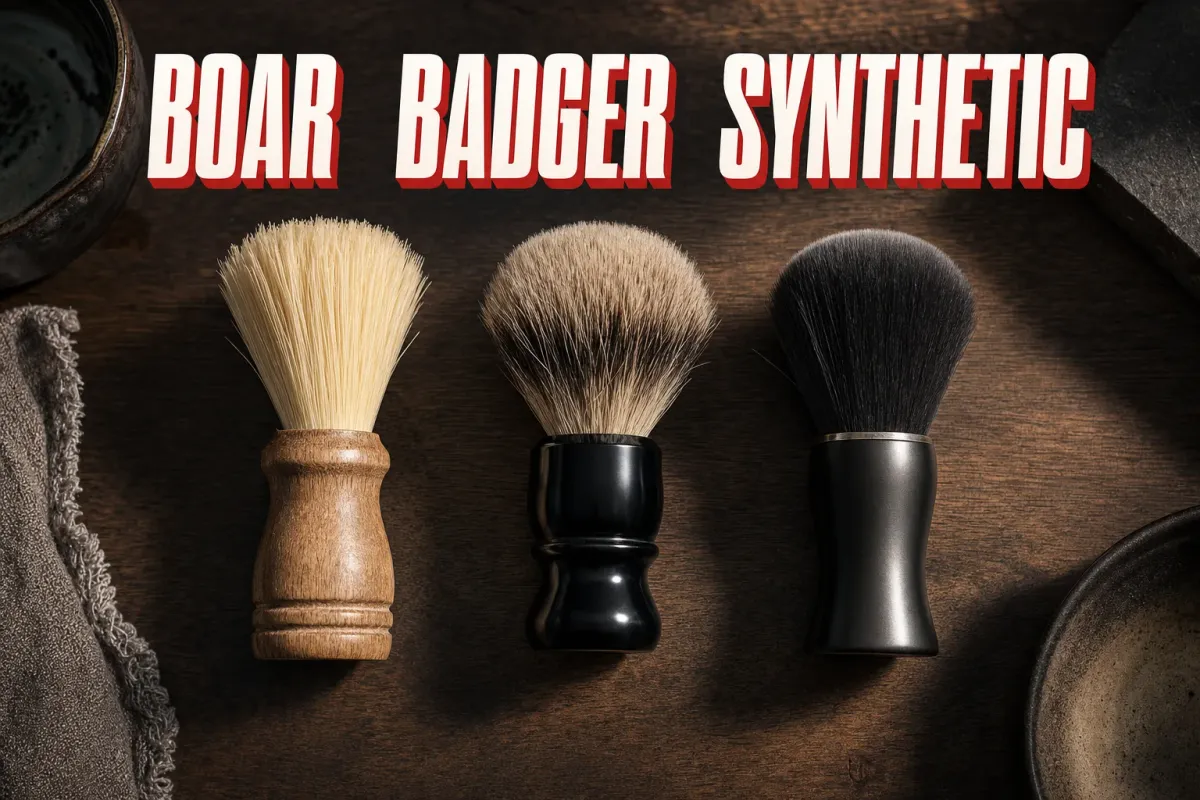
Ask ten wet shavers about razors and you will get a spirited but comprehensible debate. Ask them about brushes and the jargon wall goes up: silvertip, two-band, 24 by 57, fan knot, backbone, break-in, gel tips. The brush is the most personal tool on the shelf and somehow also the worst explained.
This is the whole picture in one place. What the brush is actually for, what the three fiber families genuinely feel like, what the numbers on a product page mean, and how to pick one without a glossary open in another tab.
What the Brush Is Actually For
A brush does three jobs a hand cannot. It builds lather by whipping water and soap into a dense, slick foam, working far more water into the mix than palms manage. It lifts the stubble, standing hairs up off the skin so the blade meets them cleanly instead of mowing them flat. And it exfoliates gently on every pass, clearing the dead skin that clogs blades and helps cause ingrown hairs.
You can technically wet shave brushless with a cream. But the brush is where the lather quality that protects your skin actually comes from, and for most people it is the single upgrade that makes the whole ritual click.
Boar: The Working-Class Hero
Boar bristle is the traditional barbershop fiber and the best value in brushes, full stop. New boar feels stiff, almost scratchy, and this is where the famous break-in comes from: over the first weeks of use the bristle tips split naturally, and a broken-in boar becomes soft at the tip while keeping a firm backbone underneath. That combination, soft face feel over real spine, is why plenty of veterans with drawers full of expensive badger still reach for a boar.
Boar loves hard soaps and face lathering, holds heat well, and costs less than lunch in its classic forms. The Omega Pro 48 is the reference professional boar, and the same maker’s smaller formats are the standard first-brush recommendation across the hobby. The one honest caveat is patience: a boar brush is at its worst on day one and its best at day thirty.
Badger: The Traditional Luxury
Badger hair is the classic luxury fiber, softer than boar out of the box and marketed under a ladder of grades that confuses everyone. From coarsest to finest, the usual labels are pure (darker, coarser hair, the firmest feel), best (finer and softer), super (finer again), and silvertip (the softest, palest-tipped hair, with the fluffiest face feel). Grading is not standardized between makers, which is why one brand’s best can feel like another’s super; treat the grades as each maker’s own ladder, not an industry ruler.
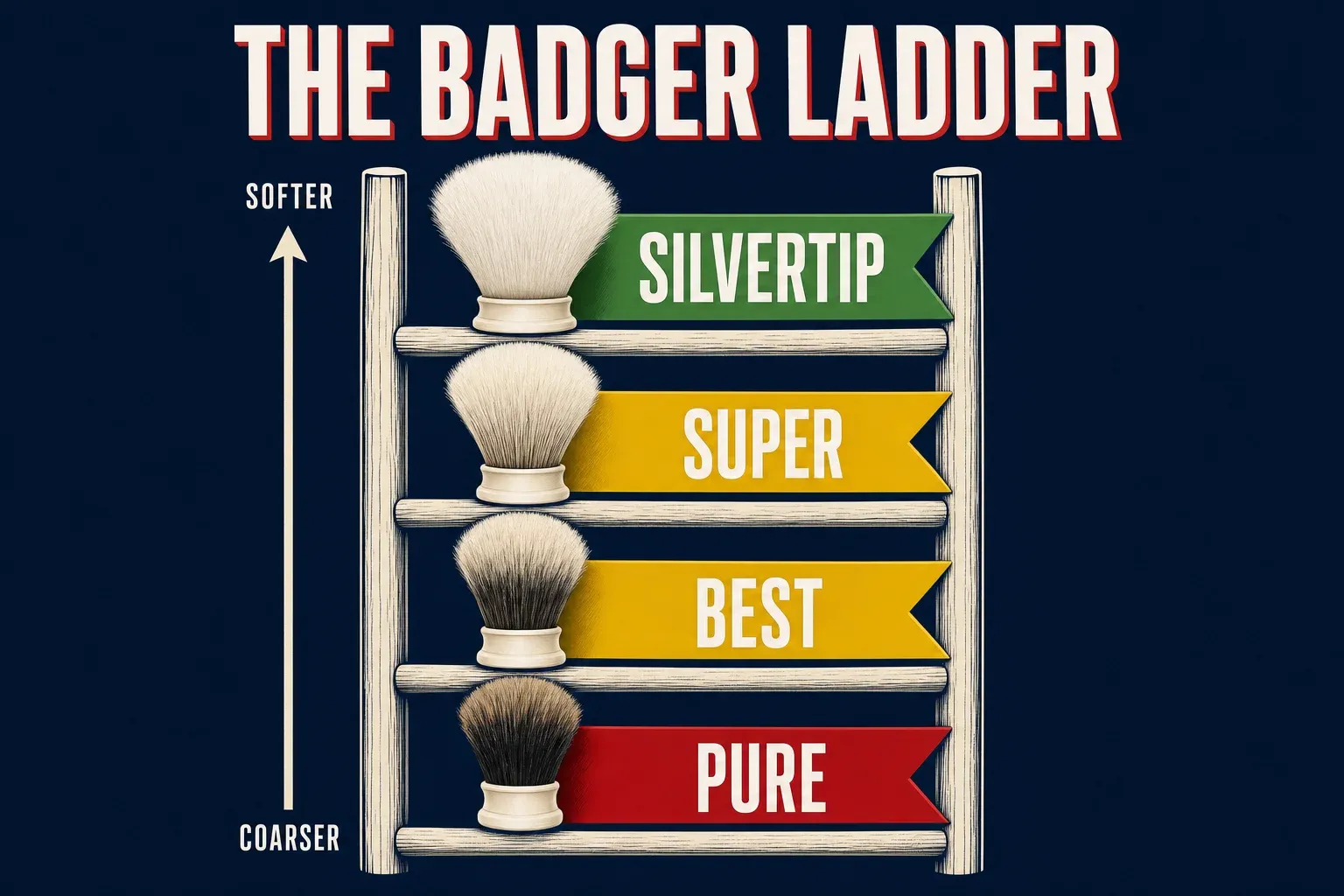
What badger gives you is water capacity and warmth. A good badger knot drinks water, releases it slowly, and delivers a warm, cushioned lather that synthetic fans grudgingly admit is lovely. The Edwin Jagger Best Badger is a fair entry point to the real thing, and the Parker Silvertip shows what the top grade feels like without silvertip-flagship pricing. The trade-offs are real too: badger needs thorough rinsing and drying, takes longer to dry than anything else on this list, and involves animal hair, which matters to some shavers.
Synthetic: The Modern Answer
Synthetic fibers were a punchline fifteen years ago and are now, by most accounts, the best value-per-dollar in the hobby. Modern synthetic knots are soft at the tips with decent backbone, need no break-in at all, dry in a fraction of the time of natural hair, shrug off travel and hard water, and involve no animals. They also need noticeably less product and water skill: a synthetic makes decent lather on your worst technique day.
The RazoRock Plissoft popularized the modern soft synthetic and remains a benchmark. At The Wet Shaving Store, the house TWSS Black G5 is exactly this style of knot, and the Simpsons Trafalgar T3 brings the most storied name in brushes to a synthetic at a friendly price. The Supply Silvertip chases the badger feel specifically. If a brush in this family is your first, you will not spend a single day fighting your equipment.
The honest knock on synthetics is character: they hold less water than badger and give up a little of that warm, heavy-lather luxury. Plenty of shavers keep one natural brush for slow weekends and a synthetic for every other day.
Knot Size, Loft, and Shape, Decoded
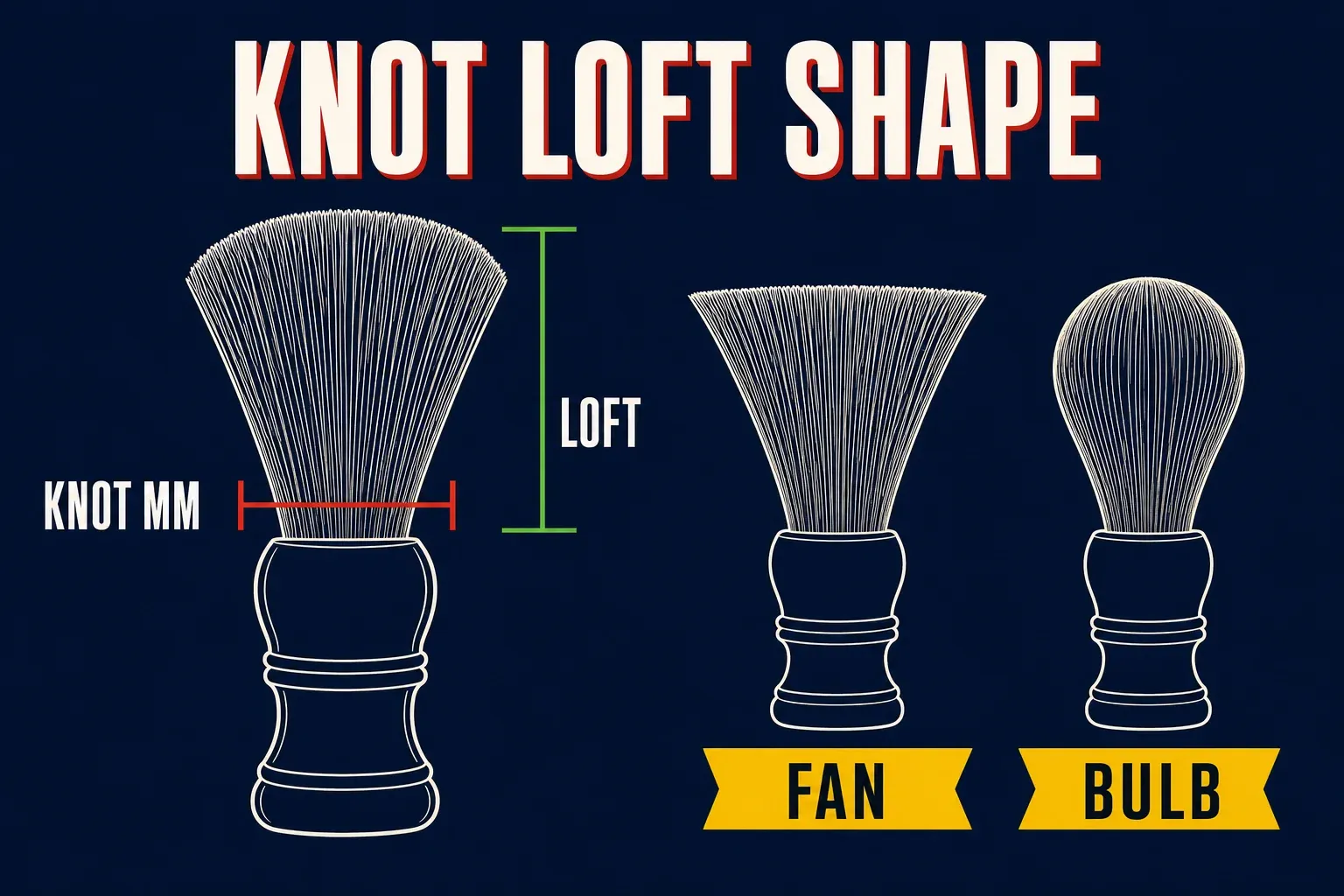
Product pages describe brushes with numbers like 24 by 57. The first number is the knot, the diameter of the bundle of fiber in millimeters where it enters the handle. The second is the loft, how tall the fiber stands above the handle.
Knot size sets how much lather the brush carries and how big its footprint is on your face. Around 22 to 24 millimeters is the versatile middle where most brushes live; under 22 gives precision and economy, over 26 is a big soft mop that soap-hogs and splays wide. Loft sets the feel: shorter lofts mean more backbone and scrub, taller lofts mean more softness and splay.
Shape is the last variable. A fan knot spreads like a paintbrush and paints lather in broad, even strokes. A bulb tapers to a dome that concentrates pressure at the center, which suits face latherers who like to work soap in with circles. Neither is better; they are different tools for the same job, and the difference is smaller than the internet argues about.
Face or Bowl?
Fiber and shape interact with how you lather. Face lathering, building the lather directly on your skin, rewards backbone, so boars and firmer knots shine there and add a pleasant scrub to the bargain. Bowl lathering rewards water capacity and softness, which is badger and soft-synthetic territory. If you have not settled your style yet, our lather guide walks both, and the Beginner’s Path brush chapter covers the first-brush version of this whole decision.
Keeping a Brush Alive
Brush care is ninety seconds of habit. Rinse the knot until the water runs clear, shake it firmly, and let it dry in open air, hanging or standing, but never sealed in a cabinet while damp. Damp storage is how knots grow funk and shed early. Natural hair appreciates an occasional deeper clean, especially in hard-water homes where mineral film stiffens badger over time. Do that little, and even a modest brush outlasts several razors’ worth of years.
Picking Yours
If you want the shortest possible answer: a soft synthetic if you want zero fuss from day one, a boar if you want the best value and enjoy a tool that improves with use, a badger if you want the traditional luxury and will give it the drying time it asks. In brush terms that is a TWSS Black G5 or a RazoRock Plissoft, an Omega Pro 48, or an Edwin Jagger Best Badger, and any one of them can be the only brush you ever need.
The real secret the spec sheets bury is that this is the least risky purchase in wet shaving. Brushes are cheap relative to razors, every fiber family has excellent options under casual-lunch money, and the wrong choice is not wrong, it is just the start of a rotation.
Frequently asked questions
What is the difference between boar, badger, and synthetic shaving brushes?
Boar starts stiff and breaks in over a few weeks to soft tips over a firm backbone, and is the best value. Badger is the traditional luxury: softer out of the box, holds the most water, delivers a warm cushioned lather, but needs real drying time. Modern synthetics need no break-in, dry fastest, handle travel and hard water easily, and make decent lather even with imperfect technique.
What do badger grades like pure, best, super, and silvertip mean?
They are a softness ladder from coarsest to finest: pure is darker, coarser hair with the firmest feel, best and super are progressively finer and softer, and silvertip is the softest, palest-tipped grade. Grading is not standardized between makers, so treat the labels as each brand's own ladder rather than an industry ruler.
What do shaving brush knot and loft numbers mean?
In a spec like 24 by 57, the first number is the knot diameter in millimeters where the fiber bundle enters the handle, and the second is the loft, how tall the fiber stands. Bigger knots carry more lather with a bigger footprint, shorter lofts feel firmer and scrubbier, taller lofts feel softer and splay more. The versatile middle is roughly 22 to 24 millimeters.
Is a fan or bulb knot better?
Neither. A fan spreads like a paintbrush and paints lather in broad even strokes, while a bulb tapers to a dome that concentrates pressure for working lather in with circles. Face latherers often like bulbs, painters like fans, and the difference is smaller than the debate suggests.
How do you care for a shaving brush?
Rinse the knot until the water runs clear, shake it firmly, and let it dry in open air, never sealed in a cabinet while damp. Natural hair benefits from an occasional deeper clean, especially in hard-water homes. That routine takes about ninety seconds and keeps even a modest brush alive for many years.
Do you really need a shaving brush?
You can wet shave brushless with a cream, but the brush is where protective lather quality comes from: it works far more water into the soap, lifts stubble so the blade cuts cleanly, and gently exfoliates. For most people it is the single upgrade that makes traditional shaving click.
Happy shaving.