

The Alum Block: What the Hundred-Year-Old Rock Actually Does
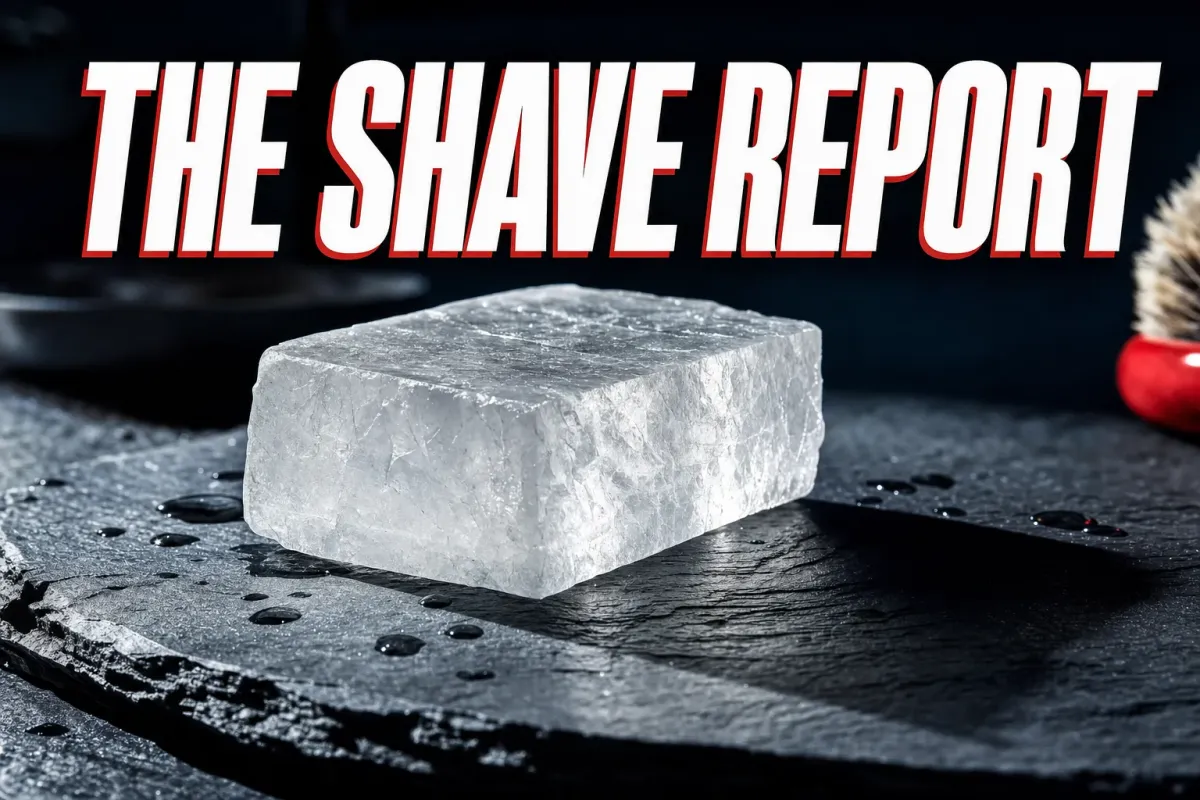
There is a translucent white block sitting in wet shaving kits that looks like it was quarried rather than manufactured, and in a sense it was. The alum block is the oldest tool on the shelf, a solid piece of mineral salt that barbers were rubbing on faces long before anything on your bathroom counter had a brand name. It costs about as much as a sandwich and a single block lasts for years.
It is also the most misunderstood thing in the hobby, credited with everything from sealing cuts to curing razor burn. The truth is simpler and, honestly, more useful.
What Alum Actually Is
An alum block is potassium alum, a naturally occurring mineral salt pressed or cut into a bar. It is the same family of compound found in some crystal deodorants and in styptic pencils, and its working property is that it is a strong astringent: applied to wet skin, it constricts tissue and tightens the skin surface.
That is the whole mechanism. Everything an alum block does for a shaver flows from that one property.
The Sting Is the Point
Glide a wet alum block over your face after a shave and for a few seconds you feel a mild sting wherever the shave was rough. Not everywhere, and that is the magic: alum stings where the skin is freshly abraded and stays quiet where your technique was clean.
This makes it the most honest feedback tool in shaving. Pressed too hard on your left jaw? Alum will tell you. Third pass on the neck was one too many? Alum will tell you, in exactly the spot, thirty seconds after the shave, while you can still remember what you did. Experienced shavers call it the shave report, and plenty keep using alum for the report alone long after their technique has made the sting rare. If the same patch lights up every day, that patch is where your angle, pressure, or pass count needs work, and our razor burn chapter covers what to change.
Beyond the feedback, the astringency calms the immediate post-shave flush, takes the edge off minor razor burn, and firms up weepers, those tiny pinpricks that are not quite cuts. It leaves the skin feeling tight and toweled, which some shavers love and others find drying.
What Alum Is Not
Alum has a century of folklore attached, so a little honesty is in order. It is sold with an antiseptic reputation, and while that traditional claim is on nearly every package, treat it as tradition rather than medicine; what alum verifiably does is constrict, not disinfect. It is not a cure for razor burn either; it soothes the symptom while your technique fixes the cause. And it is not a styptic replacement for a real cut. For an actual nick, a styptic pencil, the same chemistry in concentrated pencil form, is the right tool: alum is a whole-face rinse, styptic is a spot treatment.
How to Use One
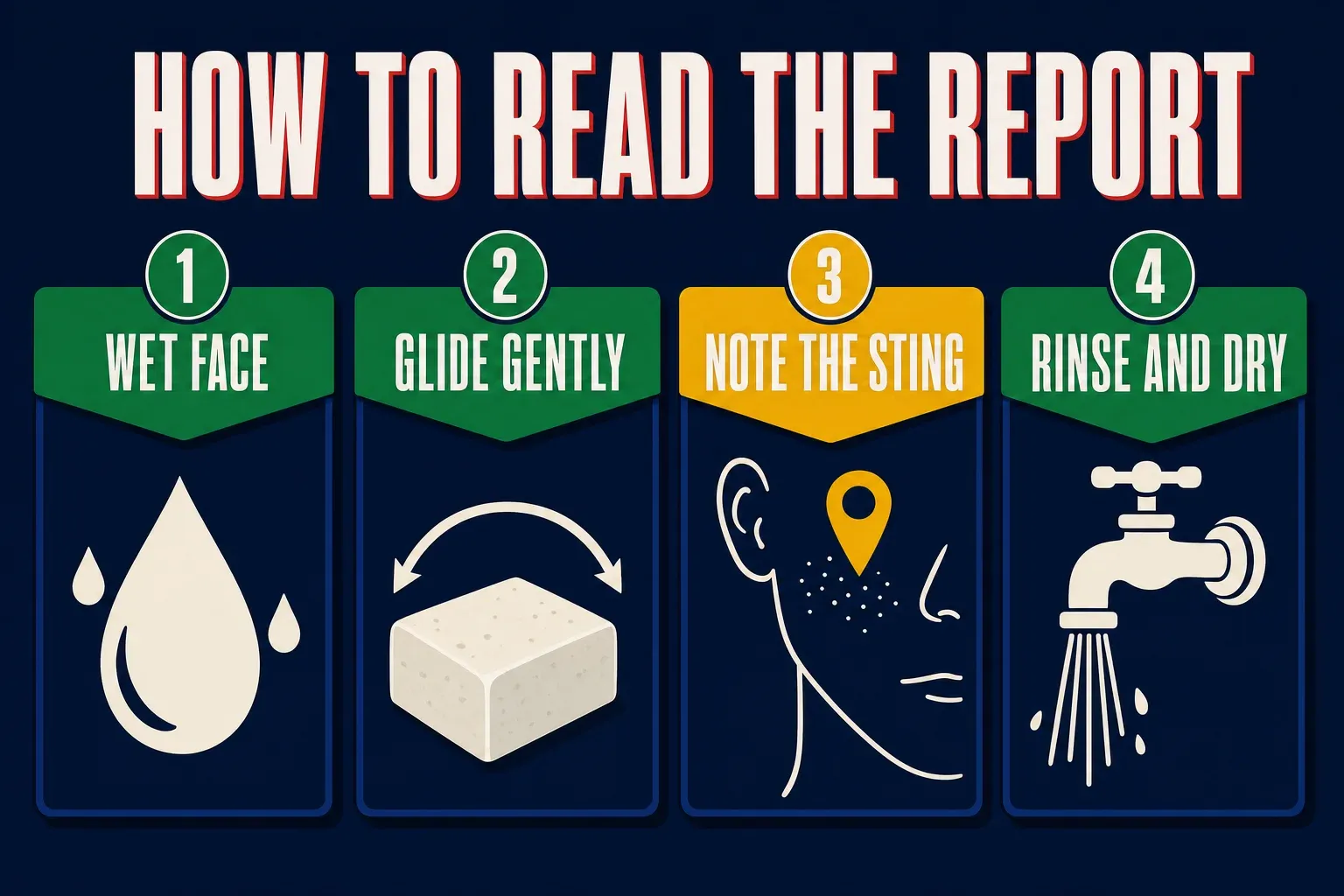
The routine takes twenty seconds. After your final rinse, while your face is still wet, glide the block gently over the whole shaved area, a few passes, no pressure. Read the report: note where it stings. Wait thirty seconds to a minute, then either rinse it off, which most people prefer, or leave it for maximum tightening if your skin tolerates it. Then apply your usual balm or splash once the skin settles.
Two care habits keep the block alive for years: rinse it clean after use, and set it somewhere it can dry, not in a puddle on the sink edge, where it will slowly dissolve into the world’s saddest bar of soap. A dry alum block is functionally immortal.
Who Should Skip It
Alum is astringent and mildly drying, which is exactly why it works and exactly why it is not for everyone. If your skin is very dry or reactive, daily alum can add to the tightness rather than calm anything, and shavers on the sensitive end often do better saving it for rough-shave days or skipping it in favor of a soothing balm, something in the lane of the Supply Healing Post Shave. Our sensitive skin guide is the deeper dive on that whole routine. And if a shave was genuinely clean, you do not need the alum step at all; it earns its place on the days something went wrong.
Getting One
There is no premium tier to chase here, which is refreshing. A block is a block; the differences are size and shape. The Doctor Plus alum at The Wet Shaving Store is the classic large-format stone, and whatever block you buy will likely outlast the razor you use it with. For the money involved, it is the cheapest genuinely useful thing you can add to a shave kit, if only for the report card.
Frequently asked questions
What does an alum block do after shaving?
Alum is a strong astringent: glided over wet skin after a shave it constricts and tightens the surface, calms the immediate post-shave flush, takes the edge off minor razor burn, and firms up weepers. It also stings briefly wherever the shave was rough, which makes it a precise feedback tool for your technique.
Why does an alum block sting?
It stings where the skin is freshly abraded and stays quiet where your technique was clean. The sting maps exactly where you pressed too hard, took one pass too many, or got the angle wrong, which is why shavers call it the shave report.
Is an alum block antiseptic?
That reputation is traditional and appears on nearly every package, but what alum verifiably does is constrict tissue, not disinfect. Treat the antiseptic claim as folklore, use it for the astringency and the feedback, and use a styptic pencil for actual nicks.
What is the difference between an alum block and a styptic pencil?
Same family of chemistry, different jobs. The block is a whole-face pass after the shave for tightening and feedback; the styptic pencil is the concentrated spot treatment you press onto an actual nick to firm it up quickly.
How do you use and store an alum block?
After your final rinse, glide the wet block gently over the shaved area, note where it stings, wait up to a minute, then rinse or leave it before your balm or splash. Rinse the block itself and let it dry between uses; stored dry, one block lasts for years.
Happy shaving.