

The Best Shaving Soaps and Creams for Sensitive Skin
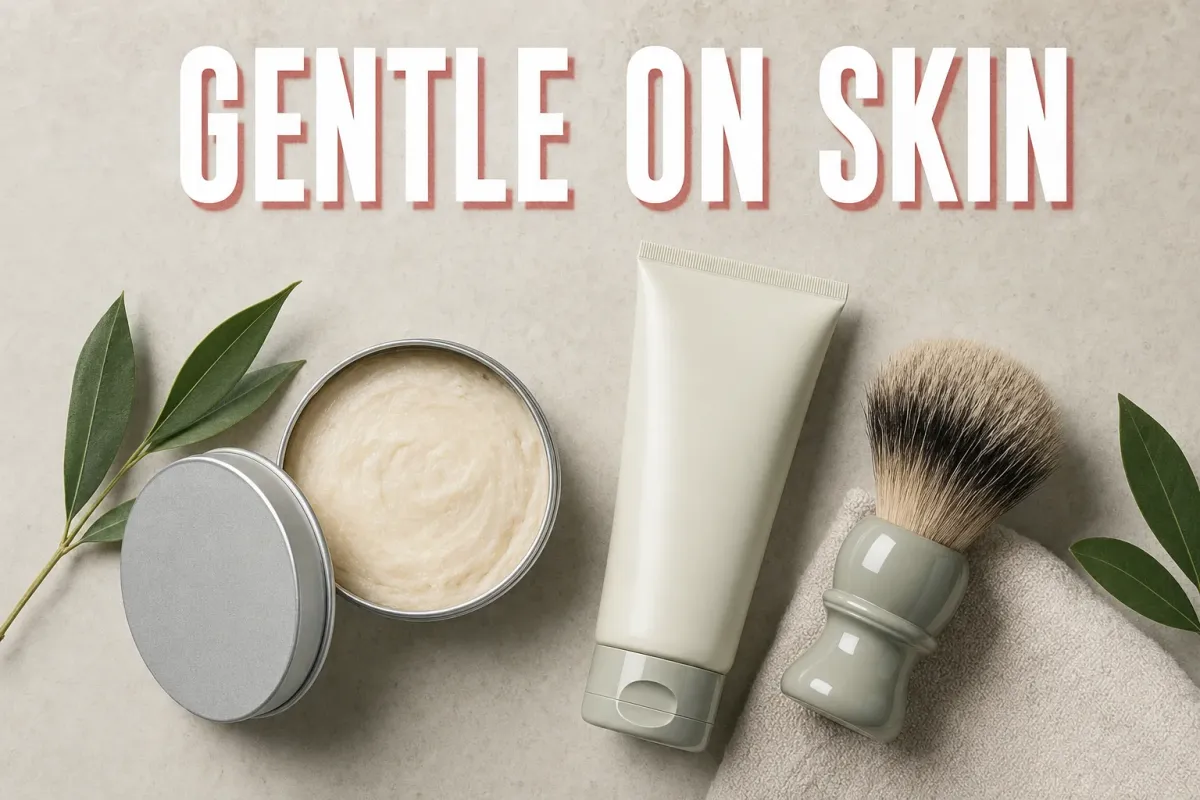
If shaving leaves your skin red, tight, itchy, or broken out no matter what you do, the soap is a reasonable place to look, but it is not the whole story. The word sensitive on a label is marketing, not a guarantee, and some products that shout about being gentle still contain the very things that set reactive skin off. The good news is that sensitive skin and a comfortable shave absolutely can coexist. It just takes understanding what actually irritates your skin, knowing what to look for, and pairing the right product with the right technique. Here is how, plus the shortlist worth trying.
What Actually Irritates Sensitive Skin
Most shaving irritation blamed on “harsh soap” comes from a short list of real culprits, and knowing them lets you shop by ingredient instead of by marketing.
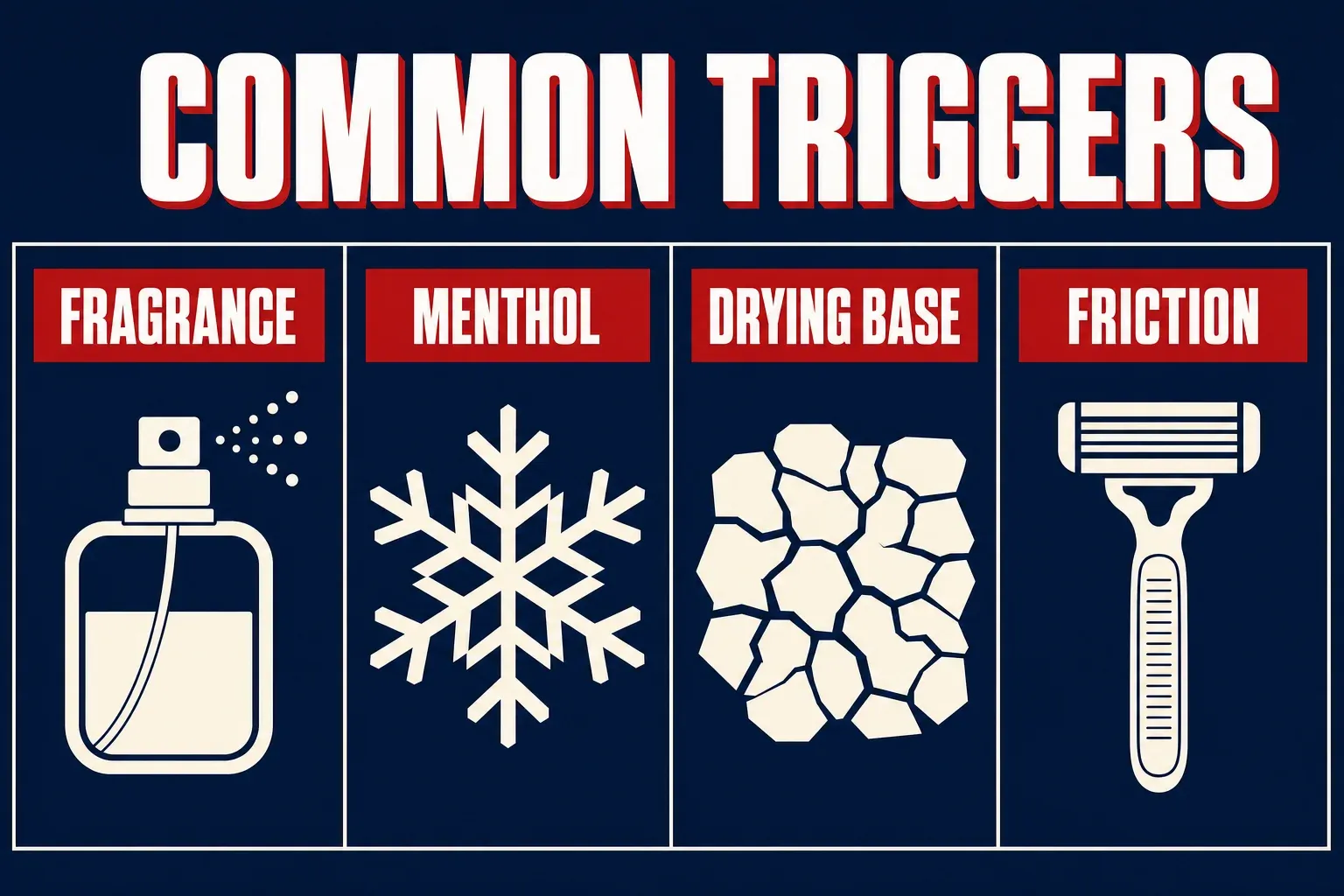
Fragrance is the big one. Added fragrance and the essential oils that scent most artisan soaps are among the most common causes of contact irritation, and the heavier and more complex the scent, the higher the odds it bothers reactive skin. Menthol and other cooling agents are the second, because that bracing tingle a lot of soaps add is a mild irritant by design, wonderful on tough skin and rough on sensitive skin. Harsh or drying bases matter too, since a soap that strips your skin’s moisture leaves it more reactive to everything else.
And then there is the irritation that has nothing to do with ingredients at all: mechanical irritation, the friction of a blade dragging over skin that a thin lather, a dull blade, or too many passes failed to protect. On sensitive skin this is often the real villain wearing a soap’s costume.
What to Look For
Shop for four things and you will avoid most of the trouble.
Low or no fragrance comes first. A fragrance-free or very lightly scented soap removes the single most common trigger, and if your skin is truly reactive it is the safest place to start. Soothing ingredients help: look for aloe, allantoin, oat, glycerin, and other humectants and calming agents that support the skin barrier rather than strip it. Slickness and cushion matter more than people realize, because a genuinely slick lather reduces the blade friction that causes so much sensitive-skin irritation, so a soap’s protective quality is doing real work. And a base that agrees with you is worth finding, because a minority of shavers react to tallow while others react to certain vegetable bases, and if one type consistently bothers you, switching is a cheap experiment.
The Part Nobody Selling You Soap Will Say
Here is the honest reframe: for sensitive skin, technique matters more than the brand on the tub. The single biggest improvement most reactive-skinned shavers can make is not a different soap, it is a better, wetter, slicker lather, a mild razor, a sharp and smooth blade, and fewer passes. A perfect “sensitive” soap built into bad technique will still leave you raw, while an ordinary gentle soap with a great lather and light, careful passes can transform your skin. Buy the gentle soap, absolutely, but spend the real effort on how you shave, because that is where the comfort actually comes from.
The Shortlist
Any of these is a sound place to start, from drugstore staples to gentle artisan options.
The Proraso White is the reference sensitive product, a low-menthol cream built around green tea and oat that is cheap, widely available, and specifically formulated for reactive skin. The Nivea Men Sensitive is the budget drugstore pick, mild and soothing with aloe and chamomile. For a simple, extremely slick soft soap with a light almond scent and no fuss, the Cella Crema da Barba has kept sensitive skins happy for generations. The Taylor of Old Bond Street Avocado cream is a gentle, moisturizing English option that suits dry, sensitive skin, and the Acca Kappa White Moss is a soft, mild Italian cream in the same lane. And if you want to eliminate the fragrance question entirely, an unscented option like the Art of Shaving Unscented takes the most common trigger off the table completely.
Beyond these, many artisan makers offer unscented or fragrance-free versions of their bases, which are worth seeking out at a well-stocked shop if you love the ritual of artisan soap but cannot tolerate the scents. A lightly scented or naked base gives you artisan-quality slickness without the essential oils that reactive skin objects to.
A Word on Tallow vs Non-Tallow
You will hear that tallow soaps are gentler, or that vegetable soaps are gentler, and the truth is that neither is universally true. Tallow-based soaps are prized for their cushion and skin feel and suit most people beautifully, but a minority of shavers find a particular base, tallow or vegetable, does not agree with them. There is no way to know in advance which camp you are in, so if you have worked on your technique and lather and a soap still bothers you, trying the other base type is a sensible next experiment rather than a rule to follow blindly.
What to Avoid
A short do-not-buy list saves reactive skin a lot of grief. Steer clear of strongly mentholated soaps and creams while your skin is unhappy, because that icy tingle is an irritant even when it feels good; the standard menthol-heavy formulas are the ones to skip in favor of their sensitive versions. Give heavily fragranced and complex-scented artisan soaps a pass until you know your skin tolerates them, since scent is the most common trigger and a big, layered fragrance is the riskiest kind. Avoid finishing with high-alcohol aftershave splashes, which sting and dry reactive skin; a balm is far kinder. And do not reach for cheap canned foams and gels as the gentle option, because despite the marketing they tend to be worse for sensitive skin than a proper soap and brush, not better.
How to Tell If It Is the Soap or Your Technique
Before you blame a soap and buy another, isolate the variable, because chasing soap after soap while the real problem is technique wastes money and keeps your skin raw. Spend one week fixing everything except the soap: build a wetter, slicker lather, drop to a single with-the-grain pass, use a fresh blade and zero pressure, and finish with a plain balm. If your skin calms down, the soap was never the main problem and you can keep the one you have. If your skin is still reacting after a week of genuinely gentle technique, then it is worth suspecting the product, and the first thing to try is a fragrance-free option to rule out scent, followed by switching the base type. Change one thing at a time and let your skin tell you what it wants.
Building a Sensitive-Skin Routine
The soap is one piece. Round it out and your skin will thank you.
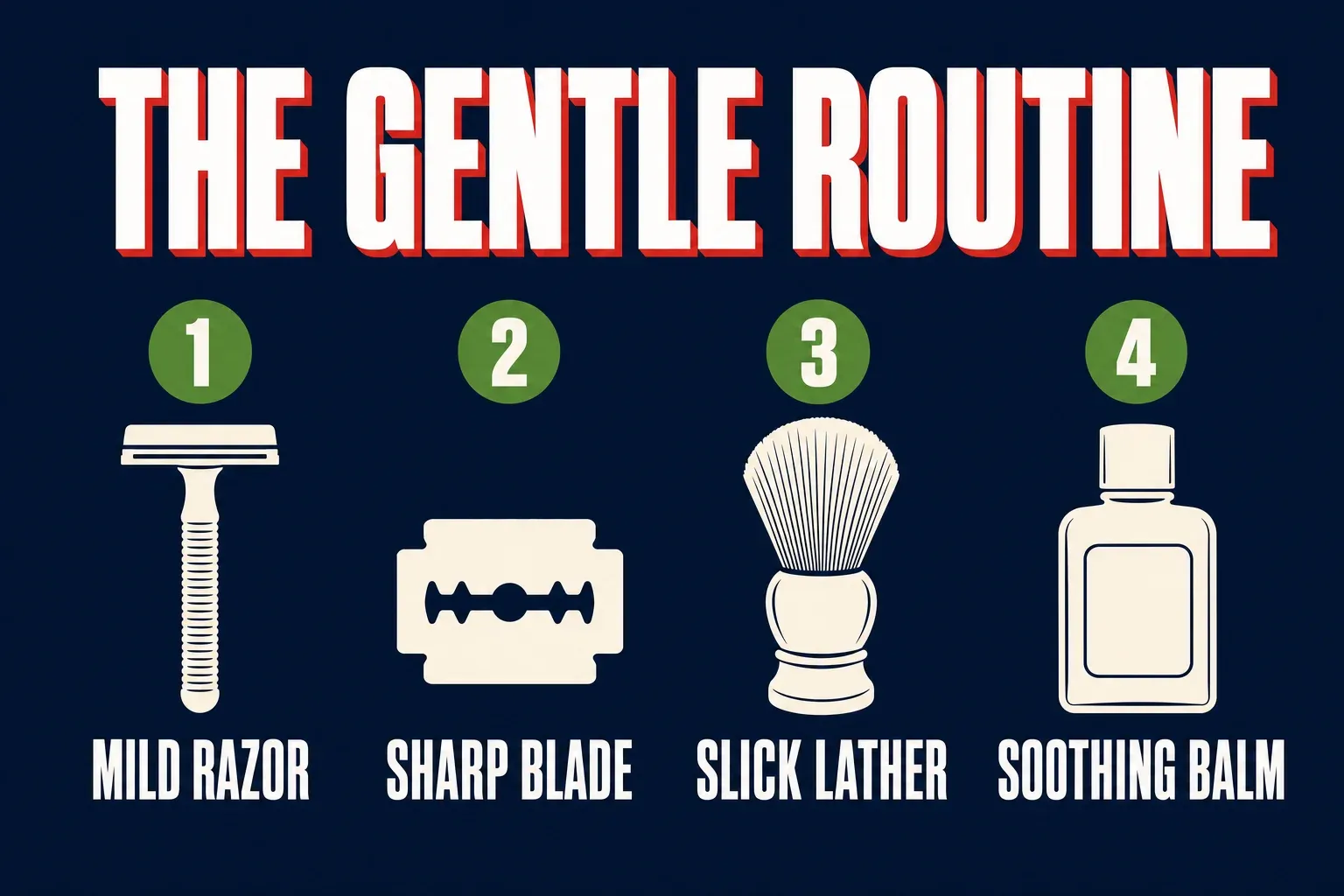
Use a mild, forgiving razor like the Merkur 34C or the Edwin Jagger DE89, which let you shave with almost no pressure. Pick a sharp but smooth blade such as the Astra Superior Platinum and change it before it starts to tug, because a dull blade is a sensitive-skin nightmare. Build your lather wetter and slicker than you think you need. Shave with the grain first, add other directions cautiously, and stop at the fewest passes that get you comfortable rather than chasing perfectly smooth. Finish with a soothing, alcohol-free balm like the Baxter After Shave Balm rather than a stinging splash. And patch-test any new product on a small area before you commit your whole face to it.
The Bottom Line
Sensitive skin does not mean giving up a close, comfortable shave, it means shopping smarter and shaving gentler. Avoid heavy fragrance and menthol, look for a fragrance-light soap with soothing ingredients and real slickness, and remember that a wet, slick lather with a mild razor and a sharp blade does more for reactive skin than any label ever will. Start with a proven gentle option like the Proraso White or a simple Cella, put your energy into technique, and give your skin a few calm weeks to settle. Most people who thought they just had bad skin discover they only had the wrong routine.
Frequently asked questions
What ingredients irritate sensitive skin when shaving?
Fragrance is the most common trigger, including the essential oils that scent most artisan soaps. Menthol and other cooling agents are mild irritants by design, and a harsh, drying base leaves skin more reactive to everything else. A lot of irritation is also mechanical: blade friction from a thin lather, a dull blade, or too many passes.
What should I look for in a shaving soap or cream for sensitive skin?
Low or no fragrance first, since scent is the most common trigger. Then soothing ingredients like aloe, allantoin, oat, and glycerin, and a genuinely slick, cushioning lather, because slickness reduces the blade friction that causes so much sensitive-skin irritation.
Which shaving soaps and creams are gentlest on sensitive skin?
Proraso White is the reference sensitive product, a low-menthol cream built around green tea and oat. Nivea Men Sensitive is the budget drugstore pick, Cella is a simple and extremely slick soft soap, Taylor of Old Bond Street Avocado and Acca Kappa White Moss are gentle cream options, and an unscented cream removes the fragrance question entirely.
Is tallow or vegetable-based soap better for sensitive skin?
Neither is universally gentler. Tallow soaps are prized for cushion and skin feel and suit most people, but a minority of shavers find one base type does not agree with them. If your technique and lather are solid and a soap still bothers you, switching base types is a sensible next experiment.
How do I tell if my soap or my technique is causing the irritation?
Change everything except the soap for one week: build a wetter, slicker lather, drop to a single with-the-grain pass, use a fresh blade with zero pressure, and finish with a plain balm. If your skin calms down, the soap was never the main problem. If it still reacts, try a fragrance-free option to rule out scent, then switch base types, one change at a time.
Happy shaving.