

Shaving Soap vs. Shaving Cream: Which One Should You Actually Use?
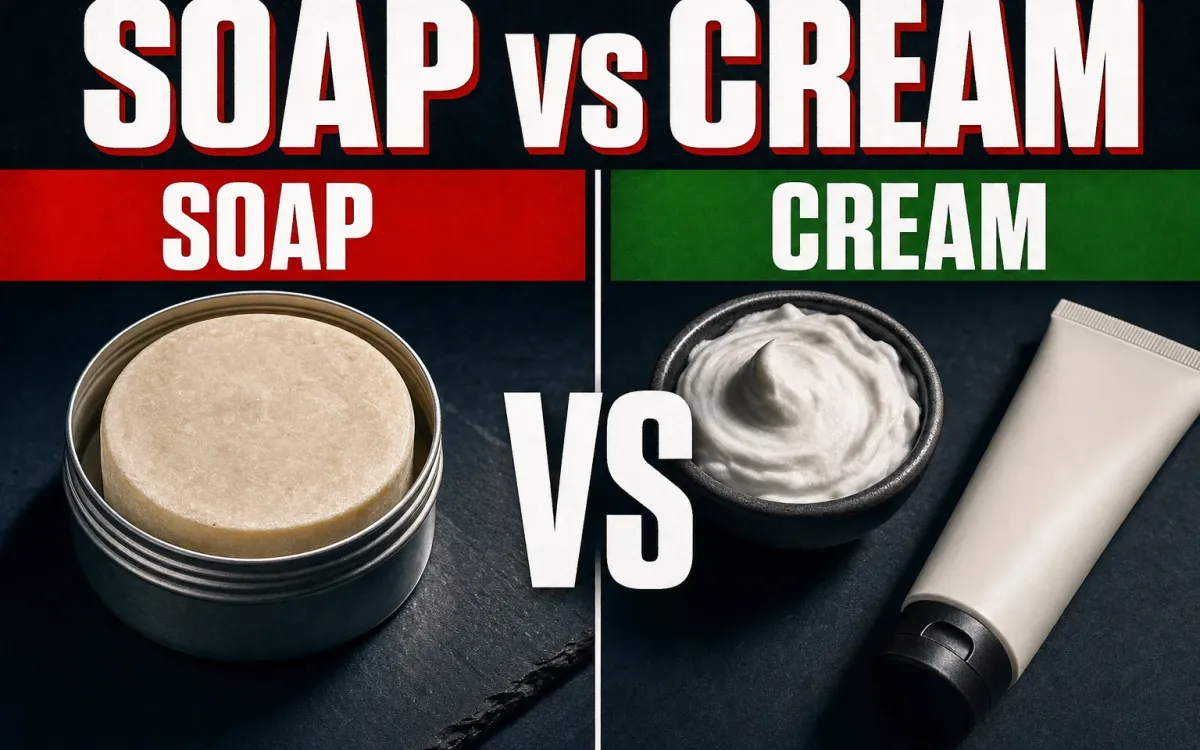
Ask whether you should use shaving soap or shaving cream and you will get answered as if those are two rival teams you have to pick between. They are not. Soap and cream are the two ends of a single spectrum that runs from a rock-hard puck to a squeezable paste, with most of the interesting products living somewhere in the middle. Once you see it as a spectrum, the real questions get easier: which is simpler to lather, which lasts longer, which actually shaves better, and which one belongs in your hand while you are still learning.
Here is the honest version, without the tribalism.
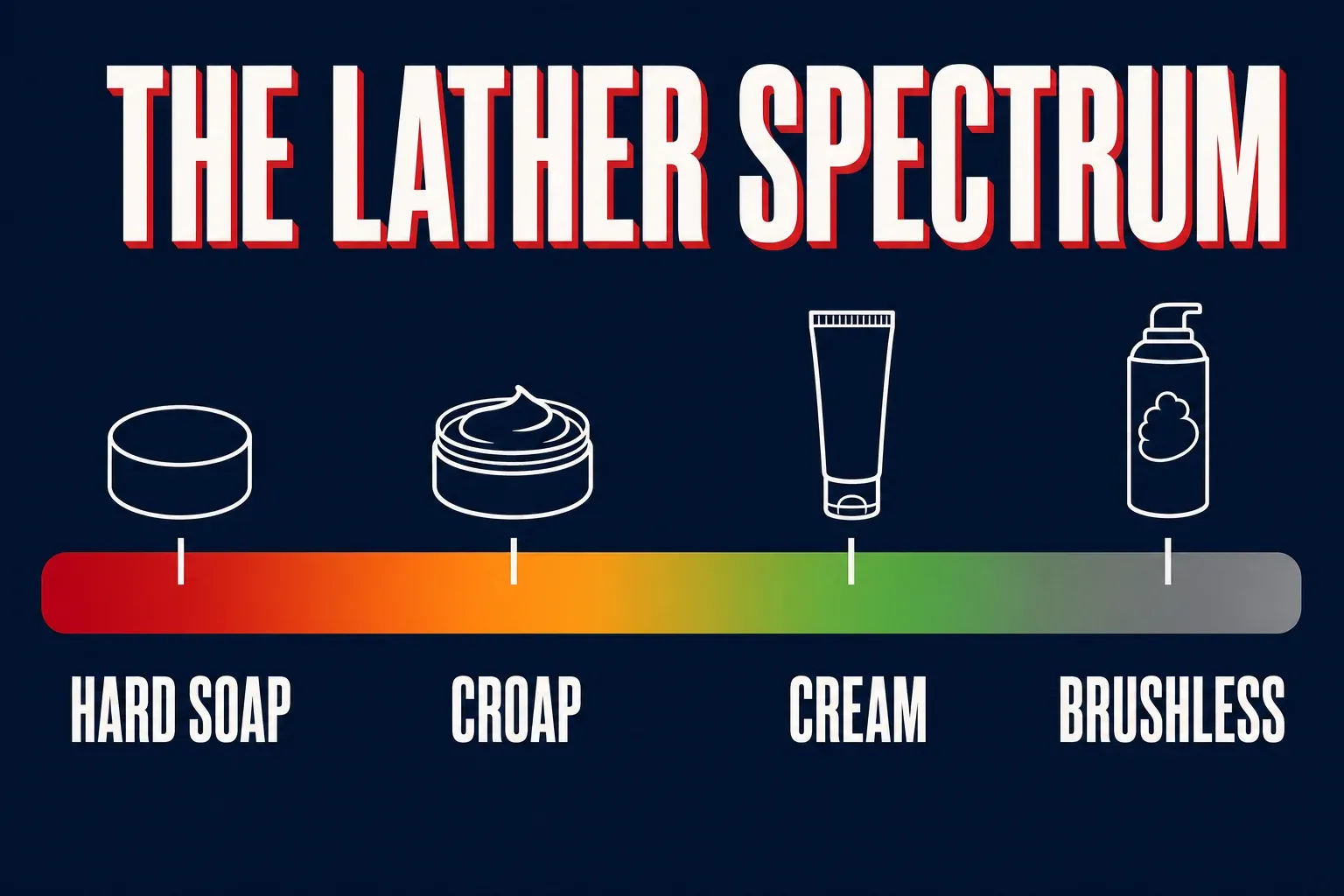
It Is a Spectrum, Not Two Camps
| Format | Effort to lather | Longevity | Best for |
|---|---|---|---|
| Hard soap | Highest, needs real loading | Longest, often a year of daily shaves | Top performance, the deepest scent world |
| Croap / soft soap | Low, loads quickly | Long | The best balance, and the easiest upgrade path |
| Cream | Lowest, nearly foolproof | Shortest for the money | Beginners, and fast mornings |
| Brushless / canned | None | Short | Not what this guide covers |
Line up every lathering product by how hard it is and you get a smooth gradient, not a wall between two categories.
At the hard end sit triple-milled and traditional hard soaps, dense pucks you have to work at to load a brush from. In the middle sit soft soaps and croaps, a croap being the artisan word for a soap soft enough to feel like a thick paste, which is where a huge share of modern premium soaps actually live. Softer still are the true creams, whipped pastes you scoop or squeeze. And at the far soft end are brushless creams and canned goo, which we are going to leave out of this because they are a different hobby.
Almost every argument about soap versus cream is really an argument about two specific points on that gradient. So instead of picking a team, figure out which point suits you.
Shaving Soap: What It Is and Who It Is For
A shaving soap is a solid you load a wet brush against to pick up product, then build into lather on your face or in a bowl. Hard soaps reward a little technique and give back a lot.
The upsides are real. A puck lasts a long time, often the better part of a year of daily shaves, so the cost per shave is tiny even for a premium soap. The best soaps, especially tallow-based artisan soaps, produce a dense, cushioning, slick lather that is as good as protection gets. And the artisan soap world is where the hobby’s creativity lives, with hundreds of small makers producing extraordinary scents you will never find in a cream. The classic drugstore hard soaps like the Williams Mug Soap are cheap and cheerful, the Arko Shaving Soap stick is a beloved budget workhorse with a legendary lemony scent, and at the premium end an artisan tallow soap like the Our Thing soap or a Noble Otter Firefighter puck is the ceiling of what lather can be.
The tradeoff is a slightly steeper learning curve. A hard soap asks you to load the brush properly and add water in stages, and a beginner’s first few attempts at a hard-soap lather are often too dry. It is a skill that clicks within a week or two, but it is a skill.
Shaving Cream: What It Is and Who It Is For
A shaving cream is a soft paste that lathers fast and forgives almost everything. You need only a small amount, it whips up quickly with far less loading, and it is very hard to get a bad lather out of a good cream.
This is why creams are the friendliest on-ramp. The Proraso Green cream is the icon of the category, cooling and cheap and nearly foolproof, and the Proraso White is the low-menthol version for sensitive skin. The English soft creams from Taylor of Old Bond Street, like the Taylor of Old Bond Street Sandalwood, lather luxuriously with almost no effort and smell wonderful. Even a supermarket tube like Palmolive Shave Cream makes a serviceable lather in seconds.
The tradeoffs are modest. A tube of cream does not last as long as a puck for the money, and the very best artisan soaps still edge out most creams on cushion and slickness at the top of the range. But for ease and speed, cream wins going away.
The Bridge: Croaps and Soft Soaps
Here is the part the soap-versus-cream framing misses entirely. Much of the modern premium market is neither a hard soap nor a cream, but a soft soap or croap that gives you the easy lathering of a cream with the longevity and performance of a soap. The Italian classic Cella Crema da Barba is the famous example, an almond-scented soft soap that whips into a slick, protective lather with almost none of the loading effort a hard puck demands. A great many artisan makers now use a soft base for exactly this reason. If the hard-soap learning curve worries you but you want soap-tier performance and value, a croap is the answer, and it quietly resolves most of the debate.
Which Should You Start With?
Start with a cream or a croap for your first month, then explore soaps once your lather is dependable.
The logic is the same as everything else in learning to shave: remove variables. Your early shaves already have you managing a new razor, a new blade, and your grain map. A forgiving cream or croap takes lather off the list of things that can go wrong, so a bad shave is easier to diagnose. Get a few clean, comfortable weeks under your belt with an easy Proraso Green or a Cella Crema da Barba, and by the time you branch out to hard artisan soaps you will already know what a good lather looks, feels, and sounds like. Learning a hard soap is far easier when you are not also learning everything else at once.
Any of these paths leads to a great shave. The only losing move is standing in the aisle unable to pick.
Does One Actually Shave Closer?
No, and this is the honest heart of it. A well-built lather from a cheap drugstore cream will out-shave a badly-built lather from a premium artisan soap every single time, because the lather does its job through water content, slickness, and cushion, and those come from technique far more than from which end of the spectrum you bought. Format does not close your shave. Your blade, your angle, and your passes do.
What the top artisan soaps buy you is a higher ceiling and a deeper world to explore, not a closer shave on day one. The cushion of a great tallow soap is genuinely superb, and the scents are a real pleasure, and there is nothing wrong with chasing that. Just do not expect the puck itself to fix a shave that was really a technique problem. Once your technique is there, both a good cream and a good soap will give you an excellent shave, and the choice comes down to ritual, scent, longevity, and what you enjoy holding in your hand.
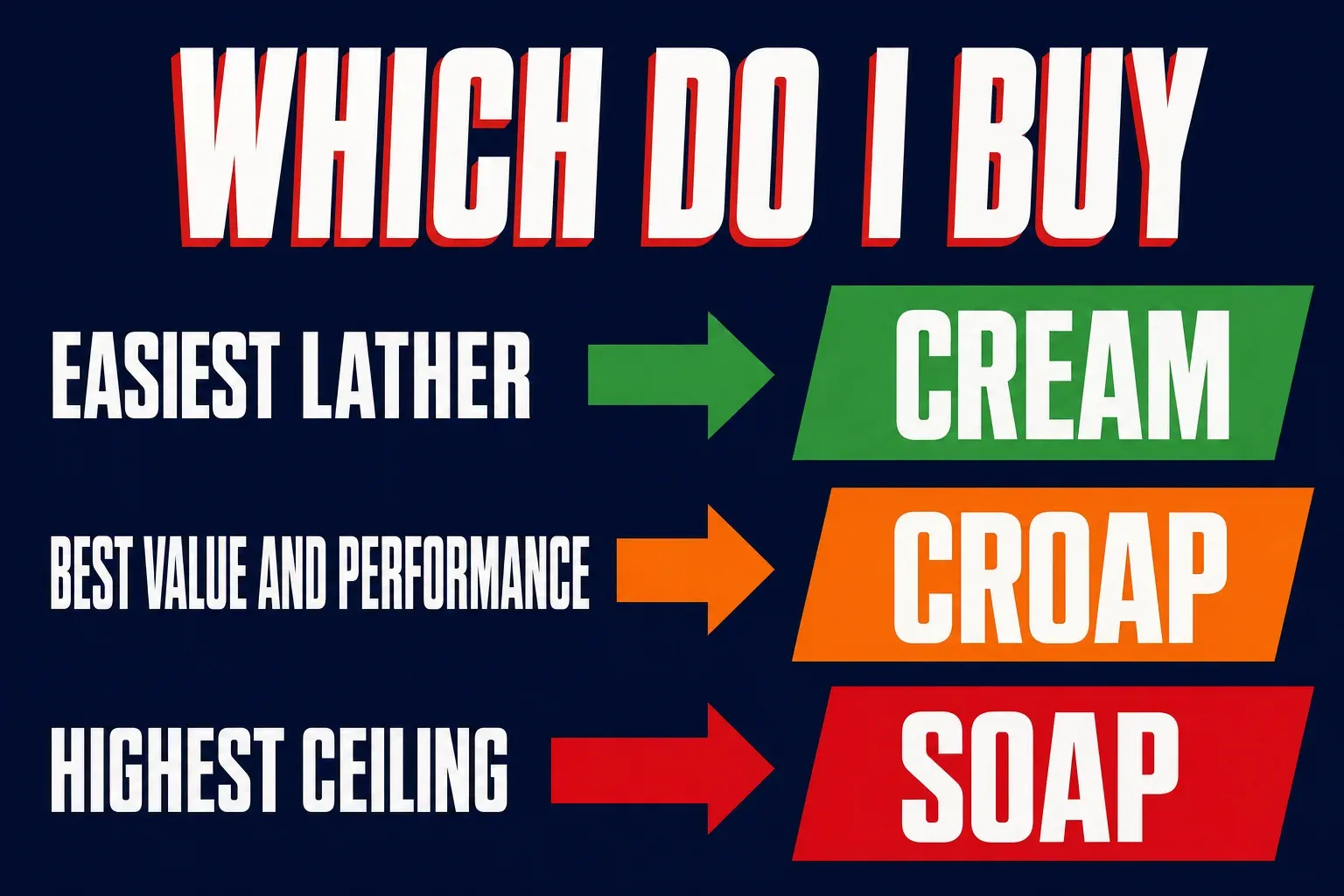
How to Choose
If you want the easiest possible lather and a fast morning, buy a cream: the Proraso Green, or the Proraso White for sensitive skin, or a Taylor of Old Bond Street cream for something plush. If you want soap-level performance and value without the hard-soap learning curve, buy a croap like the Cella Crema da Barba. If you want longevity, the deepest scent world, and the top of the performance range and you are willing to learn to load a brush, buy a soap, from a cheap Arko Shaving Soap stick all the way up to an artisan tallow puck. And if you cannot decide, buy a croap and stop worrying, because it sits in the middle for a reason.
The Bottom Line
Shaving soap versus shaving cream is a spectrum question dressed up as a rivalry. Creams and croaps are the easiest place to start and stay genuinely excellent forever; hard artisan soaps offer the highest ceiling and the richest rabbit hole once you are ready to climb into it. None of them will shave you closer than your own technique will. Pick the point on the spectrum that fits how much effort you want to spend at the sink, get your lather dependable, and then let the enormous, wonderful world of soaps and creams be the fun part rather than the confusing one.
Frequently asked questions
What is the difference between shaving soap and shaving cream?
They are two ends of one spectrum rather than two camps. Hard triple-milled pucks sit at one end, soft soaps and croaps in the middle, whipped creams at the other. Harder products need more loading and reward technique; softer ones lather faster and forgive more.
Which lathers more easily, soap or cream?
Cream. It needs far less loading and it is very hard to get a bad lather out of a good cream, which is why creams are the friendlier on-ramp for a beginner.
Does shaving soap give a closer shave than cream?
No. A well-built lather from a cheap cream will out-shave a badly-built lather from a premium soap every time. Lather does its job through water content, slickness and cushion, and those come from technique far more than from format.
What is a croap?
A croap is a soap soft enough to feel like a thick paste. It sits between hard soap and cream, giving cream-like ease of lathering with soap-like performance and longevity, which is why so many modern artisan soaps use a soft base.
Should a beginner start with soap or cream?
Start with a cream or croap for the first month, then explore hard soaps once your lather is dependable. It removes one variable while you are still learning the razor, the blade and your grain map.
Happy shaving.