

What Does "Aggressive Razor" Actually Mean? (And Whether You Need One)
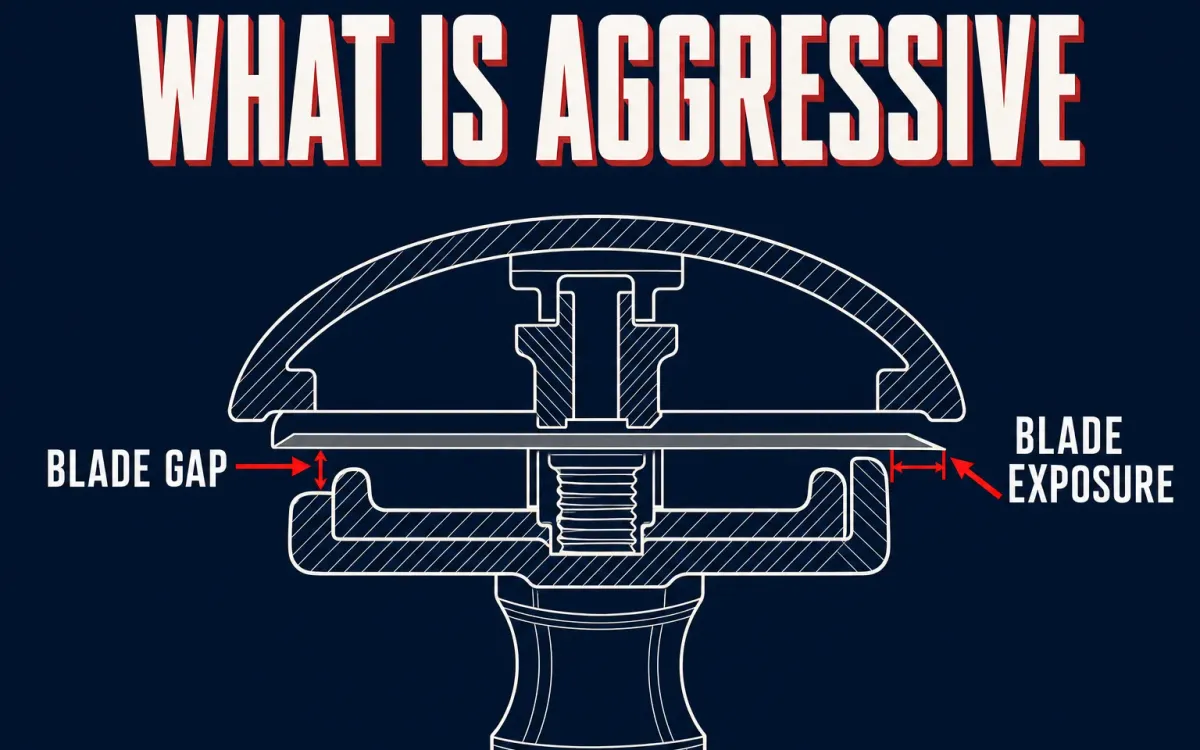
“Aggressive” might be the most used and least explained word in wet shaving. New shavers hear that one razor is aggressive and another is mild and are left to guess whether that is a good thing, a bad thing, or a warning. So let us fix that. Aggressive has a real, specific meaning, it is not the same as a few things people constantly confuse it with, and whether you want an aggressive razor has a clear answer that depends entirely on you.
What “Aggressive” Actually Measures
Aggression describes how a razor presents the blade to your face, and it comes down to two measurements plus one consequence.
The first is blade gap: the distance between the cutting edge and the safety bar or comb below it. A larger gap lets more lather and stubble pass through and lets the blade sit further from the guard, which generally means it cuts more per stroke.
The second is blade exposure: whether the edge sits above, level with, or below the line running from the safety bar to the cap. More exposure puts more blade into the skin’s plane. This one matters even more than gap for how a razor feels.
The consequence of those two is forgiveness. A mild razor, with a small gap and neutral or negative exposure, buries most of the blade behind its guard, so it tolerates a clumsy angle and a little too much pressure. An aggressive razor, with a bigger gap and more exposure, presents more blade with less protection, so it rewards good technique and punishes bad technique. That is the whole idea. Aggressive means less margin for error in exchange for more cutting power per pass.
Aggressive Is Not the Same as Efficient
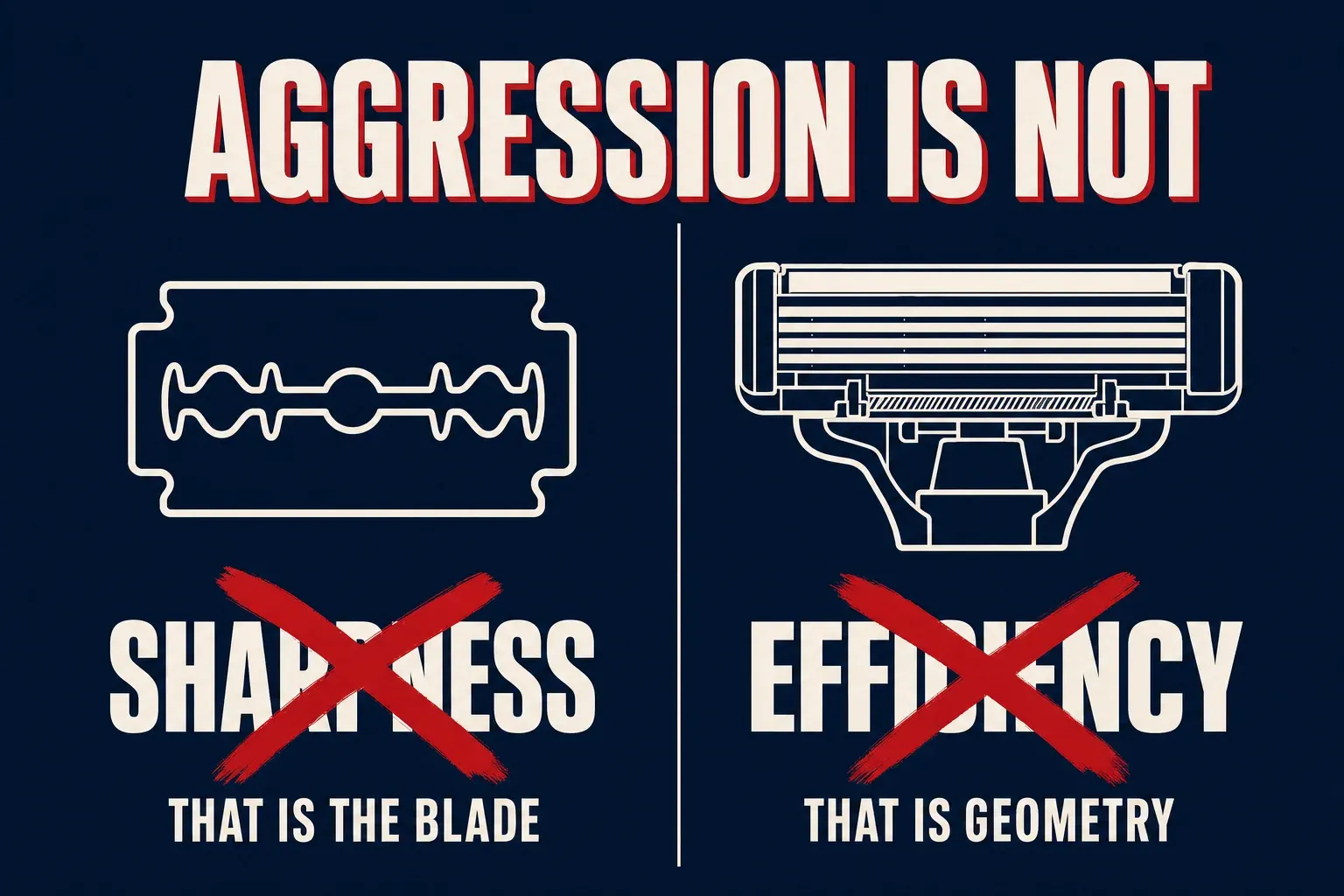
This is the confusion that costs beginners the most money and comfort. Aggression and efficiency are related but they are not the same thing, and treating them as identical leads people to buy a punishing razor when they wanted a capable one.
Efficiency is how much beard a razor removes per pass. Aggression is one crude way to buy efficiency, by exposing more blade, but it is not the only way. Modern razor design has gotten very good at delivering high efficiency through blade angle and geometry rather than through raw exposure, which is why a razor like the Blackland Blackbird has a reputation for clearing a heavy beard in two passes while still being forgiving enough for a confident beginner. It is efficient without being especially aggressive. Meanwhile a poorly designed aggressive razor can be a bloodbath that is not even that efficient. When someone says they want a closer shave, they almost always want efficiency, and reaching for the most aggressive razor on the shelf is the wrong way to get it.
Aggressive Is Not the Same as Sharp
The other mix-up is between the razor and the blade. Sharpness is a property of the blade, aggression is a property of the razor, and they move independently. You can run a mild razor with one of the sharpest blades made, the Feather, and get a mild-feeling shave with a keen edge. You can run an aggressive razor with a gentle blade and still feel every bit of that exposure. Changing your blade does not change your razor’s aggression, and dialing your razor milder does not blunt your blade. If your shave feels harsh, figuring out whether the razor or the blade is responsible is the first step, because the fixes are different.
The Scale, With Real Examples
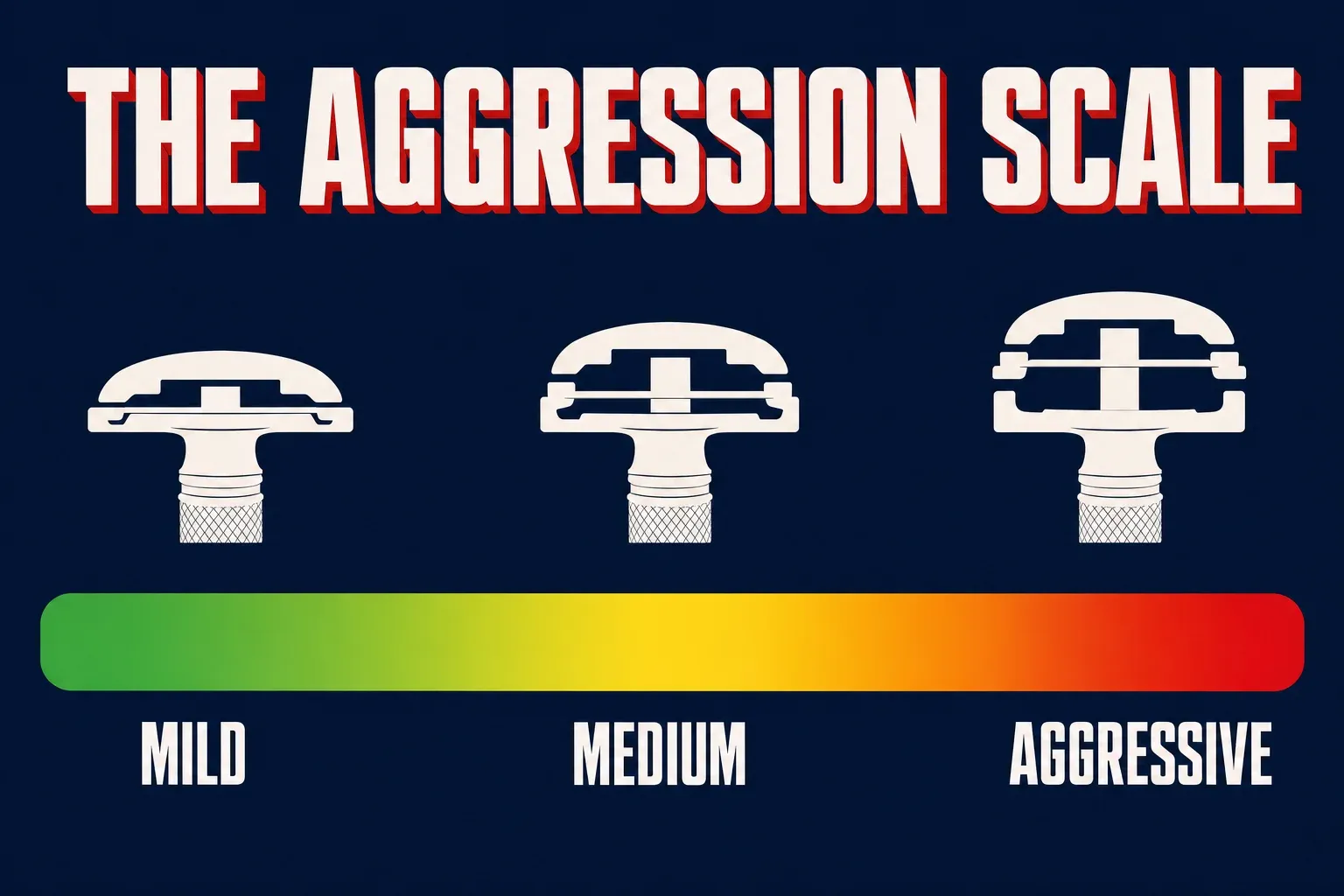
| Level | Blade gap and exposure | Feels like | Examples |
|---|---|---|---|
| Mild | Small gap, neutral or negative exposure | Forgiving of angle and pressure | Merkur 34C, Edwin Jagger DE89, Henson AL13 mild |
| Medium | Moderate gap, tuneable on plate systems | Capable without punishing | Rockwell 6C, RazoRock Game Changer, Karve Christopher Bradley |
| Aggressive | Larger gap, more exposure | Rewards good technique, punishes bad | Muhle R41, Merkur 37C slant, Merkur 41C |
| Adjustable | Dial or swap to move along the scale | Whatever you set it to | Merkur Progress, Rex Ambassador, vintage Gillette Fatboy |
Popular razors spread across the whole range, and knowing roughly where a razor sits saves you from a nasty surprise.
At the mild end live the classic first razors: the Merkur 34C, the Edwin Jagger DE89, and modern ultra-forgiving razors like the Henson AL13 on its mild setting. These are the razors you learn on, and plenty of shavers happily never leave this end.
In the middle sit the capable everyday razors. The Rockwell 6C lets you climb from mild to medium by swapping plates, the RazoRock Game Changer comes in a few gaps so you can pick your spot, and the plate-based Karve Christopher Bradley lets you tune the exact aggression you want. This is where most experienced shavers settle, because medium is enough for almost any beard.
At the aggressive end are the razors built for efficiency and coarse growth: the open-comb Mühle R41 is a famous example, and slants like the Merkur 37C shear through tough beards at an angle. The Merkur 41C and similar open-comb designs also live up here. These are wonderful in trained hands and unkind to beginners.
And then there are adjustables, which are not a point on the scale but a way to move along it. The Merkur Progress and the machined Rex Ambassador let you dial from mild to aggressive with a knob, and a vintage Gillette Fatboy does the same thing with mid-century engineering, so one razor can be a gentle Sunday shave at a low setting and a serious pass at a high one.
Who Actually Needs an Aggressive Razor
Fewer people than buy them. An aggressive razor genuinely helps if you have a thick, coarse, dense beard that a mild razor cannot clear without three or four passes, and if your technique is already solid enough that the extra exposure is capability rather than danger. For that shaver, the right aggressive or efficient razor is a real upgrade that turns a chore into a quick, clean shave.
For everyone else, and that is most shavers, a mild or medium razor with good technique gives a shave that is just as close and far more comfortable. Aggression is a tool for a specific problem, not a level you graduate to for its own sake. There is no prize for using the most aggressive razor you can tolerate, and the shavers with the best results are usually the ones who found the mildest razor that still gets them a clean shave, not the harshest one they can survive.
The Myth: Aggressive Equals Closer
The belief that drives most bad aggressive-razor purchases is that a more aggressive razor gives a closer shave. It does not, at least not the way people think. Closeness comes from reducing the beard in stages across multiple passes, with the grain and then across and maybe against it, using good lather and no pressure. A mild razor doing three careful passes will give you a closer, more comfortable result than an aggressive razor doing one rushed one. What aggression buys is fewer passes to reach a given closeness, which is genuinely useful for a coarse beard or a rushed morning, but it comes with less margin for error, not a higher ceiling on closeness. The ceiling is set by your technique, and technique works on every razor.
How to Tell Where a Razor Falls
Before you buy, you can usually place a razor on the scale in a couple of minutes. Manufacturers and reviewers publish blade-gap figures, and the wet-shaving community has argued every popular razor into a rough consensus position that a quick search will surface. As a rule, anything described as a first razor or a beginner razor is mild, anything described as efficient or a daily driver is medium, and anything described as aggressive, a monster, or for experienced shavers only is exactly what it says. When the descriptions conflict or you are unsure, start milder than you think you need. It is easy to wish for a bit more efficiency and trivial to buy it later. It is much less pleasant to learn on a razor that is fighting you.
The Bottom Line
Aggressive is not a compliment or a warning, it is a description: a bigger blade gap and more blade exposure, which trade forgiveness for cutting power per pass. It is not the same as efficient, which good modern razors deliver without the punishment, and it is not the same as sharp, which lives in the blade. Most shavers do not need an aggressive razor and get their best shaves on a mild or medium one. If you have a coarse beard and solid technique, a more aggressive or efficient razor is a real and worthwhile tool. If you do not, keep the razor you have and put the work into your passes, because that is where closeness actually comes from.
Frequently asked questions
What does aggressive mean for a safety razor?
It describes how the razor presents the blade: a larger blade gap and more blade exposure. The consequence is less forgiveness, because more blade is presented with less protection, in exchange for more cutting power per pass.
Is an aggressive razor the same as an efficient one?
No, and confusing the two costs beginners money. Efficiency is how much beard a razor removes per pass. Aggression is one crude way to buy efficiency, but modern geometry can deliver efficiency without the punishment.
Does an aggressive razor give a closer shave?
Not in the way people expect. Closeness comes from reducing the beard in stages across multiple passes with good lather and no pressure. Aggression buys fewer passes to reach a given closeness, not a higher ceiling on closeness.
Is aggression the same as blade sharpness?
No. Sharpness is a property of the blade and aggression is a property of the razor, and they move independently. Changing your blade does not change your razor geometry.
Do I need an aggressive razor?
Most shavers do not. It genuinely helps if you have a thick, coarse beard that a mild razor cannot clear in two passes and your technique is already solid. Otherwise a mild or medium razor gives a shave that is just as close and far more comfortable.
Happy shaving.