

The Beginner's Almanac for Wet Shaving
The first week in any wet shaving group feels like walking into a conversation halfway through. Somebody posts an SOTD with a three-piece OC and a croap, somebody else asks whether a G5 knot will splay too much for face lathering, and a third person admits their SAD is out of control and announces a 3017. Everyone is being helpful. Almost none of it is in English yet.
This almanac is the map. It walks the whole territory in the order you will meet it: the gear, the lather, the shave itself, the routine around it, and the culture that talks about all of it. Each section explains how the pieces relate, defines the words you will see, and points you to the Shave Dad guide that goes deeper. If you only need a single word defined, the Wet Shaving Glossary is the faster lookup. If you want to learn by doing, the Beginner’s Path is the step-by-step course. The almanac sits between them: the big picture that makes the vocabulary stick.
The Lay of the Land
Wet shaving is shaving with water, a lathering soap or cream, a brush to build that lather, and a razor that holds a single blade. Our complete introduction covers the why. The short version is that a single sharp edge cuts each hair once instead of tugging it through a stack of blades, which is the argument our safety razor vs cartridge breakdown makes in detail.
Every kit, however fancy, is the same five things:
- A razor, the handle and head that hold the blade at a safe angle.
- Blades, the consumable. Cheap, replaceable, and more personal than you would guess.
- A brush, which loads soap, whips it into lather, and lifts the stubble.
- A soap or cream, the lather itself, and the part of the hobby with the most variety.
- Aftercare, whatever goes on your face when the razor is done.
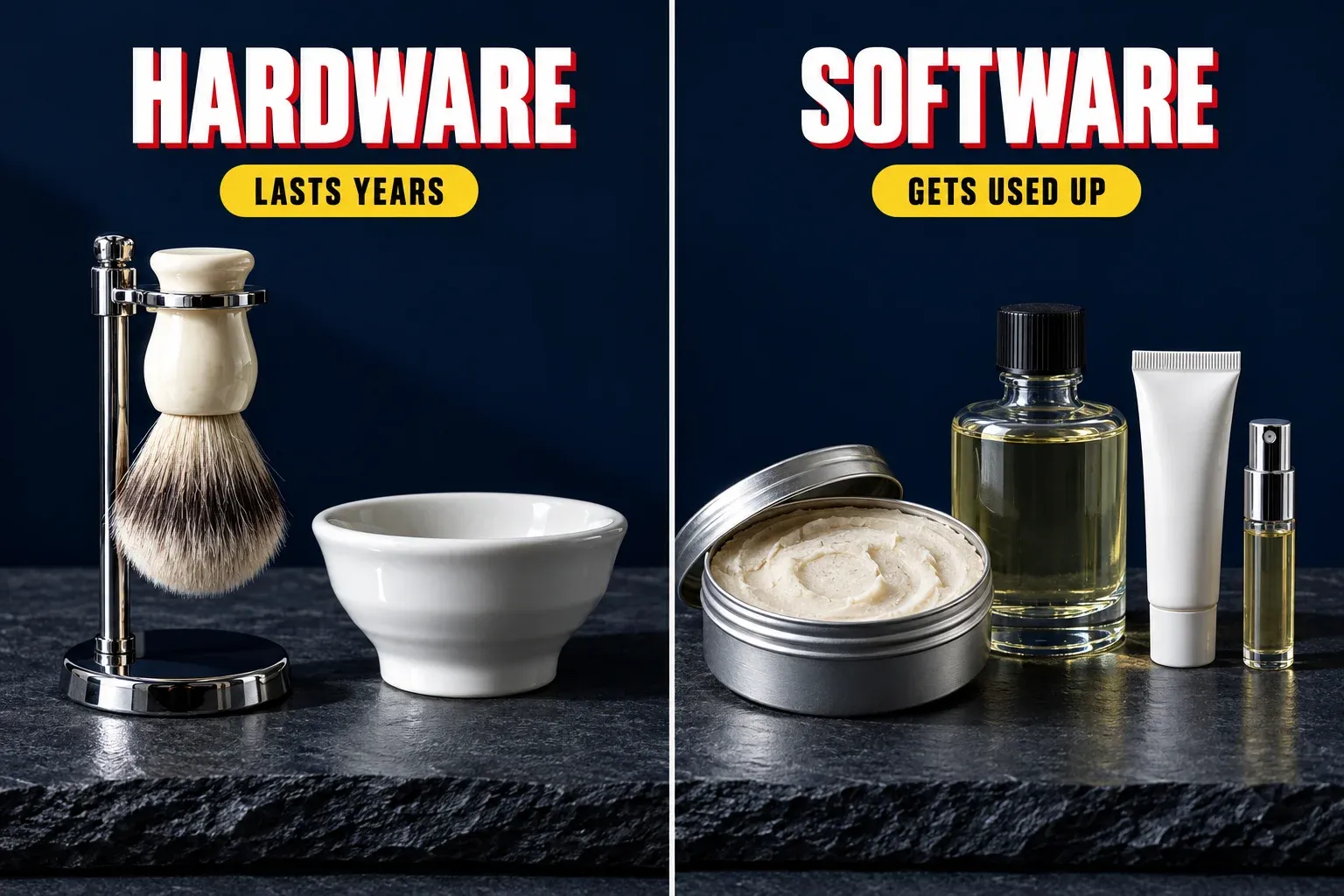
The community splits these into two words you will see constantly. Hardware is the gear that lasts: razors, brushes, stands, bowls. Software is what gets used up: soaps, creams, splashes, balms, and fragrance. “I’m set on hardware, it’s all software from here” is a sentence you will hear, and it means the person has stopped buying razors and started buying soap.
The market has three neighborhoods. Drugstore and heritage brands are the long-running names you can find almost anywhere, many of them excellent and inexpensive. Artisans are small makers, mostly soap and fragrance houses, who release scents in batches, collaborate with each other, and drive most of the hobby’s excitement. Vintage is the secondhand market for old razors, especially decades-old Gillettes, which still shave beautifully when they are clean. Most shavers end up with something from all three.
Razors: Reading the Family Tree
Safety razors and the DE default
A safety razor is any razor with a guard between the blade and your skin. The default safety razor, and the one this hobby is built around, is the DE, or double-edge razor. It holds a single thin blade sharpened on both long sides, so you get two cutting edges per blade: shave with one side, rotate, shave with the other. Our step-by-step guide to using a safety razor is the place to start once one is in your hand, and Your First DE Razor covers buying one.
The parts, and how they come apart
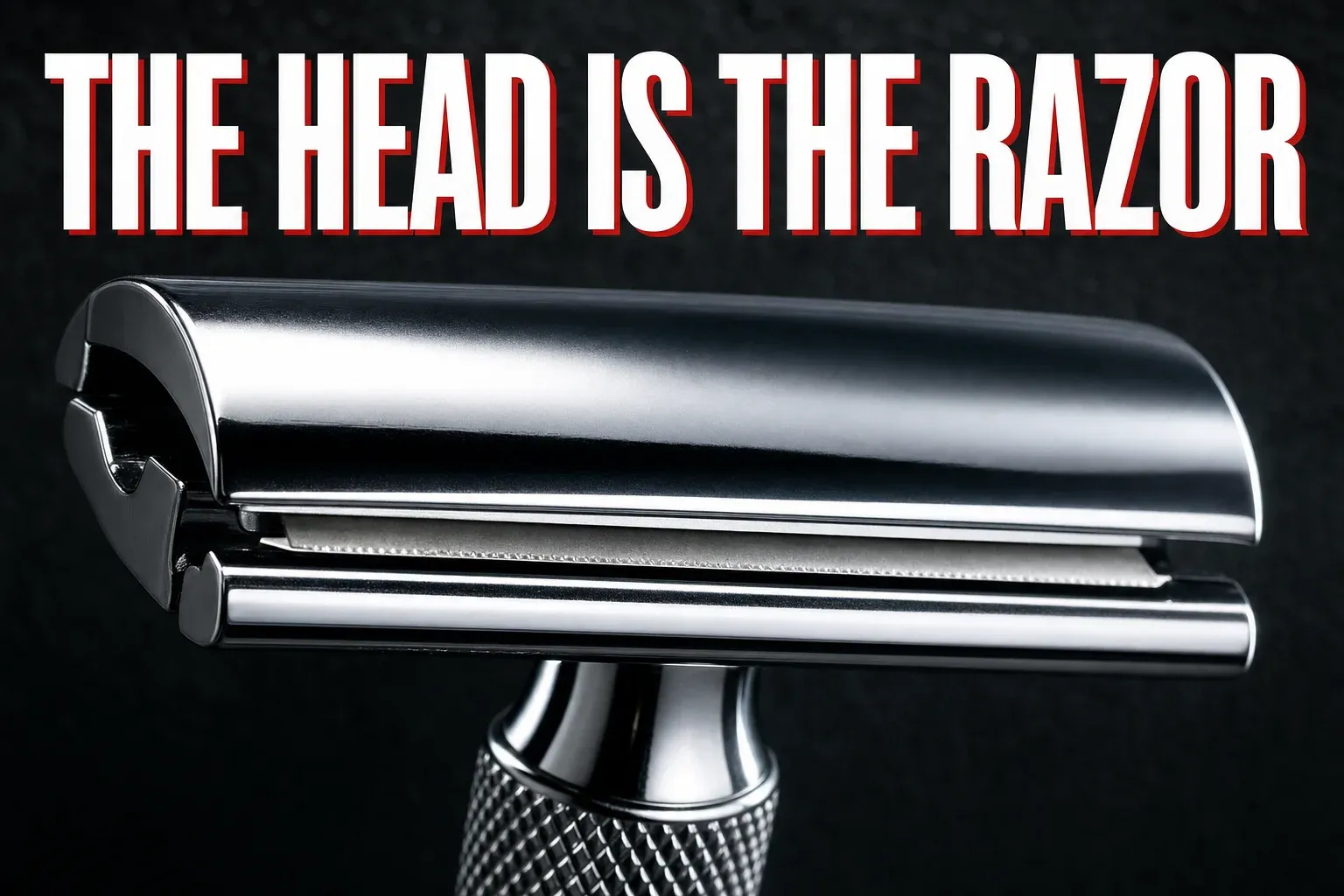
A DE head is a sandwich. The cap (or top cap) sits on top and bends the blade into a curve. The blade sits in the middle. The baseplate sits underneath, and its outer edge is the safety bar or guard. The handle screws into the bottom. Handles are usually knurled, machined with a textured grip pattern so a wet hand does not slip.
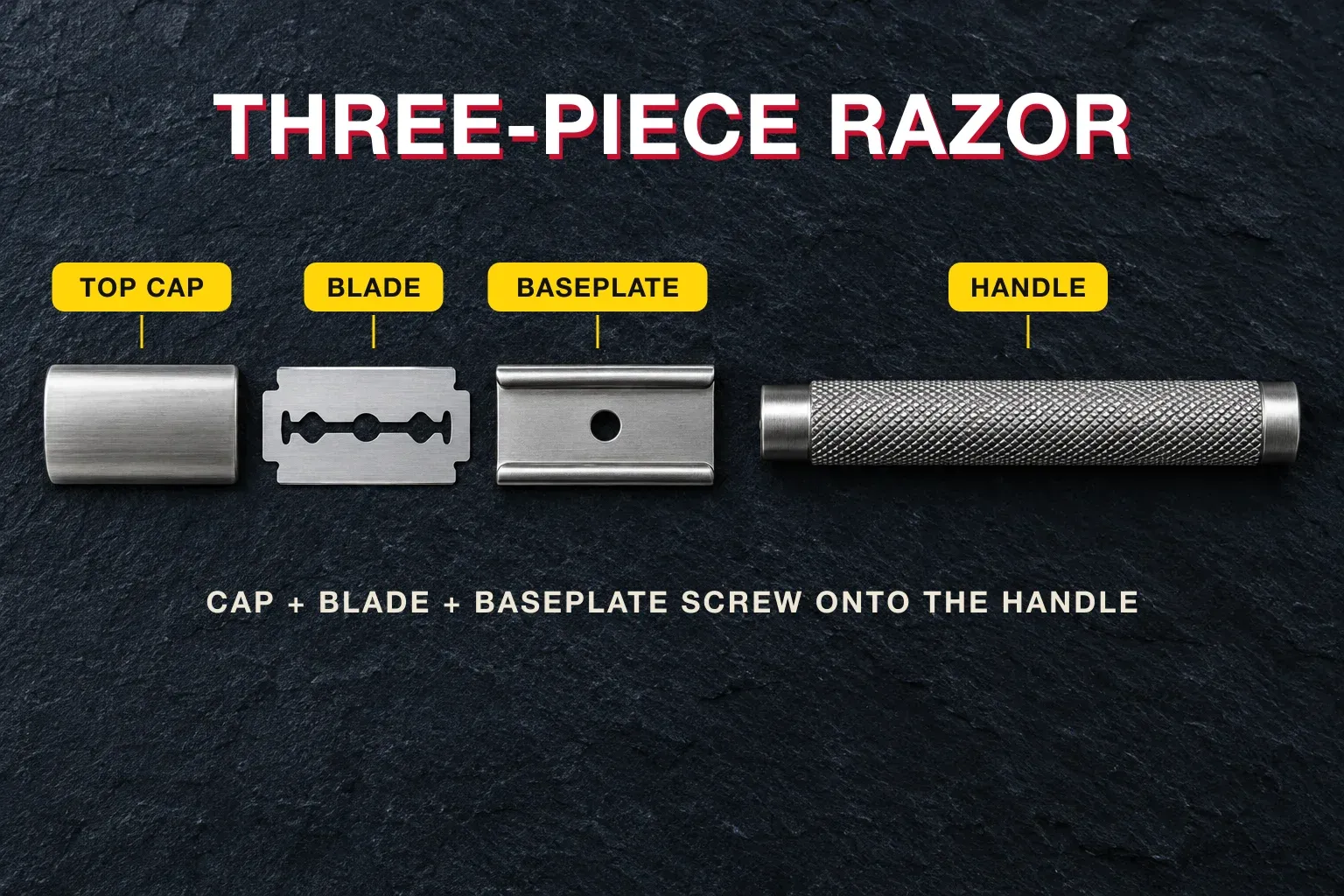
How those parts come apart gives you the construction words:
- Three-piece (3pc): cap, baseplate and handle all separate. The simplest to clean, and a very common modern design.
- Two-piece: the baseplate is fixed to the handle, and the cap comes off, usually released by turning a knob at the bottom of the handle.
- TTO (twist-to-open), also called butterfly: a single unit. Twisting the knob at the bottom of the handle opens two doors on the head so you can drop a blade in. Fast blade changes, a little fussier to deep clean. Many classic Gillettes, the Super Speed among them, are built this way.
The four head types
The head decides how the blade meets your face, and it comes in four families. Our head types explainer walks each one with photos:
- Closed comb (CC): a solid, smooth safety bar under the blade. Forgiving and efficient. Most beginner razors are closed combs.
- Open comb (OC): the solid bar is replaced by a row of teeth that feed lather and longer stubble to the edge. Built for heavy growth, less forgiving. Our open comb vs closed comb post compares them.
- Slant: the head twists the blade into a slight diagonal so it slices through hair instead of chopping it. The group’s favorites are in our slant razor picks.
- Adjustable: the blade gap is set with a dial or by swapping baseplates, so one razor covers a range from mild to bold. The Rockwell explainer shows the swappable-plate version of the idea.
Mild, aggressive and efficient
You will see razors described as mild, medium or aggressive. Those words summarize three measurements. Blade gap is the distance between the blade edge and the safety bar. Blade exposure is how far the edge sits above or below an imaginary line from the cap to the guard: positive exposure bites more, neutral sits on the line, negative hides behind it. Blade angle and rigidity, how the head bends and clamps the blade, finishes the picture.
The community has learned to separate two ideas that sound alike. Efficiency is how much stubble comes off per pass. Aggression is how much the razor punishes a bad angle or a heavy hand. The best modern razors try to be efficient without being aggressive. Our razor aggressiveness explainer covers the numbers, and what “aggressive razor” actually means covers the myths. When you start wondering whether you have outgrown your first razor, read the signs it’s time to upgrade before you buy anything.
Single edge razors
A single edge (SE) razor takes a thicker, stiffer blade with one working edge. That stiffness is the whole appeal: the blade does not flex, and many shavers describe the result as planted and smooth. SE comes in several families, and each family uses its own blade:
- GEM: the classic American single edge, with a blade that looks like a small scraper with a folded spine.
- Injector: a narrow blade that slides into the razor from a dispenser, so you never handle it.
- AC razors: modern razors built around the long, narrow AC (Artist Club) blades that come from barbering.
- Half-DE: razors that take a regular DE blade snapped in half.
Our single edge vs double edge comparison is the best overview, and the group’s experience with half-DE razors is collected in what the group found. The honest advice is that DE is the right first format and SE is a rewarding second one.
Straight razors and shavettes
A straight razor is the open, folding blade from old barbershop films. A traditional straight is a permanent blade you maintain yourself: honing on a stone restores the edge, and stropping on a leather strip realigns it between honings. A straight sold shave ready has already been honed and can go straight to the face. A shavette looks like a straight razor but takes replaceable blades, usually AC blades or half-DE blades, so there is no honing. Both are a separate skill set and best saved for later. If you are curious, our thread on whether anyone still strops is a good look at the routine.
Modern and vintage
Modern razors are new production, often machined from stainless steel, aluminum or titanium, and come with a warranty. Vintage razors are secondhand, usually decades old, and inexpensive for what they are. You will hear names like the Super Speed, the Tech and the Fatboy, all classic Gillette designs. Our modern vs vintage comparison explains the tradeoff, the vintage field guide covers what to hunt for, the Gillette date code guide shows how to tell when a razor was made, and our short history of Gillette explains why so many of them are still around.
Blades: The Part That Touches Your Face
Formats
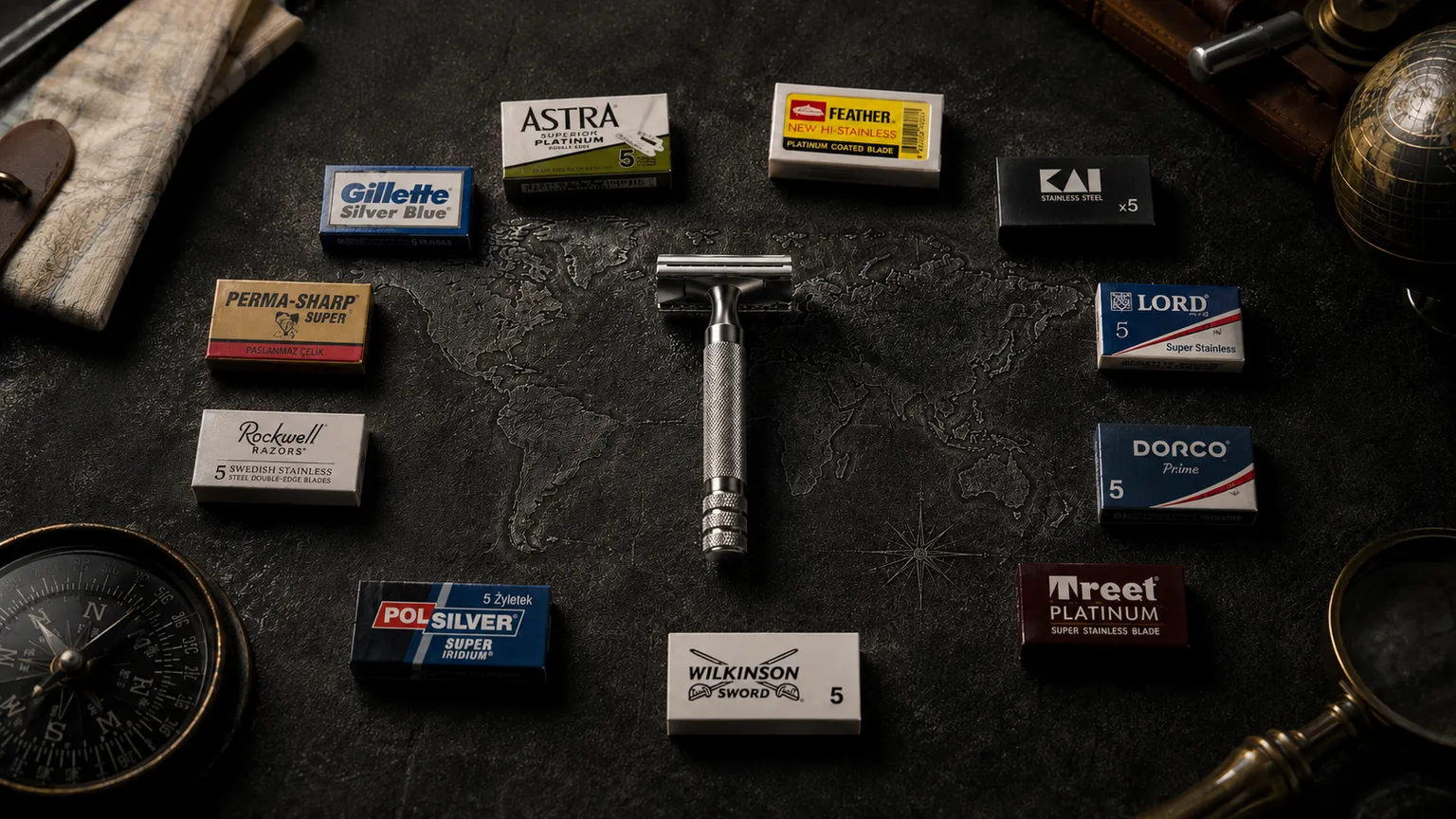
Every DE blade fits every DE razor, which is one of the great conveniences of the format. Single edge blades are the opposite: GEM, injector and AC blades are each their own shape and only fit razors built for them. If you go the AC route, our guide to picking your first AC blade explains why the right blade depends on the razor.
Sharp is not the same as smooth
Blade talk uses two different words that beginners tend to merge. Sharpness is cutting force: how easily the edge goes through hair. Smoothness is how the edge feels crossing skin, which depends on the grind and the coating. Blades are commonly coated with materials such as platinum, chromium or PTFE, and blade packs often lead with the coating in the name. A very sharp blade can feel rough, and a mild blade can feel wonderfully smooth. Our DE blade sharpness ladder puts twelve popular blades in order from mildest to sharpest and explains how to work your way up.
Buying blades
DE blades usually come wrapped individually and packed in a small carton of five, which shavers call a tuck, and in larger boxes of ten tucks or more. The standard first purchase is a sampler: a few blades each of several brands, so you can learn which suits your face before buying a hundred of one. Our sampler-first buying guide explains why that order matters, the DE blade buyer’s guide tours the major blade families, and the group’s own shortlist is in what the group recommends.
How long a blade lasts
Blade life is measured in shaves and judged by feel: when the blade starts to tug or drag, it is done. For most beards that is somewhere around three to seven shaves. Some shavers go one and done, a fresh blade every shave. Read how often to change your blade and the group’s one-and-done debate for the reasoning on both sides. Used blades go in a blade bank, a small container with a slot, and never loose into the trash. Our blade disposal post covers how.
Brushes: Fibers, Knots and Lofts
The four fibers
The bundle of fibers glued into a brush handle is the knot. Knots come in four main materials, all compared in our complete shaving brush guide:
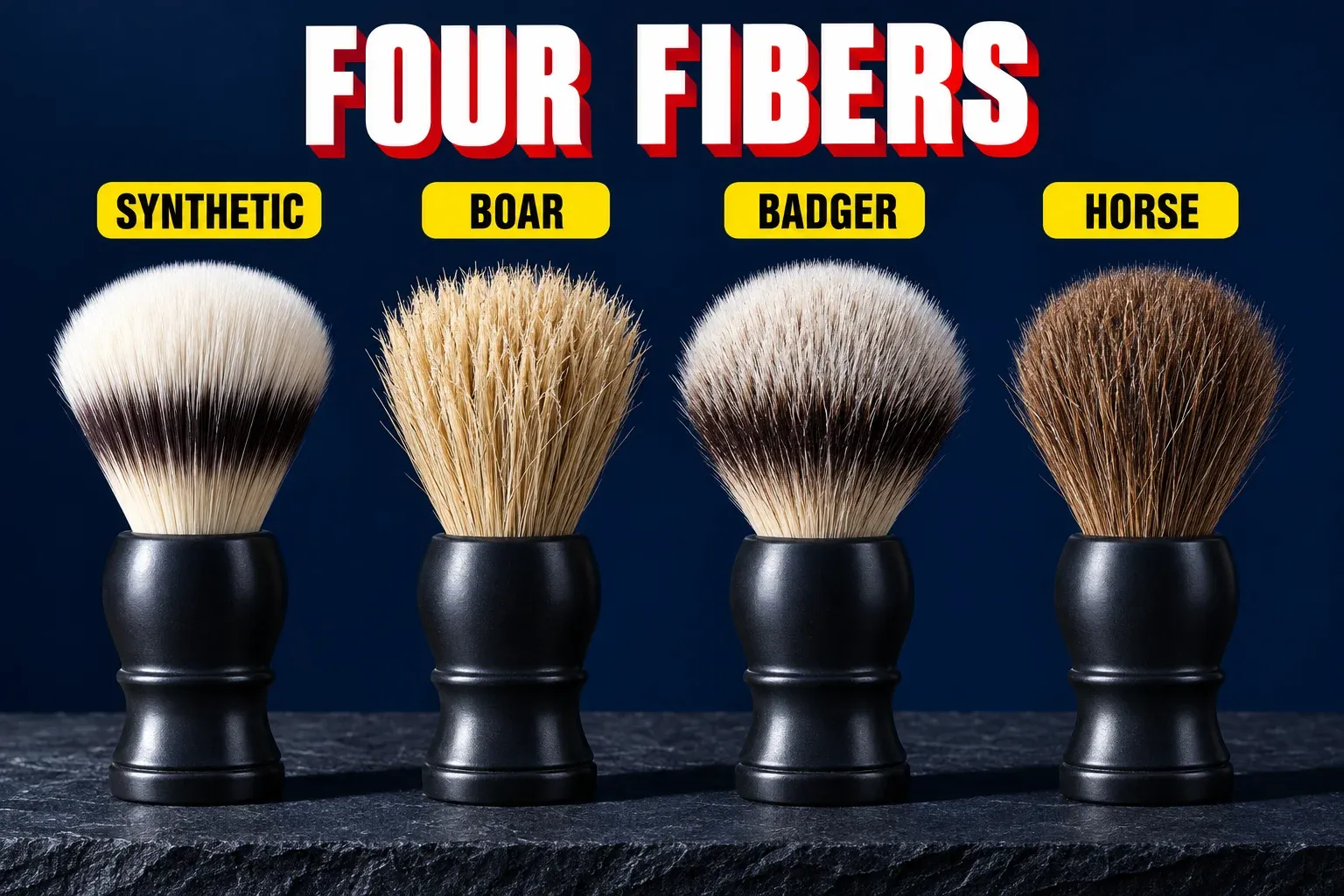
- Synthetic: modern manufactured fibers designed to behave like natural hair. Fast drying, easy to clean, consistent, and the usual first brush. You will see knot names like G5 or G7 on synthetic listings; those name the specific synthetic fiber, and each feels a little different.
- Boar: stiff natural bristle. A new boar brush needs a break-in, a few weeks of use in which the bristle tips split and soften. Our boar brush guide explains the process.
- Badger: soft natural hair that holds a lot of water. Badger is sold in grades, usually pure, best, super and silvertip, with softer, denser hair at the top of the ladder.
- Horse: natural horse hair, less common, and often described as sitting somewhere between boar and badger in feel. Mixed knots blend two fibers, most often boar and badger.
Reading brush specs
Brush listings usually give two numbers, such as 24 by 52. The first is the knot size, the diameter of the knot in millimeters where it enters the handle. The second is the loft, how tall the fibers stand above the handle. A bigger knot carries more lather and covers more face. A taller loft feels softer and floppier; a shorter loft feels firmer.
Three more words describe how a brush behaves. Backbone is how much the knot resists when you press it into your face. Splay is how far the fibers fan out under pressure. Scritch is the light scratchy feel some natural-hair brushes have on the skin, which some shavers love and others avoid. Knots also come in shapes: a bulb tapers to a dome, a fan spreads flat like a paintbrush, and a flat top is cut level.
Your First Shaving Brush covers buying one. For care, the group has threads on cleaning a synthetic brush and on hard water and badger brushes. Replacing a worn knot is called reknotting, an advanced project covered in our thread on glue for reknotting.
Lather: Soaps, Creams and Everything Between
A spectrum, not two teams
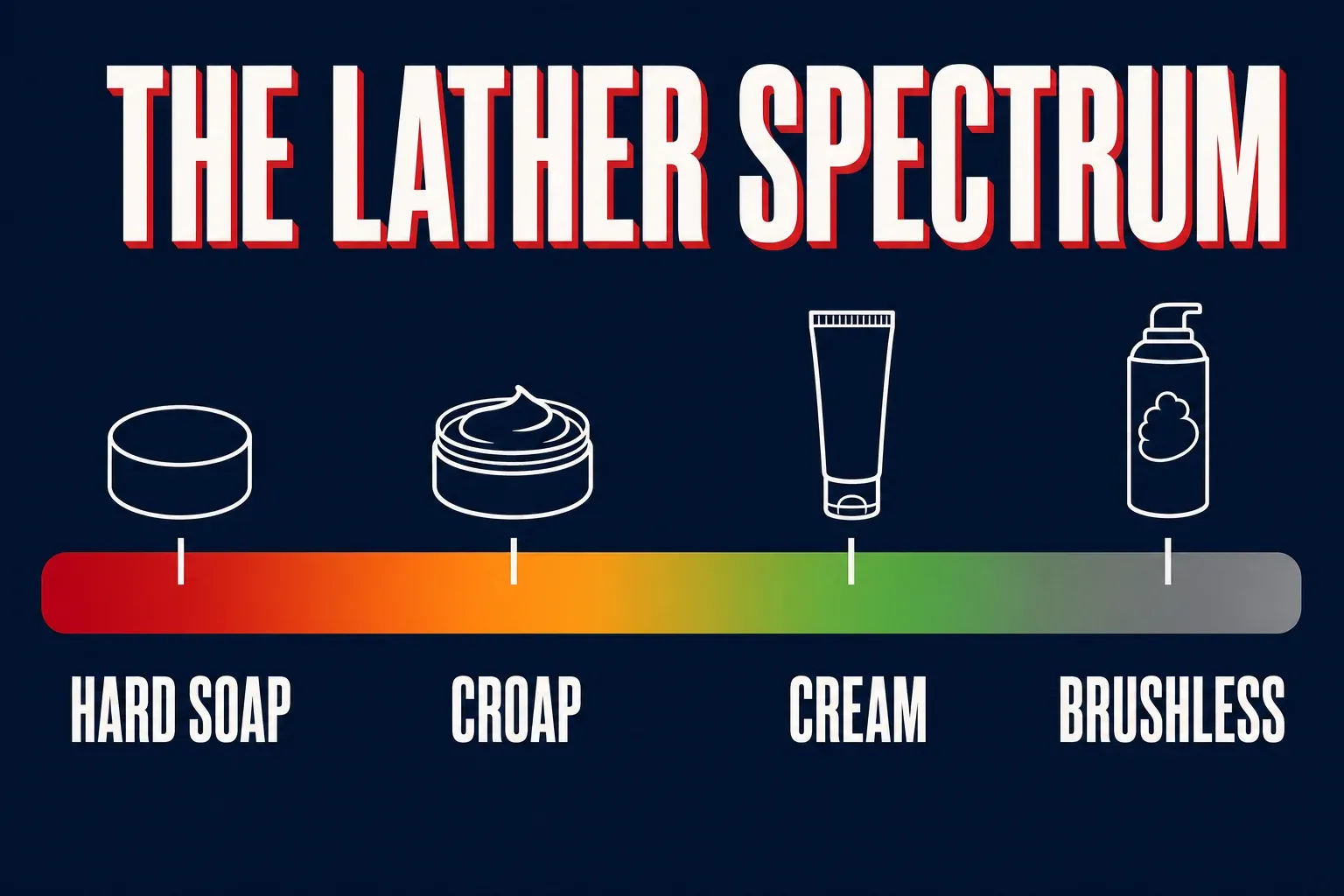
Lathering products run on a single spectrum from hard to soft. At the hard end is the hard soap, a dense puck pressed into a tub or sold as a stick. In the middle are soft soaps and croaps, the community word for a soap soft enough to be halfway to a cream. At the soft end is the cream, a whipped paste you scoop or squeeze. Past that are brushless creams and canned foam and gel, which are a different thing entirely. Our soap vs cream explainer lays out the whole spectrum and which point to start at, and Choosing Your First Soap or Cream gives starter picks.
Bases
A soap’s base is the blend of fats it is built on, and makers often give their formulas names so you can tell which base a scent is poured in. The three families you will hear about are tallow (rendered beef fat, the traditional choice), vegan (plant fats doing the same job) and glycerin (the translucent, budget-friendly melt-and-pour style). Our soap bases explainer shows how to read an ingredient list in ten seconds, and if your skin is reactive, the sensitive skin guide explains why fragrance and menthol usually matter more than the base. Wondering whether that puck you bought years ago is still good? Does shaving soap go bad? has the answer.
Performance words
Reviews judge lather on a few specific qualities. Slickness is how easily the blade glides over the lather, and it is the property that protects your skin. Residual slickness is the slick film left behind after the lather is wiped away, which makes touch-up strokes safer. Cushion is the thick, protective feel between blade and skin. Post-shave (or skin feel) describes how your face feels after rinsing: soft, tight, dry or moisturized. A soap described as thirsty needs a lot of water before its lather comes alive.
Scent words
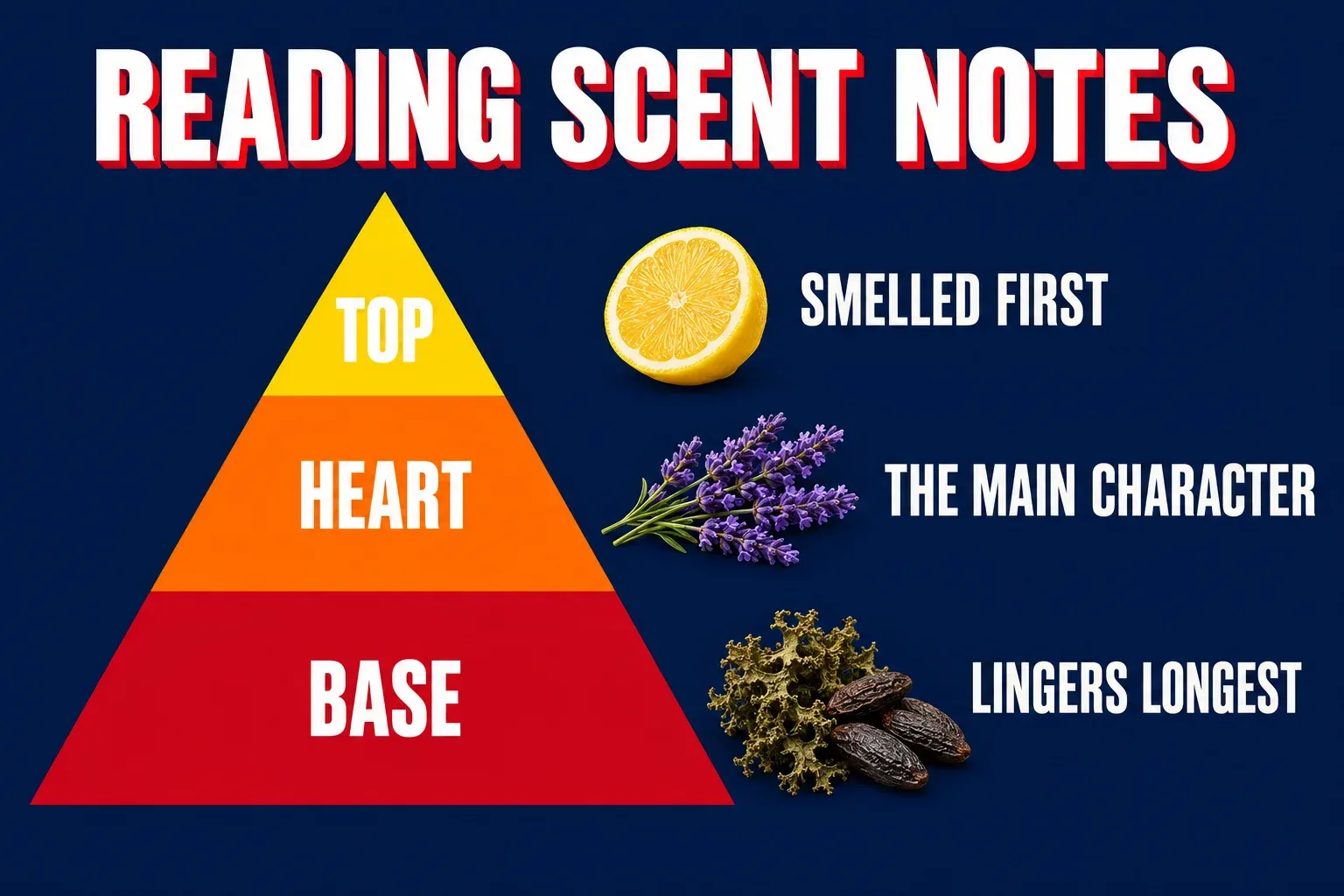
Much of the conversation about software is really about fragrance, and it borrows the perfume world’s vocabulary. A scent is described in notes: the top notes you smell first, the heart that follows, and the base that lingers. A few style names come up constantly. Barbershop means a family of classic scents that varies by region, and the fougère, built on lavender, oakmoss and coumarin, is its French form; our barbershop fragrance explainer tours the regional recipes. Bay rum is a spicy classic built around bay leaf and clove. Menthol or cooling soaps add a cold tingle and are labeled as such.
Artisans often build scents inspired by famous designer perfumes, and three words describe how closely. A clone aims to match the original exactly, a dupe aims for the same overall impression, and an homage borrows the idea and goes its own way. Our clone, dupe or homage explainer covers the difference, and the most duped fragrances shows which originals get the treatment most.
How artisan releases work
Artisan soaps are often released as part of a set: a soap with a matching aftershave splash and sometimes a matching fragrance. A release or drop is the day a new scent goes on sale. LE means limited edition, made once or in a short run. A restock is a new batch of something that sold out. A collab is a release made jointly by two or more makers, retailers or community groups; the Shave Dad collabs page collects the ones this community has been part of. Samples are small portions of a soap or splash, the cheapest way to try a scent before committing to a full tub.
Building Lather: The Verbs
Lather has its own set of action words, and Building a Lather That Actually Works puts them in order.
- Blooming: putting a little warm water on top of a hard soap for a few minutes to soften the surface before loading.
- Loading: swirling a damp brush on the soap to transfer soap into the knot. Under-loading is the most common beginner lather mistake.
- Proto-lather: the thick, pasty first stage of a lather, before enough water has been worked in.
- Face-lathering: building the lather directly on your face with the brush.
- Bowl-lathering: building the lather in a small bowl first, then painting it on. Our lather bowl guide covers bowls, mugs and the scuttle, a bowl with a hot water jacket.
- Hand-lathering: building the lather in your palm, a less common middle option.
- Paint strokes: back-and-forth strokes that spread lather evenly, as opposed to circles.
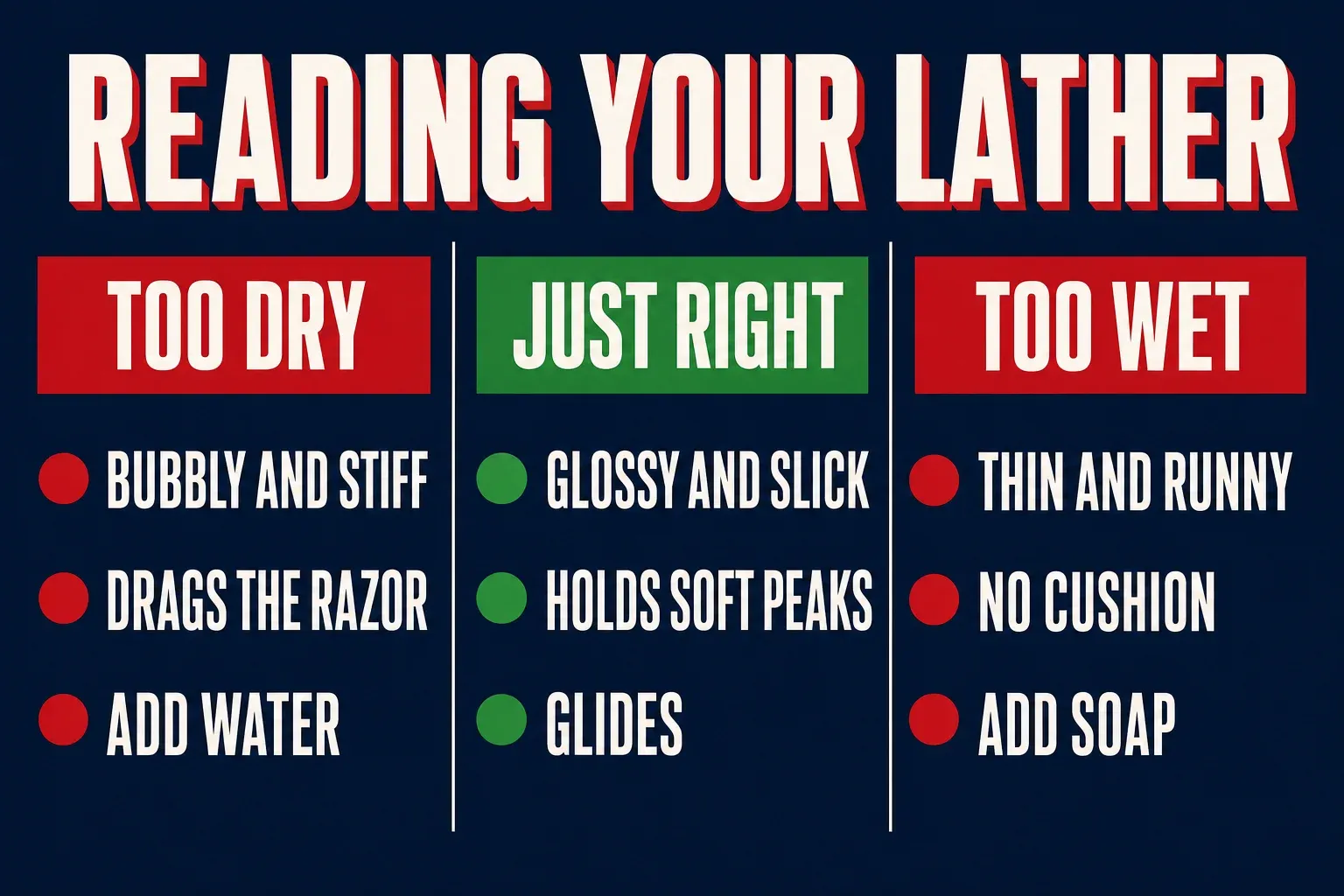
The group has argued the merits of face and bowl lathering at length in load from the tub or scoop to the bowl. If face lathering leaves your skin red, that is brush burn, and why face lathering burns explains the causes. For the full method with troubleshooting, read how to build the perfect shaving lather.
The Shave Itself: Technique Words
Grain and passes
The grain is the direction your beard grows, and it is different on different parts of your face. Many people discover that their neck grows sideways or even upward. Mapping your grain means running your fingers across the stubble to learn which way is smooth (with the grain) and which is rough (against it). Our neck grain map post shows how.
A pass is one complete trip over your face with the razor. Shaves are described by their passes:
- WTG: with the grain, the first pass and the gentlest.
- XTG: across the grain, at roughly a right angle to growth.
- ATG: against the grain, the closest pass and the one most likely to irritate.
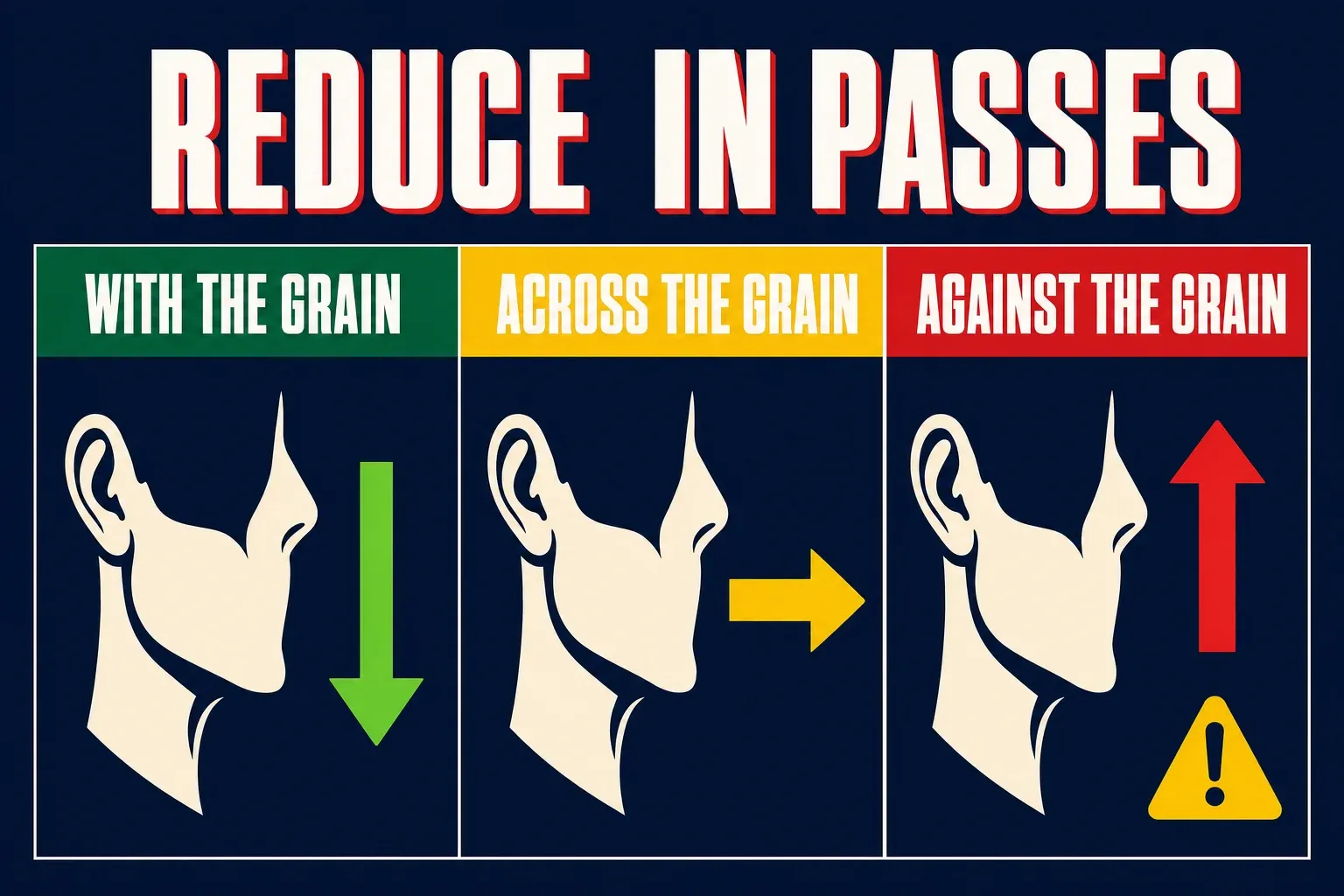
The idea is reduction: each pass removes some of the hair instead of trying to take it all at once. The Three-Pass Shave explains the method, and do you actually need three passes? makes the case for stopping sooner.
Angle, pressure and strokes
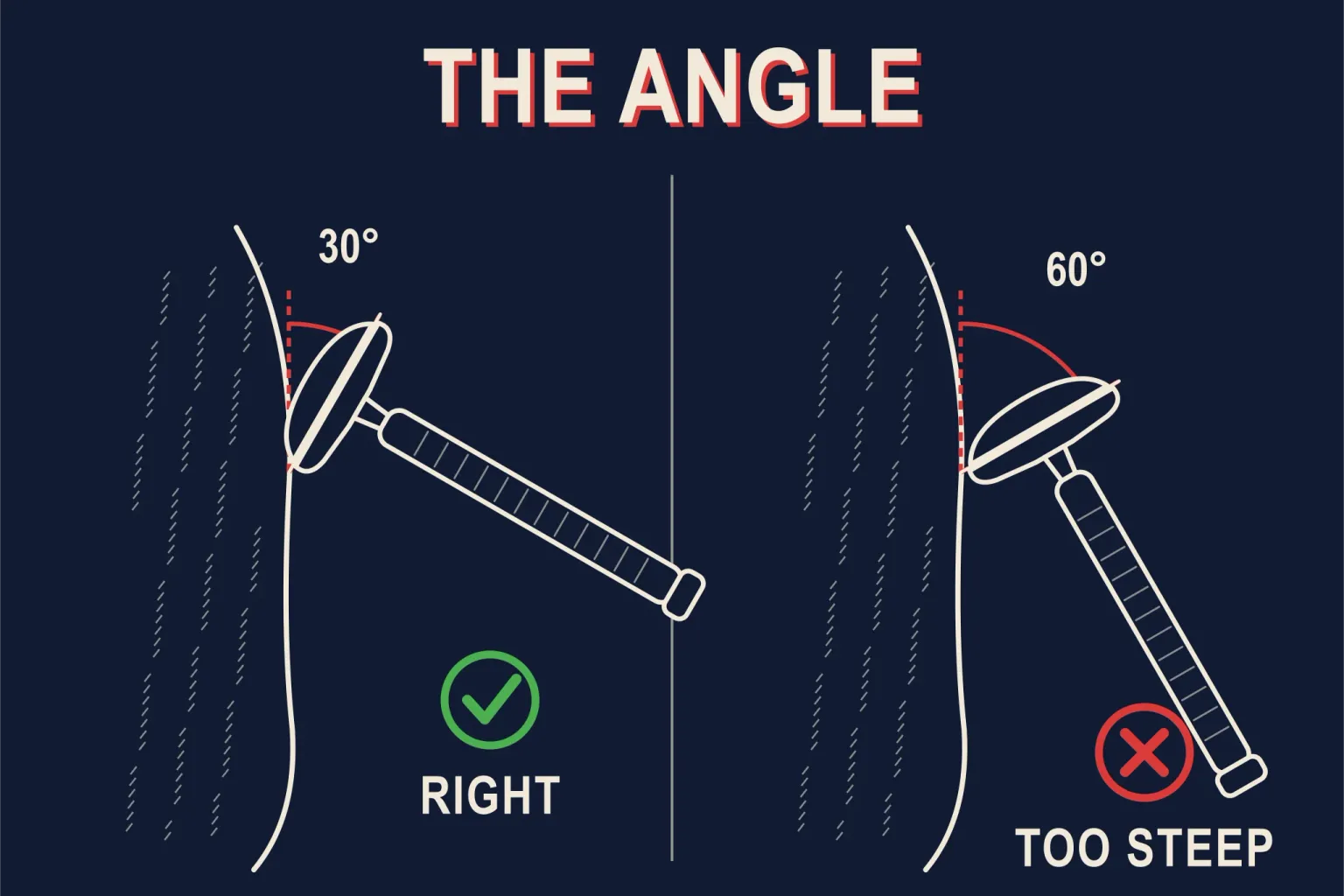
Two phrases cover most of the technique. Cap leads: hold the razor so the cap touches your face first and the blade follows at a shallow angle, roughly 30 degrees. No pressure: let the weight of the razor do the work and only guide it. Short, deliberate strokes beat long ones.
A few more terms describe specific strokes. A touch-up is a final, re-lathered pass over the spots that still feel rough. Buffing is repeating small strokes over one area, a fast way to get very smooth and an equally fast way to irritate your skin if you overdo it. A J-hook is a curved stroke that follows the jawline. Skin stretching means pulling the skin flat with your free hand, which helps in some places and causes ingrown hairs in others.
For special cases, we have guides to shaving around moles and scars and shaving your head with a safety razor. If you are wondering how long all this should take, how long does a wet shave really take? has timed routines.
Before and After: Prep and Aftercare
Prep
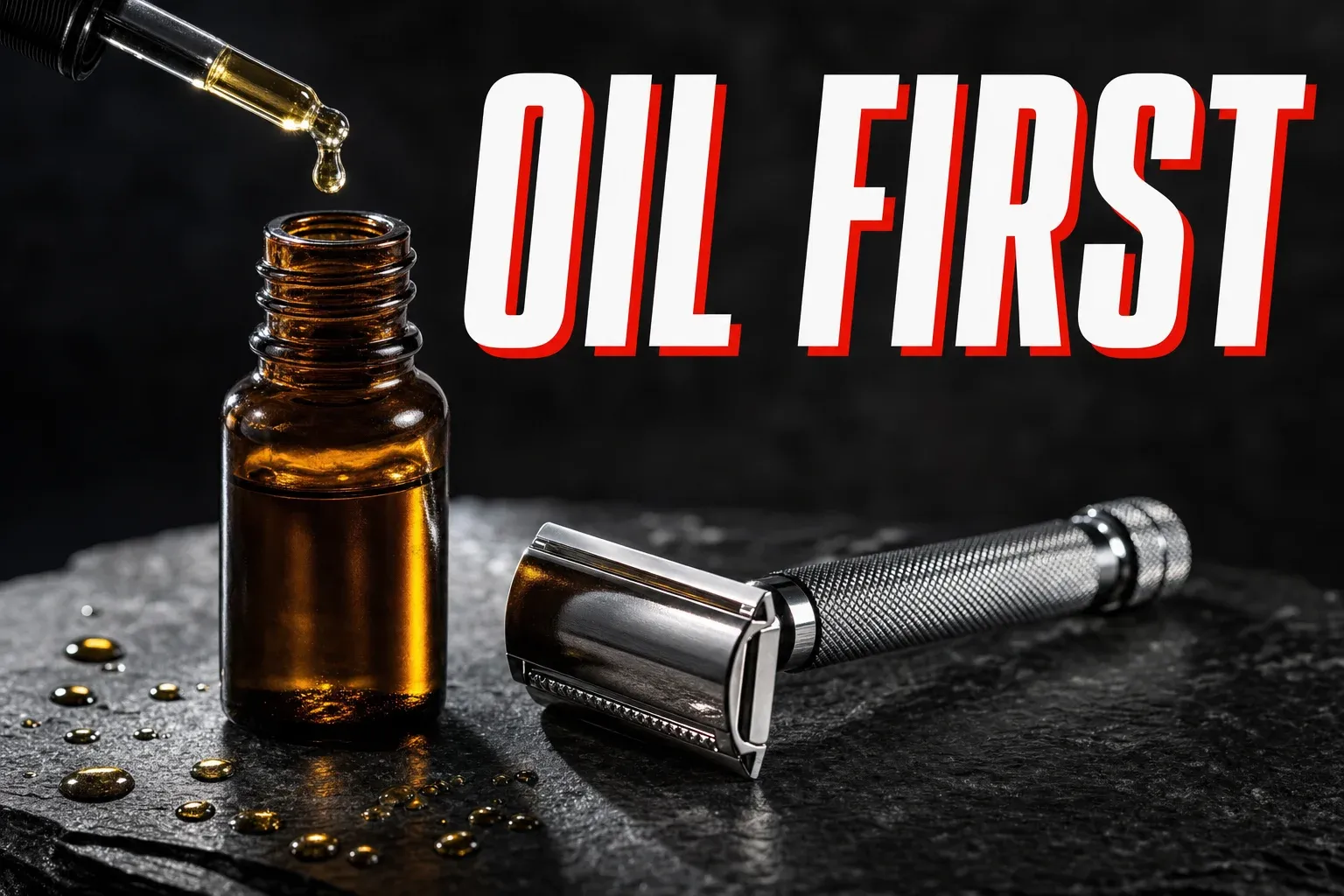
Pre-shave is everything before the lather. The core of it is a face wash and hot water on the stubble, because hydrated hair cuts far more easily than dry hair. Some shavers add a hot towel, a washcloth wrung out in hot water and held on the face, or a pre-shave oil or pre-shave soap applied before lathering. Our pre-shave oils guide explains who benefits from oil, the hot towel tip covers the towel, and pre-shave vs post-shave explains what each end of the shave contributes.
Aftercare
Post-shave is everything after the last pass. A typical routine looks like this, and our post-shave skincare guide walks it step by step:
- Cold rinse: cold water to calm the skin.
- Alum block: a block of mineral salt rubbed over wet skin. It stings wherever the blade irritated you, which makes it useful feedback on your technique. Our alum block guide covers it.
- Styptic: a stronger astringent, sold as a pencil or powder, for stopping a nick that keeps bleeding.
- Witch hazel or toner: a mild astringent step some shavers use to calm the skin. See our witch hazel post.
- Splash: an alcohol-based aftershave. Brief sting, fast-drying, usually scented.
- Balm: a lotion-style aftershave that moisturizes without stinging.
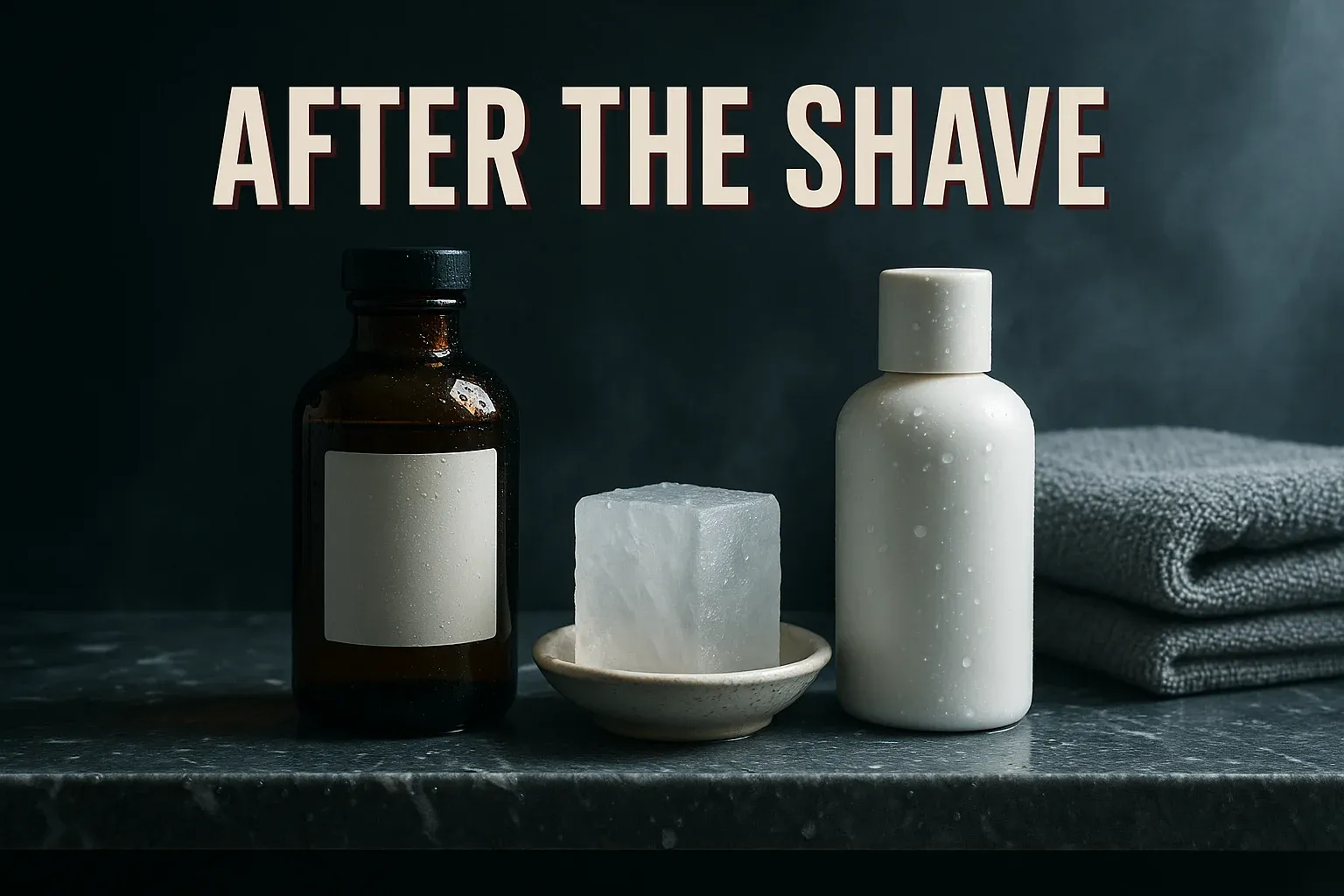
Aftershave splash vs balm explains when to use which, and if you use both, splash first, balm second settles the order. For a tour of the long-running aftershave brands, read the classic aftershave buyer’s guide.
Fragrance strengths
Many artisan sets include a fragrance, and the labels describe strength. EDC (eau de cologne) is the lightest, EDT (eau de toilette) is stronger, and EDP (eau de parfum) is stronger again. Perfumes labeled extrait or parfum sit at the top. A splash is not a fragrance in this sense, even when it smells like one; it is aftercare first.
Results and Trouble: Grading the Shave
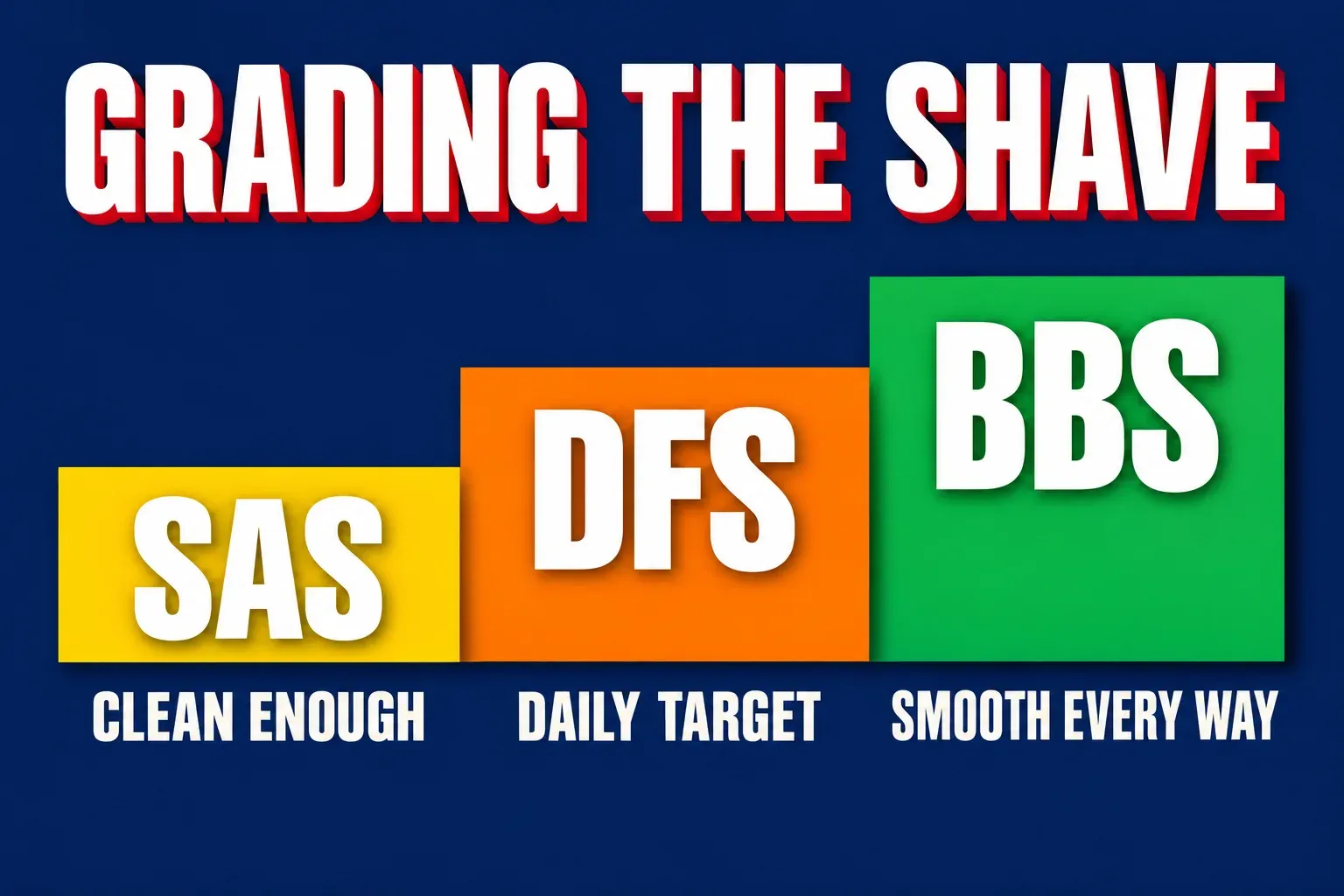
The community grades a finished shave on a three-step scale, and our BBS vs DFS post explains each one and how to check honestly:
- BBS (baby butt smooth): smooth in every direction, including against the grain.
- DFS (damn fine shave): smooth with and across the grain, with a little left against it. The sensible daily target.
- SAS (socially acceptable shave): clean enough for the day, no more.
When something goes wrong, the words are just as specific, and each one points to a different cause. Razor burn is a red, hot rash that shows up after the shave. A weeper is a pinprick of blood from a follicle the blade opened. A nick is an actual small cut. An ingrown hair is a hair that curls back into the skin and leaves a bump, most often on the neck. Avoiding Razor Burn, Ingrowns, and Weepers diagnoses each one by symptom.
For deeper help, start with the shaving troubleshooting guide, then preventing razor burn and the ingrown hair fix. If your skin never seems to recover, shaving every day is wrecking your skin makes the case for rest days, and shavers with rosacea should read our rosacea tips. And before you believe anything the internet tells you about shaving, check it against shaving myths, fact-checked.
Care and Keeping
Most wet shaving gear lasts for years if you rinse it and let it dry. A razor gets rinsed after every shave and taken apart now and then for a deeper clean. A brush gets rinsed until the water runs clear and dries in open air, often hanging knot-down in a stand. Hard soaps just need the lid on. Maintaining Your Gear is the full routine, our gear care guide goes further, and the group’s razor cleaning thread compares four methods.
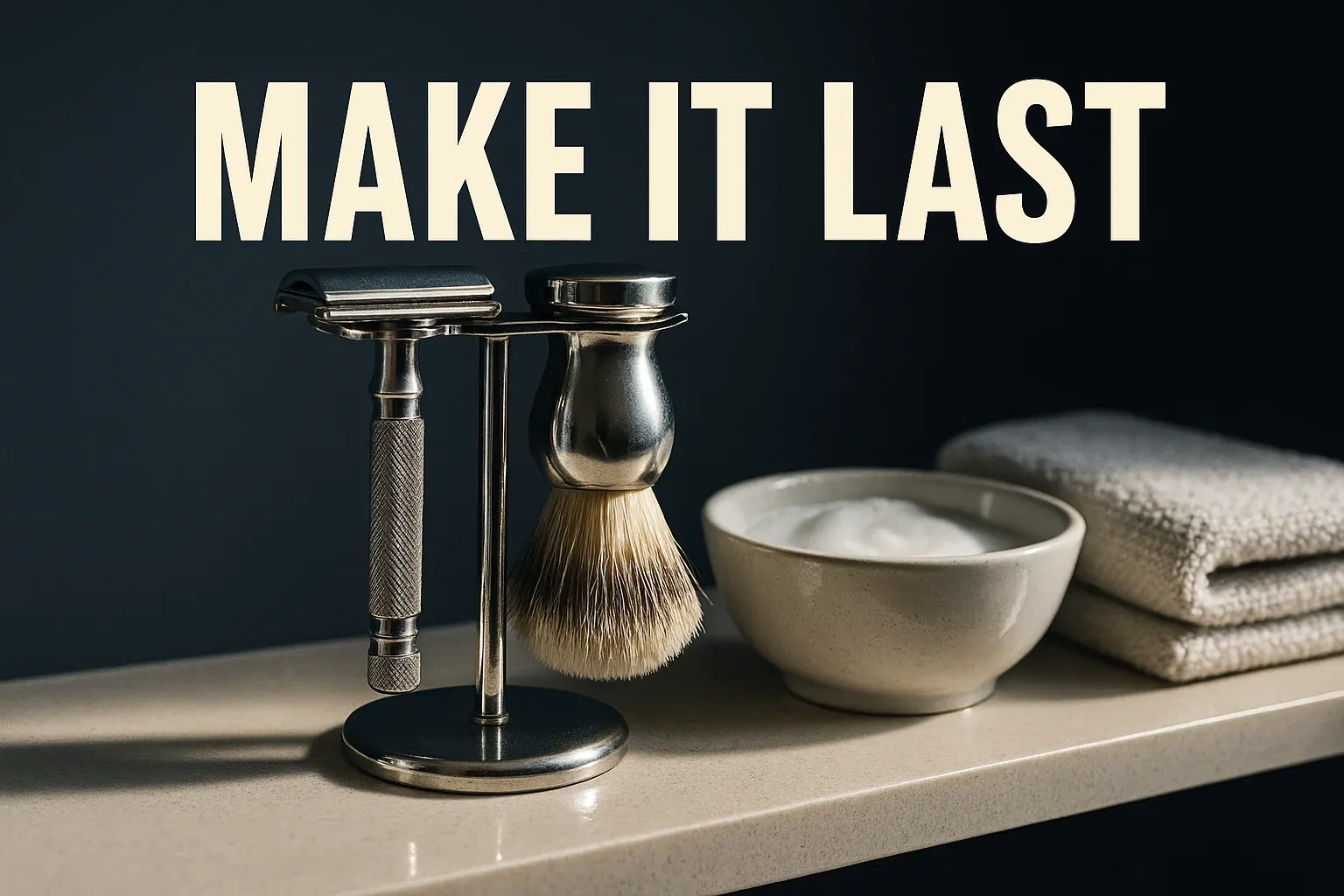
The place where all of this lives is your den, the community’s word for your shaving collection and the shelf or cabinet that holds it. Our shave den essentials lists what a working setup needs and what you can skip. Taking it on the road? How to travel and fly with a safety razor covers packing and airport rules.
Speaking Fluent Group: The Culture
The last layer of vocabulary has nothing to do with shaving technique and everything to do with the people. These are the words you will see in every post and comment thread:
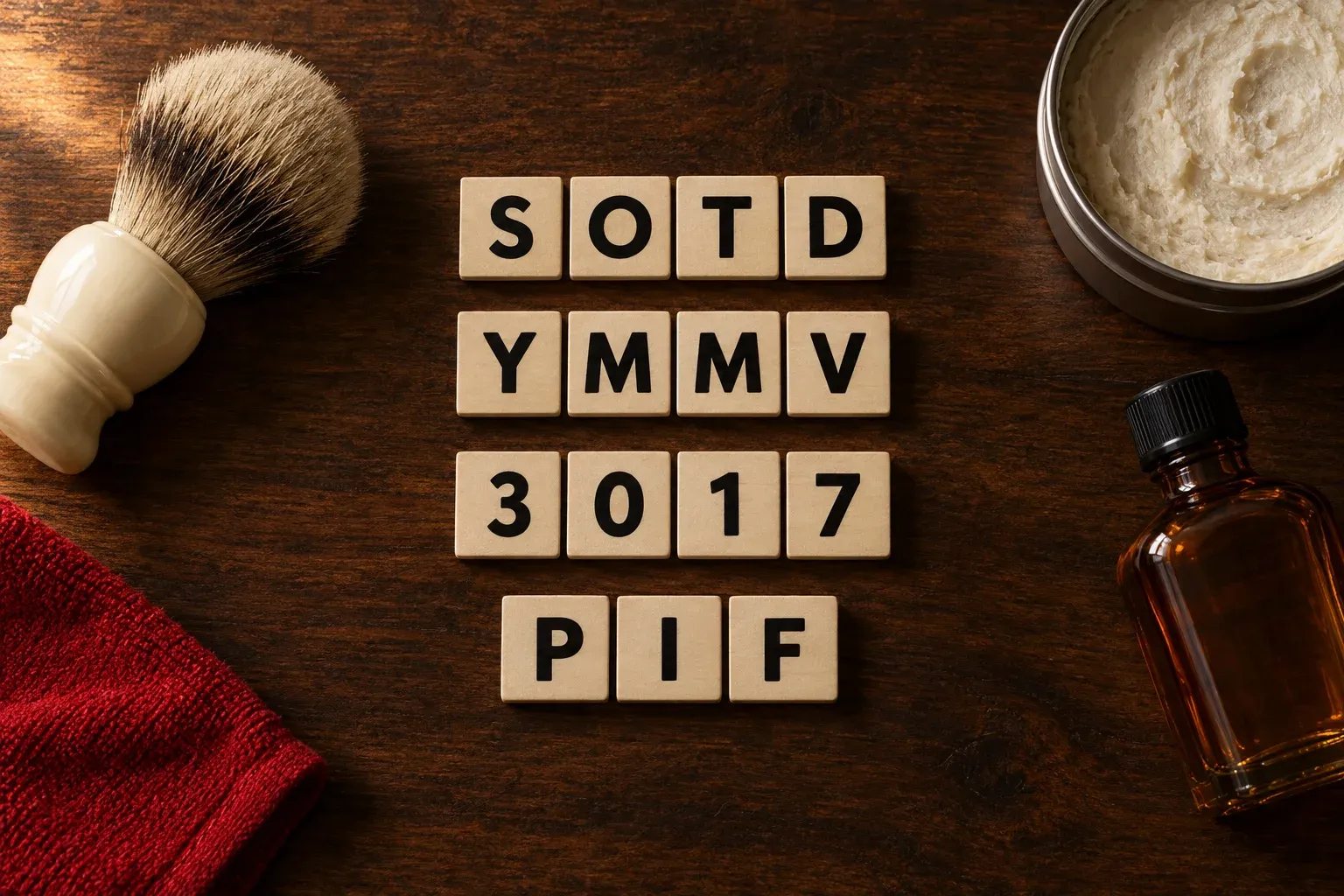
- SOTD: Shave of the Day. A photo of the gear used for a shave, usually with a list of it underneath.
- PSO: often Post-Shave Observation, a short report on how the shave went. The same letters also get used for pre-shave oil, so read the context.
- Rotation: the set of products someone is actively using. A daily driver is the razor or soap they reach for most.
- AD: Acquisition Disorder, the joking name for buying more gear than you need. RAD is for razors, SAD for soaps, BAD for brushes.
- 3017: a challenge to use one soap until it is gone before buying another. The usual cure for SAD.
- YMMV: your mileage may vary. Faces differ, so every recommendation carries this asterisk.
- HG (holy grail) and endgame: the item someone considers their last word in a category. Endgames have a way of changing.
- BST: buy, sell, trade. The posts or groups where shavers sell gear to each other.
- PIF: pay it forward. Gear given away free, often to a newer shaver.
You will also see brand names shortened to initials. A few common ones: B&M (Barrister and Mann), HC&C (Hendrix Classics and Co), MSC (Master Soap Creations), PAA (Phoenix Artisan Accoutrements), SGS (Strike Gold Shave), GFT (Geo. F. Trumper) and TWSS (The Wet Shaving Store, Shave Dad’s official outfitter). The glossary keeps the full list, and our longer wet shaving glossary explains the concepts behind the acronyms.
The best place to hear all of it in use is the Shave Dad group on Facebook, where a week of reading SOTD posts will teach you more vocabulary than any page can. When you want to keep your own notes, the Shave Tracker turns your shaves into a record.
How to Read a Product Listing
This is where the vocabulary pays off. Here are four sample listings, the kind you will see on any shop page, decoded line by line. The specifics are illustrative, not a recommendation.
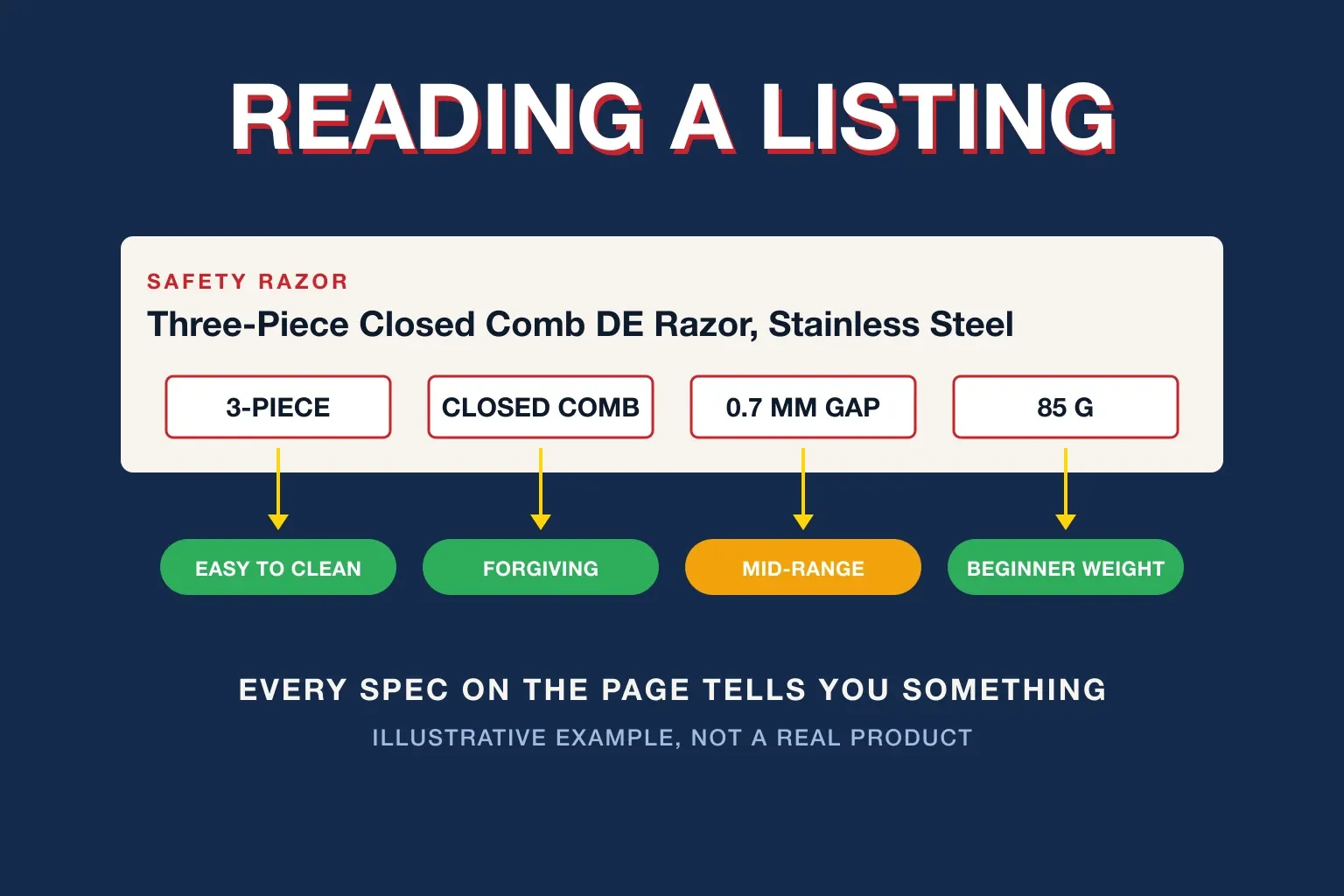
A razor: “Three-piece closed comb DE, stainless steel, 0.7 mm blade gap, 85 g.” It comes apart into cap, baseplate and handle, so it is easy to clean. It has a solid safety bar, so it is forgiving. It takes standard DE blades. The gap sits in the middle of the usual range, and the weight is in the band our beginner guide recommends. A beginner could buy this.
A brush: “24 mm synthetic knot, 52 mm loft, bulb shape.” A mid-sized knot that carries plenty of lather, a moderate loft that should have a little backbone, and a domed shape that suits face-lathering. Also a sensible first brush.
A soap: “Tallow base, 4 oz tub. Notes of bergamot, lavender, oakmoss and tonka. Matching splash available.” A traditional soap base, a common artisan tub size, and a scent with a fresh top note and a classic fougère heart. The matching splash means you can wear the same scent after the shave.
Blades: “Platinum-coated DE blades, 10 tucks of 5.” One hundred DE blades in packs of five, with a coating aimed at a smooth glide. Only buy the hundred once a sampler has told you this brand suits your face.
A Sensible Path Through All of This
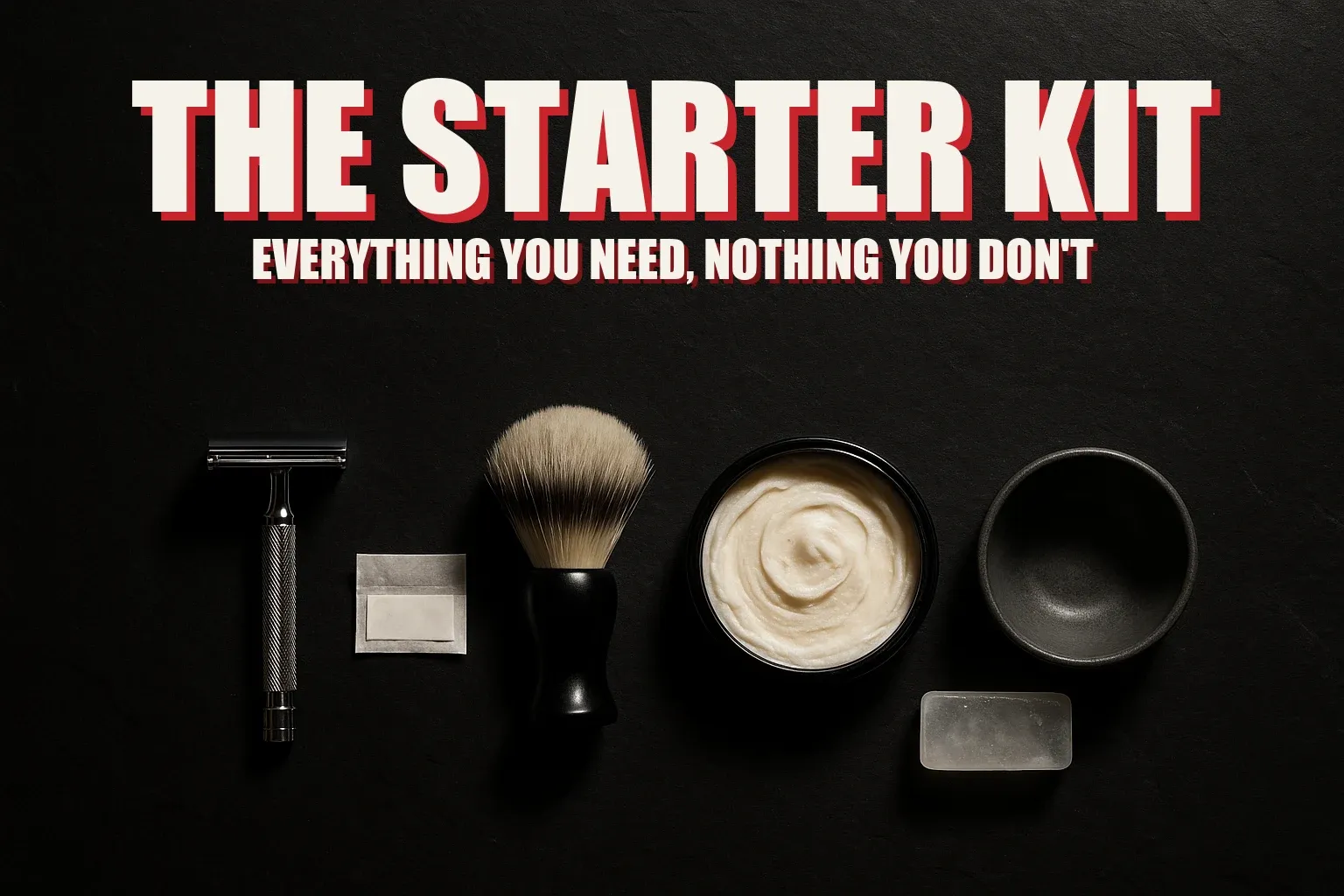
Nobody needs to know every word on this page before their first shave. You need one of each piece of gear and a little patience. Our safety razor starter kit lists what to buy, and the best safety razor for beginners narrows the razor choice. Then follow the Beginner’s Path in order and read Ten Common Beginner Mistakes before the first month is out. If you want to know what the early weeks feel like from someone who just went through them, two months in is an honest diary.
The vocabulary will come on its own. A few weeks of shaving and reading SOTD posts, and the next time someone asks whether a G5 knot will splay too much for face lathering, you will know the answer.
Frequently asked questions
What is the difference between a DE and an SE razor?
A DE, or double-edge razor, holds a single thin blade sharpened on both long sides, and every DE blade fits every DE razor. An SE, or single edge razor, takes a thicker, stiffer blade with one working edge, and each SE family, such as GEM, injector and AC razors, uses its own blade shape. DE is the right first format and SE is a rewarding second one.
What do WTG, XTG and ATG mean?
They describe the direction of a pass relative to the grain, the direction your beard grows. WTG is with the grain, the first and gentlest pass. XTG is across the grain, at roughly a right angle to growth. ATG is against the grain, the closest pass and the one most likely to irritate.
What does it mean when a razor is called aggressive?
Aggression describes how much a razor punishes a bad angle or a heavy hand, and it comes from the blade gap, the blade exposure, and how the head bends and clamps the blade. It is not the same as efficiency, which is how much stubble comes off per pass. The best modern razors try to be efficient without being aggressive.
What is the difference between a soap, a croap and a cream?
They sit on one spectrum from hard to soft. A hard soap is a dense puck you load a brush from. A croap or soft soap is halfway to a cream. A cream is a whipped paste you scoop or squeeze. Brushless creams and canned foam sit past the soft end and are a different thing entirely.
What do BBS, DFS and SAS mean?
They grade a finished shave. BBS, baby butt smooth, is smooth in every direction including against the grain. DFS, damn fine shave, is smooth with and across the grain with a little left against it, and is the sensible daily target. SAS, socially acceptable shave, is clean enough for the day.
What do SOTD, AD and 3017 mean in shaving groups?
SOTD is Shave of the Day, a photo of the gear used for a shave. AD is Acquisition Disorder, the joking name for buying more gear than you need, with RAD for razors, SAD for soaps and BAD for brushes. 3017 is a challenge to use one soap until it is gone before buying another.
Happy shaving.