

Stop Throwing Loose Razor Blades in the Trash
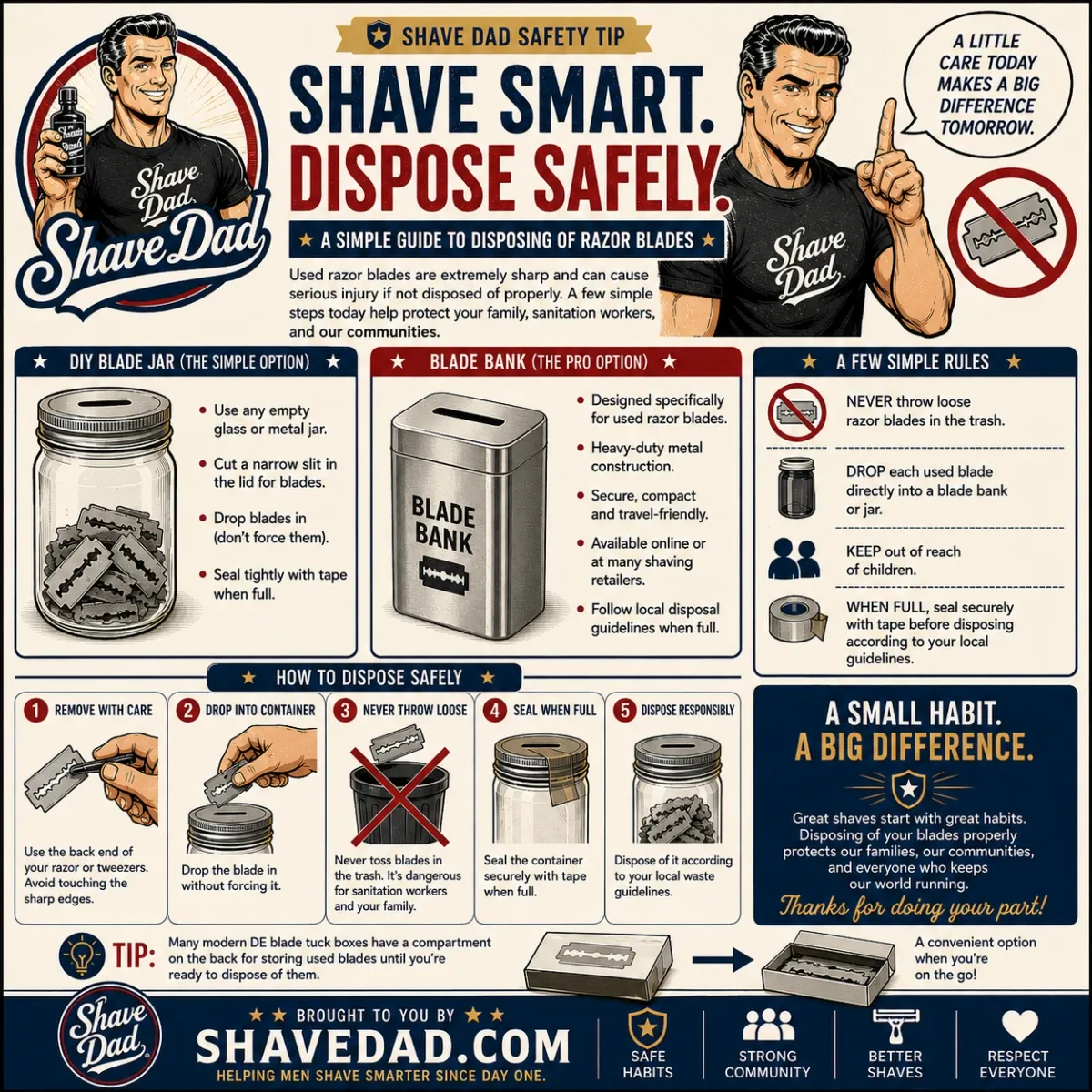
Jerry didn’t post about a new razor or a new soap this time. He posted about the trash.
A used double-edge blade is still sharp enough to open skin, days or years after you pulled it out of the razor. Toss it loose in the garbage and it’s the sanitation worker or a family member who finds that out the hard way, not you. Jerry’s fix is simple: a spent blade never goes straight into the bin. It goes into something built for the job first.
The blade bank, homemade or bought
You don’t need to spend a dime on this. An old glass jar works. So does a metal tin, or a sturdy plastic container with a small slit cut into the lid, just wide enough for a blade to drop through and not come back out. Purpose-built blade banks exist too, cheap and small, made for exactly this. Jerry’s rules from the post are short: never loose in the trash, straight into the bank, keep it out of reach of kids, tape it shut when it’s full and dispose of it per your local guidelines.
Knick has been running the homemade version for a decade.
Mark does something similar with a prescription bottle instead of a jar, the childproof cap doing double duty as a kid-safety feature. Thom uses the same trick, an old prescription bottle for the cap. He also says he gets a lot of shaves out of every blade, so he isn’t going through them fast enough to fill a container quickly either way.
Or just buy one
Nick picked up a blade slot from Fine Accoutrements and still hasn’t installed it, which, if you’ve ever bought a gadget for a habit you already have a workaround for, tracks. Brian went the Amazon route.
That last part is worth repeating on its own. Used blades are medical-adjacent sharps waste in a lot of places, the same category as needles, and a fire station or hospital will usually take them off your hands if you ask. Brian also runs a second setup, four blade banks bought as a set, each rated for 300 blades. He’s been filling the first one since he started with a DE razor in November 2023, and it isn’t even a third full yet. When it is, the plan is to seal it and drive it to the recycling center.
That plan runs straight into a disagreement that played out in the comments.
Can you actually recycle them?
Jeffrey said he recycles his. Bill said don’t, that loose blades can damage recycling equipment and aren’t accepted as a standard recyclable item. Jeffrey came back with a mixed answer: he’d found a source saying yes, if the local facility takes them, and said his own blades went through without a single question asked, though he was also dropping off around 300 pounds of other scrap metal at the same time, which may be doing some of the work there. Nobody in the thread settled it. The honest answer is that it depends entirely on what your specific facility will take, and the only way to know is to call and ask before you show up with a jar of blades.
Dave’s comment cuts the other way entirely. His local waste management told him to just put used blades in the regular garbage. He compromises by wrapping each one back in its paper sleeve and burying it in the middle of the bag, which isn’t Jerry’s method but is a lot better than loose blades on top.

The oldest tricks in the thread
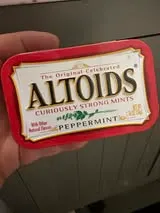
A few guys skipped containers altogether. Chris cuts a slot straight into the medicine cabinet and lets the blades fall into the wall cavity between the studs, the way it used to be done before anyone thought twice about it. His caveat is the right one: fine until somebody remodels the house and finds forty years of blades in the drywall. JJ uses an Altoids tin for now, with a longer-term idea of handing the whole stash to a bladesmith once it’s full, on the theory that enough old DE blades might be worth turning into a knife. Brian, for one, thought that was a good idea.
None of this is complicated. A jar, a tin, a bottle, whatever you’ve already got with a lid. The only real rule is the one Jerry led with: nothing loose, ever.
Happy shaving.