The used market is full of seventy-year-old razors that still shave perfectly, which tells you everything about how durable this gear is when someone bothered. It is also full of brushes with rotted knots and razors with soap concrete in the threads, which tells you the other half. The difference is about thirty seconds a day and ten minutes a month.
Razors: The Daily Thirty Seconds
After the shave, rinse the razor thoroughly under hot water, give it a firm shake, and leave it somewhere with airflow. That is genuinely most of it. Do not towel-scrub the head across the blade edge, and do not store a wet razor in a closed cabinet where soap film hardens and moisture lingers. Whether the blade stays in between shaves is preference; what matters is that the razor drains and dries.
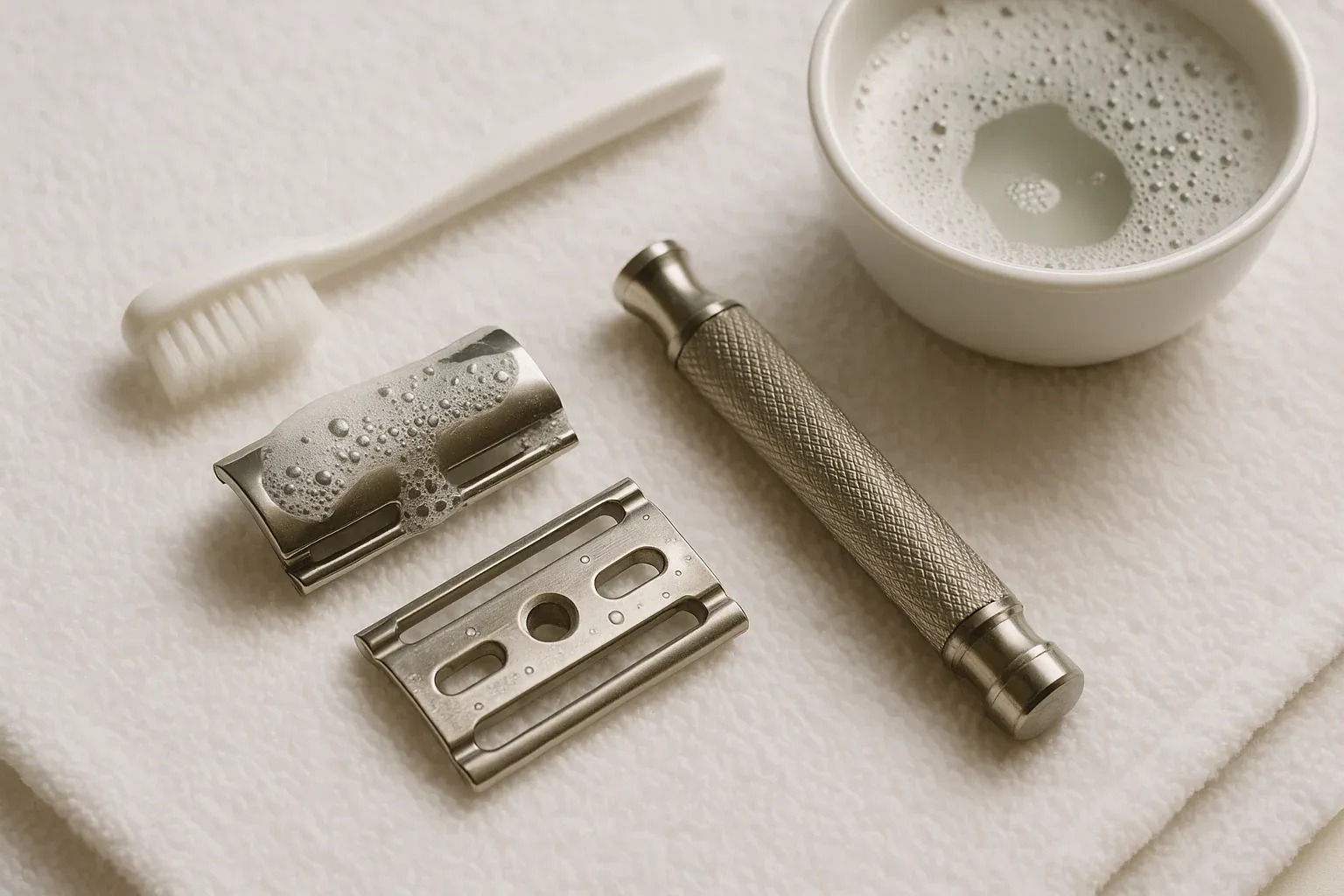
Monthly, do the deep clean: blade out, warm water with a drop of dish soap, a soft toothbrush into the head’s corners and the handle knurling, rinse, dry. Hard-water film wipes off with diluted white vinegar, rinsed promptly. A dab of mineral oil on adjustable mechanisms and three-piece threads keeps everything turning the way it did new.
Brushes: Damp Is the Enemy
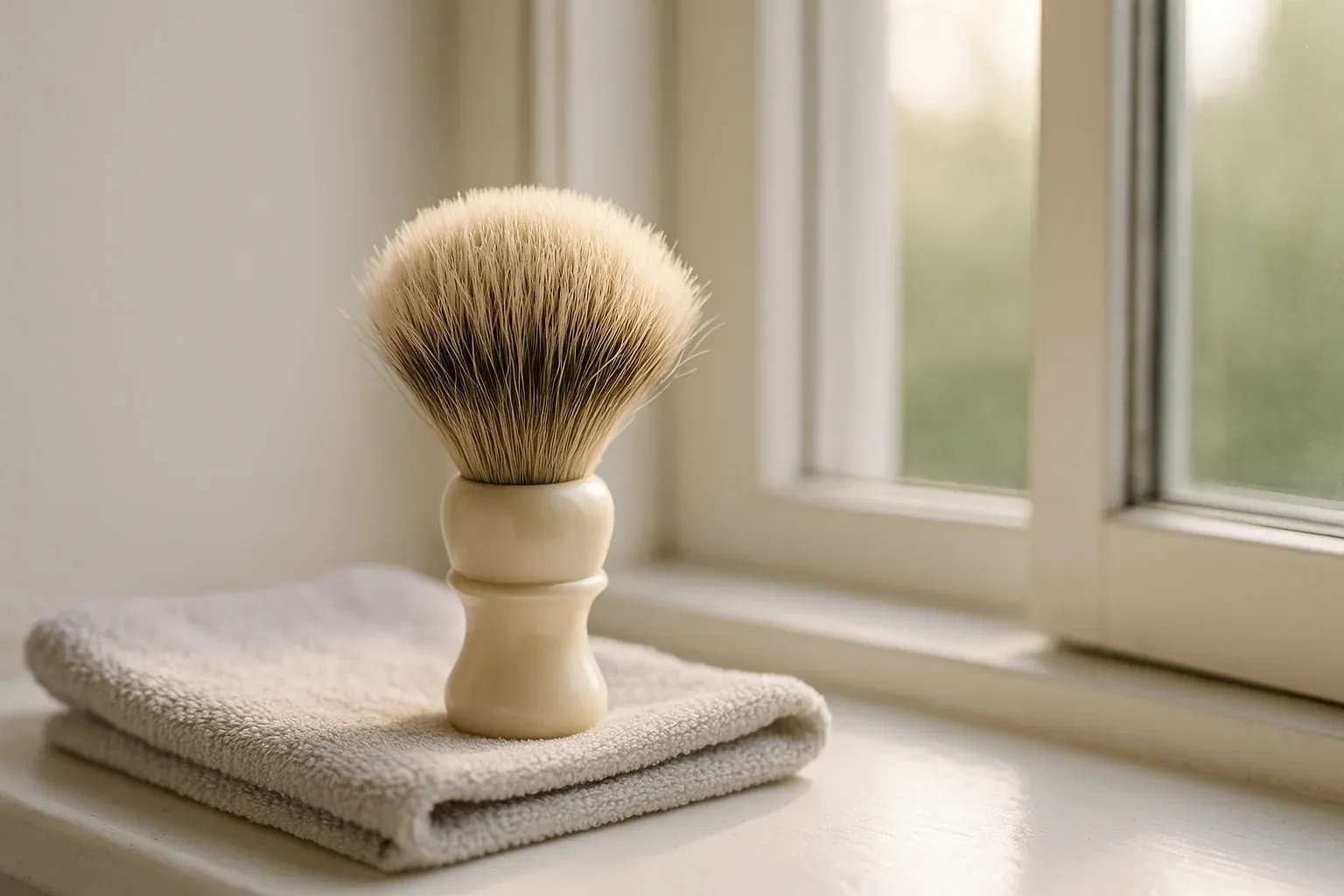
Almost every dead brush died the same death: chronic damp at the base of the knot, where water sits after rinsing and slowly breaks down hair and glue. The routine that prevents it takes twenty seconds. Rinse until the water runs clear, squeeze gently from base to tip, shake firmly, then a light flick of the tips across a towel, and let it dry in open air. Not in the shower stall, not in a drawer.
Hanging bristles-down versus standing upright is one of the group’s eternal debates; the honest answer is that airflow matters more than orientation. A brush standing in a ventilated spot outlives a brush hanging in a humid closed cabinet every time. Give boar and badger a full dry day between uses when you can, which is the practical argument for a two-brush rotation, and one more reason the brush guide recommends owning a second.
What a Stand Actually Earns
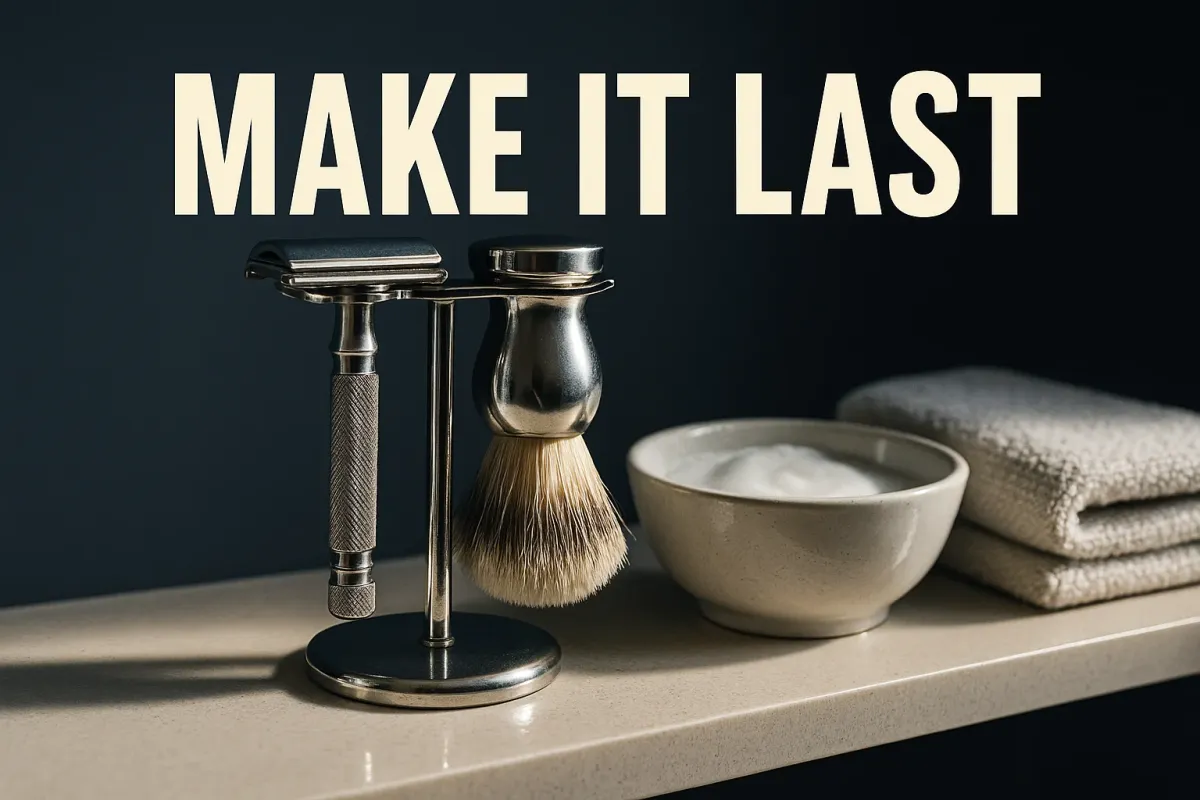
A stand is not jewelry, or not only. It holds the razor where it drains instead of lying in a puddle on the sink edge, keeps the brush in open air, and moves both out of the toothpaste splash zone. Any stand that does those three things is doing the whole job; the price difference beyond that is furniture.
Soaps, Creams, and Blades
Soap care is simple: let the puck dry open for a few hours after the shave, then lid it loosely, and keep tubs out of direct sun and shower humidity. Done right, soap outlasts your interest in it, as the group’s decade-old pucks in does shaving soap go bad prove. Cream tubes just want their caps on.
Blades want two things: to stay dry, and to leave the house safely. Store spares in their wrappers somewhere dry, and retire used ones into a blade bank ↗ Amazon or any taped-shut rigid container, never loose in a bin. Travel deserves its own note: dry everything before packing, guard the razor head, and check blade rules before flying.
Frequently asked questions
How do I maintain a safety razor?
Daily: rinse hot, shake, and let it dry with airflow. Monthly: remove the blade and clean the head and handle with warm soapy water and a soft toothbrush, using diluted white vinegar for hard water film. Oil adjustable mechanisms sparingly. Done consistently, a razor lasts generations.
How should a shaving brush be dried?
Rinse clean, squeeze gently from the base outward, shake firmly, flick the tips on a towel, and dry in open air away from shower humidity. Airflow matters more than whether it hangs or stands. Chronic dampness at the knot base is what kills brushes.
Do I need a razor and brush stand?
It is the cheapest genuinely useful accessory: it lets the razor drain instead of pooling, keeps the brush in moving air, and protects both from sink-edge knocks. Any stable stand does the job; beyond that you are buying looks.
How should I store razor blades?
Unused blades stay in their paper wrappers somewhere dry. Used blades go in a blade bank or any rigid, taped-shut container for disposal, never loose in the trash. Humidity is the only real enemy of a stored blade.
Buy once, rinse always, deep-clean monthly. The gear will hold up its end for decades; it only asks the same of you for half a minute a day.
Happy shaving.
The Shave Dad Newsletter
You're almost in.You're already in.
Your submission was successful. One quick step left to lock it in.
That email is already subscribed to the Shave Dad newsletter. You're all set, no further action needed.
SubscribeDone.
2Check your email and click the confirm buttonThe email should arrive in a couple of minutes. If you don't see it in your inbox, check your spam or junk folder.
Confirmation sent toYou're subscribed withNot the right address? Close this and sign up again.
The Shave Dad Newsletter
You're in.
Subscription confirmed. The Shave Dad Newsletter will land in your inbox about twice a month, limited drops, new reviews, and field-tested gear, no filler.
Shave Dad is supported by Google AdSense. We use cookies to show relevant ads and measure how the site performs. You can accept all, reject personalized ads (you'll still see ads, just less targeted), or read theprivacy policy first.