
Shaving Soap Bases Explained: Tallow, Vegan, Glycerin, and What Actually Matters
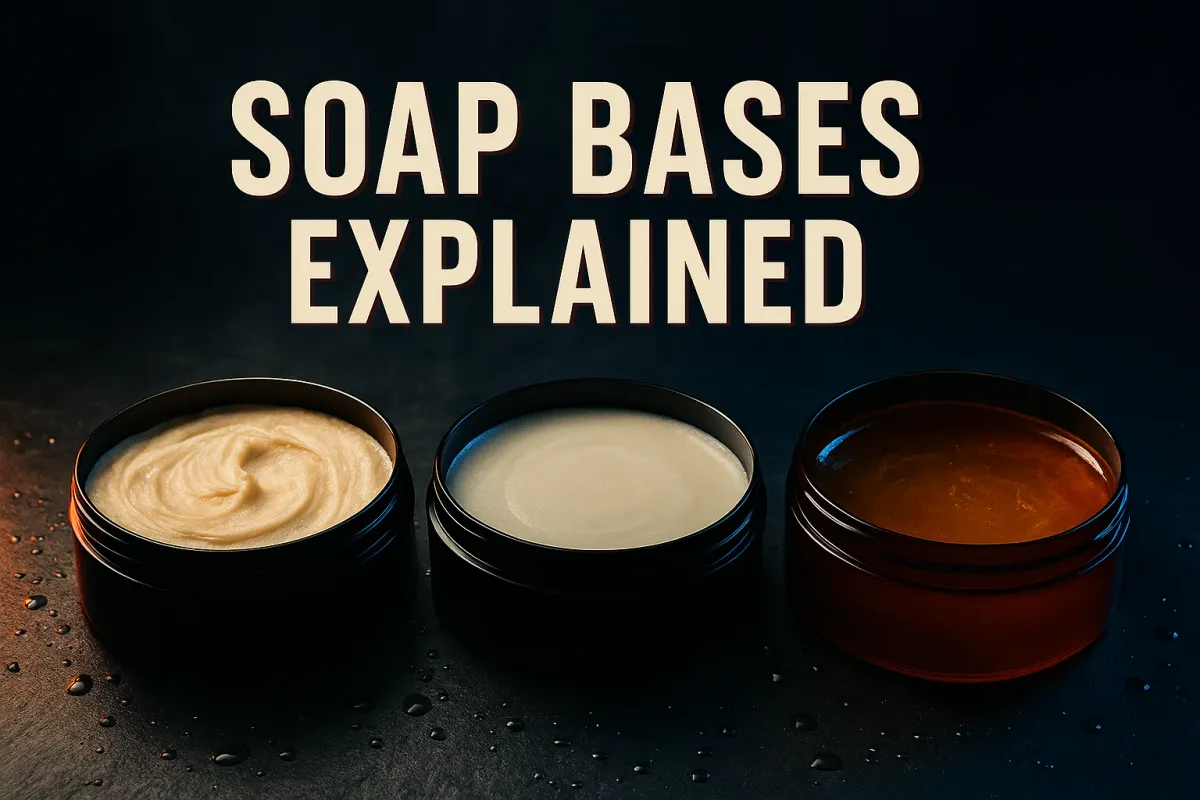
Walk into any wet shaving conversation about soap and within three replies someone will say the word tallow the way other hobbies say the word vintage. Tallow bases have a reputation bordering on mythology, vegan bases carry a faint suspicion they have done nothing to earn, and glycerin melt-and-pour soaps get dismissed by people lathering products that outperform their price by miles.
Most of this argument is fought over labels. The truth is that a soap’s base, the blend of fats it is built on, matters less than how well the maker formulated it, and the best soap in each family beats the worst soap in every other. But the families do have personalities, and knowing them turns an ingredient list from chemistry homework into useful intelligence.
What a Base Actually Is
Every shaving soap is fat plus alkali: fats are saponified (converted to soap) and the choice of fats determines the soap’s character. The workhorse is stearic acid, the fatty acid responsible for the dense, stable lather shaving demands, which is why it leads so many ingredient lists regardless of base. The rest of the fat blend tunes the balance: lauric acids for quick fluffy lather, oleic-rich oils for slickness and skin feel, butters for post-shave comfort.
That is the whole secret. Tallow, palm, shea, coconut: they are all just different routes to a fatty acid profile, and a skilled maker can reach excellent from almost any starting point.
Tallow: The Benchmark
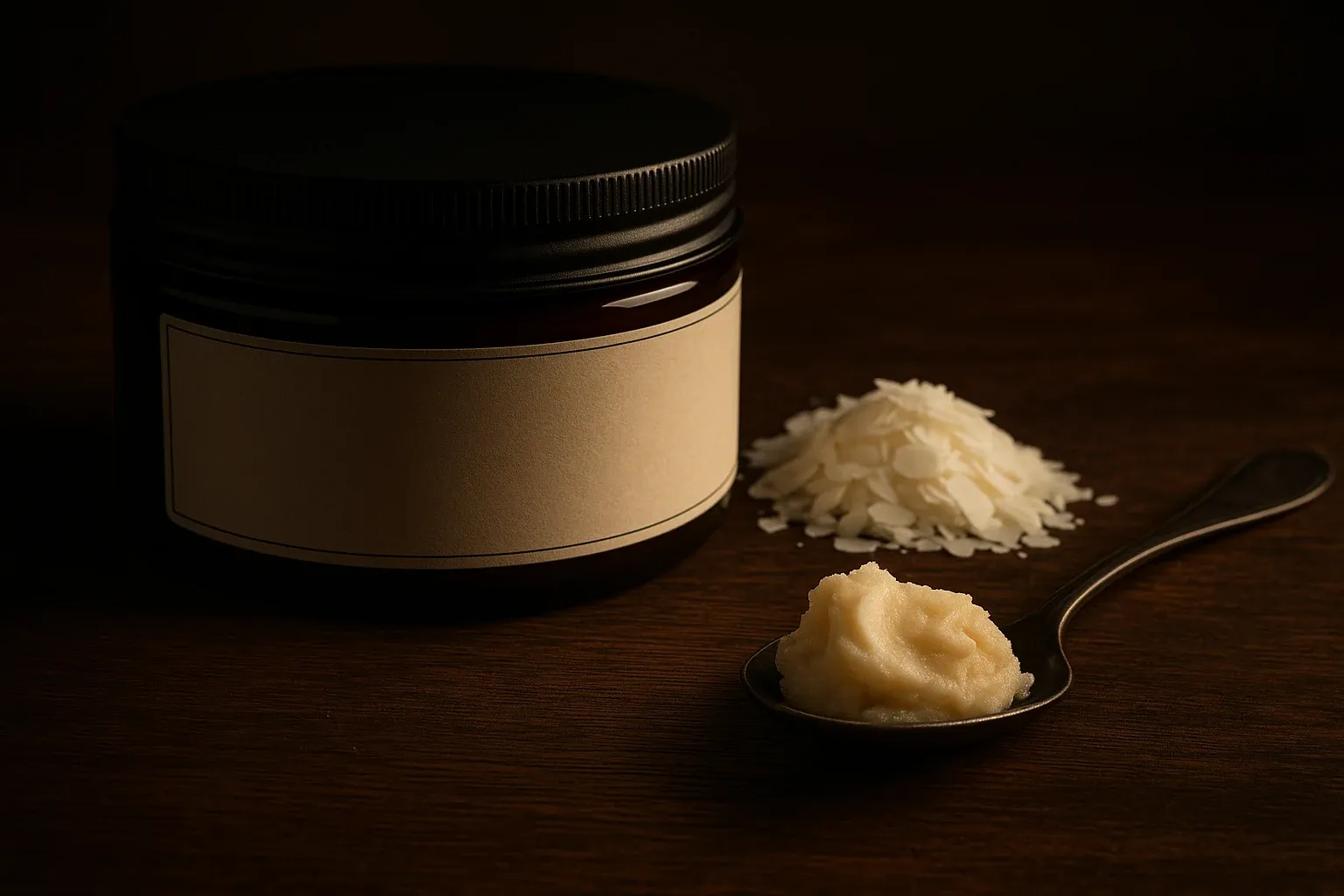
Rendered beef fat has been the backbone of shaving soap since shaving soap existed, and its fatty acid profile happens to sit almost exactly where a shaving lather wants it. Well-made tallow soaps are known for dense, heavy lather, outstanding residual slickness, and a moisturized after-feel. The old Williams Mug Soap generation was tallow; the artisan renaissance brought it back in premium form, and bases like Master Soap Creations’ and Noble Otter’s tallow blends carry the tradition at The Wet Shaving Store today, in scents from the Firefighter shave soap to Lonestar shave soap. If you shop Amazon instead, the Moon Soaps Bixby tallow puck is a newer luxury example of the same tradition.
The honest caveat: tallow is not magic. Blind tests in the community regularly humble people who swear they can identify it by feel. It is a great starting profile, not a guarantee.
Vegan: The Modern Contender
Vegan bases build the same fatty acid profile from plants: stearic from palm or sustainable alternatives, lauric from coconut, plus shea, cocoa butter, and oils. A decade ago vegan meant compromise; today the top vegan bases trade blows with the best tallow formulas, and some of the most technically admired soaps in the hobby are plant-based. Brands like Ariana & Evans run both tallow and vegan lines precisely because the gap has closed. For an easy storefront example, the MÜHLE Sea Buckthorn shaving soap is a stearate-led, fully plant-based puck from a maker better known for its hardware.
What to watch for is the same as anywhere: a short, thoughtful fat blend led by stearic acid, not a bar-soap recipe wearing shaving soap’s clothes.
Glycerin: The Honest Budget Option
Glycerin melt-and-pour soaps, the translucent pucks sold cheaply everywhere, are real shaving soaps with a real ceiling. They lather fast and slick but the lather is thinner and evaporates quicker, and the high glycerin load can feel sticky in hard water. As a first soap or a travel puck they are entirely legitimate; the classic Arko stick, a croap rather than a true glycerin puck but priced in the same neighborhood, remains the community’s favorite proof that cheap can lather brilliantly. The other classic doorway is Col. Conk, whose glycerin pucks have sat next to American barbershop registers for decades and come in a four-scent variety pack sized for experimenting.
Reading the Label in Ten Seconds
Ingredient lists are ordered by quantity, so the first five lines tell the story. You want a fatty acid or fat up top (stearic acid, tallow, palmitic), an alkali pair (potassium and sodium hydroxide, standard and unavoidable), a lauric source (coconut or palm kernel), and then the comfort section: glycerin, shea, lanolin, butters. Fragrance sits near the end. A soap that leads with water and glycerin will be a softer, wetter product; one that leads with stearic and tallow will be a dense puck that rewards a longer load. Neither is wrong. They are just telling you what they are, and our lather guide covers how to adjust your loading either way.
If your skin runs sensitive, base matters less than what rides along with it: fragrance load and menthol are the usual culprits, and the sensitive skin guide goes deep on that. For choosing your very first soap, the Beginner’s Path soap chapter keeps it simple.
Frequently asked questions
What is the difference between tallow and vegan shaving soap?
Tallow bases are built on rendered beef fat, whose fatty acid profile naturally suits dense, slick shaving lather; vegan bases build a similar profile from plant fats like palm stearic, coconut, and shea. Today's best vegan formulas perform alongside the best tallow ones, and formulation skill matters more than the base family.
Is tallow shaving soap better?
Not automatically. Tallow starts from an ideal fatty acid profile and the best tallow soaps set the benchmark for slickness and after-feel, but blind comparisons regularly show well-made vegan bases performing just as well. Judge the soap, not the label.
What does stearic acid do in shaving soap?
Stearic acid is the fatty acid most responsible for the dense, stable, cushioning lather shaving requires, which is why it leads the ingredient list of most serious shaving soaps regardless of whether the base is tallow or vegan.
Are glycerin shaving soaps any good?
They are honest budget performers: fast, slick lather with a lower ceiling, thinner cushion, and quicker evaporation than tallow or premium vegan bases. Fine as a first soap or travel puck; most shavers outgrow them once they try a stearic-led artisan base.
How do you read a shaving soap ingredient list?
Ingredients are listed by quantity, so read the first five: a fatty acid or fat first (stearic, tallow), the hydroxide pair, a coconut or palm kernel source, then comfort ingredients like glycerin, shea, or lanolin. Fragrance near the end. The top of the list predicts lather character better than any marketing copy.
Happy shaving.