

Tatara Masamune vs Nodachi: Why I Had to Build a Frankenstein Razor
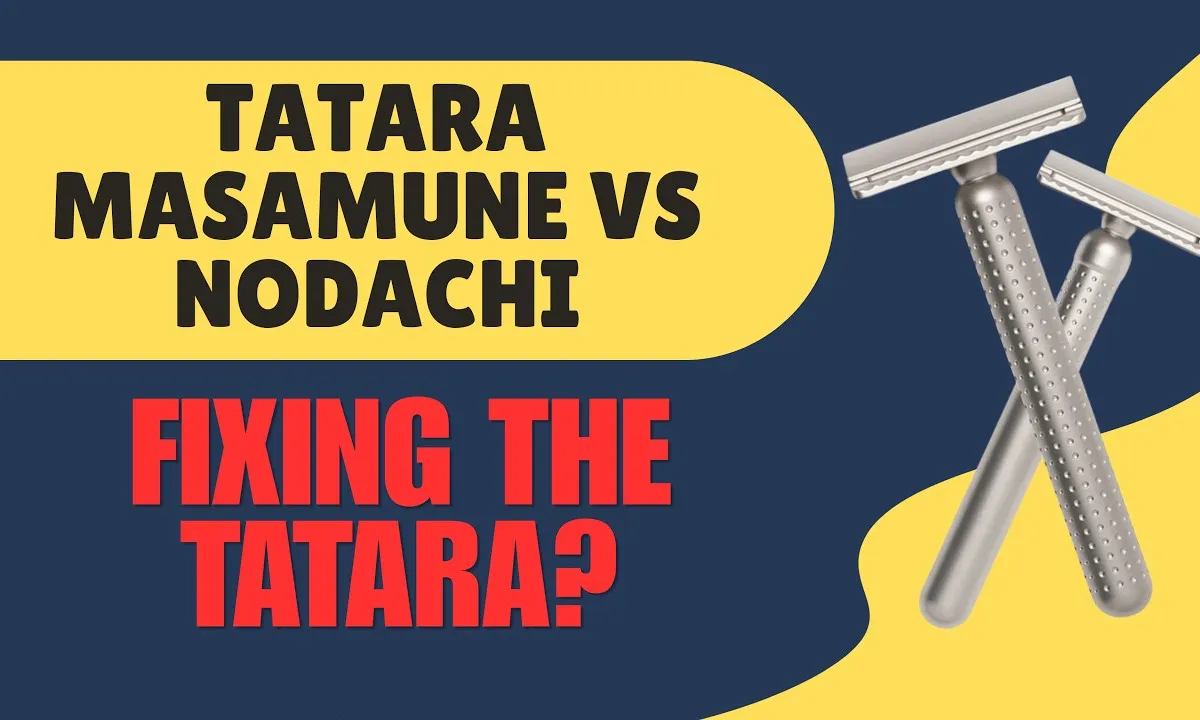
Welcome to Shave in Solitude. I’m Siraj, and today we’re talking Tatara.
Quick note before the specs: I don’t own these. They’re on loan from my good friend Chris, who you probably know as Lathered Yeti. If you haven’t checked out his channel, go fix that. Also, these razors don’t come in this polished finish from the factory. Chris put in seven or eight hours of his own work on them. They look beautiful. Absolutely beautiful.
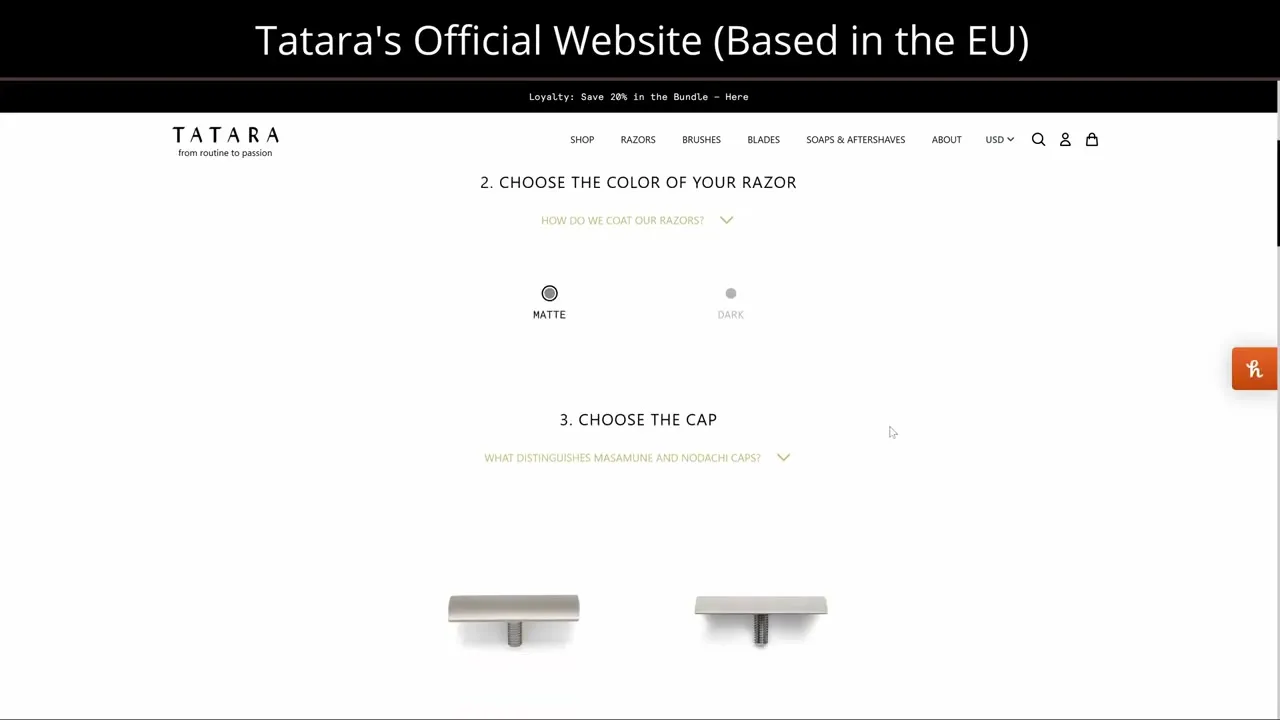
The name. Tatara is a Japanese word for the furnace used to smelt the steel that made samurai swords. Does this razor cut like a samurai sword? I genuinely don’t know how a samurai sword cuts. But you see where they’re going with it. Tatara has been making these in Portugal since 2016.
Fair warning: this one runs long. There is a lot to cover. Let’s get into it.
Razor Specifications
The Masamune is the mild one. Blade gap: 0.63 mm. Blade exposure: negative 0.13 mm. Shorter handle. Weight is 91 g, height 93.7 mm.
The Nodachi is the aggressive one. Blade gap: 0.9 mm. Blade exposure: positive 0.13 mm. Longer handle, 113 g, 108 mm tall.
Both are stainless steel 303. That grade machines beautifully and holds very tight CNC tolerances, which is almost certainly why Tatara went with it. One thing to know about 303: leave a wet blade sitting in the razor and don’t clean it after your shave, and rust from the blade can transfer to the steel. That’s called tea-staining. Clean the razor and let the blade dry after each use and you won’t see it. If corrosion resistance is your top priority, 316L is the spec you want. Tatara chose 303 for machinability.
If you just want to pick up one of these as-is, US retailers like Razor Emporium carry them. A lot of these shops run Black Friday, Fourth of July, and Memorial Day sales. Worth watching if you’re patient.
Why Both Stock Setups Failed Me
The Masamune was too mild. I could get close to BBS, but not there. That’s my face and my technique, not a verdict on every user. Some guys will love how mild it is. I’m not one of them.
The Nodachi had serious bite. I brought everything I had in terms of technique and still nicked myself every single shave. Every time. I’m not saying my technique is perfect. I’m just telling you not to go into the Nodachi blind. It demands careful attention and a light touch. You feel the blade on your skin the whole time, and that is not a casual experience.
Building the Frankenstein
Here’s where Tatara gives you something interesting. You can mix the top cap from one razor with the base plate from the other and create a hybrid. Two setups worth knowing:
Masamune top cap, Nodachi base plate. Blade gap stays at 0.9 mm, same as the stock Nodachi. Blade exposure drops from a positive 0.13 down to a negative 0.03 mm. You keep the wider opening of the Nodachi’s gap while pulling the blade back considerably. That’s the combo I used on the right side of my face for this review.
Nodachi top cap, Masamune base plate. Blade gap holds at 0.63 mm, same as the stock Masamune. Blade exposure goes to exactly neutral: 0.00 mm. That’s the left side.
Weight and height depend on whichever handle you choose. Tatara’s shorter handle ships default with the Masamune (89 mm, 56 g), the longer one with the Nodachi. Your call.
Ordering This Direct from Tatara
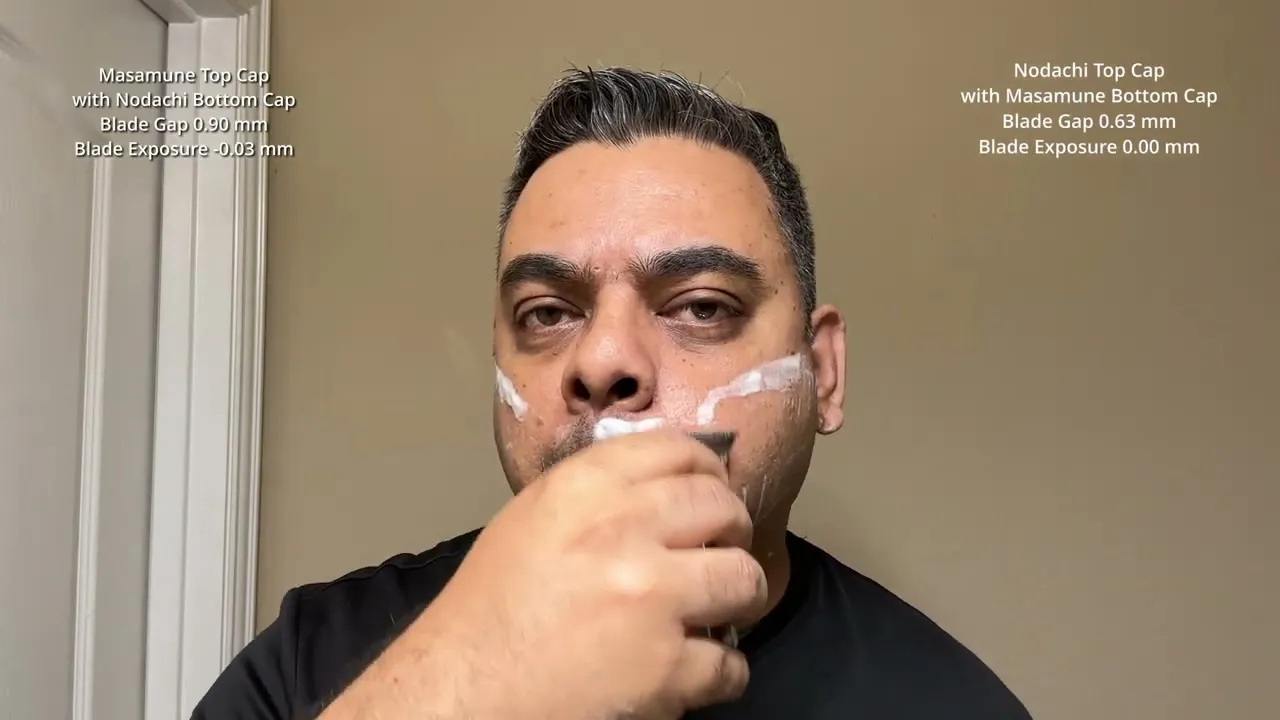
The part that surprised me. On the Tatara website, there is a configurator where you pick your material, your color, your top cap, your base plate, and your handle. The price comes out the same as buying either stock razor. Mix-and-match doesn’t cost extra. For a precision-machined stainless razor at this price point, that is not what I expected. I think it’s genuinely worth knowing.
If you try to build the same hybrid by buying individual parts from US retailers, the costs add up fast. Individual top cap, individual base plate, individual handle, each priced separately. Ordering direct from the Tatara website is the smarter path if you know the combo you want.
One thing to sort out when you have both top caps in hand: the base plates are clearly labeled, Masamune and Nodachi. The top caps aren’t marked, which I don’t understand. Here’s how you tell them apart. The Nodachi top cap has a 10 mm thread post. The Masamune is 8 mm. The Nodachi also has slightly smaller diameter posts. The Masamune’s are a bit wider. Keep them straight or you’ll have a confusing morning.
Handles: Not Interchangeable
This came up during blade loading and it deserves its own paragraph. The Tatara handle post extends up into the caps and is part of how the blade gets clamped. That means you can’t swap in a handle from another maker. The balance, the feel, the weight distribution, whatever you might want to change by swapping hardware, you’re doing it within Tatara’s own lineup only. There’s no workaround.
If handle swapping matters to you, this is not the razor.
The Shave
For soap I went with Stirling Glacial Frozen Tuxedo. It’s getting warm in Dallas and a little menthol made sense. I’m not a heavy menthol person. It cools my face more than I’d like. But once in a while, it’s the right call.
Blades: two fresh Personna Platinum, one per side so each combo got a fair run. Two days of growth.
Right side: Masamune top, Nodachi base. 0.9 mm gap, negative 0.03 mm exposure. Left side: Nodachi top, Masamune base. 0.63 mm gap, neutral exposure. I put on-screen labels in the video so you can follow which combo is which throughout the shave.
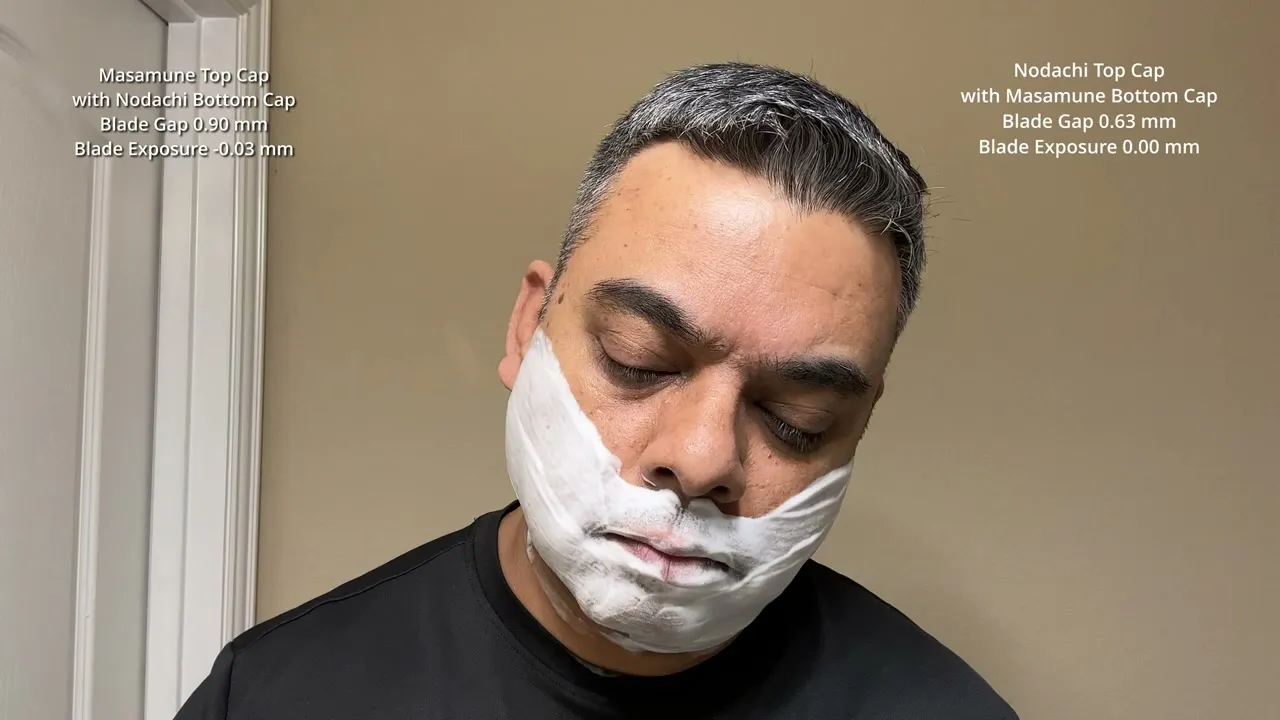
Watch the video above for the full shave and my verdict on which setup I’d actually recommend. Thanks for watching, and I hope this helps you figure out whether a Tatara belongs in your den, and if it does, which version of it actually makes sense for the way you shave.