

Don't Buy a Henson Until You See This: Tier One Razor Review
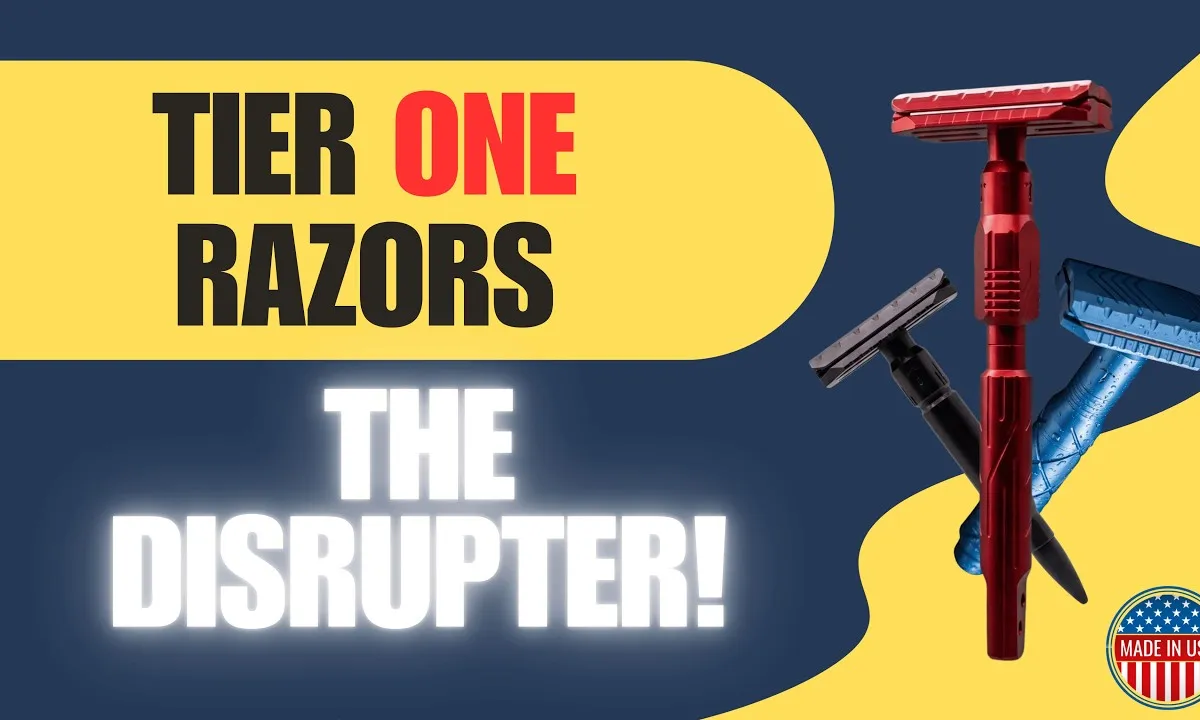
Hey guys, welcome back to Shave in Solitude. Today I’m reviewing a brand-new razor called the Tier One. That’s both the name of the razor and the name of the company.
I know exactly what you’re thinking the moment you see it. “Siraj, isn’t that basically a Henson?” Fair point. And then the next one is going to be, “Isn’t it also very close to a Tatara?” Also fair. I’m going to explain exactly why that is and then tell you what sets it apart. Quick disclosure first: I reached out to Tier One and asked if they’d send me a sample to test and review. They said yes. I did not pay for this razor. But you guys know me. This review is going to be completely detailed and completely unbiased.
Comparing the Specs
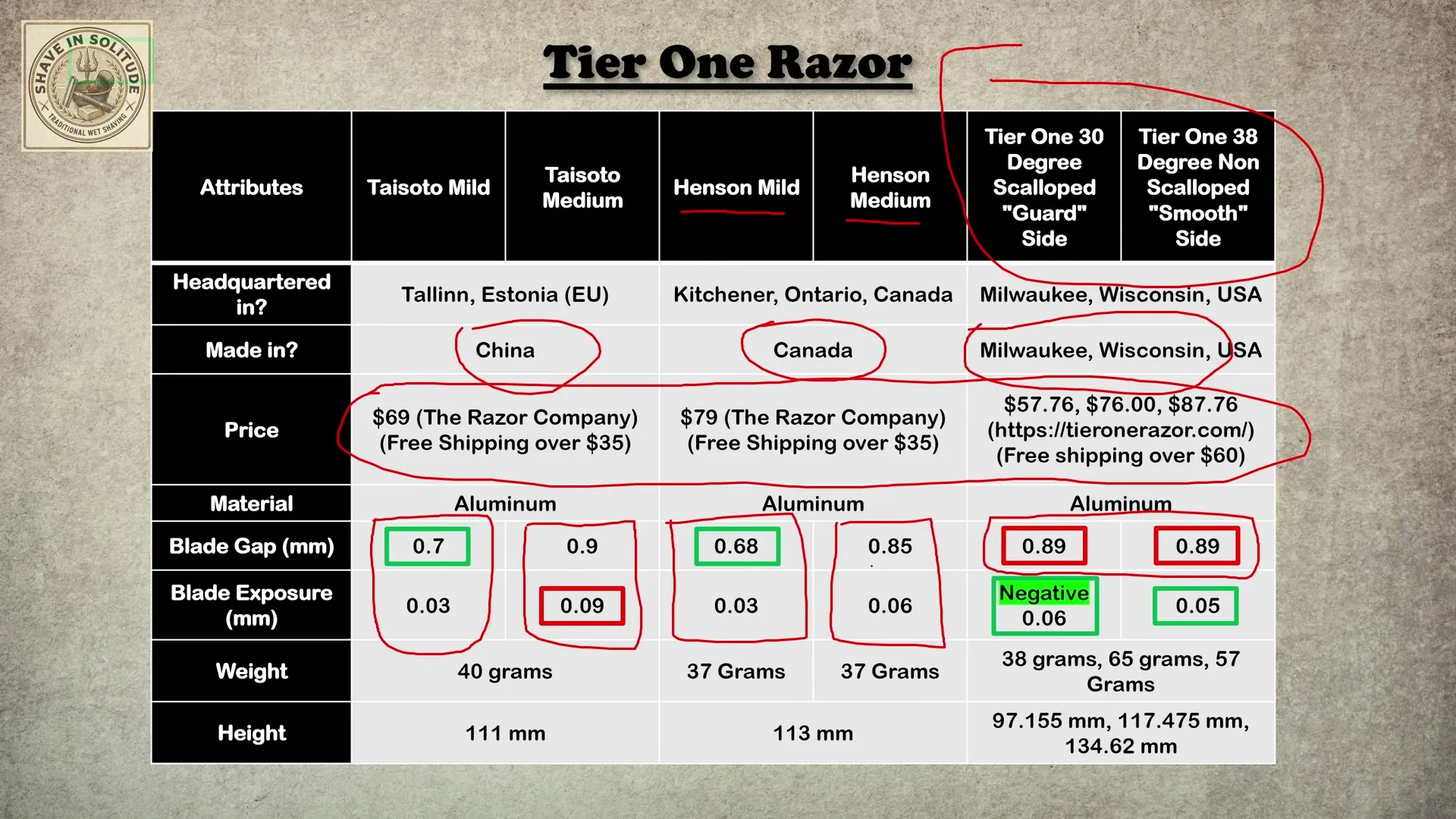
I’m comparing the Tier One against four configurations: the Tatara mild, the Tatara medium, the Henson mild, and the Henson medium. On manufacturing: the Tatara is made in Portugal, the Hensons are made in Canada, and the Tier One is made here in the US. Pricing across all of these is in the same range, so that’s probably not your deciding factor.
The main numbers to look at are blade gap and blade exposure.
The Tatara’s mild side looks very similar to the Henson mild on paper. But in actual use I found it significantly milder than the Henson mild, and I wasn’t happy with that. The Tatara medium tracks similarly to the Henson medium and did a decent job there.
Here’s where the Tier One starts to separate itself. Of all the razors in this comparison, the Tier One has the highest blade gap. More blade gap means more surface area for the blade to contact the skin, which translates to more effective hair removal.
The Tier One is a two-sided razor. One side is the guard side, shaving at a 30-degree angle. The other side is the smooth side, at 38 degrees. Both sides have different blade gaps and blade exposures, and that asymmetry is the core of what makes this razor interesting.
Per Tier One’s specs, the guard side has a negative 0.06 blade exposure. The smooth side has a positive 0.05. On paper that positive 0.05 looks like the lowest in the comparison. But in actual use, over the days I’ve been testing this razor, the smooth side performs noticeably more efficiently than that number would suggest. I’ll get to that in the shave.
Weight runs around 40 grams, which puts it in line with the others. The height depends on which handle you choose, and that is its own conversation.
The Handles
Tier One offers three handles, and they were kind enough to send me all three to test with the same razor head. I want to be direct with you about what I found.
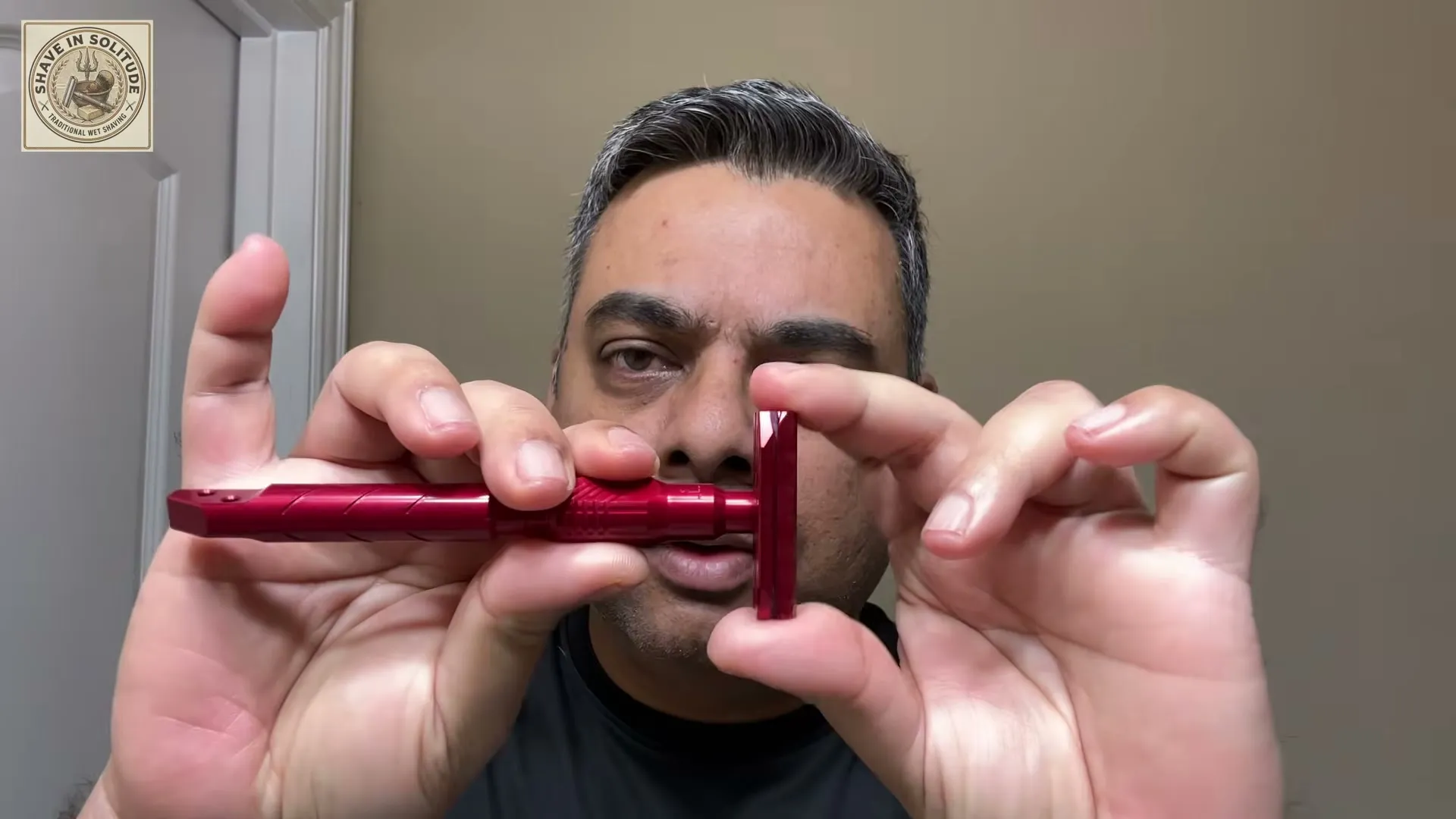
The first is a two-piece extensible design. You can attach an additional section to make it longer, or remove it for a shorter grip. Extended: too long in my opinion, hard to maneuver properly. Shortened: too short, not enough handle to work through a full shave comfortably. I’m not recommending this one.
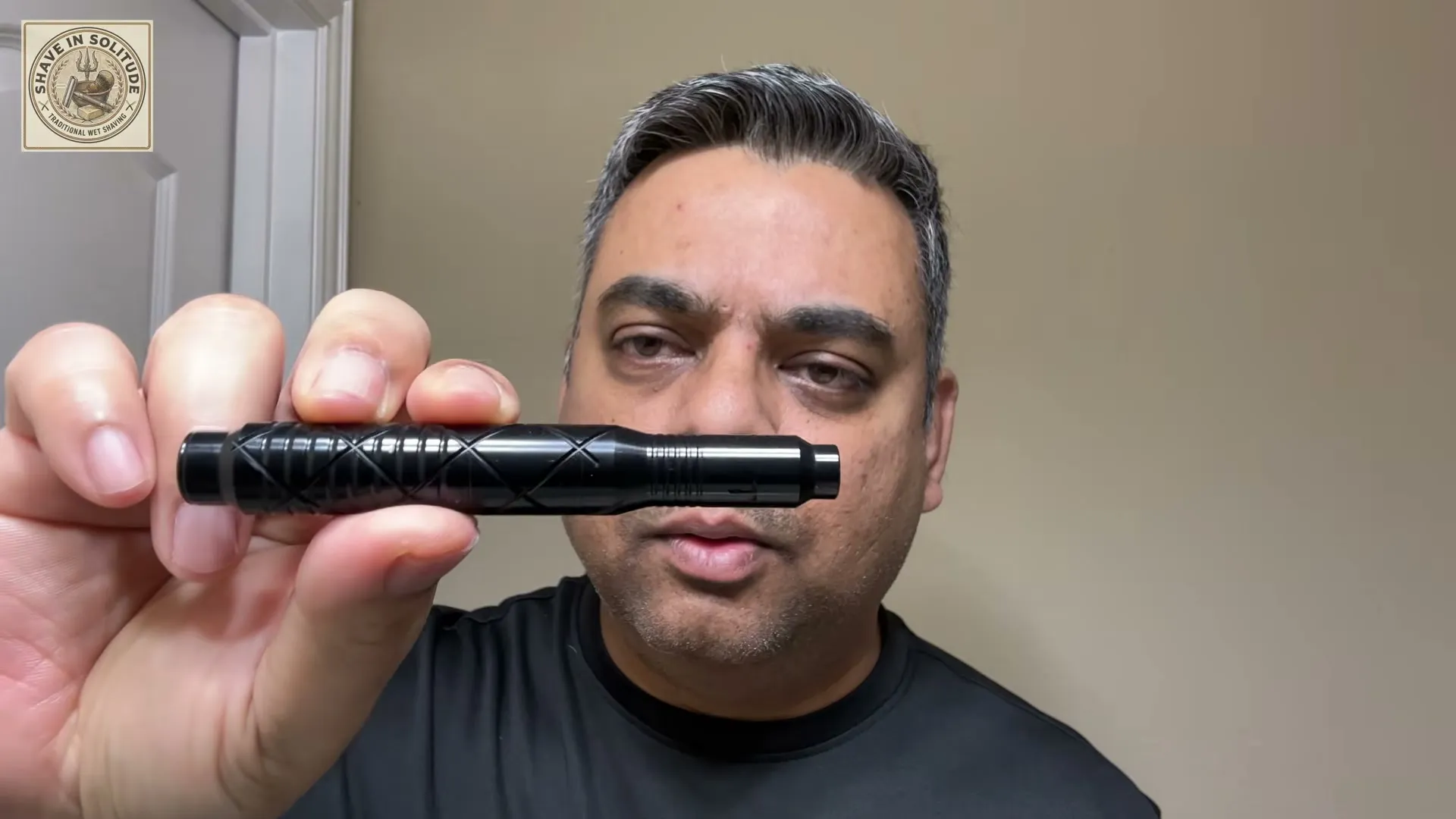
The second is the bullet handle. It looks great. I’ll give it that. But there are two real problems with it for actual shaving use. First, there is no knurling anywhere on it. The handle is completely smooth. Wet, soapy hands on a smooth handle is not a combination that works. Second, the end tapers to a point. On your third pass, going south to north against the grain, you need to be able to grip the end of the handle because that pass takes real pressure. The taper gives you nothing to hold. My personal recommendation: skip this one too.
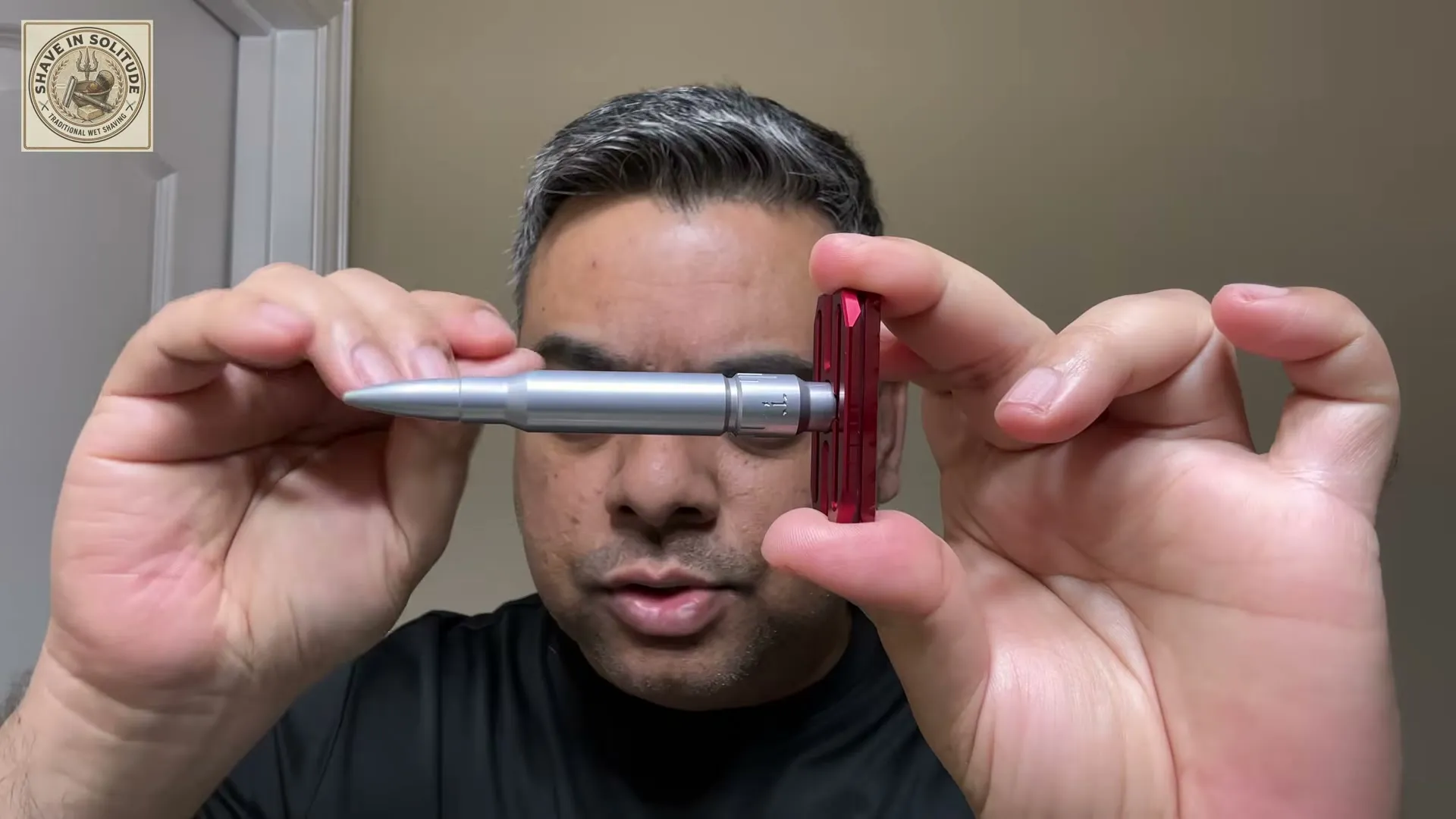
The third handle sits between the other two in length and has a more conventional thickness. It’s still slightly longer and thicker than I’d personally prefer. But out of all three, if I had to pick one, this is the one I’m going with.
One more thing before you choose: the Tier One uses a 10-by-24 thread rather than the standard 10-by-32. That means no aftermarket handle is going to fit this razor head. You are limited to whatever Tier One currently sells. So when you’re picking a handle, choose based on function, not on what looks the best.
Loading the Blade
Because the two sides have different geometries, you need to load the blade in the correct orientation every time you change blades.
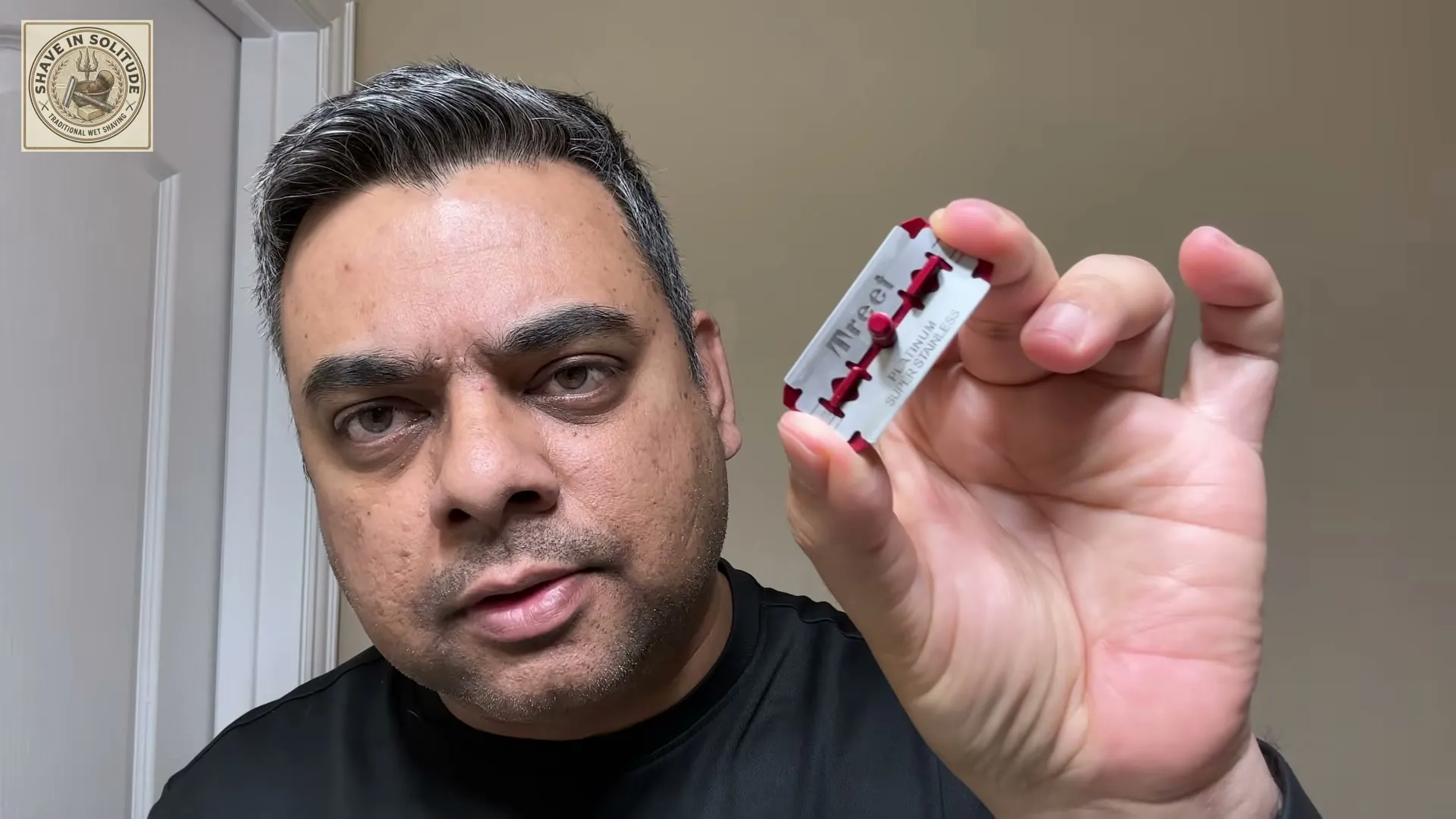
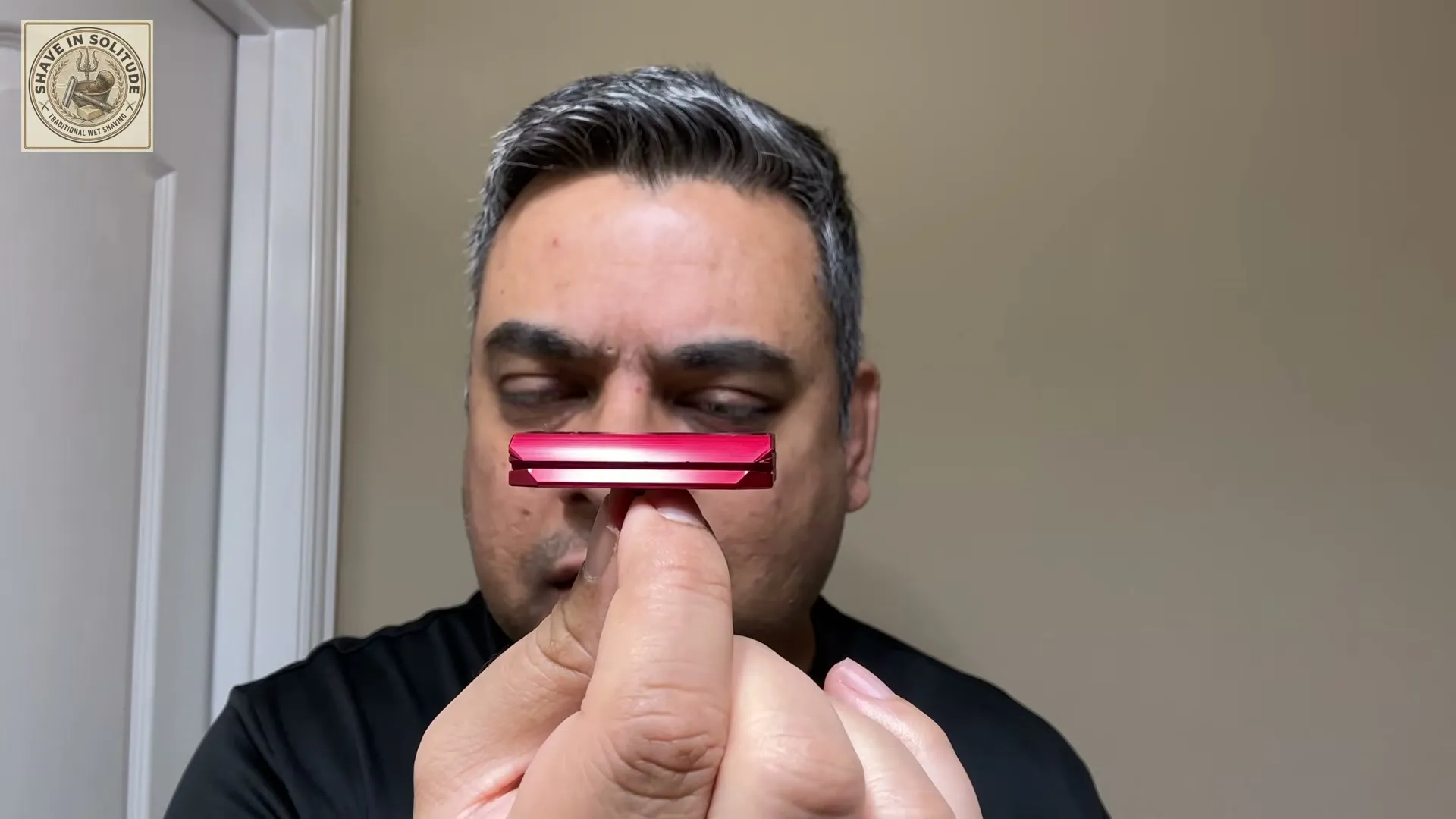
There are two ways to confirm you have it right. First: look at the groove lines. One side of the razor has two groove lines; the other has one. Two matches with two, one matches with one. Second: one of the blade-holding tabs is longer than the other. That longer tab has a corresponding hole on the bottom cap to receive it. Match the longer tab to the hole, and the blade is seated correctly. Both methods tell you the same thing. Use whichever you find easier to check.
I loaded a second-use Treet Platinum for my shave.
The Shave
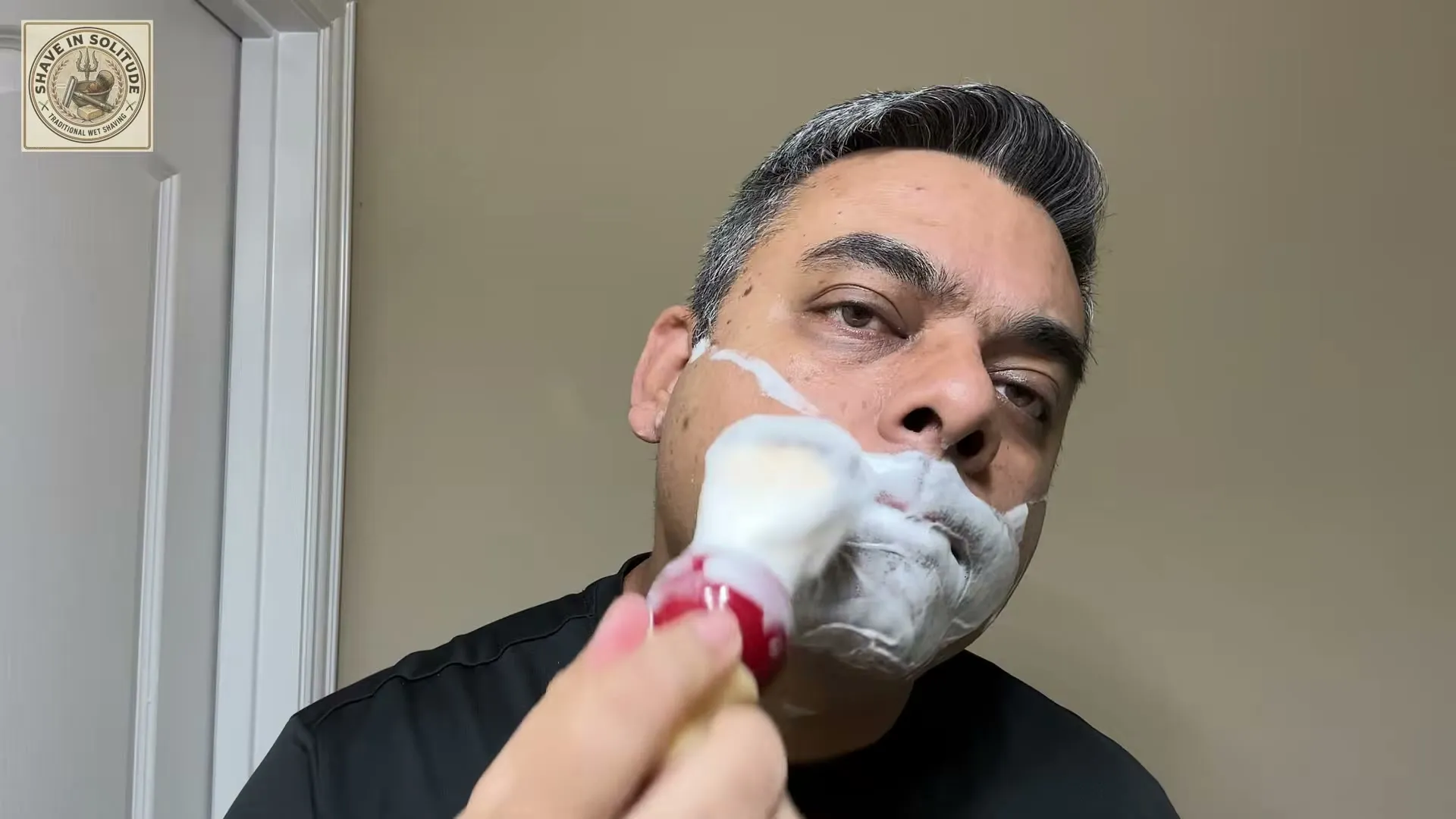
For soap I went with Rookie Card by Adopted Acres Soap Company, with the matching splash. Working with two days of growth.
My approach was to use the guard side for passes one and two, then switch to the smooth side for pass three. The reasoning is the same logic behind any multi-pass wet shave: gradual hair reduction. There’s no reason to go aggressive on the first two passes. The guard side with its negative blade exposure lets me apply pressure where I need it, including the tougher spots, without worrying about cutting myself. It’s about as forgiving as a safety razor gets.
Pass one was solid. For anyone who’s newer to wet shaving, that guard-side feel is going to be very reassuring. You can work the blade, you can buff the hard areas multiple times, and your skin stays safe throughout.
Pass two, across the grain, still on the guard side. Same story. Comfortable, no drama. The negative exposure keeps the blade well-controlled even when you’re pushing into the grain.

Moving to the smooth side for pass three, the positive blade exposure does more than the number looks like it would. It’s noticeably more efficient in use than the 0.05 figure suggests. Of the days I’ve been testing this razor, that’s been consistent: the smooth side picks up what the guard side leaves behind and finishes the shave cleanly.
The combination of the highest blade gap in this comparison group and the asymmetric geometry gives you a lot of range in one razor head.
Thanks for watching this one, guys. If you were weighing the Tier One against the Henson or the Tatara and wanted a direct look at how they stack up, I hope this helped. Drop your questions and thoughts in the comments below. I’ll see you in the next video.