
The Gillette Guard: A Forgiving Razor for Shaving Below the Belt
Plenty of men shave more than their face, and the groin is one of the hardest areas to shave well. It is thin, it folds, it stretches, and the hair grows coarse, curly and in every direction at once. A 2017 study in JAMA Dermatology surveyed more than 7,500 American adults and found that about one in four people who groom their pubic hair had been injured doing it. Among men, the scrotum was the most commonly injured spot by a wide margin.
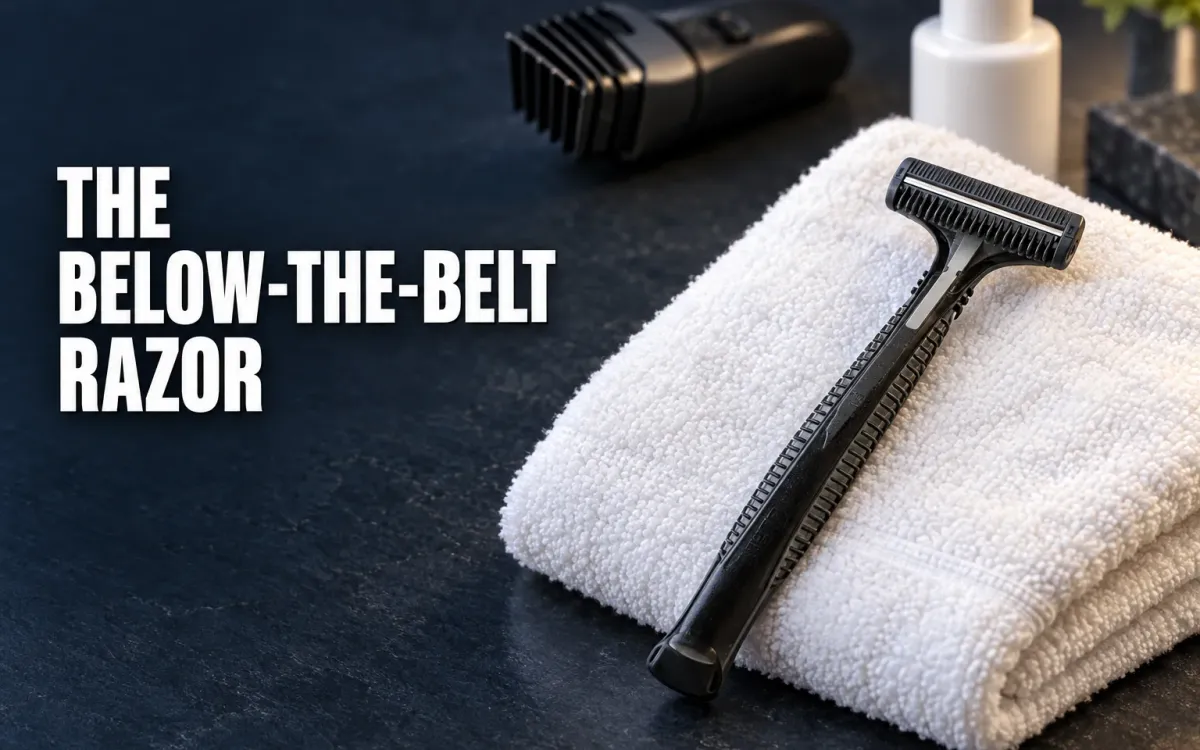
The razor you use matters there more than anywhere else. The Gillette Guard is a cheap single-blade cartridge razor with a safety comb in front of the blade, and that combination makes it one of the more forgiving tools for the job. It is stocked at The Wet Shaving Store.
Why one blade and a comb suit the groin
For men prone to razor bumps, the American Academy of Dermatology notes that a single-blade or electric razor is often recommended, and the Cleveland Clinic’s ingrown hair advice is the same: use a single-blade razor. Thick, curly or coarse hair is the kind most likely to grow back into the skin, and the pubic area is one of the usual places it happens. One blade means one edge touching the skin per stroke.
The Gillette Guard adds two things a bare blade does not have. Gillette puts a full-length safety comb in front of the blade, meant to keep the skin from being caught by the edge, and the head pivots so it follows a curve instead of riding over it. On skin that bunches and folds, those are the two details that help most.
In practice, the comb holds loose skin back from the edge in a way a bare blade cannot, and the rest comes down to patience. One longtime wet shaver who uses the Guard exactly this way puts it plainly:
A double-edge safety razor can do this job too, and plenty of wet shavers use one. It just asks for more angle control on loose, uneven skin than most people want to practise down there. Most people will find the Guard easier to get right the first time.
The Gillette Guard
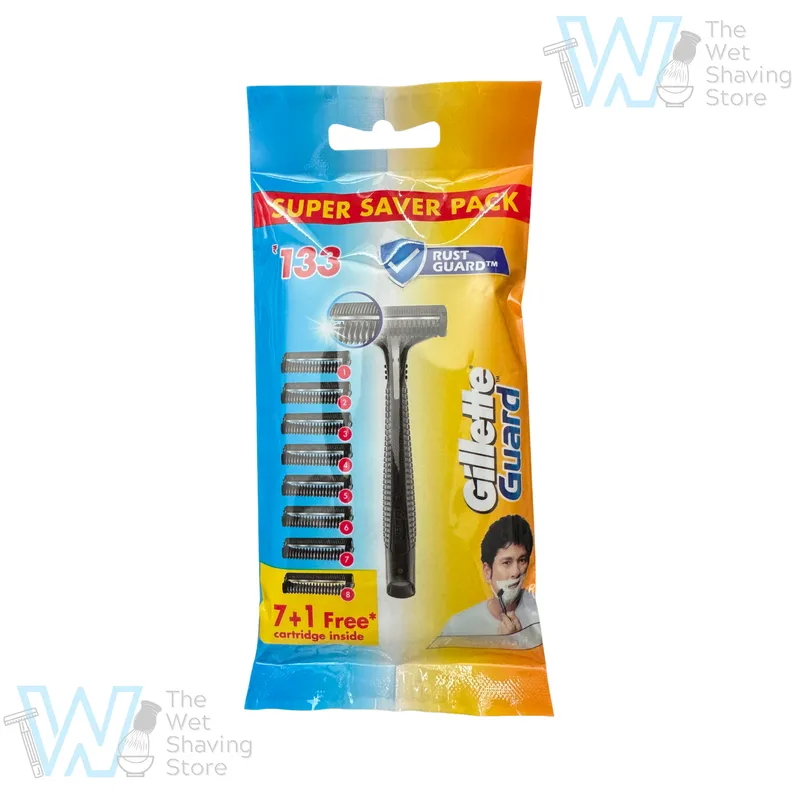
The pack at The Wet Shaving Store is the Indian-market Gillette Guard: one lightweight handle and eight cartridges, labelled 7+1 on the front. Cartridges snap on and off, and each one costs very little, which is the real point here. Keep one Gillette Guard just for body grooming and use it for nothing else. Your face razor stays your face razor, and the body razor never goes near anyone else’s skin.
First time? Trim it down first
If you have never shaved your groin, do not start with a razor. Take the hair down first with an electric trimmer fitted with a guard comb, the plastic attachment that keeps the cutting teeth a few millimetres off the skin. Long hair clogs a single-blade cartridge quickly and tends to tug instead of cutting cleanly, so taking it short first makes the shave itself easier and calmer.
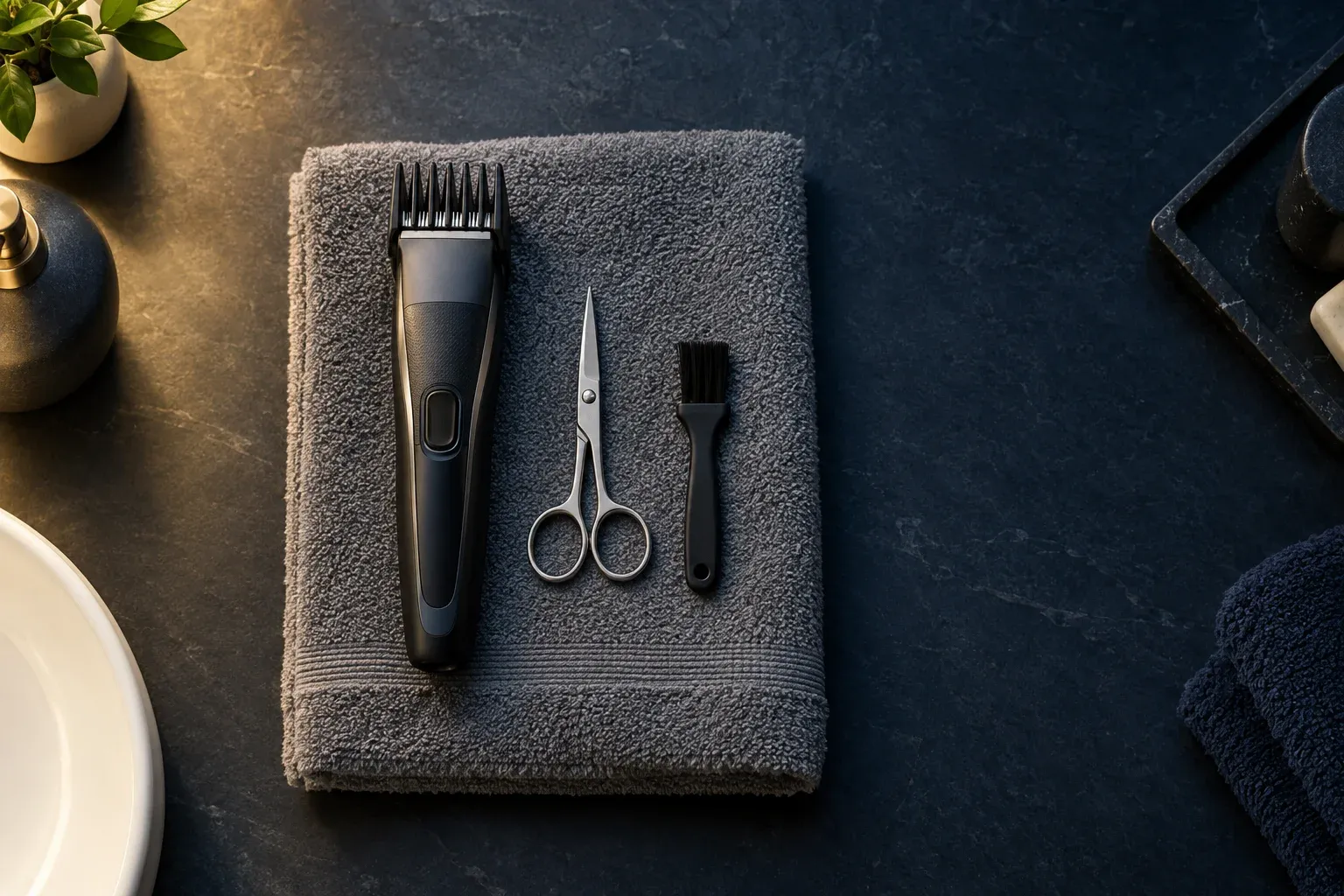
Trim in the direction the hair grows, with the guard on, standing up so you can see what you are doing. For a lot of men that is where it can stop. The JAMA study found that removing all pubic hair was an independent risk factor for injury, so a close trim is a perfectly good finish if you do not need bare skin.
How to shave below the belt with the Guard
Shave at the end of a warm shower, when the hair is soft and the skin is relaxed. Then:
- Lather with something gentle. Any moisturizing shave cream or soap works. Skip anything with menthol, mint, eucalyptus or a cooling claim on the label: menthol is there to make skin tingle, and at higher strengths it produces burning and irritation, which is the last thing you want on thin skin. A brush like the TWSS Black G5 builds a cushioned lather from a soap, though fingertips are fine with a cream.
- Stand, and use a mirror. The AAD recommends standing while you groom so you can see the area clearly.
- Pull the skin flat. With your free hand, gently stretch the skin you are shaving so the blade glides over a flat surface instead of a fold.
- Only with the grain, and slowly. Shave in the direction the hair grows and nowhere else: no across-the-grain pass, no against-the-grain pass. Use short strokes, almost no pressure, and let the comb rest on the skin and do its job. This is the one rule not to bend.
- Rinse after every stroke. Pubic hair fills a single-blade cartridge quickly. A quick rinse each time keeps the comb clear.
- Two passes at most. The AAD’s advice is never to go over the same area more than twice. Whatever is left can wait until next time.
Settling for a slightly less close result is deliberate, not a compromise. The AAD’s razor-bump advice says the same thing: avoid shaving too closely.
Take the scrotum slowest of all. Keep the skin pulled flat, use the lightest strokes of the whole shave, stay with the grain, and stop if anything feels like it is catching.
Rinse with cool water when you are done and pat dry with a clean towel rather than rubbing.
Aftercare: what to put on afterwards, and what not to
After grooming, the AAD recommends a fragrance-free moisturizer. Leave out alcohol splashes too: alcohol stings on freshly shaved skin, and this is the last place to test that. Fragrance is the second most common cause of allergic contact dermatitis after nickel, per DermNet, and a product labelled “unscented” can still contain a masking fragrance, so look for “fragrance-free.”
The Supply Healing Post Shave Fragrance Free fits that brief. It is a light alcohol-free spray, and the full ingredient list for the Fragrance Free version is short:
Organic Aloe Barbadensis Leaf Juice, Polysorbate 20, Glycerin, Hamamelis Virginiana (Witch Hazel) Water, Allantoin, Butyrospermum Parkii (Shea) Butter, Tocopherol, Phenoxyethanol, Ethylhexylglycerin, Sodium Hydroxide
That is aloe, glycerin, shea butter and allantoin to soothe and moisturize, witch hazel, vitamin E, and a common preservative pair. Witch hazel is also an FDA-recognised astringent in over-the-counter hemorrhoid products, so it has a long record of use on sensitive skin close to this area. One of the preservatives, ethylhexylglycerin, is a rare but documented allergen in leave-on cosmetics, which is one more reason for the test below.
Two cautions. It also comes in scented versions; the link above opens the Fragrance Free one, so make sure that is still the version selected when you order. And try it on the inside of your forearm for a few days before the first use below the belt. It is for the outer skin only, and if anything stings or itches afterwards, stop using it.
Keep it clean
Rinse the cartridge well, shake it off and let the razor dry upright between shaves. The AAD suggests a fresh single blade after five to seven shaves, and coarse body hair may dull an edge sooner, so swap the cartridge the moment it tugs. Never share a razor: the AAD warns that shared grooming tools can spread bacteria, viruses and sexually transmitted infections through tiny breaks in the skin.
Do not shave over cuts, sores, bumps or a rash. Let the skin settle first, and if bumps keep coming back or anything looks infected, a dermatologist is the right next stop.
Set up that way, with a trimmer for the bulk, a Gillette Guard kept only for body work, a gentle lather and a fragrance-free finish, shaving below the belt becomes routine maintenance rather than something to dread.
Frequently asked questions
Is the Gillette Guard good for shaving pubic hair?
It is one of the more forgiving choices. It has a single blade, which the American Academy of Dermatology notes is often recommended for men prone to razor bumps, a safety comb in front of the blade, and a pivoting head that follows curves. Those features matter most on the thin, folding skin of the groin.
Should I trim before shaving my pubic area?
Yes, especially the first time. Take the hair down with an electric trimmer fitted with a guard comb first. Long hair clogs a single-blade cartridge and tends to tug. A close trim on its own is also a lower-risk finish if you do not need bare skin.
Should I shave against the grain below the belt?
No. Shave only in the direction the hair grows. Going against the grain on the thin, loose skin of the groin is very likely to cause a nick, and a nick there ruins the shave. Take your time, use short light strokes, and accept a slightly less close result.
Can I use a safety razor to shave my groin?
You can, and many experienced wet shavers do. A double-edge razor needs careful angle control on loose, uneven skin, so a single-blade cartridge with a safety comb, like the Gillette Guard, is the easier place to start.
How often should I change the blade when shaving below the belt?
The American Academy of Dermatology suggests replacing a single blade after five to seven shaves. Coarse body hair may dull an edge sooner, so swap the cartridge as soon as it starts to tug.
What should I put on after shaving my groin?
A fragrance-free, alcohol-free moisturizer or post-shave product. Skip alcohol splashes, colognes and anything with menthol or a cooling claim. Try any new product on your forearm for a few days first and use it on the outer skin only.
Can I use the same razor for my face and my groin?
It is better to keep a separate razor for body grooming. And never share a razor with anyone else, because shared grooming tools can spread bacteria, viruses and sexually transmitted infections.