

Oliworks M3teorite: Aluminum vs. Stainless, Which Should You Buy?
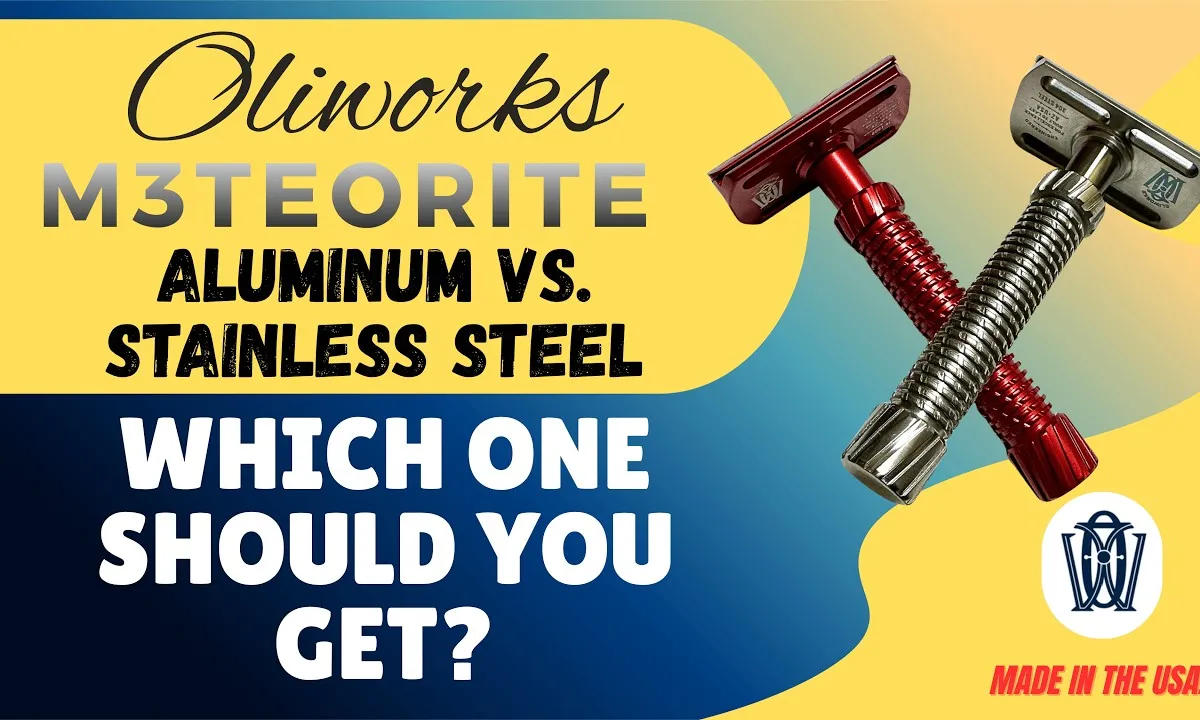
Welcome back to the channel, guys. I’m Siraj. I’m putting the aluminum M3teorite up against the stainless steel M3teorite. I did a full review of the aluminum version last year, link’s up top if you want the details, and what I said back then still holds. For the money, this is one of the best values you can get into wet shaving with.
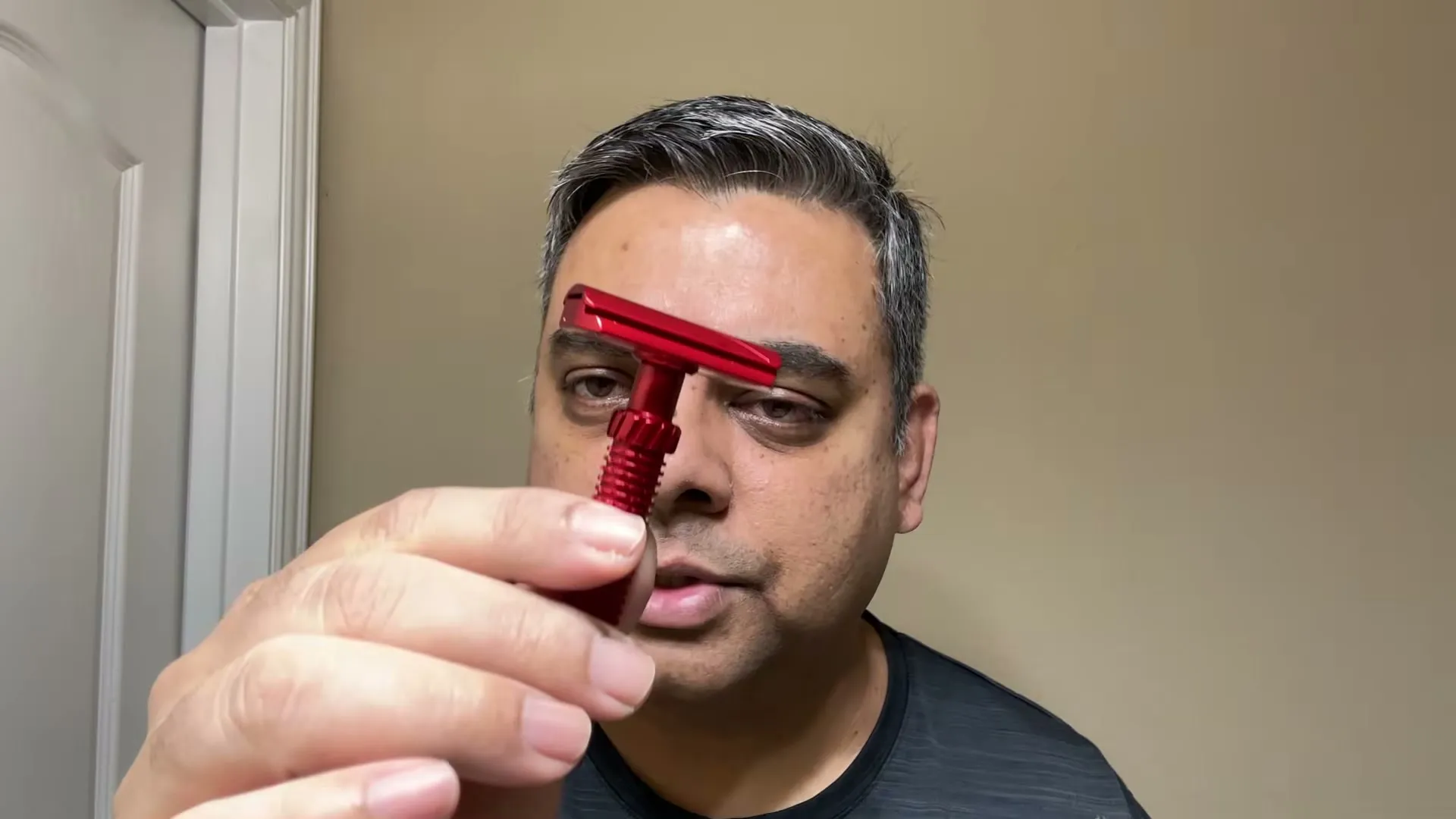
Both versions give you three separate bottom plates that change the blade gap and blade exposure. Start on the mild plate, move to the medium if that’s where you land, or push to the third plate if you’re someone who only shaves once a week and needs more bite to deal with it. The blade gap and blade exposure are identical whether you pick the aluminum or the stainless. That part never changes. What changes is weight and construction material, and that’s the whole ballgame here.
Similarities vs Differences
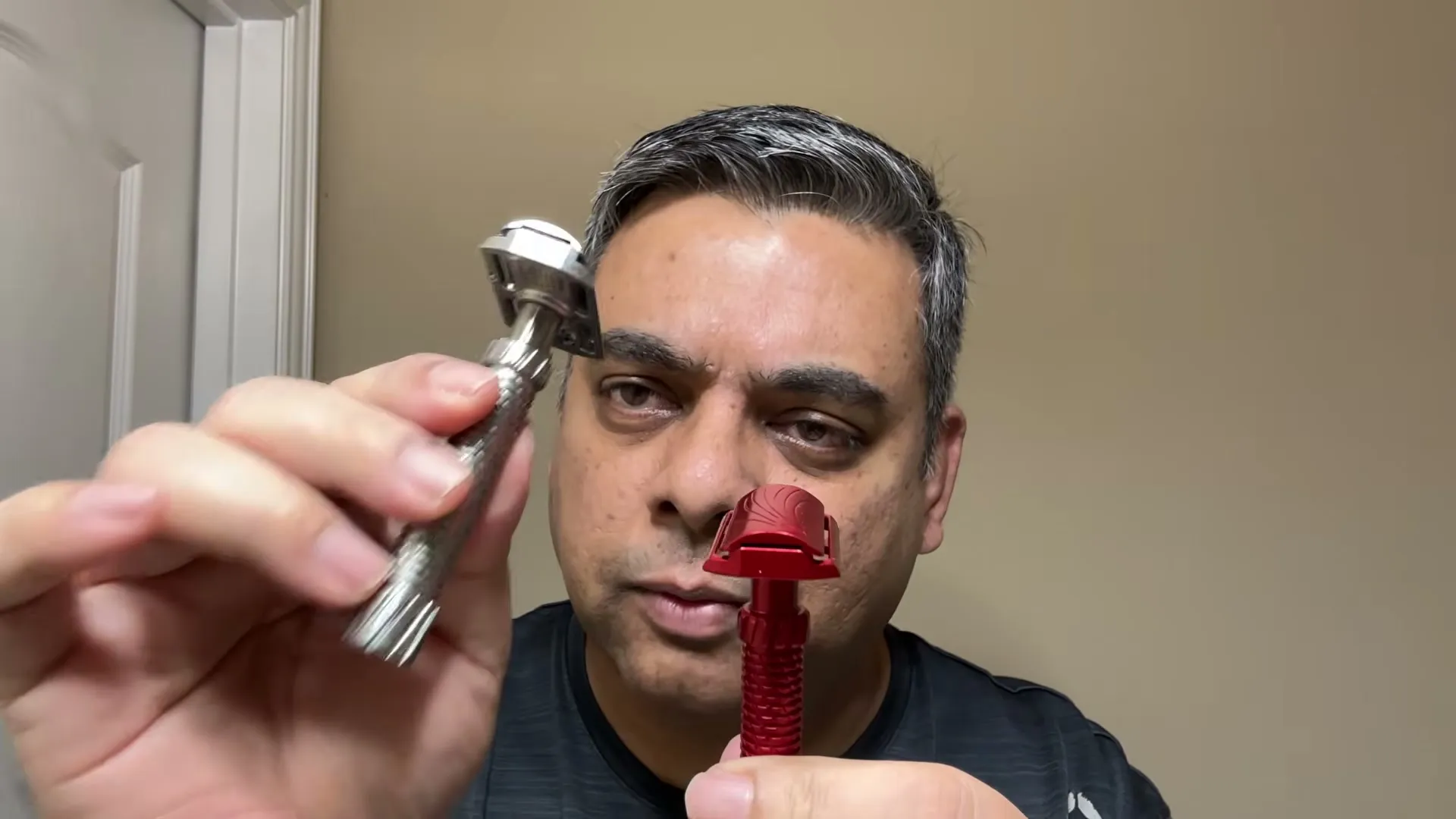
Here’s the thing about shaving with a safety razor. You lay the blade against your face and pull down. Aluminum is so light there’s basically nothing resting on your skin. You end up adding a little bit of your own pressure just to get the blade to engage the hair and start cutting. Stainless steel solves that by being a lot heavier. You don’t add pressure. You lay it on your face and the weight does the engaging for you. All you’re managing is the weight as you move down.
Does that change how it actually shaves? Stick with me.
Specs and Pricing Compared
I want to put this in context against other multi-plate razors, since that’s really the M3teorite’s whole selling point. Razorock’s Game Changer. The Rockwell 6S and 6C. Henson, which gets you similar flexibility even if it’s not packed into one single razor.
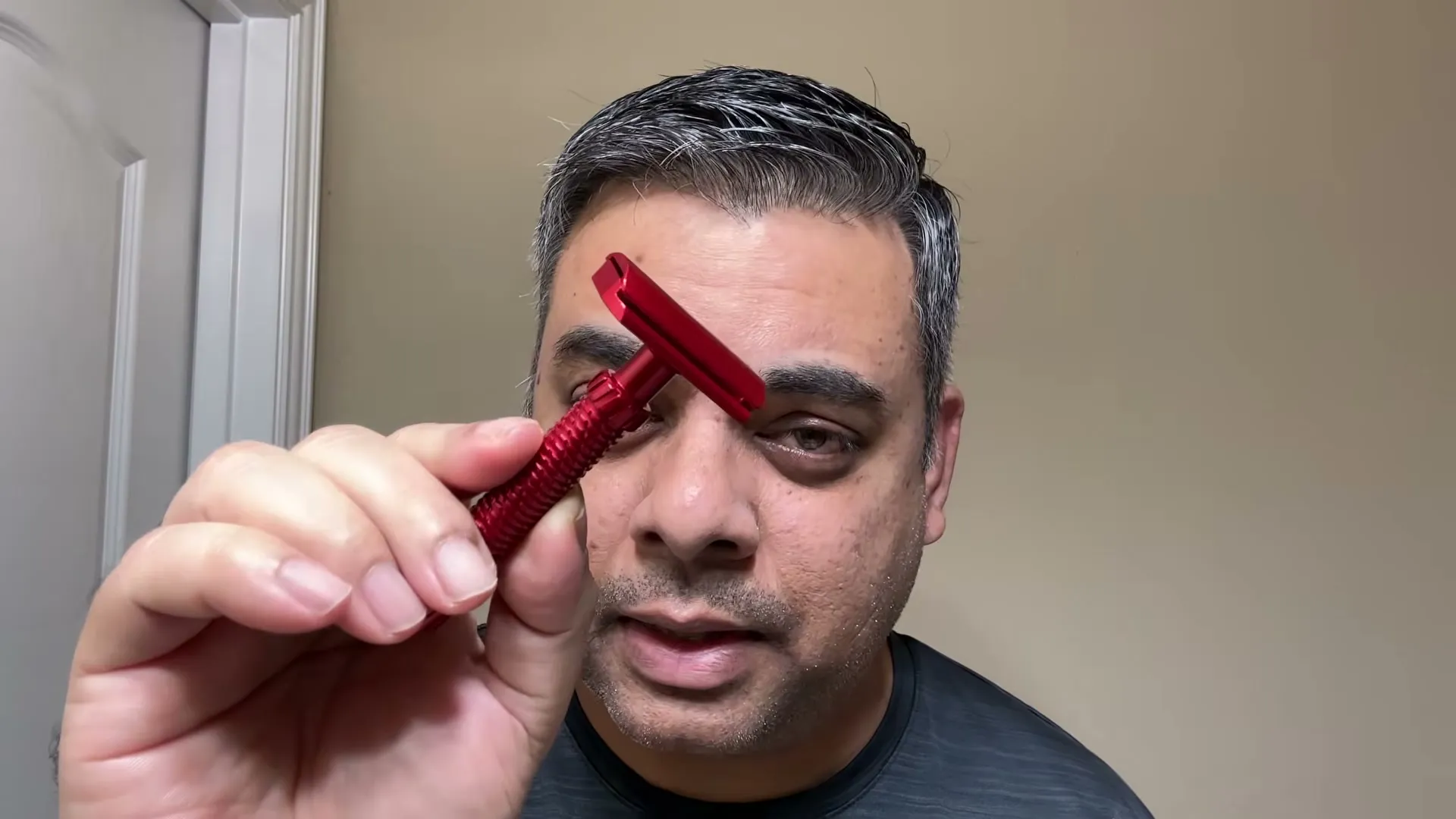
The aluminum M3teorite launched last year at $69. It’s crept up to $75 since. I still think that’s a phenomenal number for what you get. The stainless version runs $125 if you’re only picking up one plate, say the medium, and sticking with it. Grab all three plates and you’re at around $165.
Against that, the Game Changer is still the number one value in stainless. Three plates and the razor for $120, made in Canada. That’s hard to argue with. Henson is a different story. They sell their AL13 aluminum razors, mild, medium, and aggressive, separately at $79 each, so building out the full range costs more than the M3teorite’s complete three-plate stainless set, and you’re buying three whole razors to get there, not three caps for one. The Rockwell 6C is cast zinc alloy and made in China, so factor that in if country of manufacture matters to you. The 6S is stainless, made in the USA even though Rockwell as a company is based in Canada, but the fit and finish has this sandblasted look to it. Some guys like it. I don’t think it’s in the same league as the M3teorite or the Game Changer for finish.
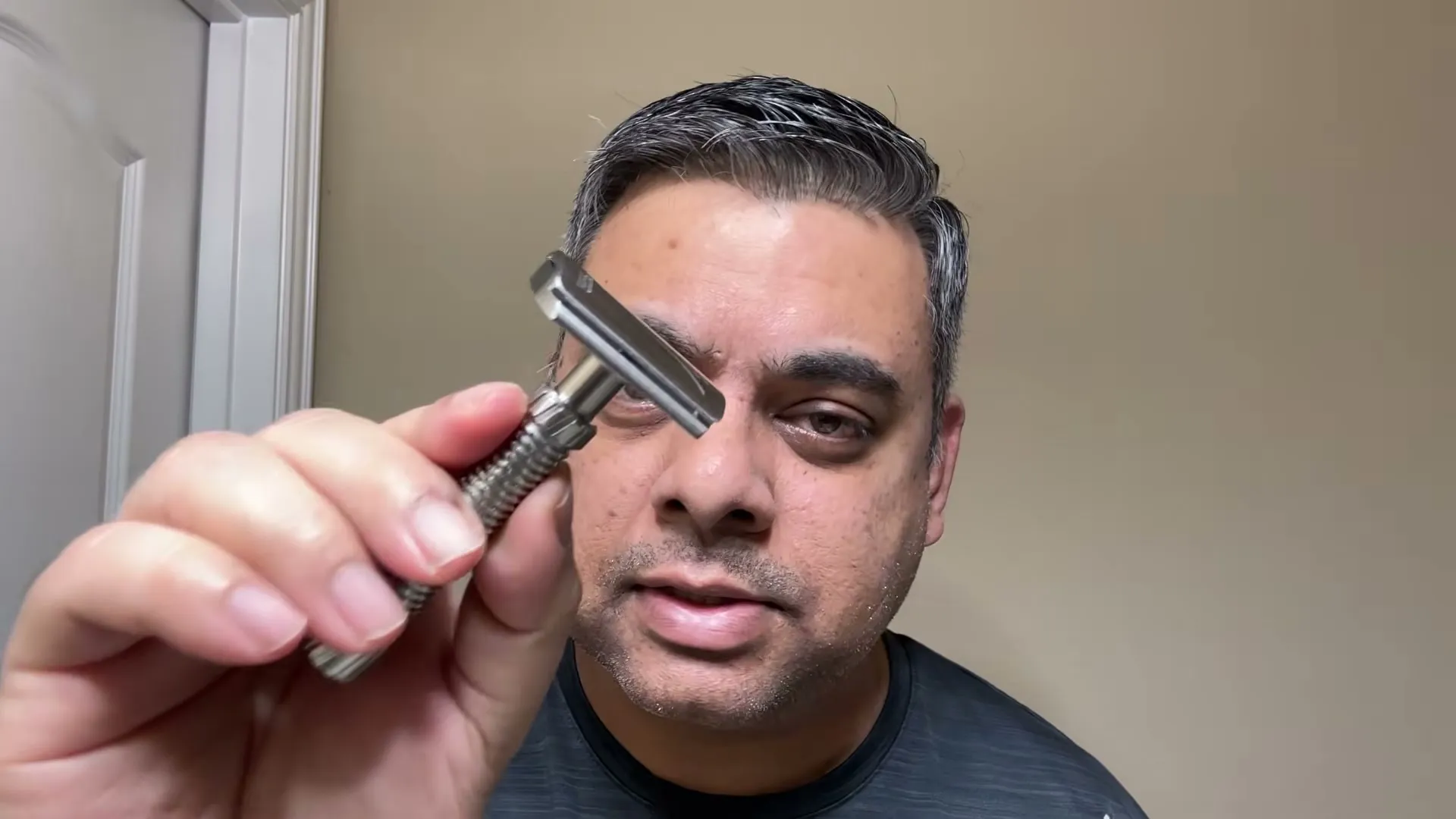
I’ll throw the Masamune in here too, even without exact blade gap numbers to compare directly. It’s built in Portugal rather than the US, which is worth knowing if origin factors into your decision. That razor uses interchangeable top caps rather than bottom plates, and building out a comparable range costs enough that it lands in the same neighborhood as the M3teorite’s full stainless kit. Check current pricing directly before you commit either way, since caps and razors get repriced.
The Shave
For the soap I’m using Subtle Arts Draconic Luna, working with two days of growth. The razor’s on the medium plate with a third-use Treat Platinum blade.
Once the lather’s built up, there’s a ton of cushion and a ton of slickness on my face already. I don’t need to press down with the stainless. Just lean it against my face and let it cut. Hold it, keep the pressure minimal, and go.
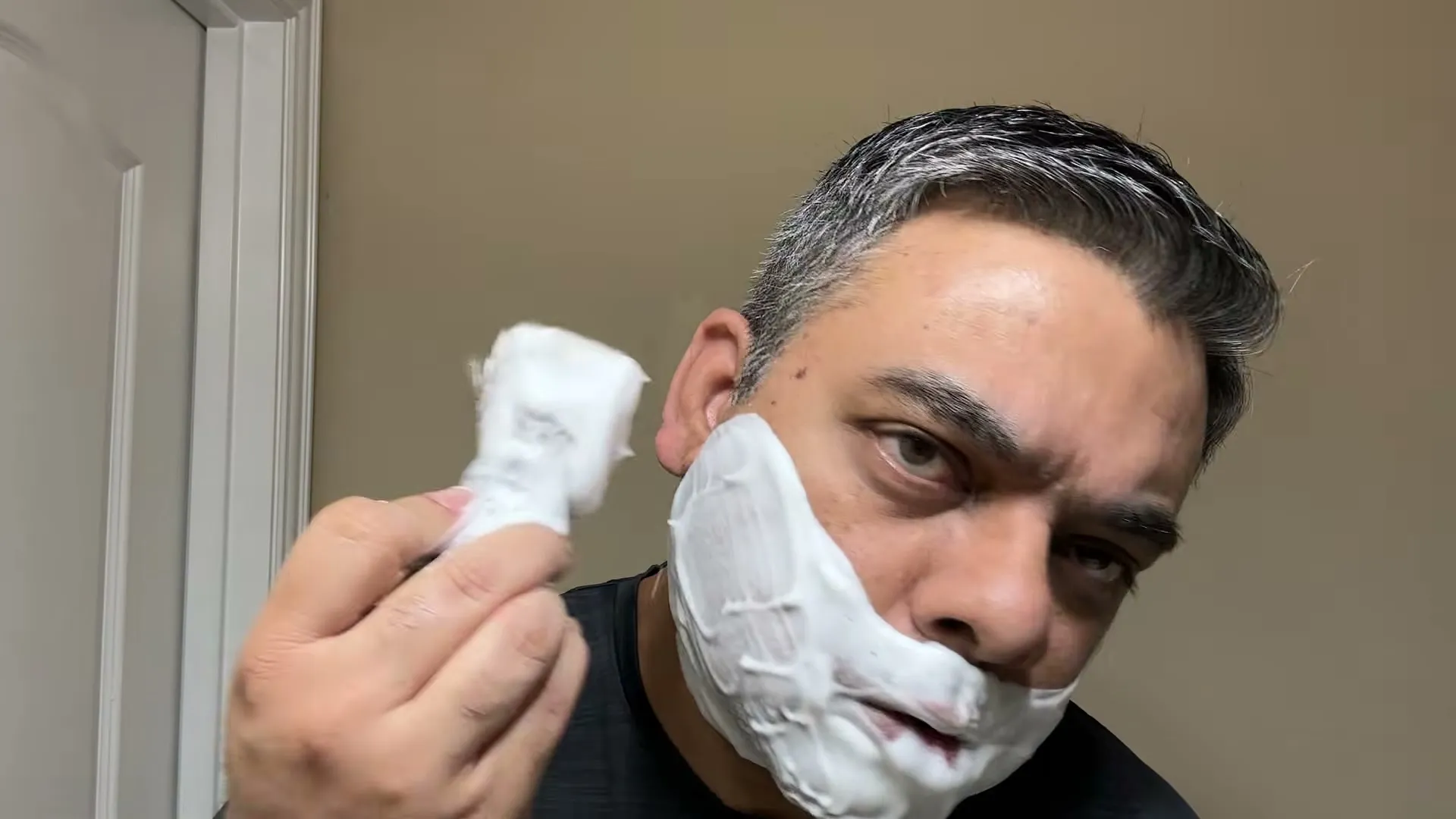
One thing about the stainless that I really like is that it’s audible. You can hear it working. That matters more than people give it credit for. Sometimes you think you’ve cleared a section, then you run the razor through again and you can still hear hair getting cut, which tells you it wasn’t actually done. That kind of feedback is a real feature, not a gimmick.
I’m dealing with a couple of breakouts at this point in my life, which I thought I was past. Apparently not. For pass one the length of the razor balances well against my pinky, not too long, and it moves through the chin cleanly.
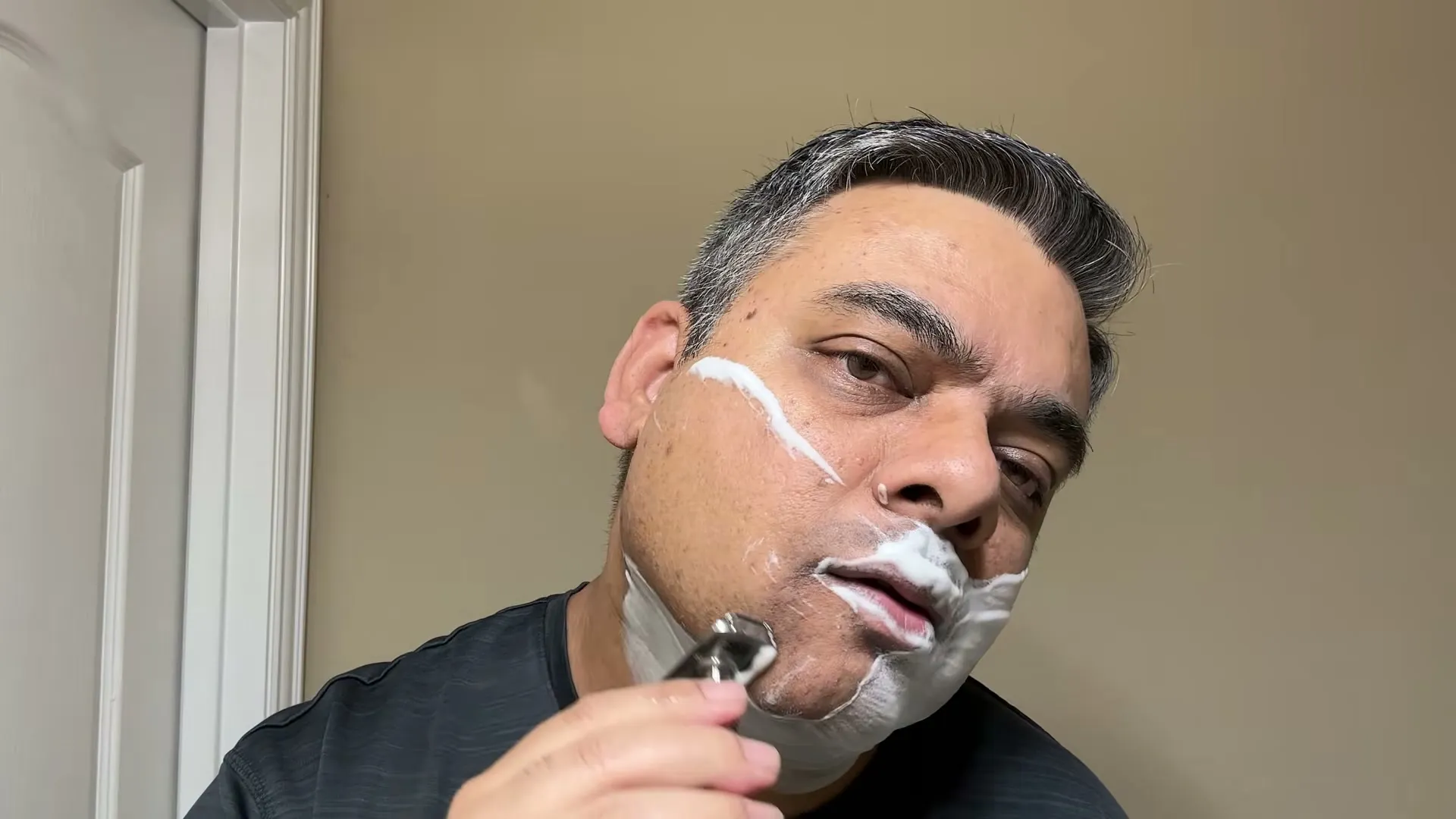
Pass two goes east to west. Over the stretch of days I tested these, I alternated one day on aluminum, the next on stainless, back and forth. Shave characteristics were close between the two. The real difference is that I never had to add that extra bit of pressure the aluminum needs. That alone makes the stainless feel like a faster shave.
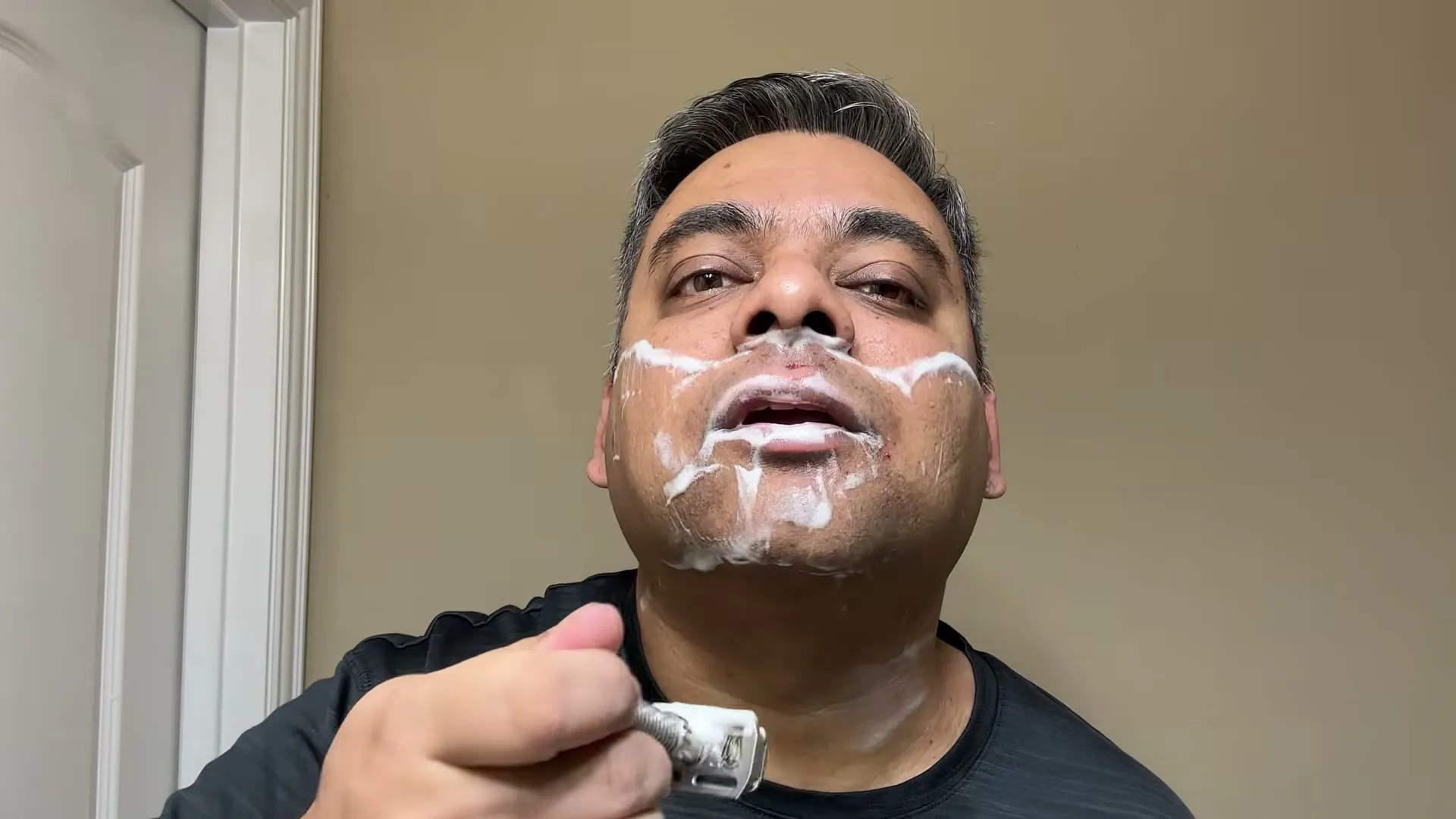
The neck is where my toughest hair lives, and you can hear the razor working through it. Pass three runs south to north, and the mustache and chin are still fighting me at this stage. The soap keeps up. Full slickness through every buffing stroke, no drag, just a couple of small nicks, which is typical for two days of growth on my face by this point in a shave.
Alum Test
After a quick touch-up pass, I ran the alum test to check for missed spots. Almost nothing. A few areas came back at a bare 0.25 on a five-point feedback scale, and most spots showed nothing at all. That’s about as clean a shave as you’re going to get.
Here’s what stood out after ten days of switching back and forth. Both razors got me to BBS. Both were smooth, both were easy to run. Two things separated the stainless. First, no need for that extra pressure, which made the whole shave feel quicker. Second, the BBS held up longer after the stainless shave than it did after the aluminum. That’s the trade you’re making: lighter and cheaper against heavier, pricier, and a closer shave that sticks around.
If you’ve watched this far, you know roughly where I land on value, fit and finish, and balance. I’ll keep working through the rest of the scoring in the full review up top. Thanks for watching, and I’ll catch you in the next one.